Guide to Longmenhao and Xiahaoli


Longmenhao and Xiahaoli sit just across the road from each other and were originally neighboring parts of the same old neighborhood. Longmenhao was renovated and opened to the public first, while Lower Longmenhao was renovated later and reopened as Xiahaoli.
Online photos can make them look like two fairly similar old hillside neighborhoods. Once you explore them in person, however, the differences become clear. They vary considerably in size and atmosphere, and each is at its best at a different time of day. The key to making the most of both is getting the timing and order right.
Getting there
Longmenhao and Xiahaoli are both a short walk from Shangxinjie Station, which is served by Metro Line 6 and the Loop Line.
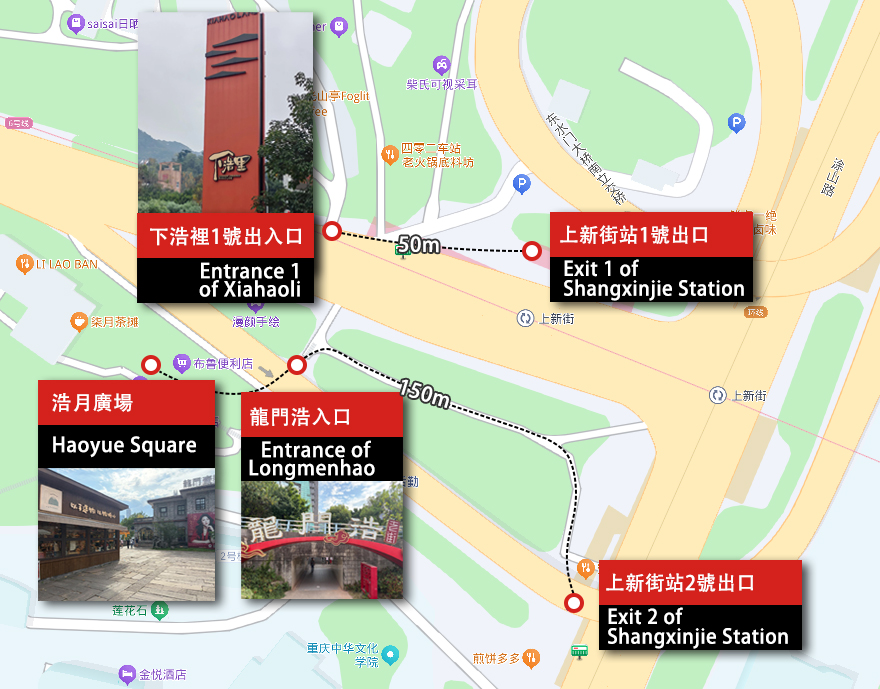
For Longmenhao Old Street, take Exit 2 and walk about 150 meters to the entrance. When using walking directions, set your destination to “浩月廣場” (Haoyue Square).
For Xiahaoli, take Exit 1. The entrance is about 50 meters straight ahead once you leave the station.
If you are taking a taxi or booking a ride, use the relevant metro exit as your destination: Exit 2 for Longmenhao and Exit 1 for Xiahaoli. Starting from either exit, most of the route will be downhill, so you can avoid a lot of unnecessary uphill walking.
How to plan your visit
Longmenhao is better seen in daylight, when you can take in its architecture and river views. Xiahaoli, by contrast, is at its best after the lights come on.
The most straightforward way to visit both is to arrive at Longmenhao about two hours before sunset. Follow the old street all the way downhill, then enter Xiahaoli from Nanbin Road.
By then, it will usually be getting dark. You can have dinner or grab a coffee there, take a short break, and wait for the lights to come on. Once they do, take your time exploring Xiahaoli.
How to explore Longmenhao Old Street
Longmenhao is fairly compact, with two main things to see. One is the riverfront cityscape, where Dongshuimen Bridge, the Yangtze, and the Yuzhong Peninsula across the water come together. The other is the old buildings dating from Chongqing’s treaty-port era and the Second Sino-Japanese War.
The area once housed a number of foreign institutions, customs offices, and consulates. As a result, even on this relatively short street, you rarely walk far without coming across another reminder of the area’s past.
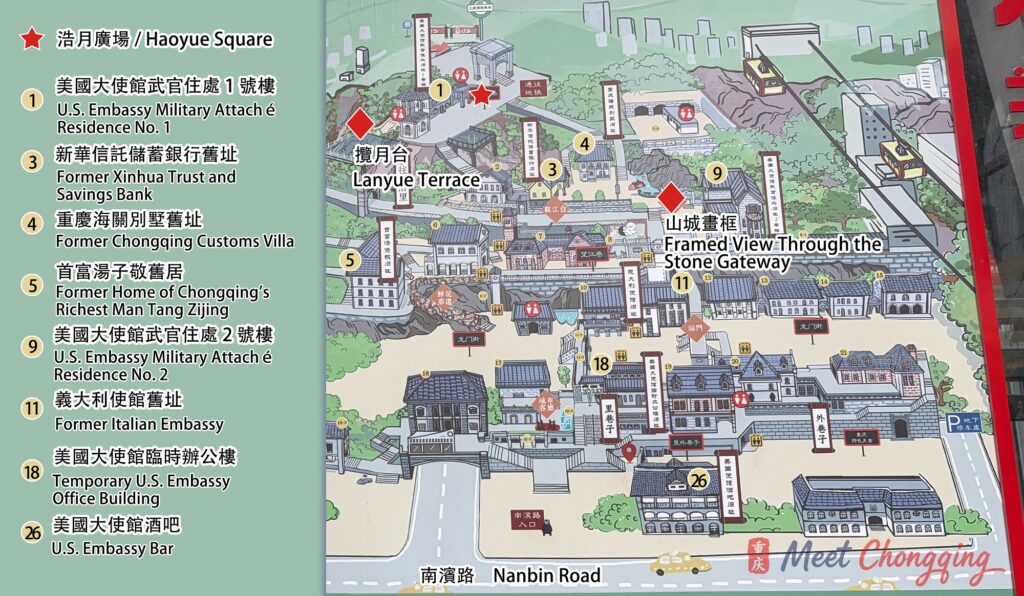
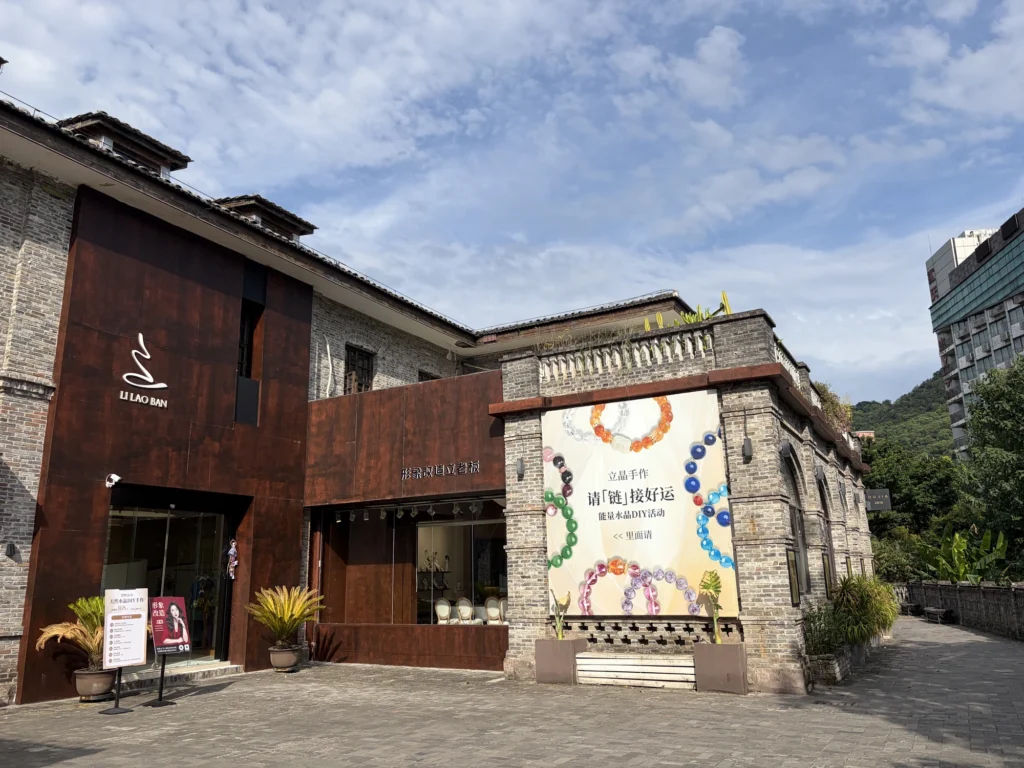
The first place you come to after entering is Haoyue Square. The small gray-brick building on the square was once home to the military attaché at the U.S. Embassy. Its exterior looks fairly ordinary, and you only learn its history by reading the information panel beside it.
Many of Longmenhao’s old buildings are like this. Keep an eye out for the information panels by their entrances as you pass; they make the walk more interesting.
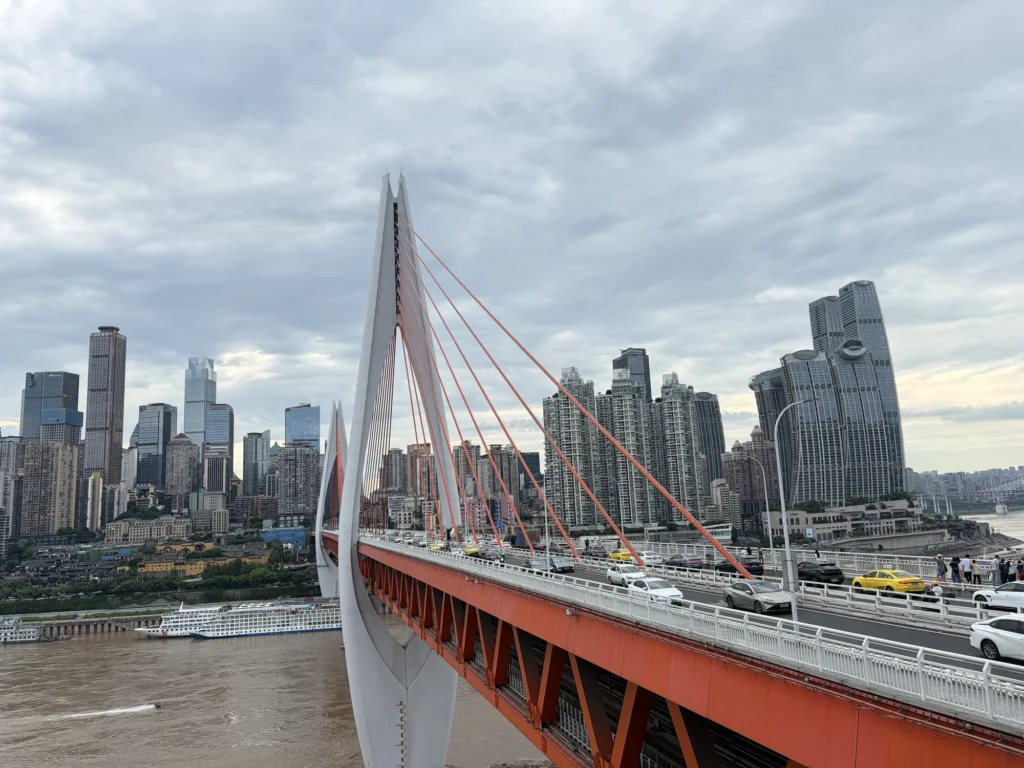
Continue ahead to Lanyue Terrace, the viewpoint with the broadest views in Longmenhao. It faces Dongshuimen Bridge and the Yuzhong Peninsula on the opposite bank. This view was once included among the “Twelve Scenic Views of Ancient Bayu” and is considered one of the classic views of old Chongqing.
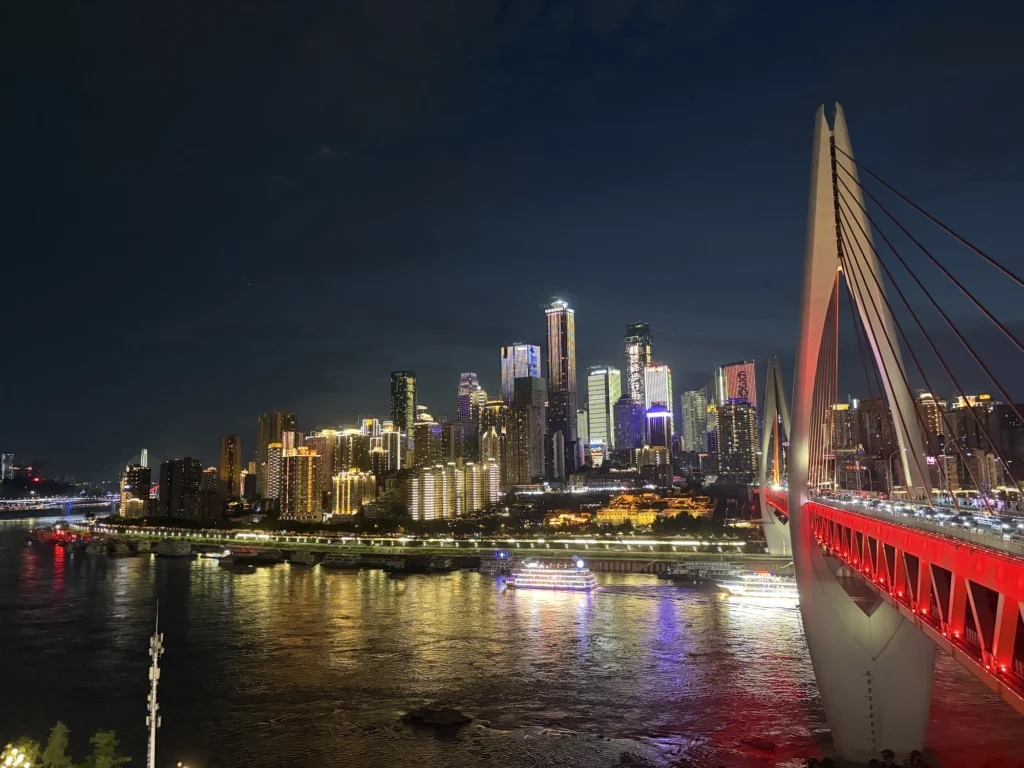
Night view from Lanyue Terrace
As you continue down the steps, old buildings start appearing in greater numbers. Former banks, customs villas, and old embassy buildings stand at different levels on both sides of the stone stairway. This is where the atmosphere of Chongqing’s old hillside streets really comes through.
Among them, the most worthwhile stop is Building No. 2 of the Former Residence of the U.S. Embassy Military Attaché. An old stone gateway stands at the entrance. Stand just inside it and look out, and Dongshuimen Bridge is perfectly framed by the gateway, centered in the opening. This is one of Longmenhao’s classic spots for the “Mountain City Frame” shot.
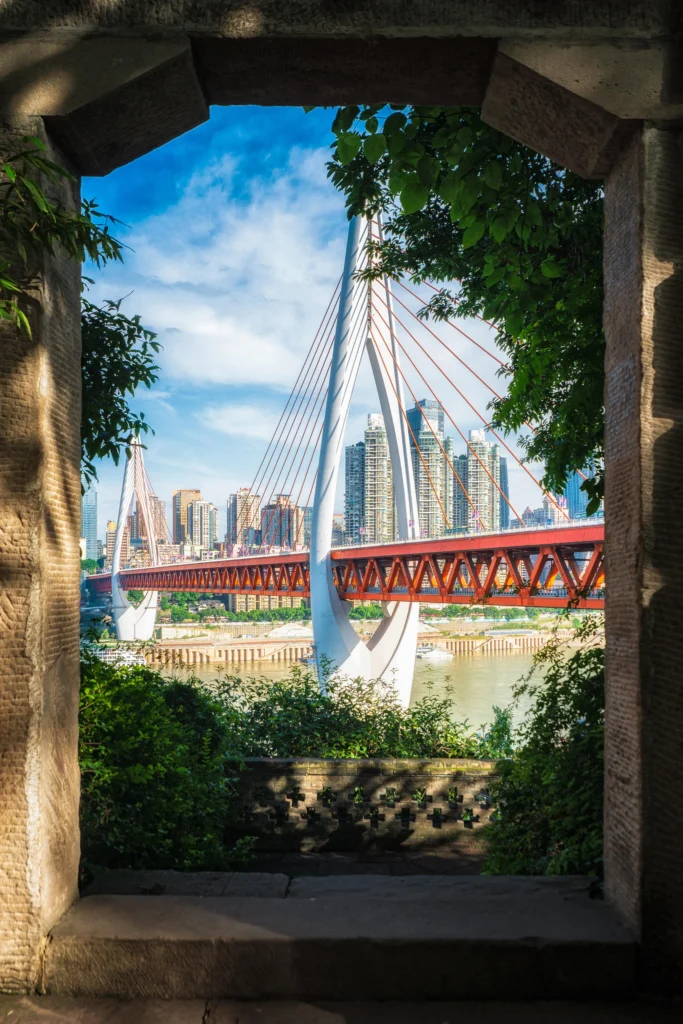
Beyond the “Mountain City Frame”, the rest of the route is better suited to taking your time, with stops along the way. You will not get the same broad, striking panorama as at Lanyue Terrace, but several small shops with terraces are scattered along the route.
When you need a rest, find a seat overlooking the river and stay for a while. Enjoy the river breeze, take in the old brick walls, and settle into the slower pace here. It makes for a very pleasant break.
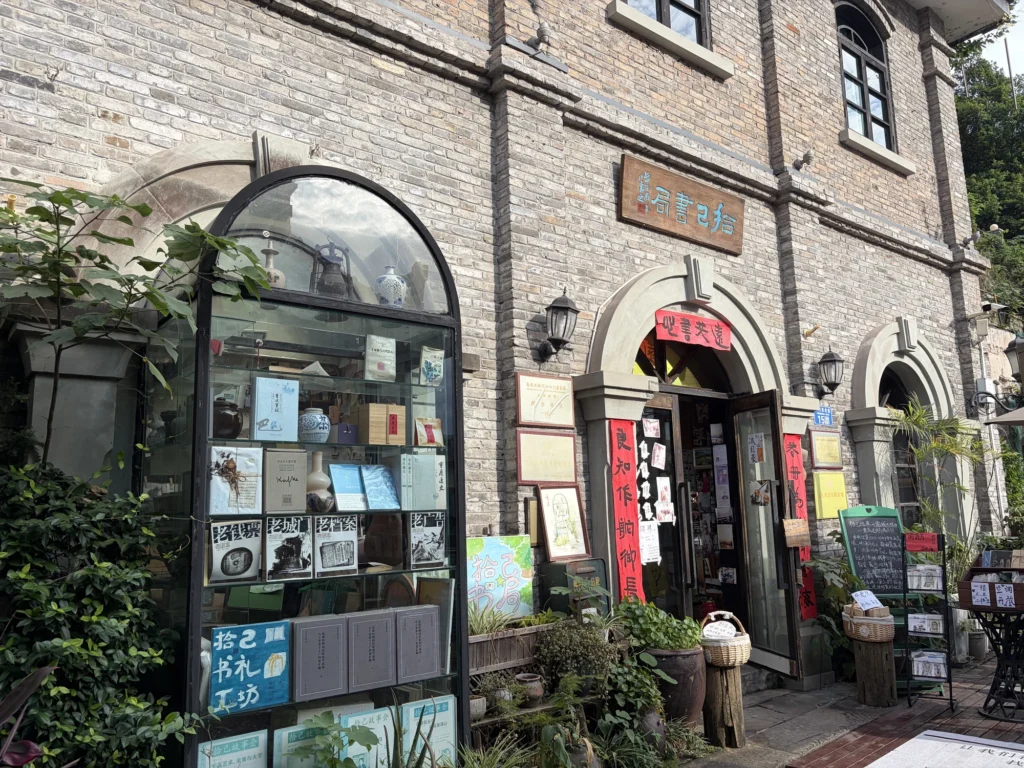
As you approach Nanbin Road, you will pass a very short food street. The food itself is fairly ordinary, but the two Kumamon statues at the entrance have a much more interesting story.
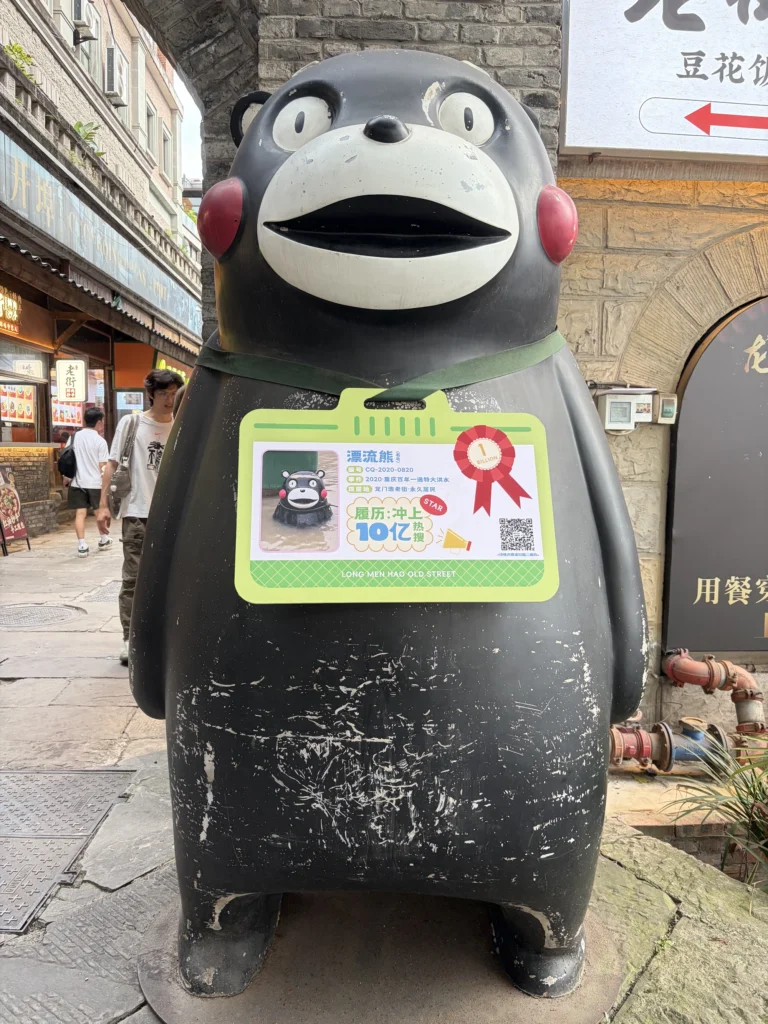
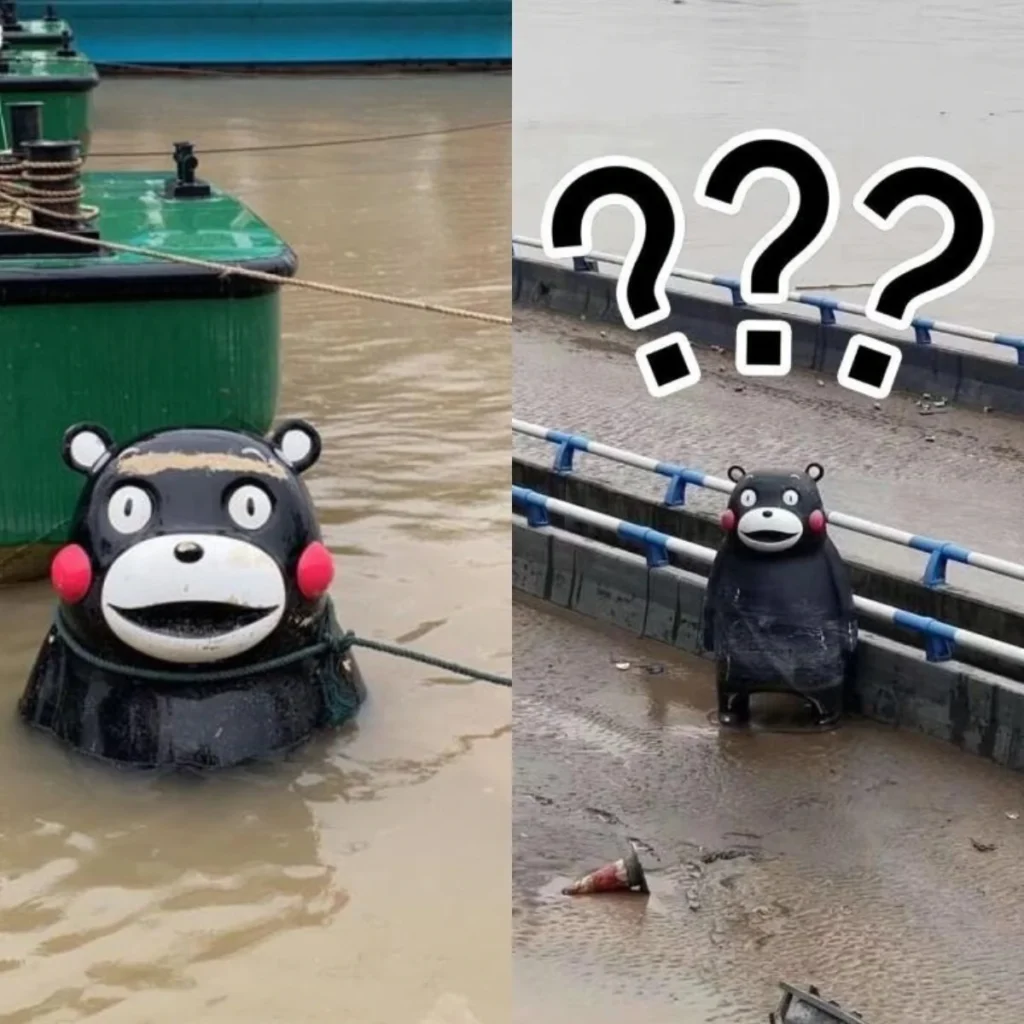
During the severe flooding in Chongqing in 2020, both statues were swept away by the river. One did not drift far and was recovered nearby soon afterward. The other floated more than 300 kilometers east along the Yangtze before someone recognized it more than twenty days later. It eventually made its way back to Longmenhao aboard a cruise ship.
The whole episode sparked plenty of discussion online at the time. The two figures, originally little more than decorations for a shop, became the subject of one of Longmenhao’s most amusing local anecdotes.
How to explore Xiahaoli Old Street
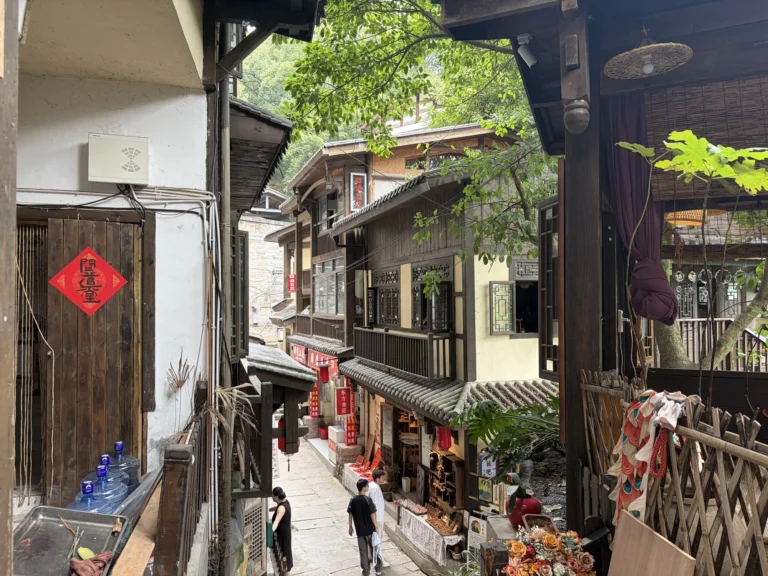
Xiahaoli is larger than Longmenhao, with buildings, stone steps, alleys, courtyards, and a mix of interesting shops spread across the hillside at different levels. The paths branch every few steps, and a lane that looks like a dead end may open onto another street once you turn the corner.
Do not feel that you have to cover every place marked on the map. Just keep in mind that the route generally heads downhill, and feel free to wander into any alley or courtyard that catches your eye, or stop at any shop that looks interesting along the way.
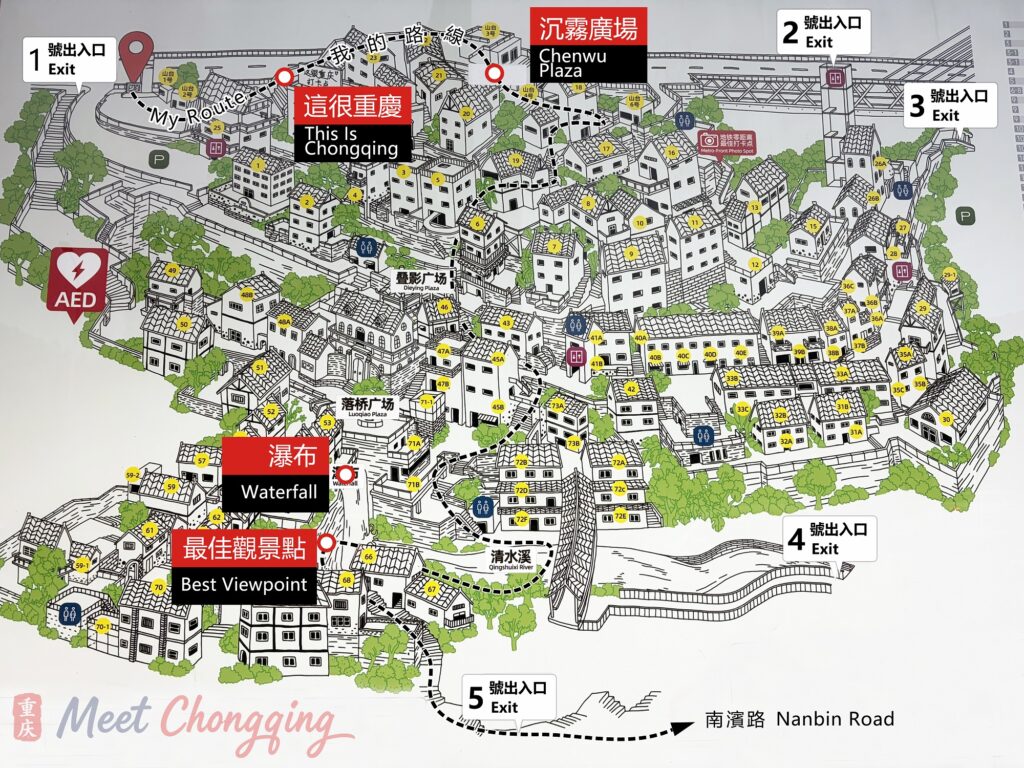
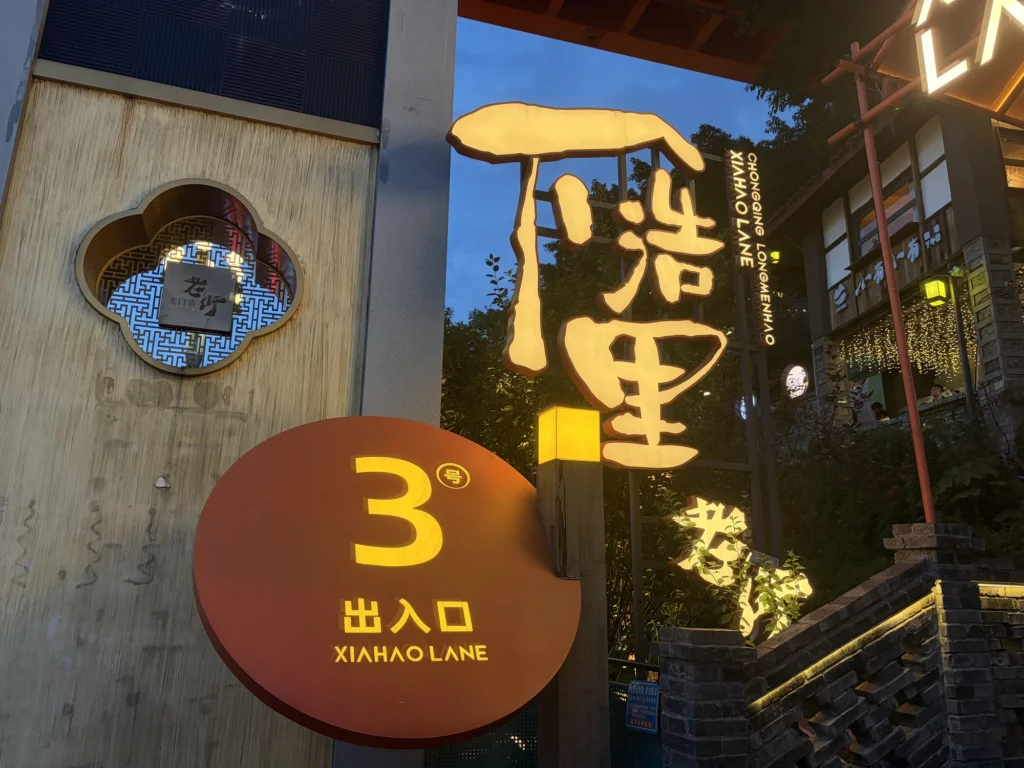
Once you reach Nanbin Road from Longmenhao, Xiahaoli’s Exit 3 is less than 100 meters ahead. If you start exploring uphill from here, you will spend most of the way climbing what feels like an endless series of steps.
There is a much easier way. Enter through Exit 3 and follow the ramp for about three minutes to an elevator that takes you directly up to Dongshuimen Bridge. The elevator is easy to spot, just look up.
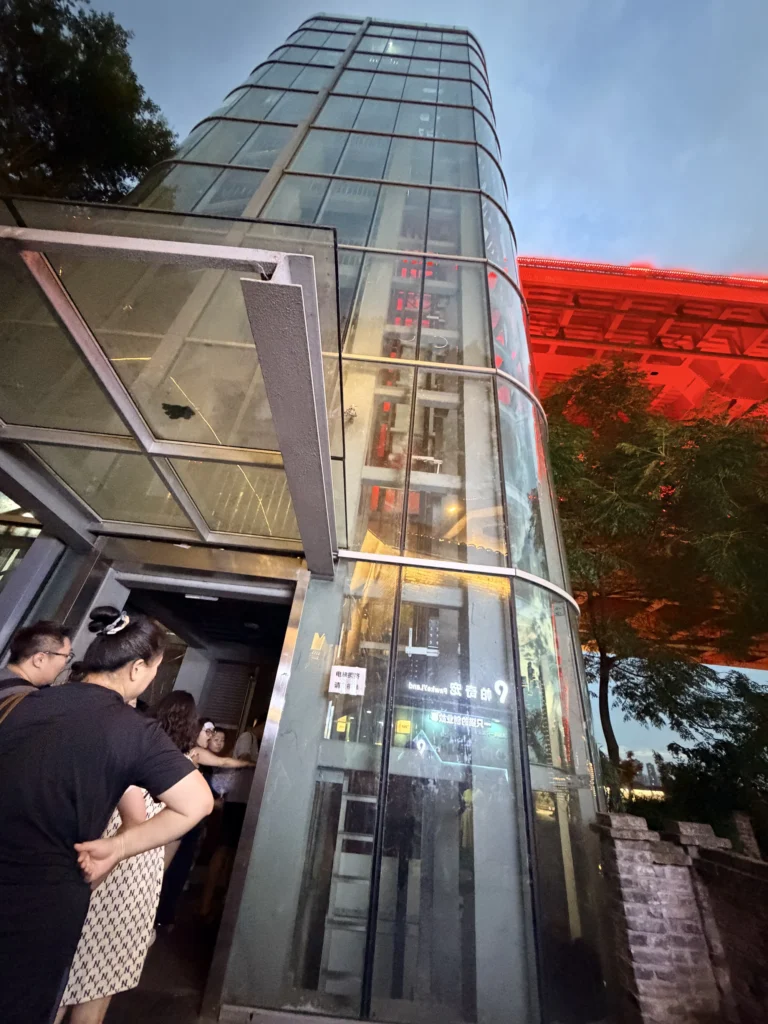
The elevator brings you up to Dongshuimen Bridge, marked as Exit 2 on the Xiahaoli map. From there, walk over to Exit 1 and explore Xiahaoli from the top down. This is far easier than climbing up from Nanbin Road.
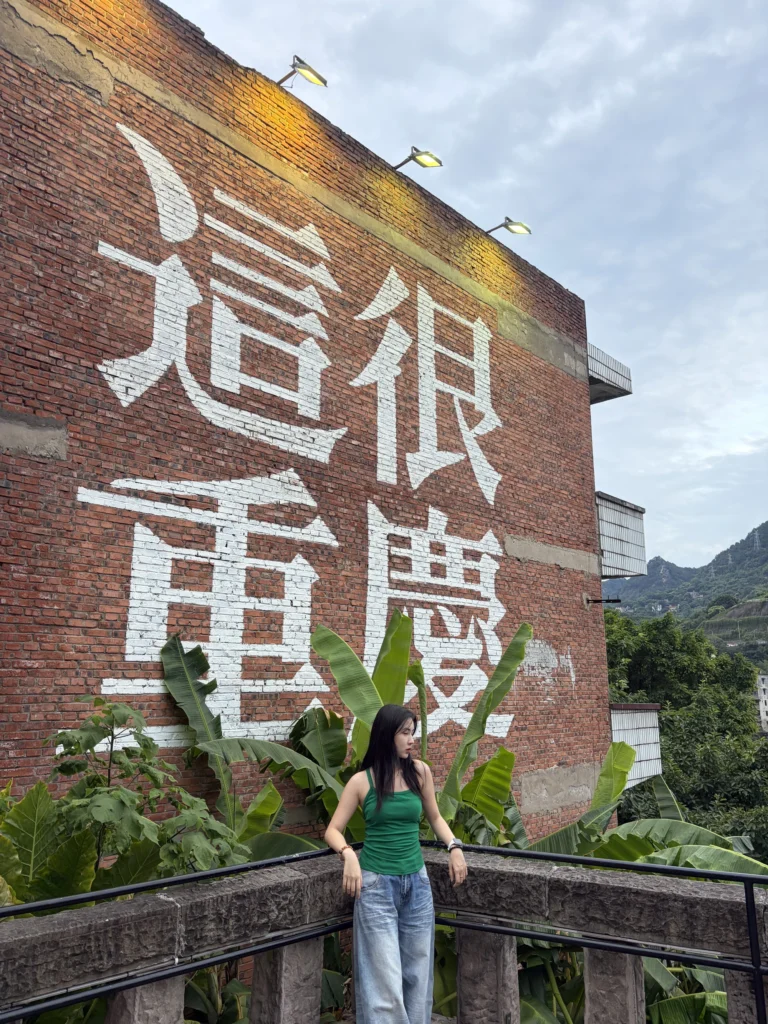
At Exit 1, do not head straight down the steps. Instead, take the path toward the wall marked “这很重庆” (This Is Chongqing). The red wall with white lettering is easy to spot, and it is the first thing many visitors photograph after arriving in Xiahaoli.
Continue ahead and you will reach Chenwu Plaza, right beside Dongshuimen Bridge. Its massive piers and orange-red cables loom directly in front of you, making the bridge feel especially imposing at such close range.
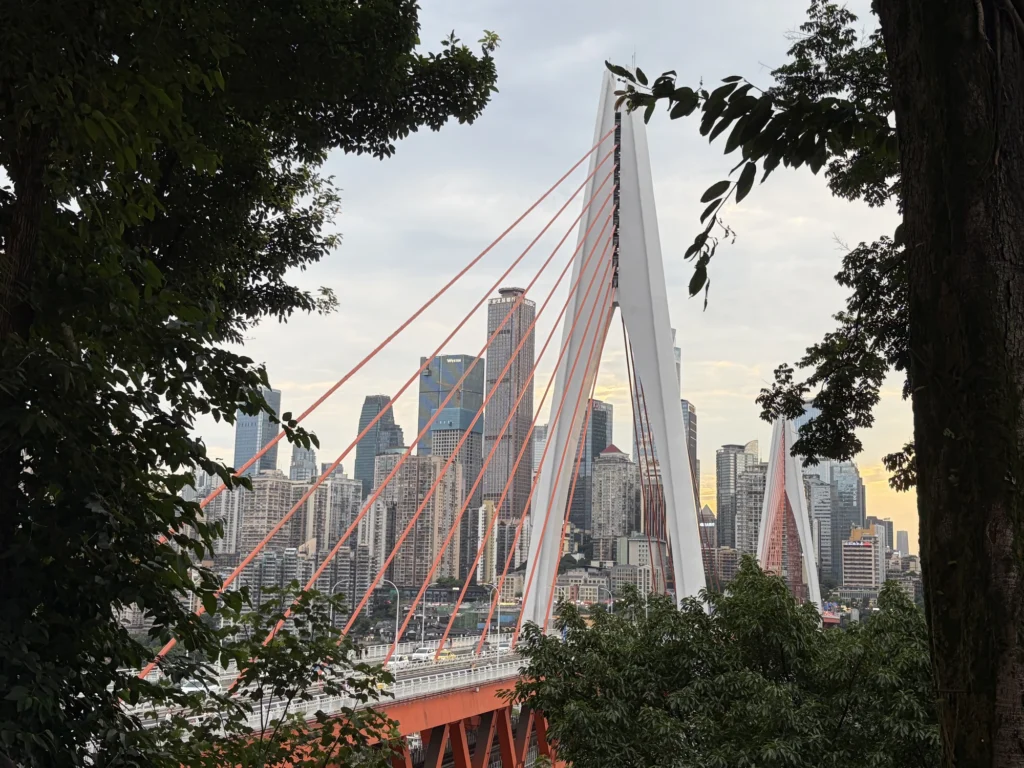
After leaving Chenwu Plaza, continue downhill. The focus of your view gradually shifts from the bridge to Xiahaoli’s night scenery. Before long, you will see the waterfall at the center of the area. As you move closer to it, the music and the sound of the water become more noticeable, and there are gradually more people around you.
This is the liveliest area in Xiahaoli. Although the water feature itself is not very large, the lights, music, and surrounding houses arranged at different heights create a lively atmosphere full of sound and color. The scene is much more vivid in person than in static photos on a screen.
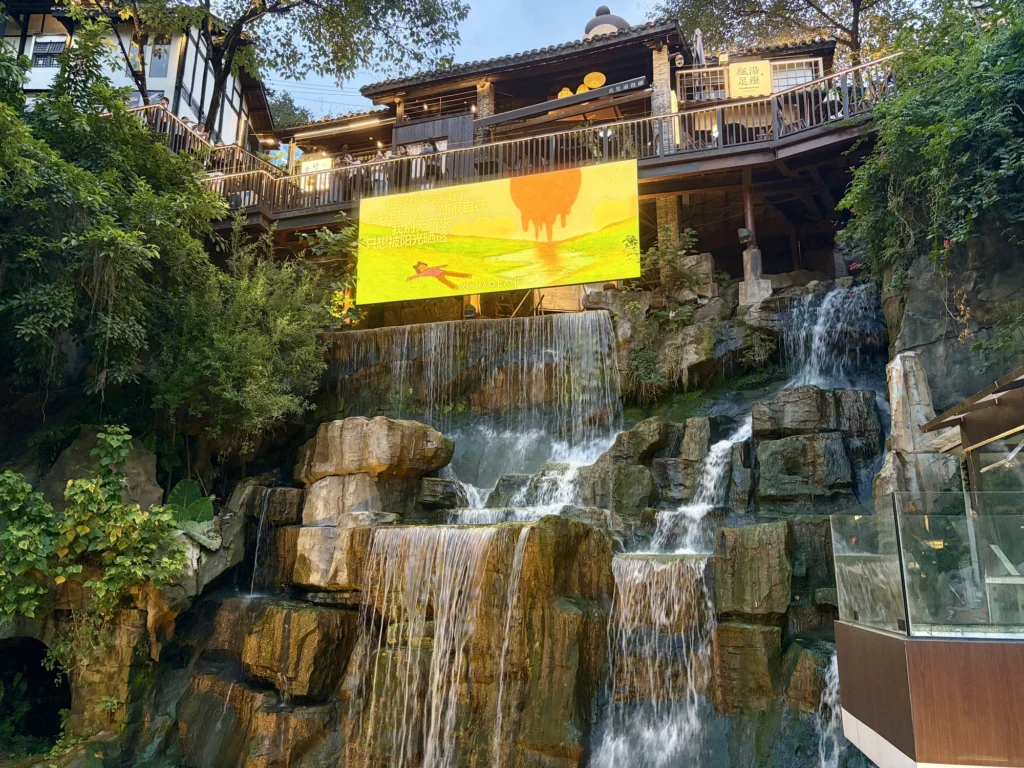
After exploring the waterfall area, take the small staircase beside it to the viewing platform across the way. This is also Xiahaoli’s signature photo spot.
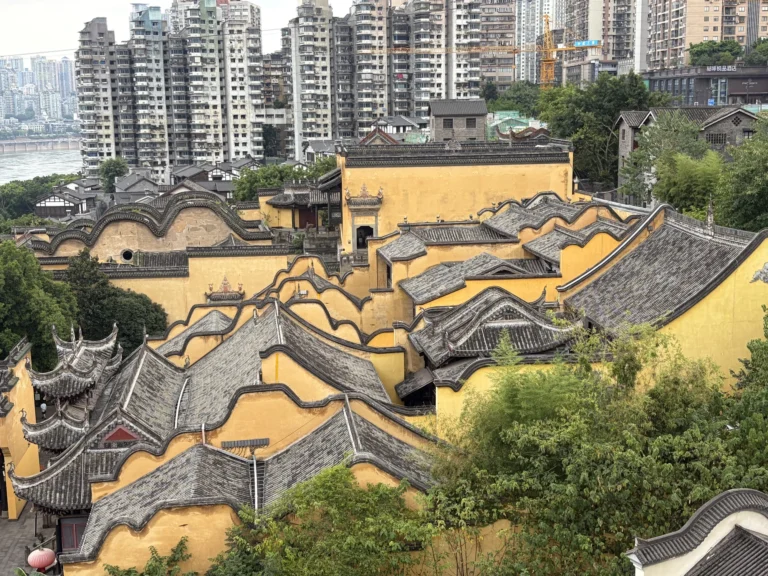
Turn around, and Chongqing’s distinctive hillside streetscape immediately comes into view. The last of the daylight still lingers on the horizon, while warm yellow lights pick out the eaves of old houses stacked up the slope. Gray-tiled roofs, stone steps, and tree shadows overlap, giving the view a rich sense of depth.
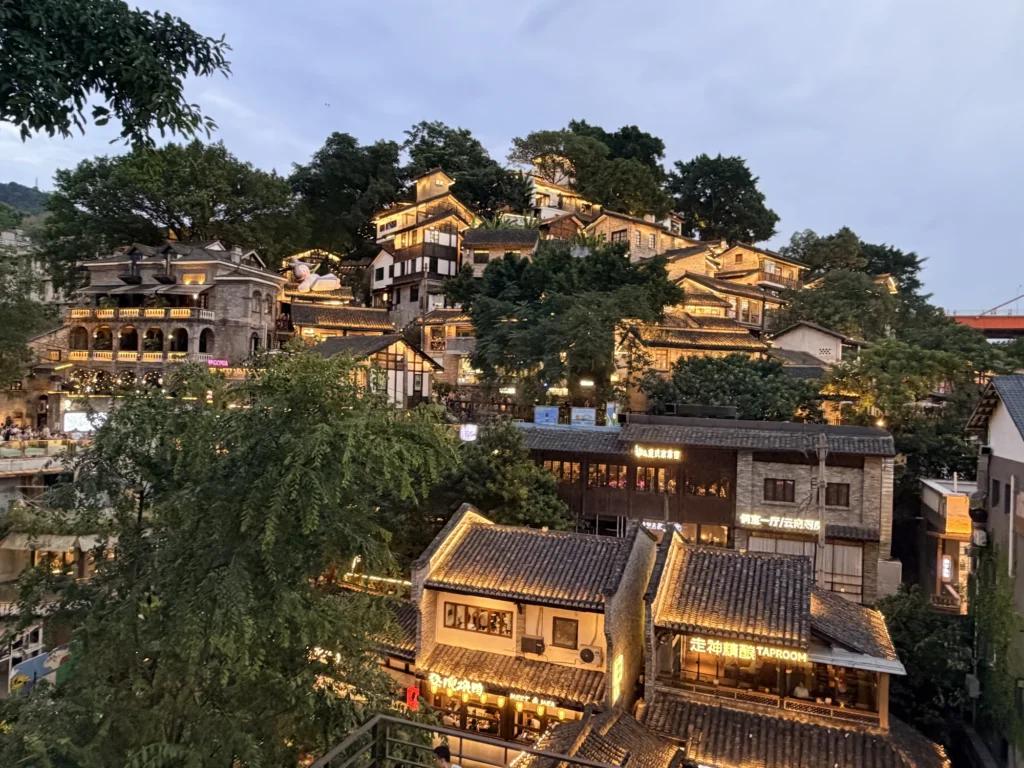
After taking in the night view, follow the steps down to Gate 5 and come out onto Nanbin Road. That marks the end of the main route through Xiahaoli. If you still have time and energy, there are two convenient ways to continue from here.
For the first, walk about 750 meters along Nanbin Road to the 长江索道南站 (Yangtze River Cableway South Station). From there, take the cableway across the Yangtze toward Jiefangbei. This lets you continue across the river while also experiencing the cableway.
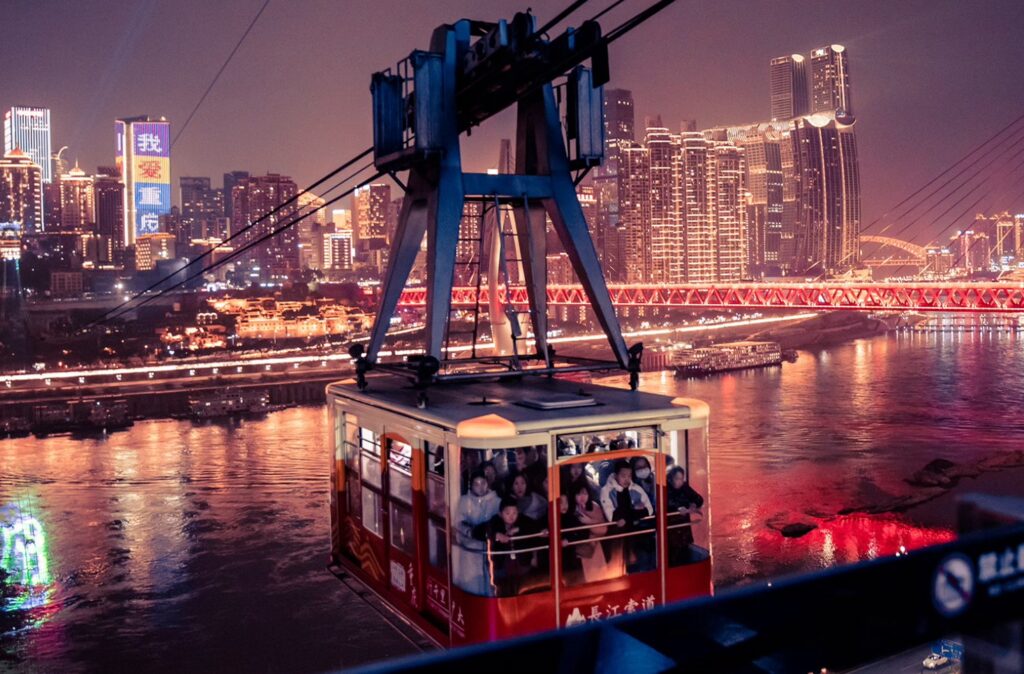
For the second, book a ride to 钟楼广场 (Zhonglou Square). The square faces the confluence of the Yangtze and Jialing rivers and Raffles City Chongqing. From here, you also get a wide, open view of the Chongqing Grand Theatre and the Yuzhong Peninsula after dark.
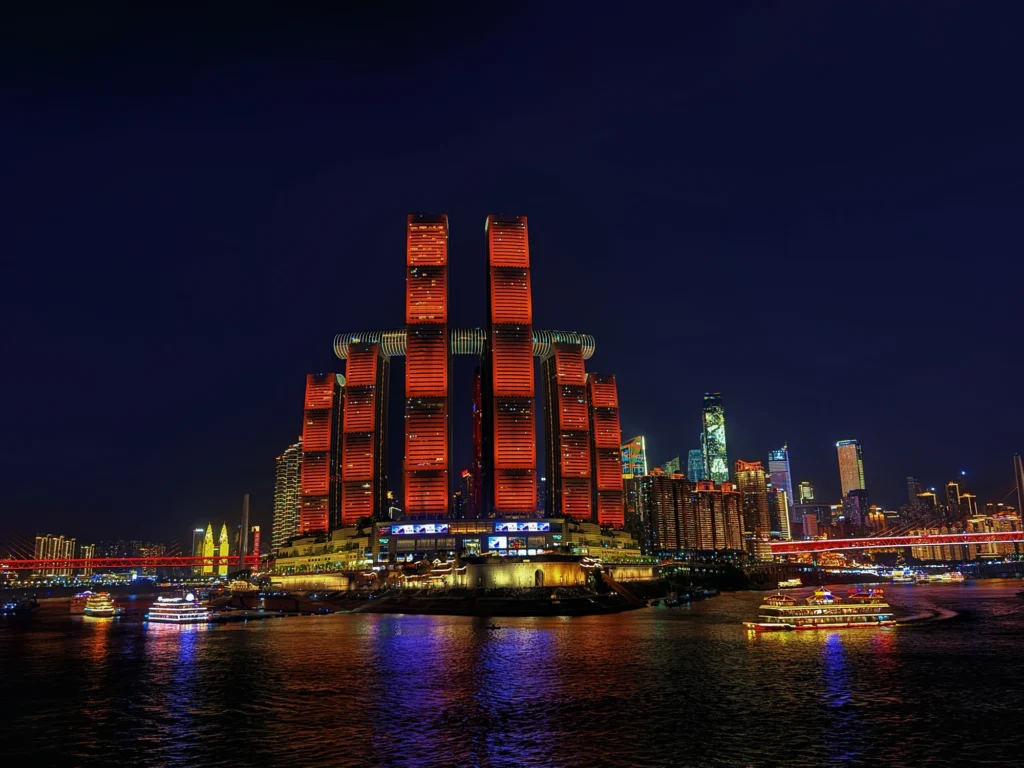
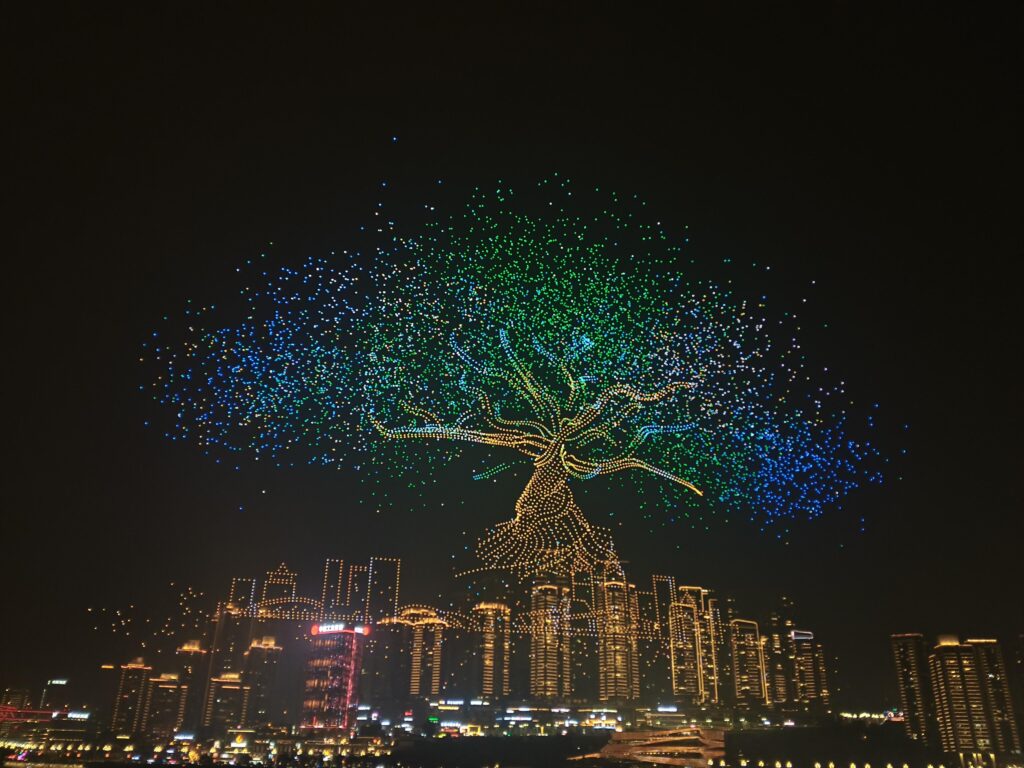
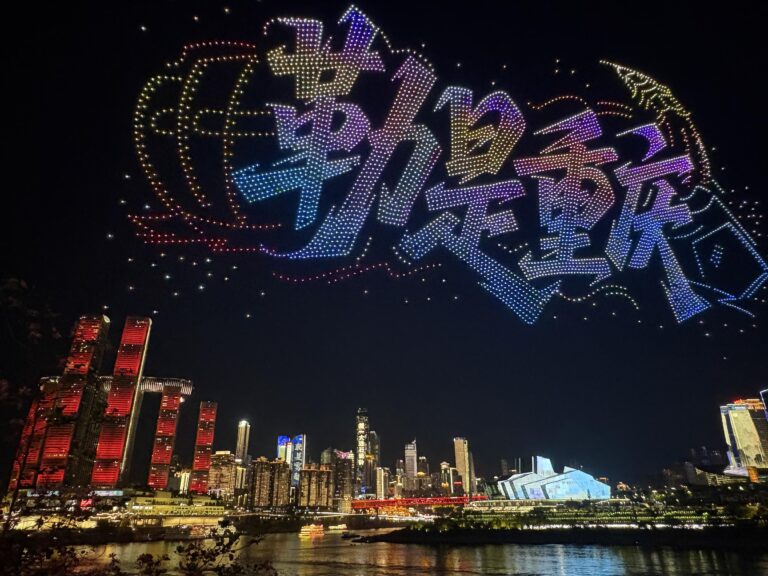
If you happen to be there on a Saturday and the weather is good, there is usually a drone show in the area. Set your destination to “长嘉汇购物公园” (Changjiahui Shopping Park), then find a spot with a clear, open view of the show.