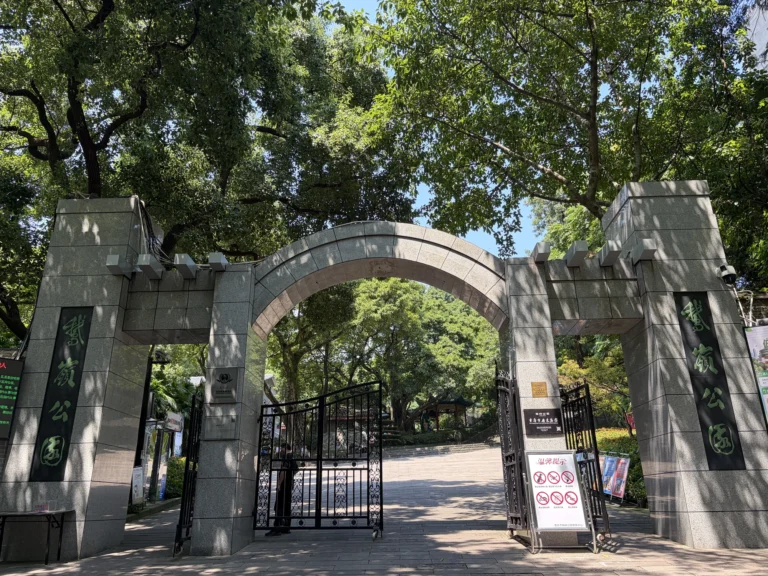
Guide to Chongqing Huguang Guild Hall


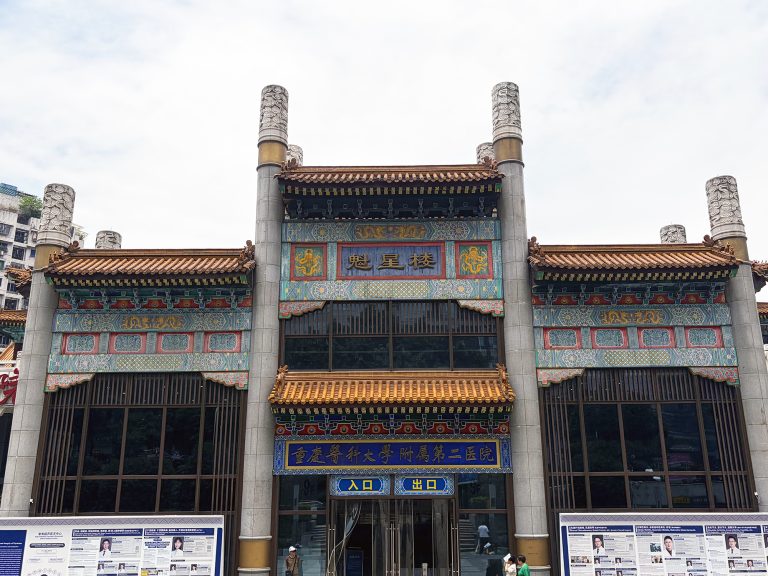
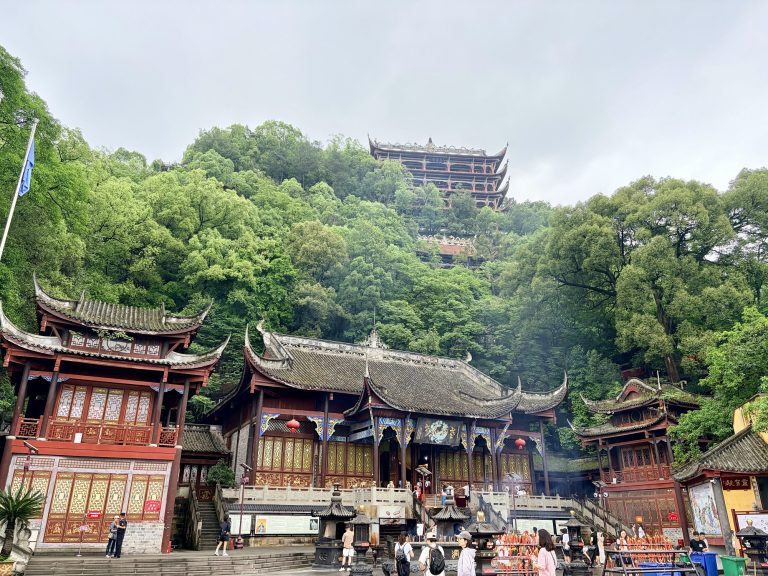
Chongqing Huguang Guild Hall is the largest surviving complex of historic guild halls in China. Built during the Kangxi reign of the Qing dynasty (1662 to 1722), it consists of Yuwang Palace, Guangdong Guild Hall, Qi’an Guild Hall, and several other historic buildings.
More than 10,000 wood, stone, and brick carvings remain throughout the complex. The carvings on the opera stages, beams, and beneath the eaves are especially worth a closer look.
Getting there
Take Metro Line 1 or Line 6 to Xiaoshizi Station, leave through Exit 7, then walk about 400 meters. For directions, search for “重庆湖广会馆” in your map app.
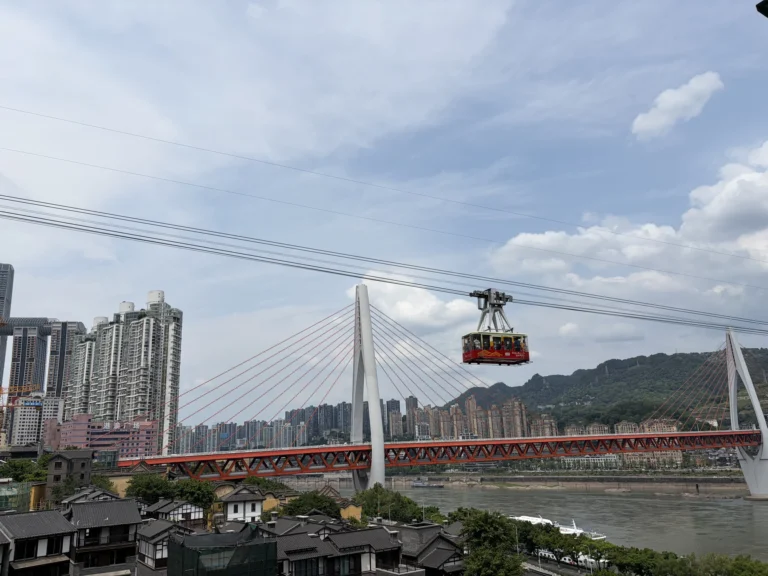
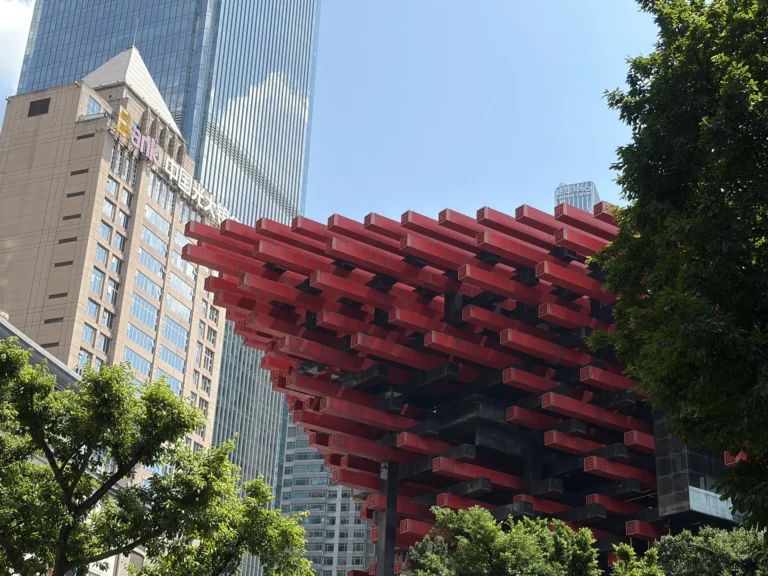
A better option, and the route I took, is to visit Huguang Guild Hall after Raffles City Chongqing and Chaotianmen. This adds about 200 meters to the walk, but takes you along the river, where you can enjoy the view and catch a breeze off the water. It is more enjoyable than heading there directly from the metro station.
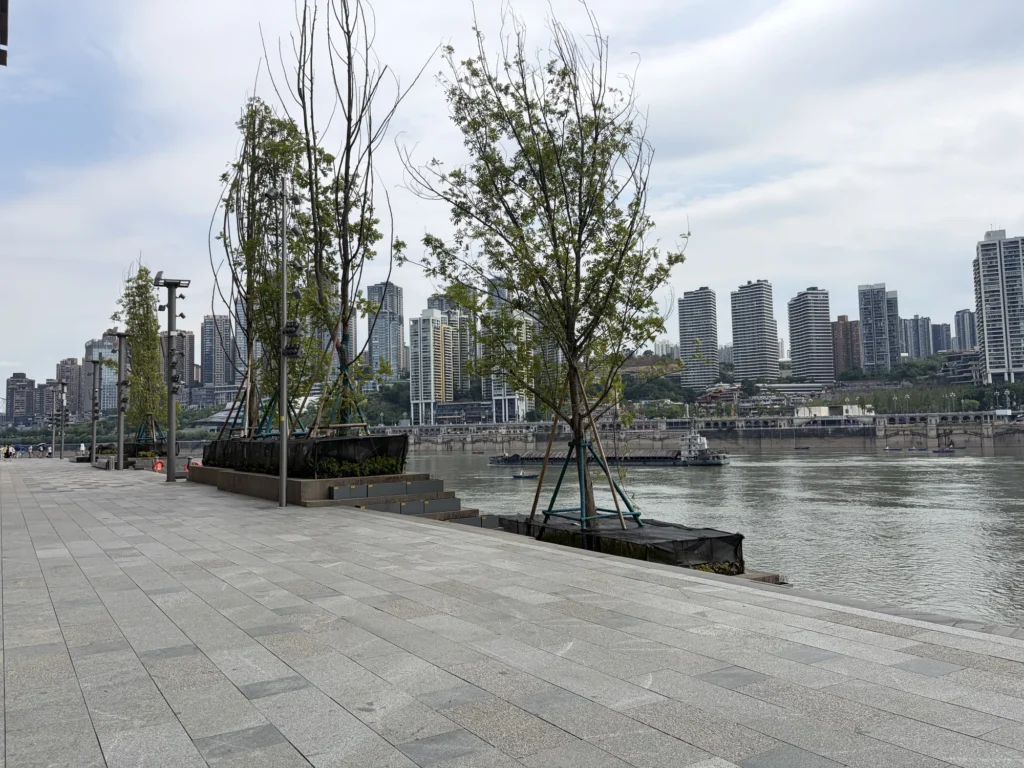
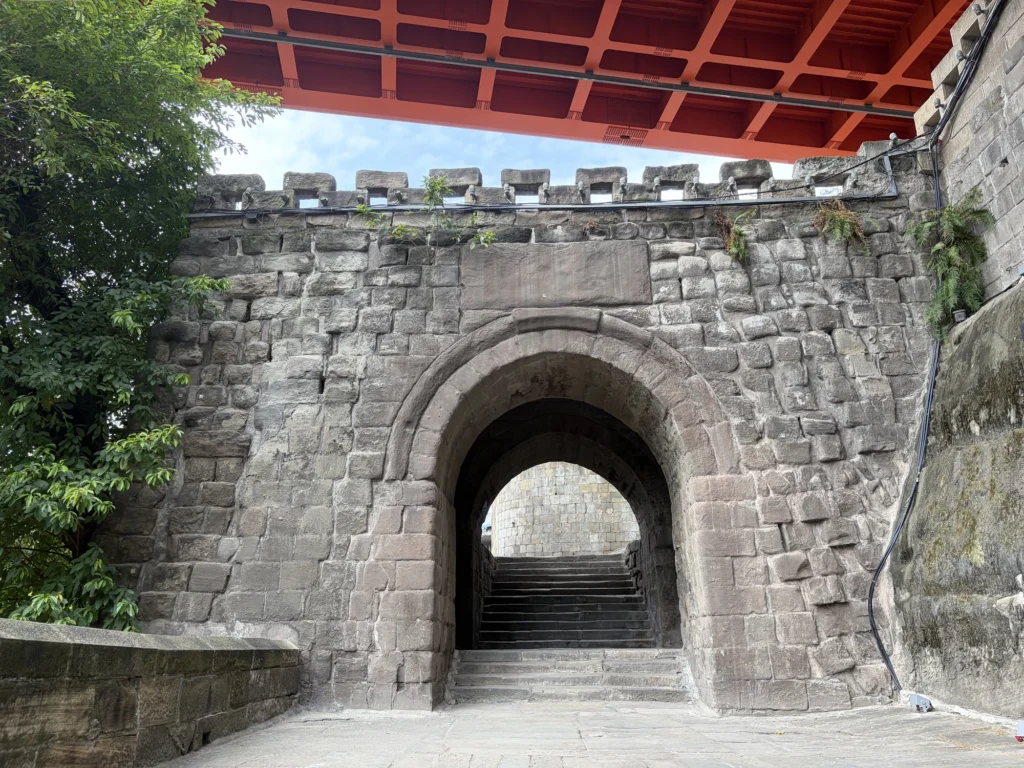
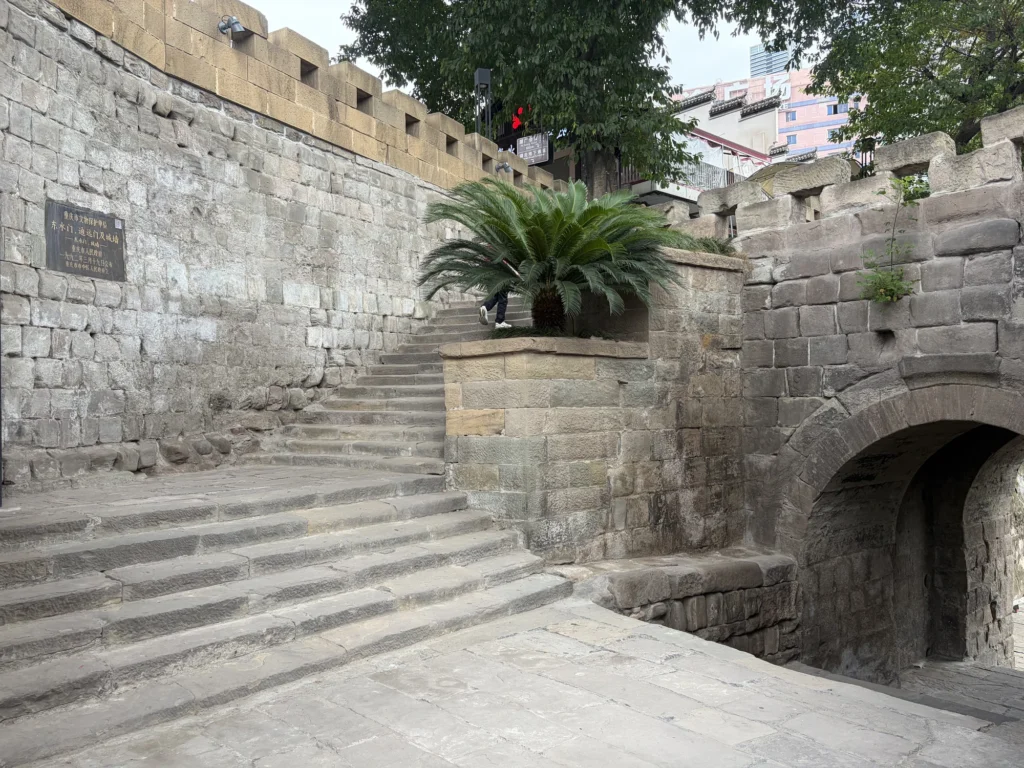
The walk also passes Dongshuimen and a surviving section of Chongqing’s old city wall. First built during the Ming dynasty, Dongshuimen is one of only two historic city gates that survive in Chongqing. It was once an important route into and out of the city.
Huguang Guild Hall later took shape nearby, and its development was also linked to the steady flow of merchants and travelers through this part of Chongqing.
Tickets and opening hours
Huguang Guild Hall is open from 9:00 am to 6:00 pm, with last admission at 5:00 pm.
Adult admission costs 32 yuan. A separate ticket for the Zui Bayu (醉巴渝) performance costs 68 yuan, and discounted combination tickets are also available.
Without the performance, I recommend allowing 1.5 to 2 hours. To read the Migration Museum exhibits carefully and stay for the show, plan on about 2.5 hours.
How to explore Huguang Guild Hall
I suggest following this order:
Migration Museum → Carving Museum → Yuwang Palace → Yuzhou Academy → Guangdong Guild Hall → Qi’an Guild Hall
The first two museums explain the historical background and highlight the details worth looking for in each building. By the time you reach the historic buildings farther inside the complex, you will know where to stop and what to examine.
Without that context, the succession of opera stages, audience halls, and courtyards can easily begin to look much the same.
Migration Museum
The Migration Museum is immediately on the right after you enter through the main gate.
During the late Ming and early Qing dynasties, prolonged warfare and repeated disasters led to famine, epidemics, and tiger attacks. Sichuan’s population fell sharply, and large areas of land were abandoned.
To restore production and stabilize the region, the Qing government introduced a series of resettlement policies. Beginning during the Shunzhi reign, the government recruited displaced people to move into Sichuan and reclaim uncultivated land.
Large numbers of migrants came to Sichuan from Hunan, Hubei, Guangdong, Jiangxi, and other regions. This movement continued for many years and later became known as “湖广填四川.”
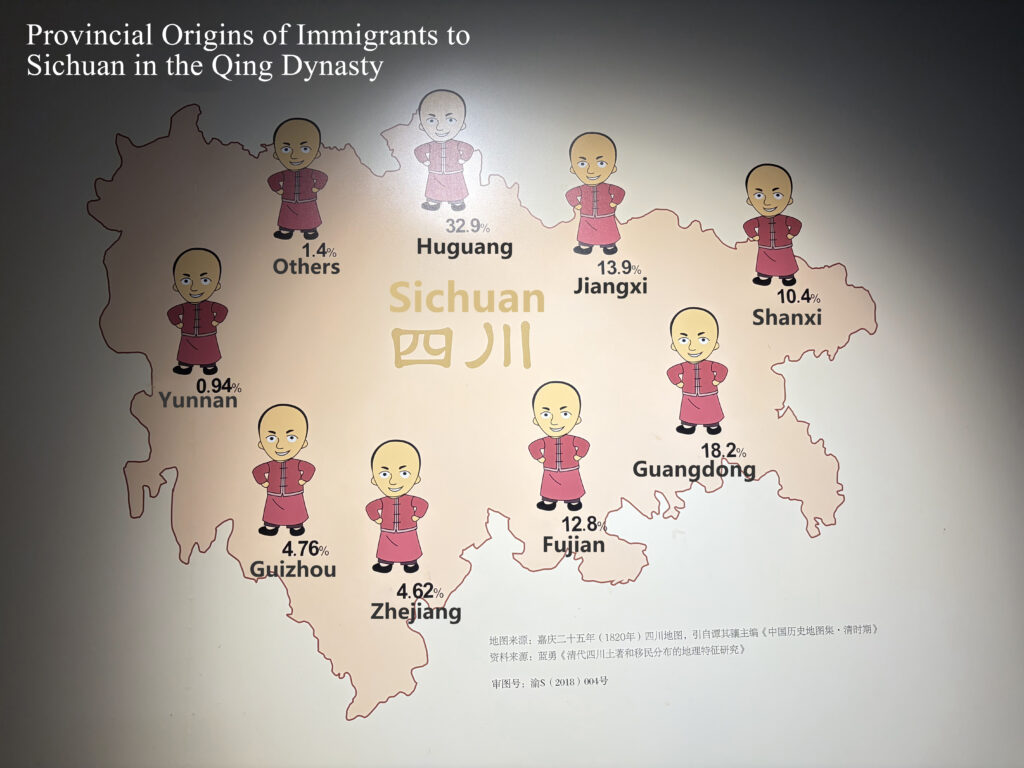
At the time, Chongqing was still part of Sichuan and was also an important center of river transport and trade on the upper Yangtze. It became a place where many migrants stopped after entering Sichuan, while also attracting large numbers of merchants from elsewhere to settle and do business.
Huguang Guild Hall and the neighboring guild halls grew out of this same history. The museum begins with this historical background.
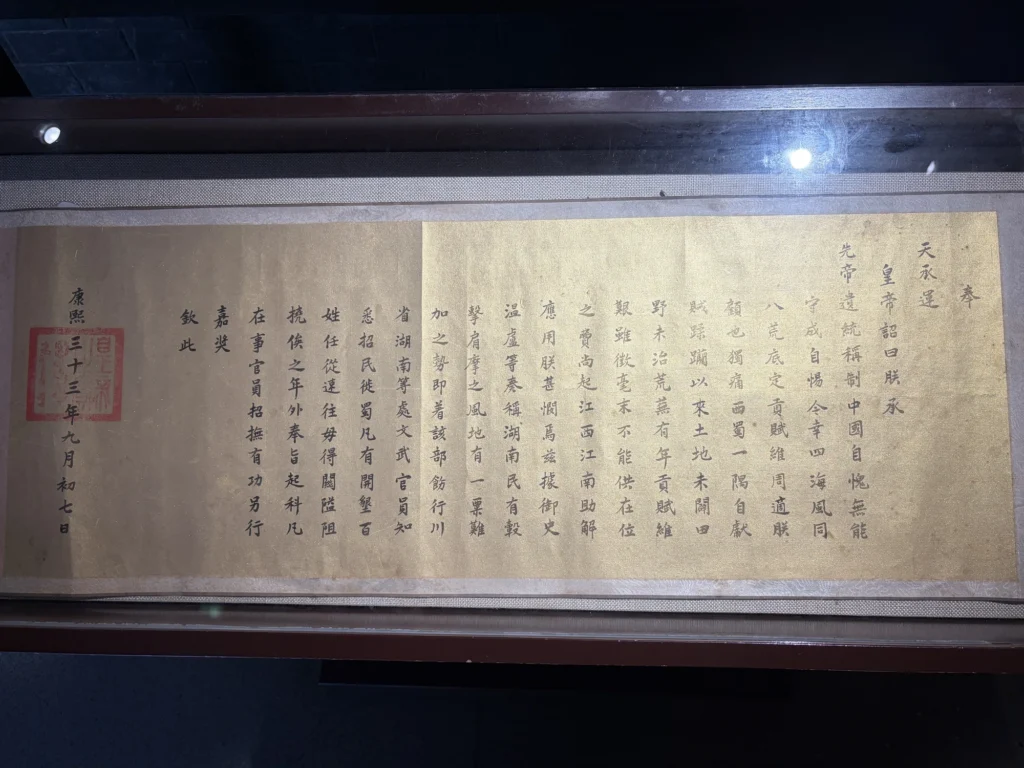
Qing imperial edicts related to the recruitment of migrants explain how government policy drove the movement。
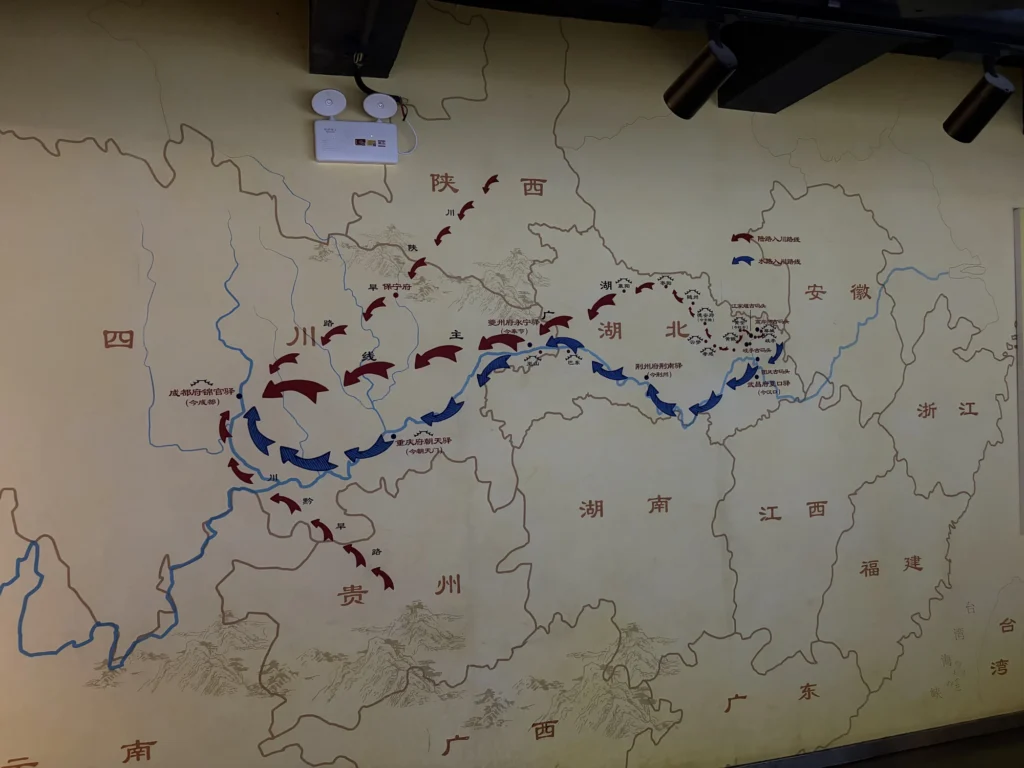
A carriage and the migration routes on display show how migrants continued to enter Sichuan over time.
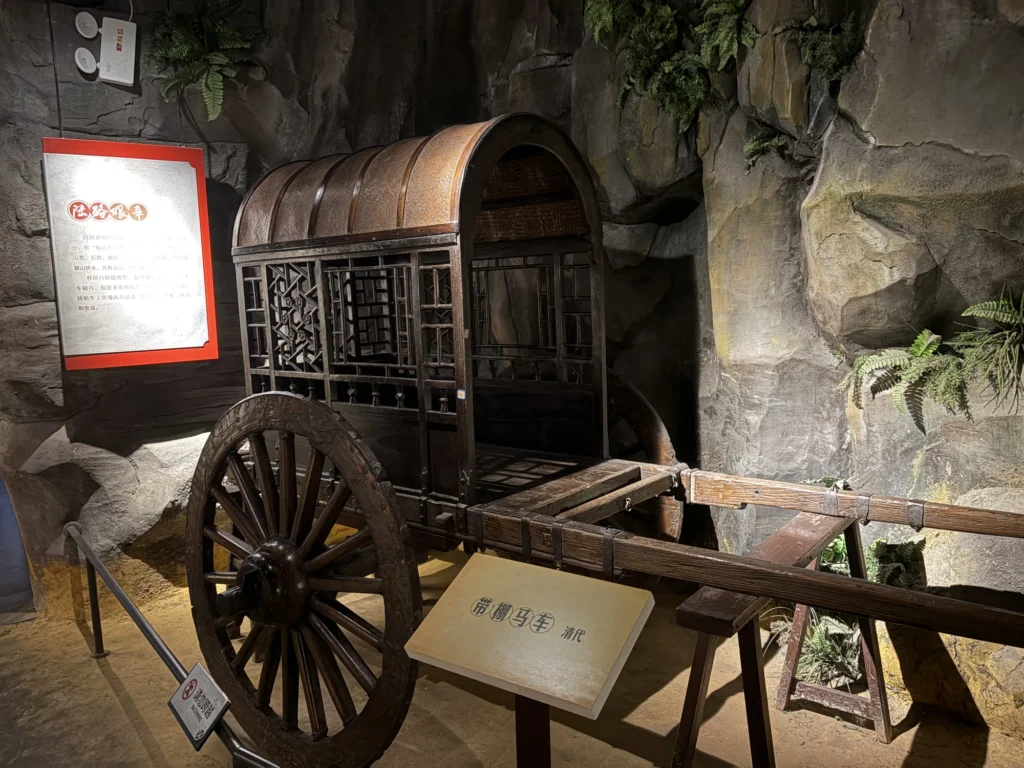
The migrants also brought techniques and experience from their home regions, gradually changing production and commerce in Chongqing.
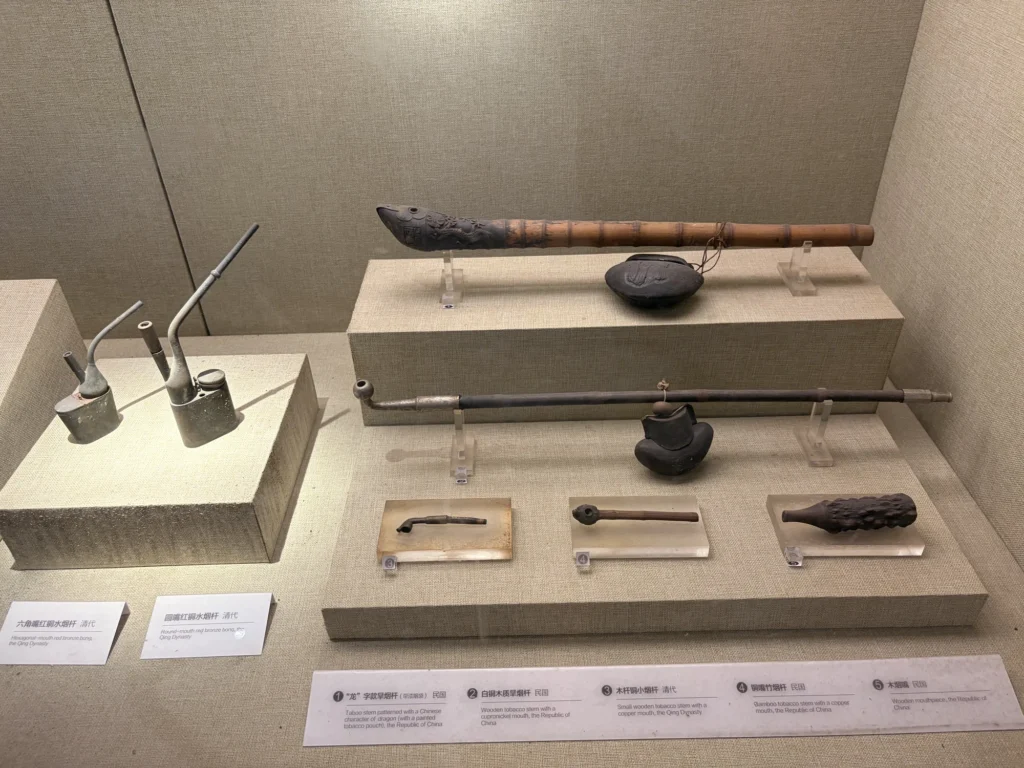
Hakka migrants from Fujian and Guangdong introduced methods for growing and processing tobacco, helping tobacco production in Sichuan become more specialized.
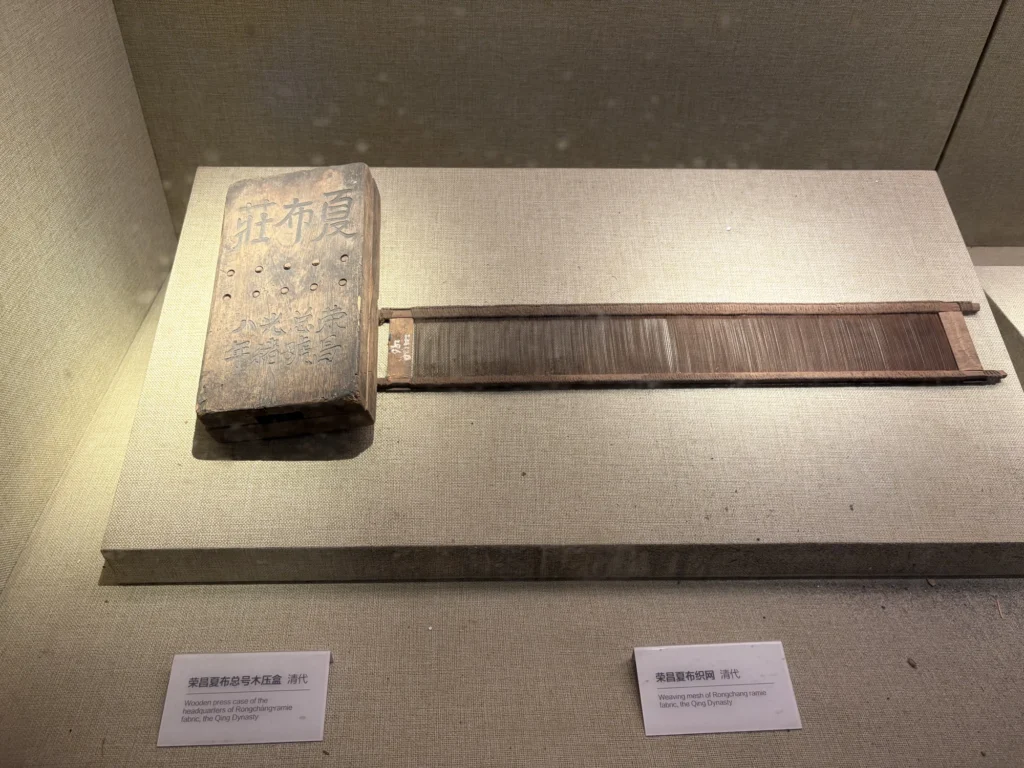
Migrants from Hunan and Hubei brought techniques for growing hemp and weaving cloth, contributing to the development of Chongqing’s textile industry.
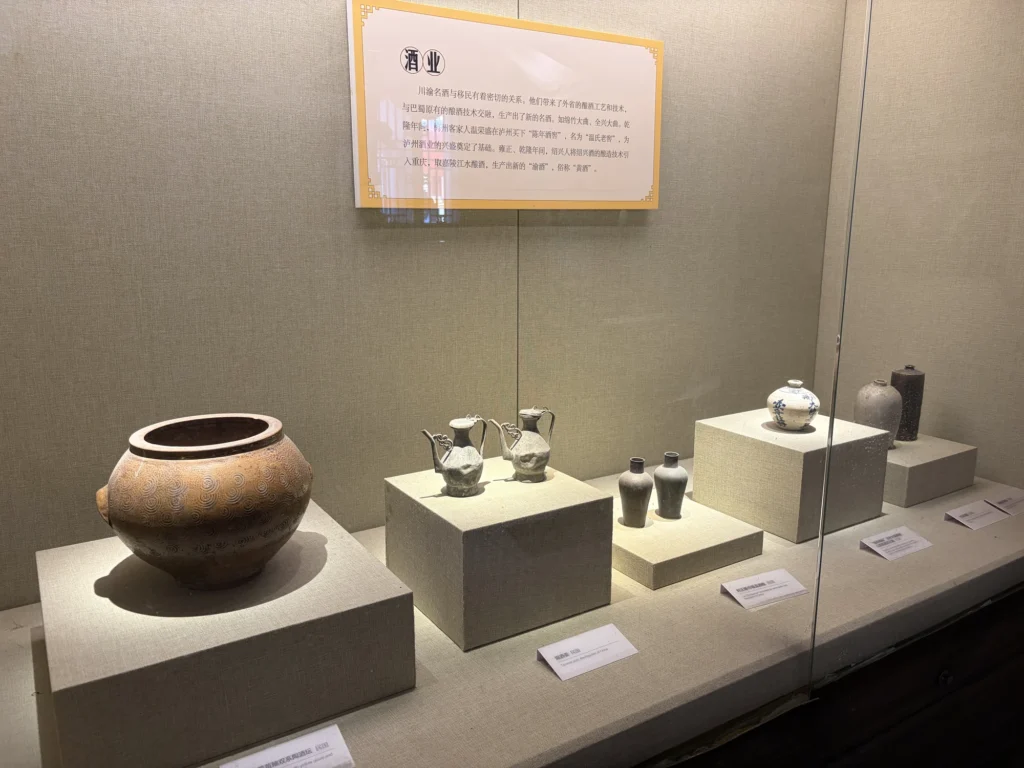
Migration also influenced the liquor industry in Sichuan and Chongqing. Liquor-making techniques from Guangdong, Zhejiang, and other regions combined with local methods, leading to new types of liquor.
As trade and industry expanded, more and more migrants settled in Chongqing and went into business. They established guild halls based on their places of origin, where people from the same region could maintain ties, discuss shared affairs, and support one another.
Yuwang Palace, Guangdong Guild Hall, and Qi’an Guild Hall all developed in this setting.
Carving Museum
Huguang Guild Hall contains a large collection of wood, stone, and brick carvings. Their subjects range from dragons, phoenixes, and plants to myths, traditional opera, and folk tales.
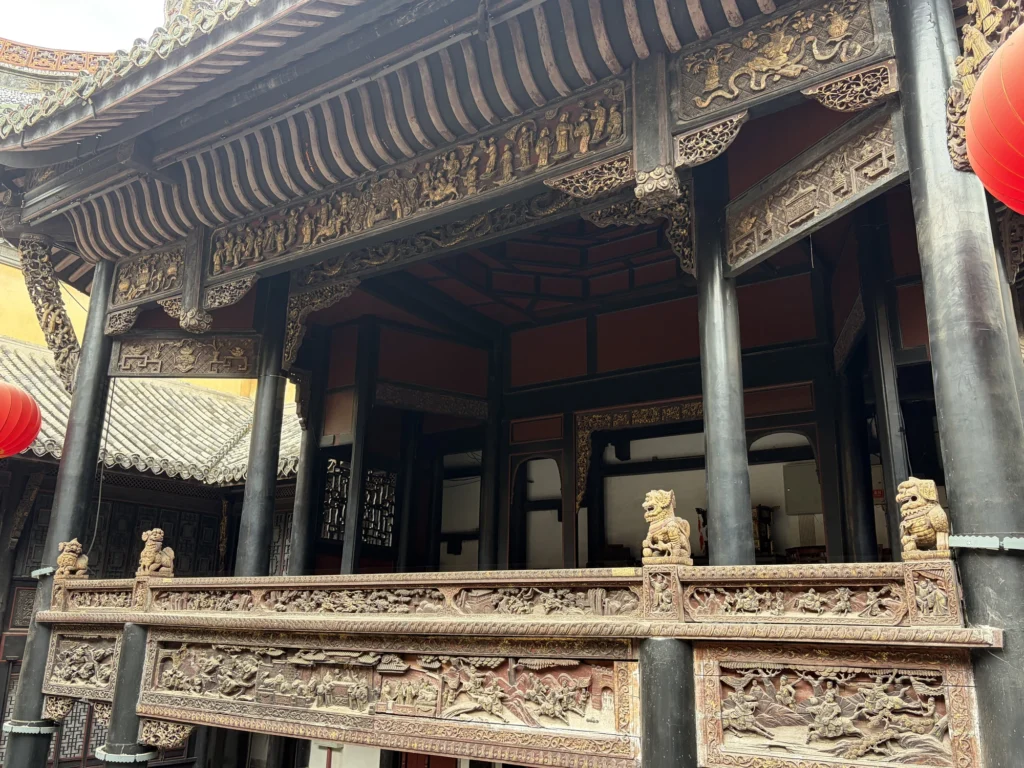
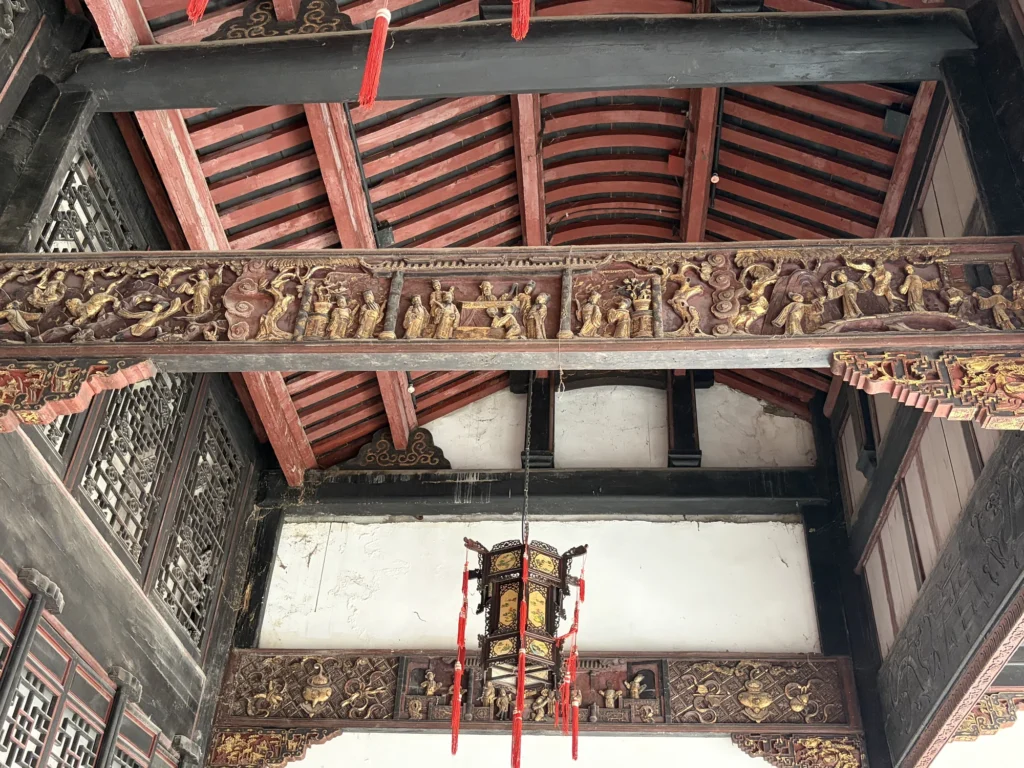
Many of the finest examples can be found on the opera stages, beams, decorative brackets, and beneath the eaves. Unless you make a point of looking up, it is easy to walk straight underneath them without noticing anything.
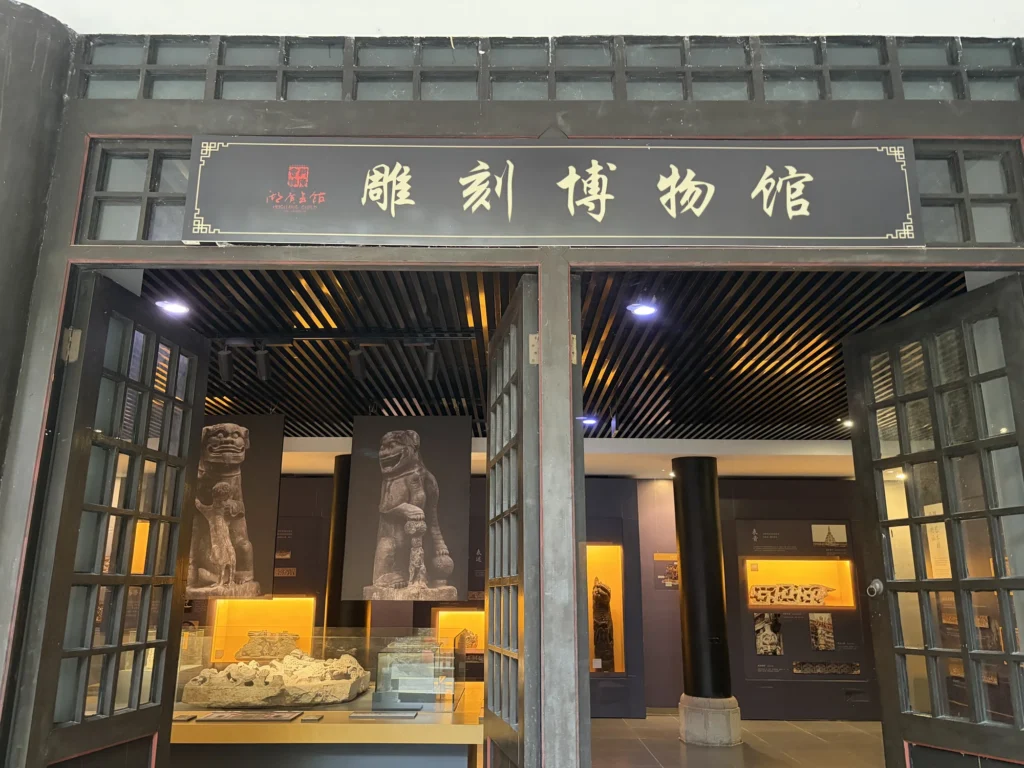
That is why I suggest visiting the Carving Museum before moving on to the historic buildings.
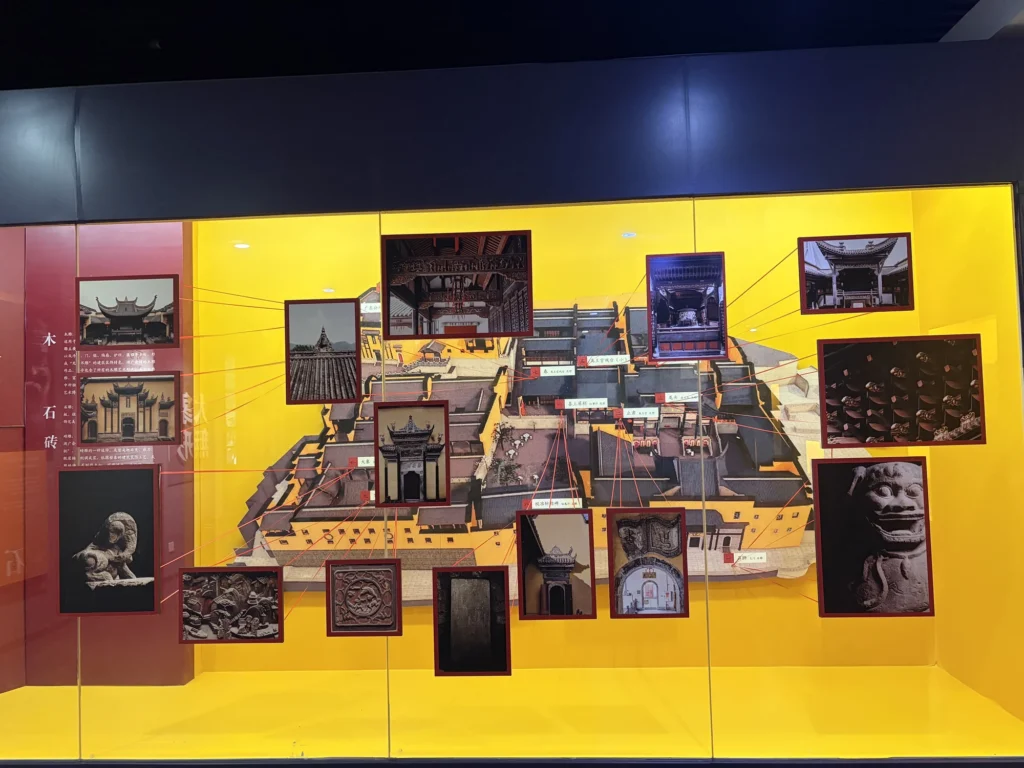
The museum contains a model of the entire complex arranged to match the actual layout, almost like a three-dimensional map. It marks the carvings and architectural details worth looking for in each building.
Once you have seen the model, you will know where to pause and what to examine as you enter the different courtyards. The differences between the buildings also become much easier to spot.
Yuwang Palace
Yuwang Palace is the largest part of the Huguang Guild Hall complex.
Historically, Yuwang Palace was itself the Huguang Guild Hall. Migrants from Hunan and Hubei built it to worship deities, discuss community affairs, and maintain ties with people from their home regions.
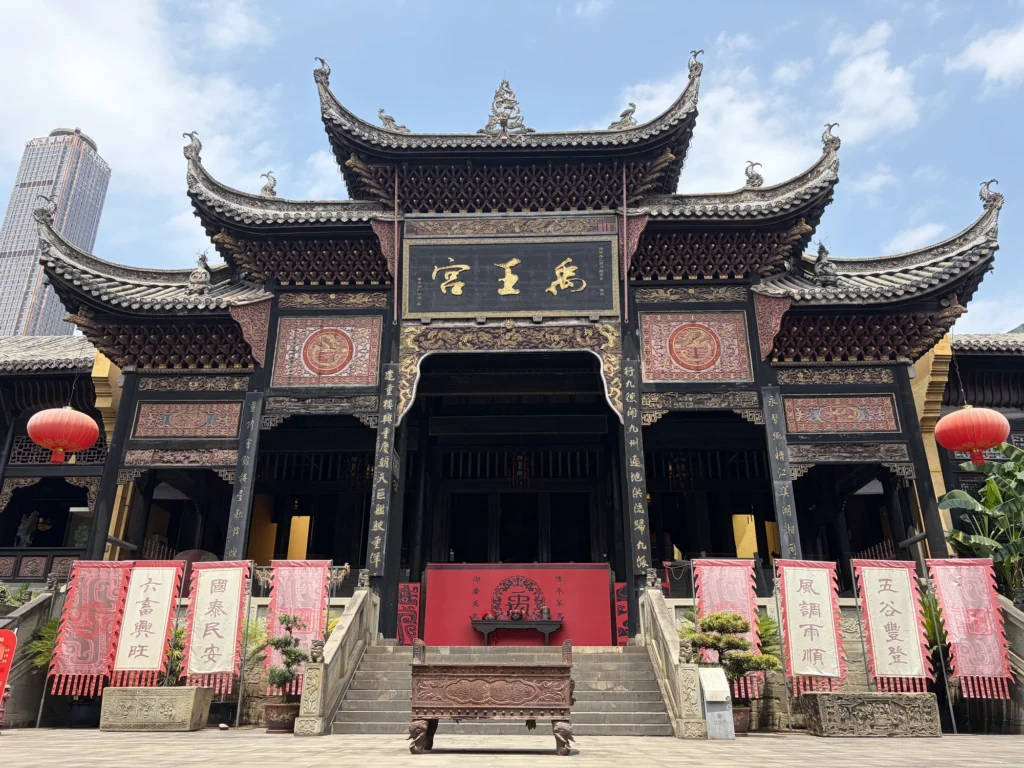
Migrants from other regions later built their own guild halls nearby. Most did not survive, leaving only Yuwang Palace, Guangdong Guild Hall, and Qi’an Guild Hall.
After an overall restoration was completed at the beginning of this century, the surviving buildings were incorporated into a single historic complex devoted to presenting Chongqing’s migration history. It was opened to the public under the name Chongqing Huguang Guild Hall.
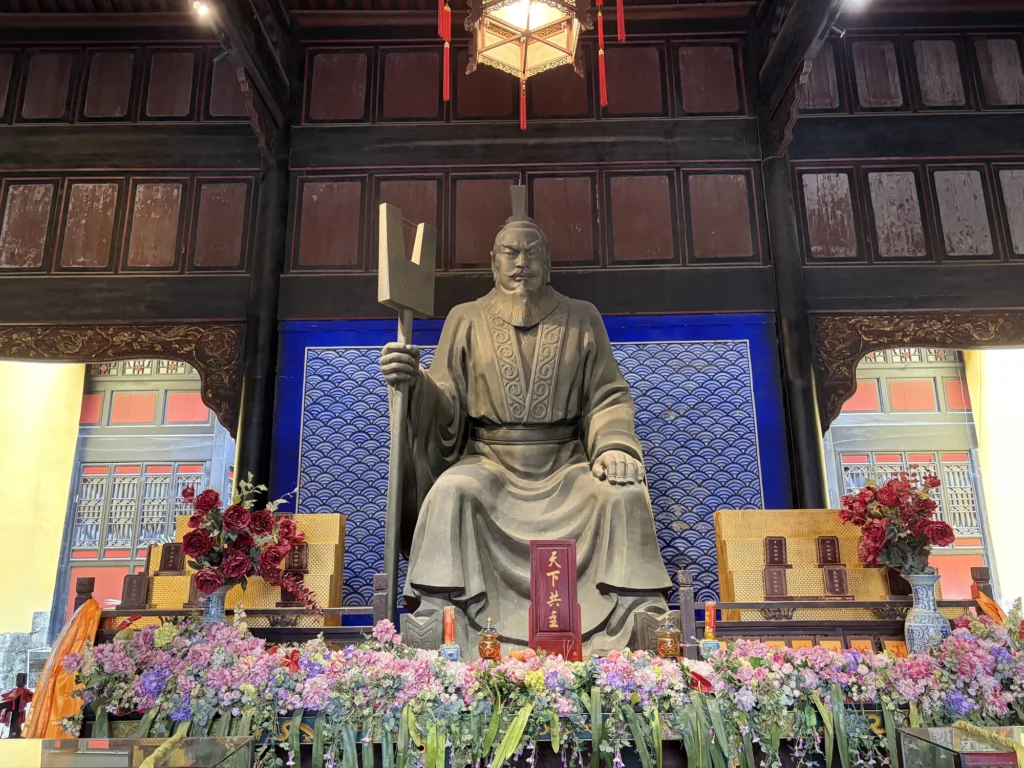
The main hall of Yuwang Palace is dedicated to Yu the Great. In ancient Chinese legend, he is the hero who led people in channeling floodwaters and was worshipped by later generations.
Hunan and Hubei have extensive networks of rivers and lakes and historically suffered frequent flooding. Migrants from the two provinces therefore worshipped Yu as a god of flood control and prayed for favorable weather. For those who had left home, worshipping Yu also expressed their hopes for a stable life and safe journeys.
Yuzhou Academy
According to information released when Yuzhou Academy opened in 2022, it had a collection of more than 3,000 books on Chongqing local gazetteers, guild hall history, cultural relics and archaeology, and historical geography. The academy also reportedly hosts lectures and reading events.
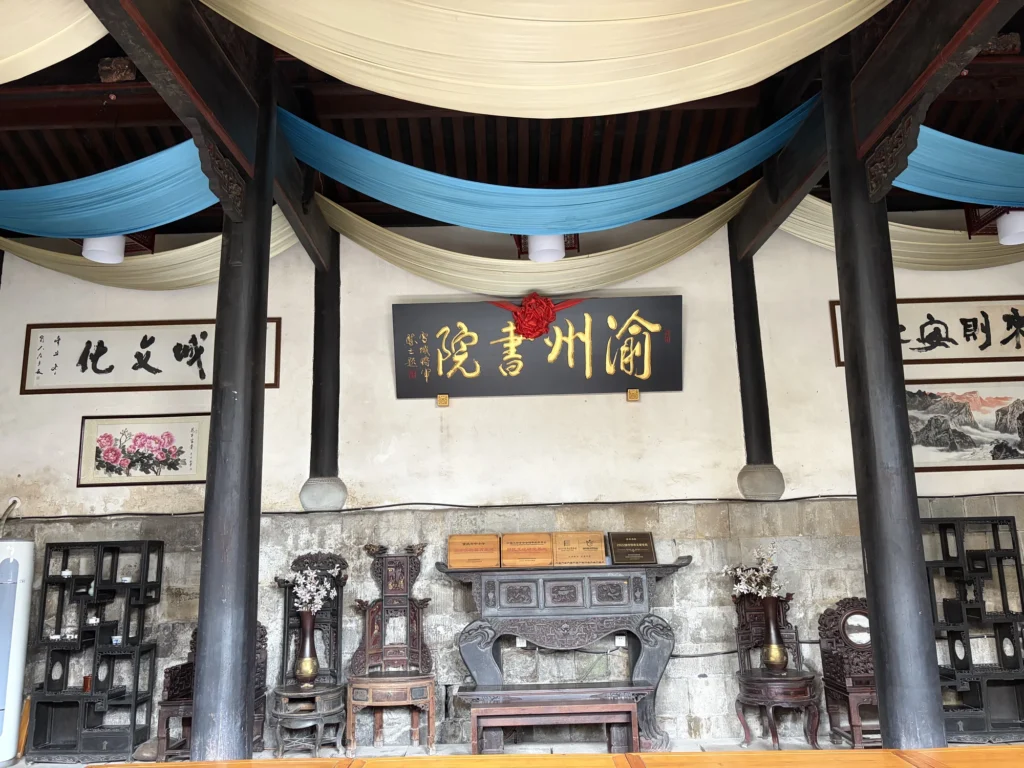
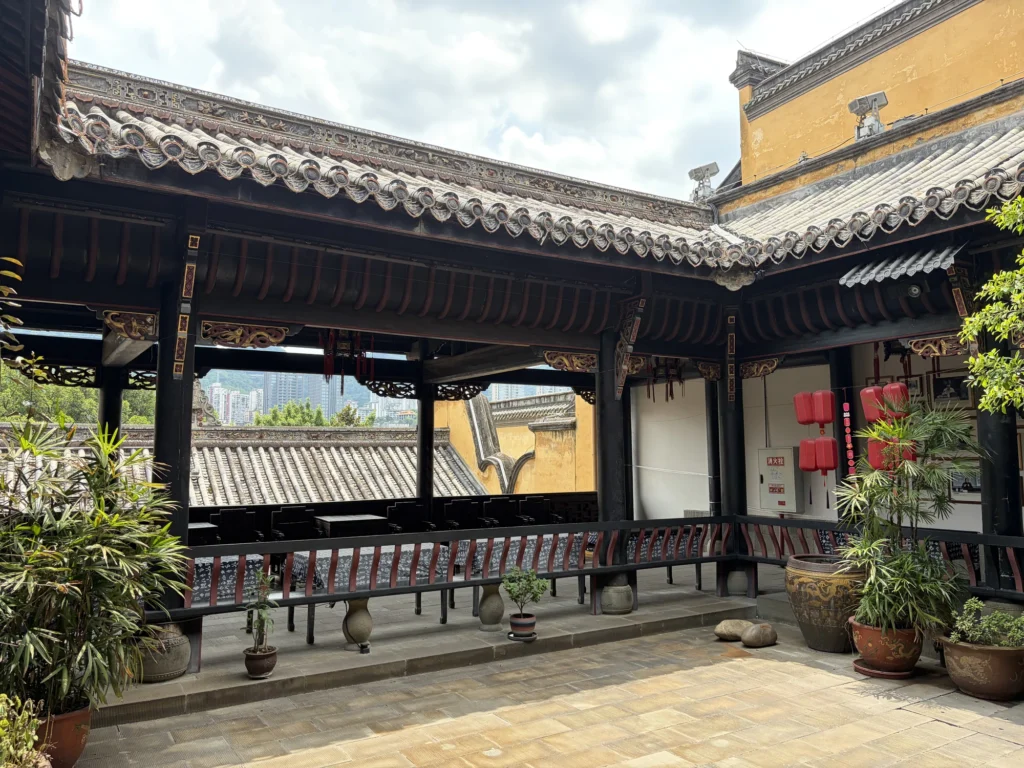
On my visit, however, I saw neither the books nor any related activities. The space contained only an opera stage, an audience gallery, and a small courtyard beside them.There was not much worth making a special stop for, so a brief look as you pass through is enough.
Guangdong Guild Hall
Of all the buildings in the complex, Guangdong Guild Hall was my favorite.
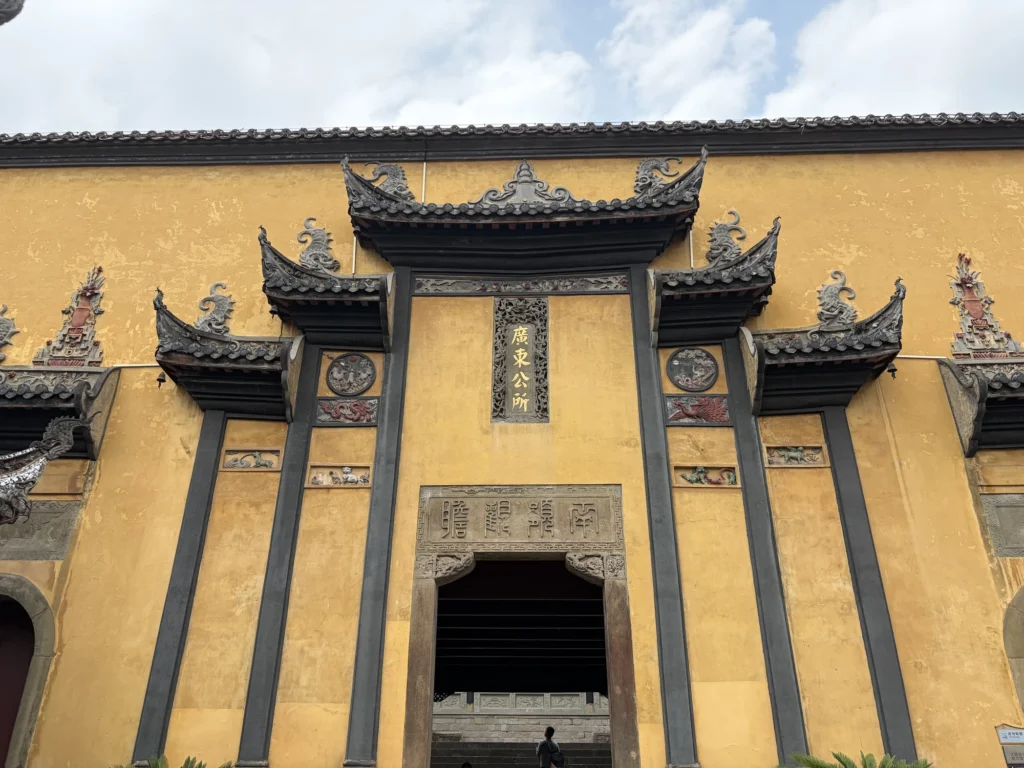
Its traditional Chinese opera theater is the largest in the complex. Between the stage and the audience hall opposite is a broad open-air courtyard, which makes the entire space feel especially open.
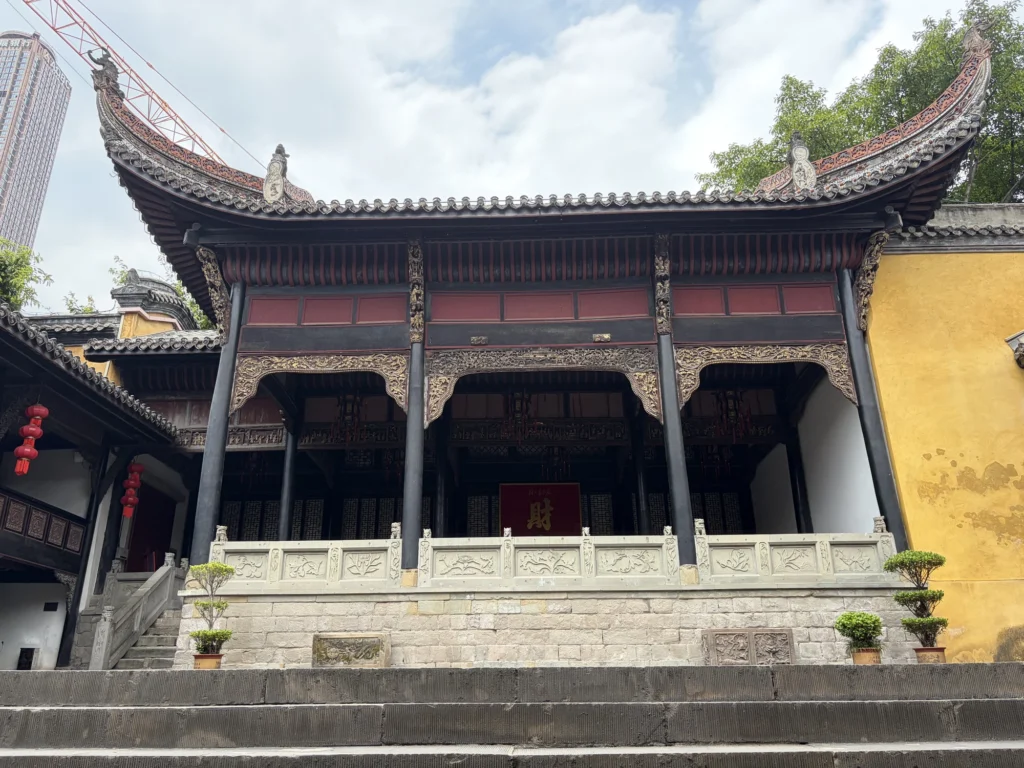
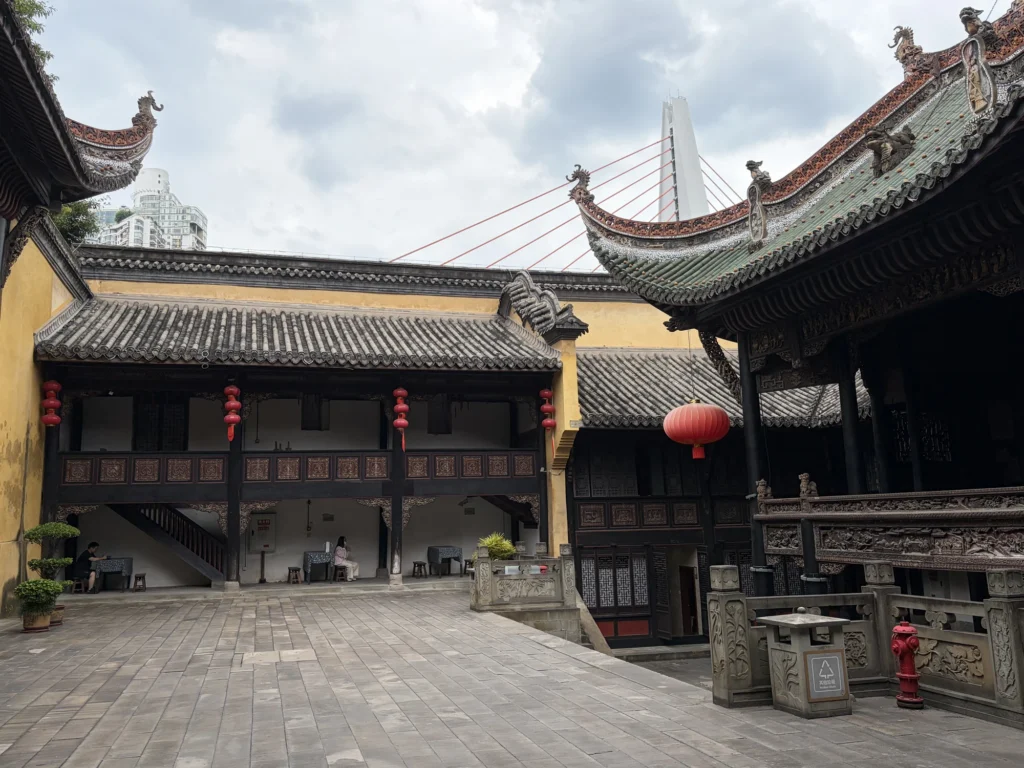
The carvings are another highlight. The stage, beams, eaves, and audience hall are decorated with dense figure carvings and ornamental patterns, some of which still retain faint traces of gold.
Compared with Yuwang Palace and Qi’an Guild Hall, the carvings here are more concentrated.
Qi’an Guild Hall
Qi’an Guild Hall was built during the Qing dynasty by migrants from Huangzhou in Hubei. During the Sui and Tang dynasties, Huangzhou was known as Qi’an Commandery, which is where the guild hall’s name comes from.
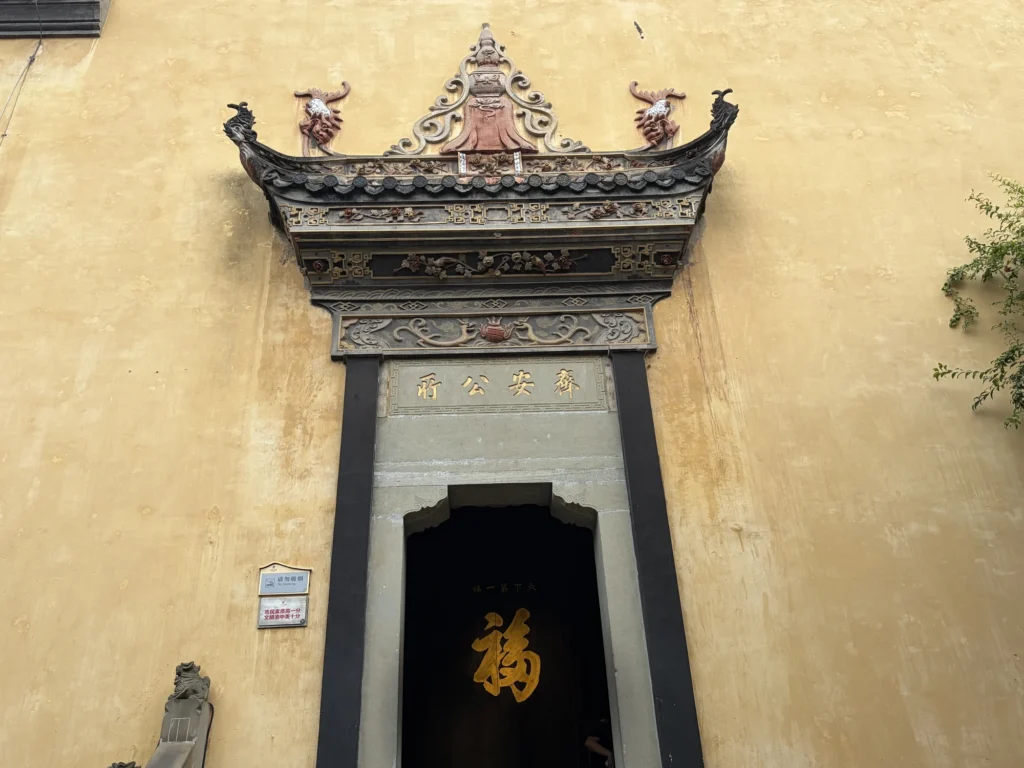
It is not as solemn as Yuwang Palace or as spacious and ornate as Guangdong Guild Hall. Its opera stage, however, is the best-preserved and most finely carved in the complex.
The Zui Bayu (醉巴渝) intangible cultural heritage performance is now held here. It includes Sichuan opera, face-changing, court dance, and a long-spout teapot performance.
The full show consists of six acts. I arrived after the opening Sichuan opera act had already ended, so I only recorded the remaining five.