Guide to Eling Park and Eling Skywalk

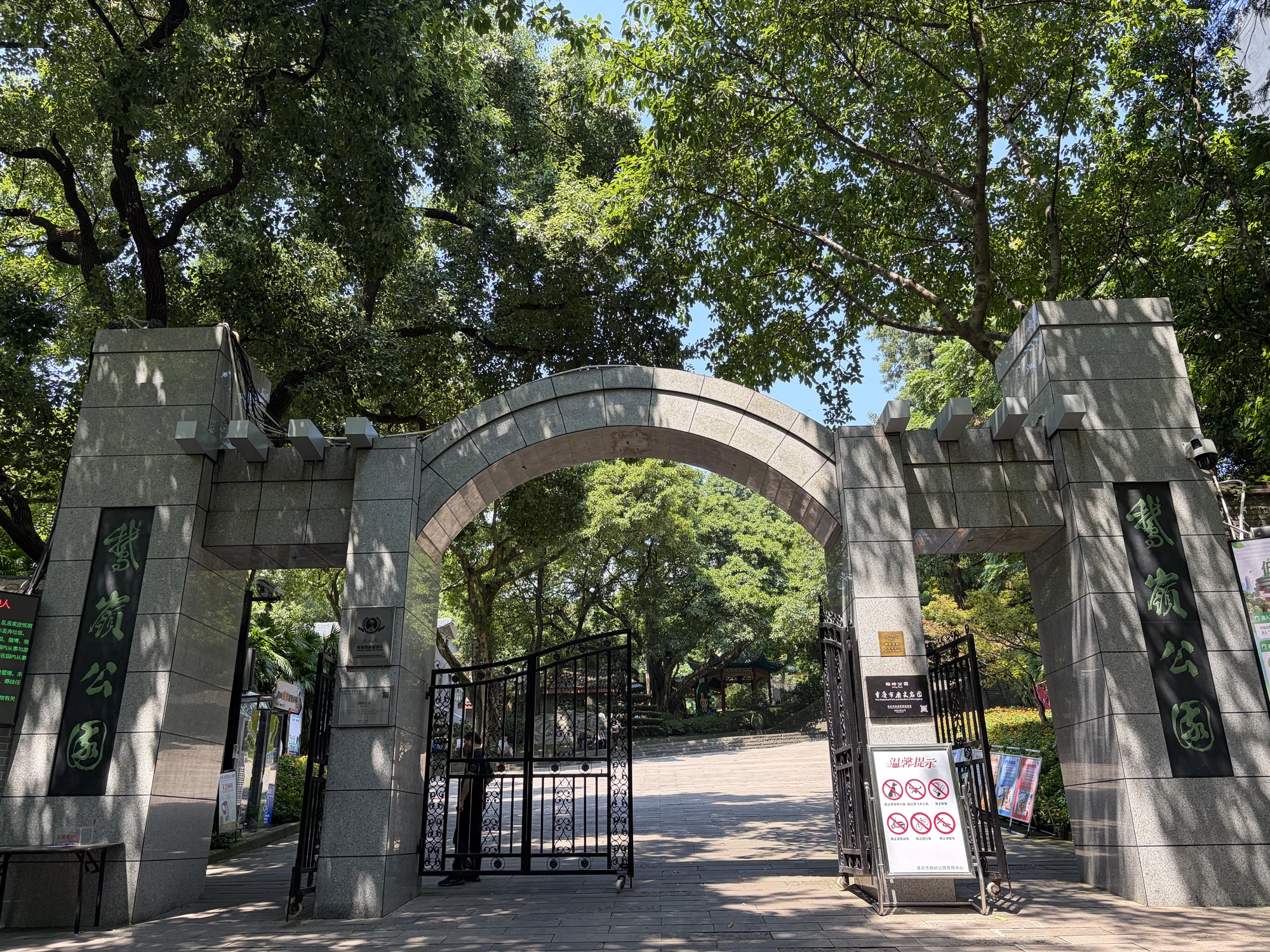
Eling Park started out as the private garden of Li Yaoting, a wealthy Chongqing businessman, in 1909. After the founding of the People’s Republic of China, his descendants donated the property to the state. After being expanded and renovated, it opened to the public as Eling Park in 1958.
I had assumed it was just a typical city park with greenery, walking paths, exercise equipment, and a few pavilions. Once I went inside, though, I found that several former foreign legations from the Second Sino-Japanese War are still preserved here. Eling also sits high above the surrounding city, and from the top of Kansheng Tower, you get an unobstructed view that stretches almost 360 degrees over the Yangtze and Jialing rivers and the city along their banks.
I would combine Eling Park with the Huangguan Escalator, TESTBED 2, and Liziba Station on the same outing. If you are interested in the Second Sino-Japanese War or Sino-American cooperation during World War II, you can also add the Stilwell Museum.
Getting there
The easiest option is to take Metro Line 1 to Eling Station and use Exit 1.
If you are skipping the Eling Skywalk, simply walk from the station to the main entrance of Eling Park, about 400 meters away.
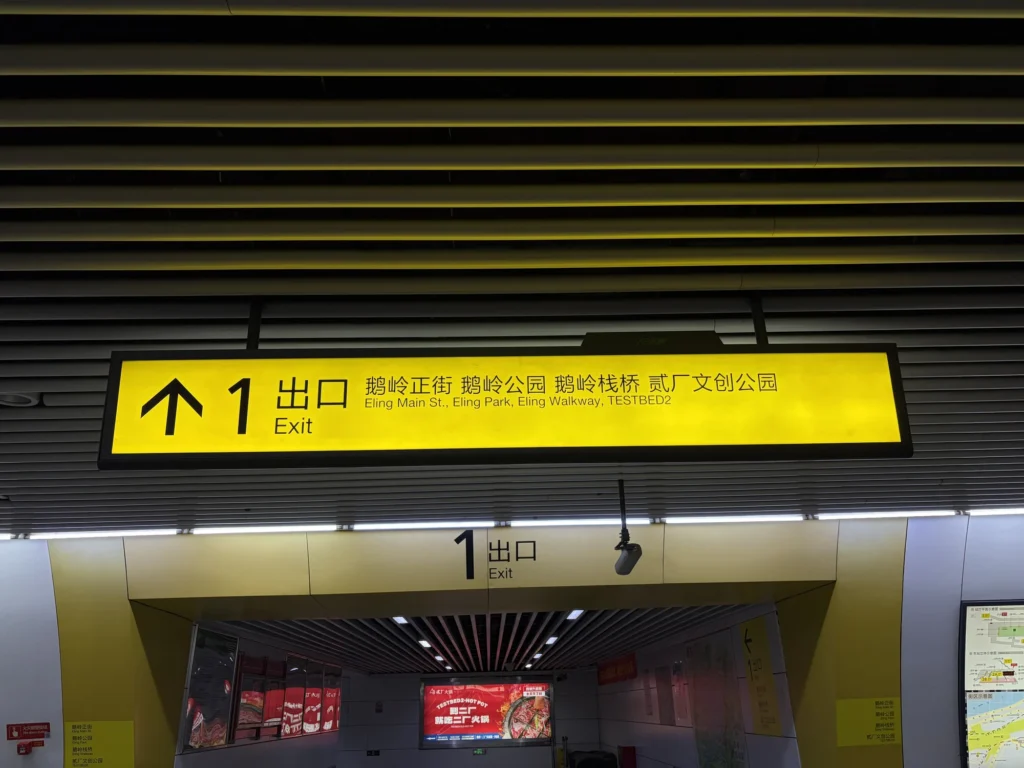
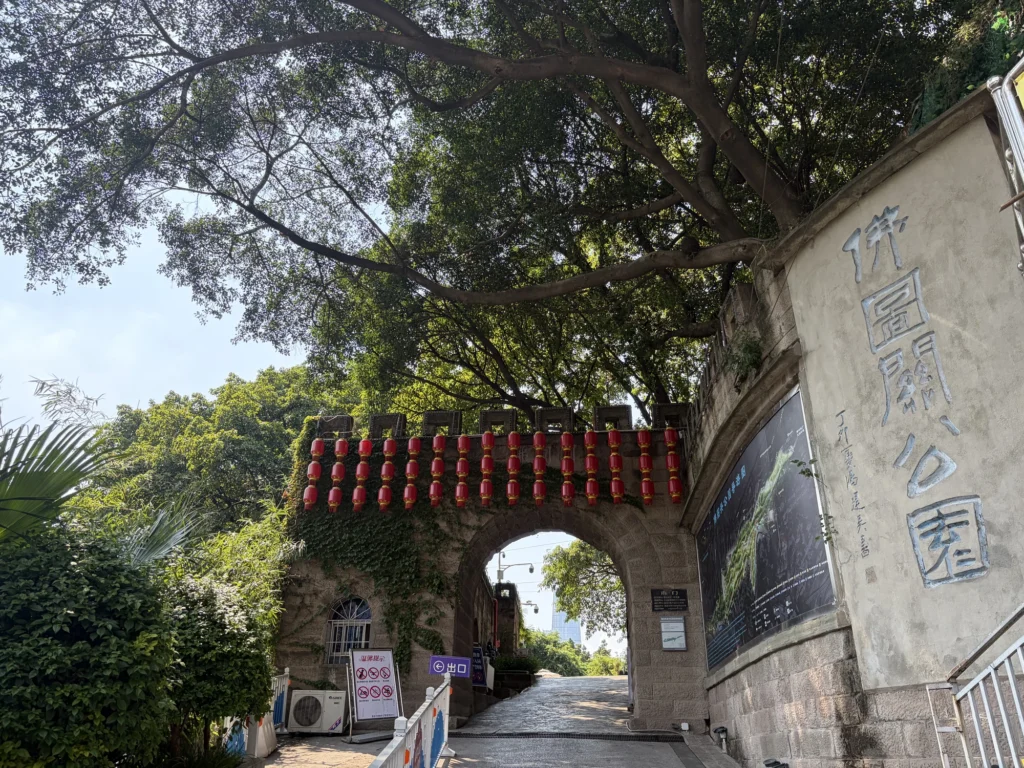
If you do want to walk the skywalk, make sure you start from the correct end. From Exit 1, do not head to Eling Park first. Instead, walk about 100 meters to the south gate of Fotuguan Park. The Eling Skywalk is one-way: you enter from here and come out inside Eling Park.
I did it the other way around, walking through Eling Park first and heading to the skywalk afterward, which meant making an unnecessary detour.
Tickets and opening hours
Eling Park is free to enter and is open from 6:00 to 22:00.
The Eling Skywalk is also free, but you need a reservation. If you have WeChat, search for “鹅岭公园” and make a reservation there. If you do not have WeChat, bring identification and register on site before entering.
The skywalk is open from 9:00 to 18:00, with last entry at 17:40. Except on public holidays, it is closed every Monday for maintenance. It may also close temporarily during periods of extreme heat.
Walking route and what to see
Once through the main entrance, you will see three paths. Just take the path on the left, as most of the park’s main sights are along this route.
I would retrace the same route on the way back. I took the path on the far right, thinking there might be something else to see, but there was nothing.
Former foreign legations
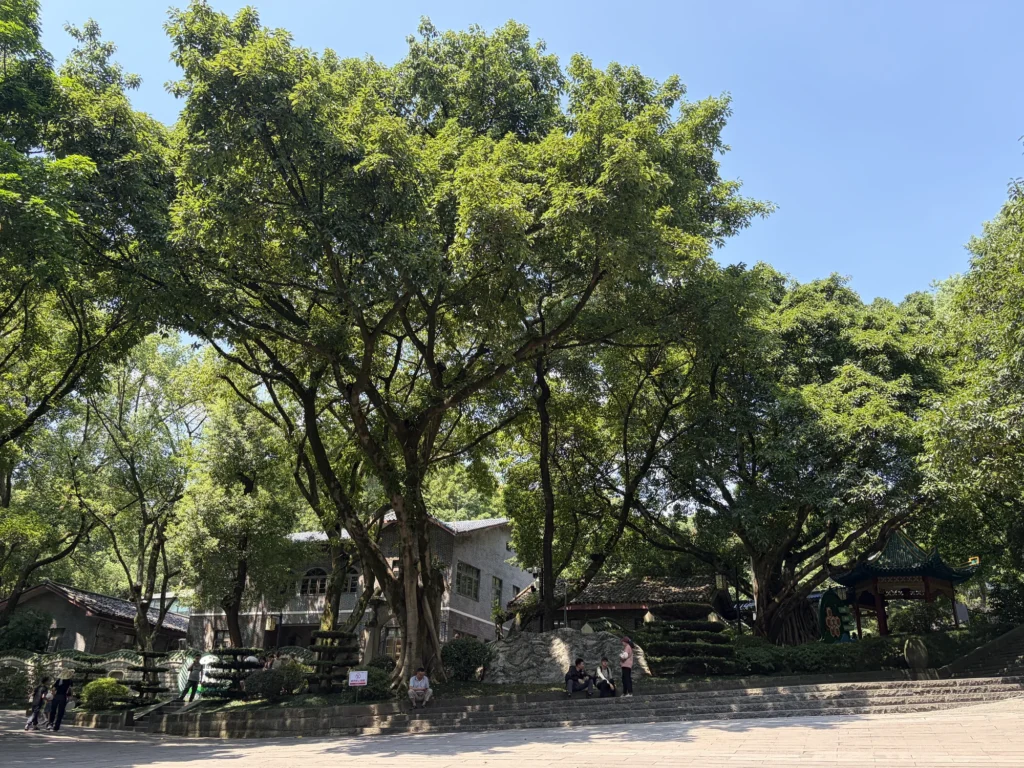
Eling Park still has the former Australian, Danish, and Turkish legations from the Second Sino-Japanese War. They are very close together, almost like neighbors.
Except on Mondays, you can go inside all three former legations. Most of what you will find there consists of text panels, photographs, and historical materials about China’s relations with Australia, Denmark, and Turkey.
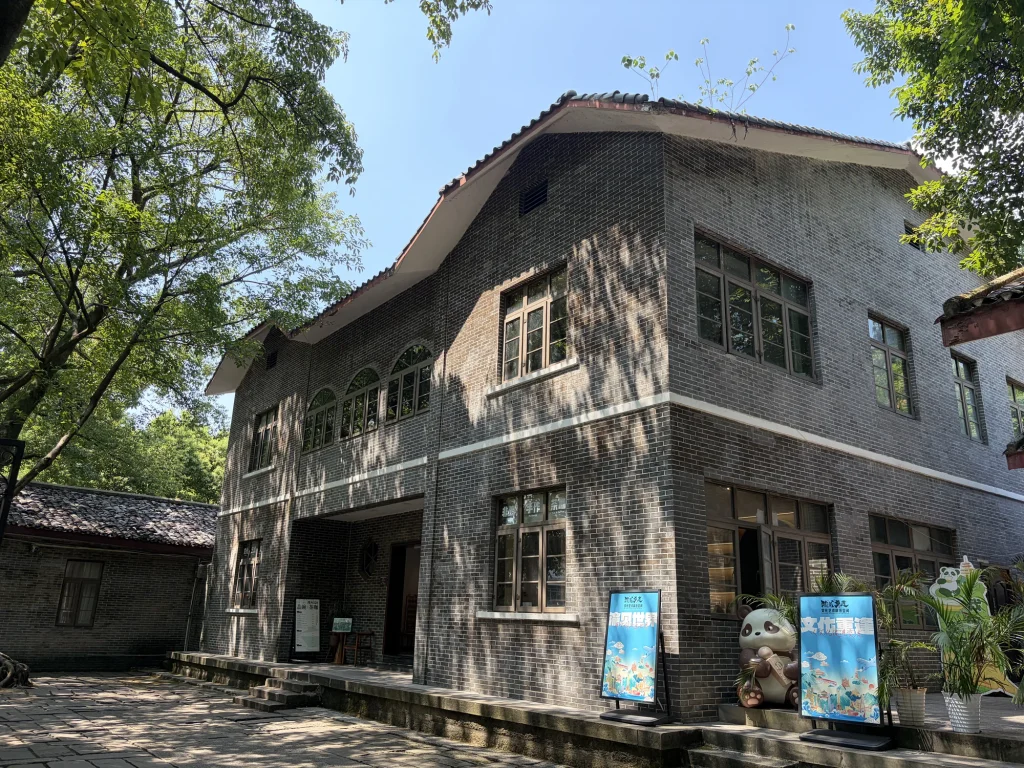 Australian Legation 澳洲公使館
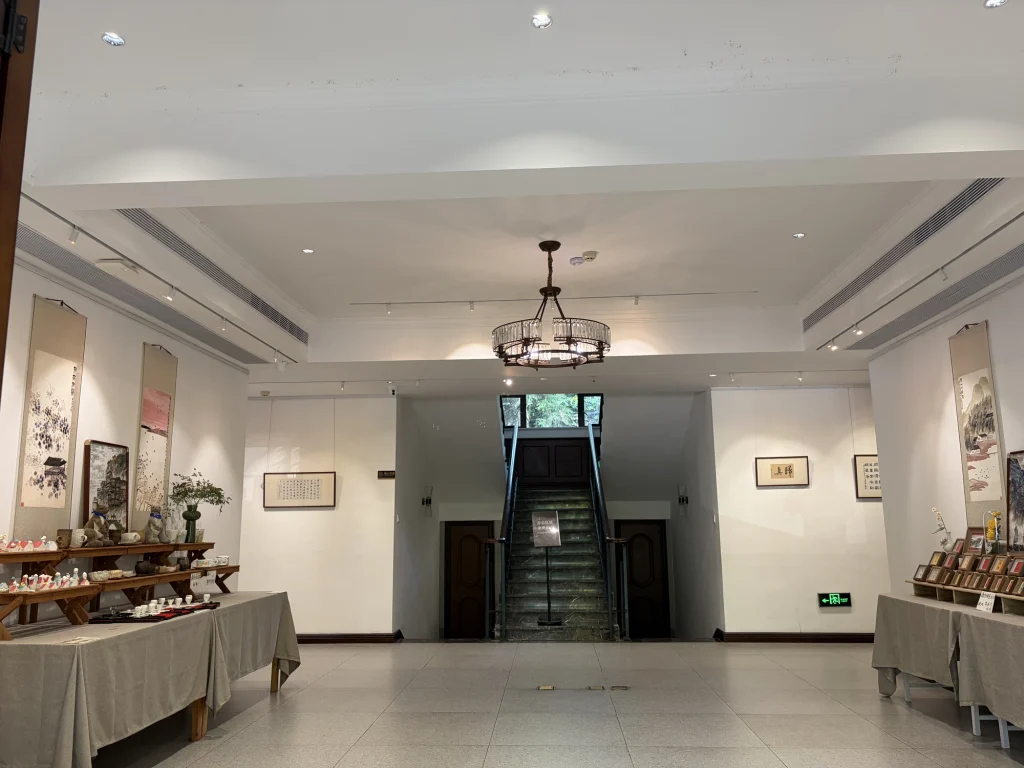 Australian Legation 澳洲公使館
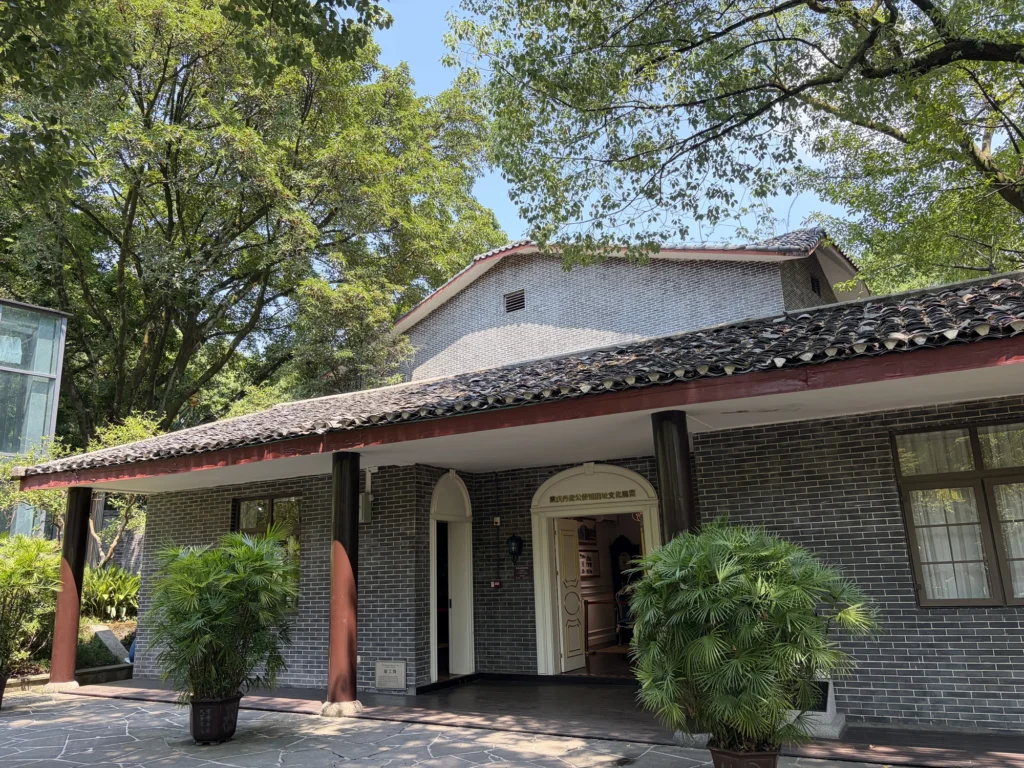 Danish Legation 丹麥公使館
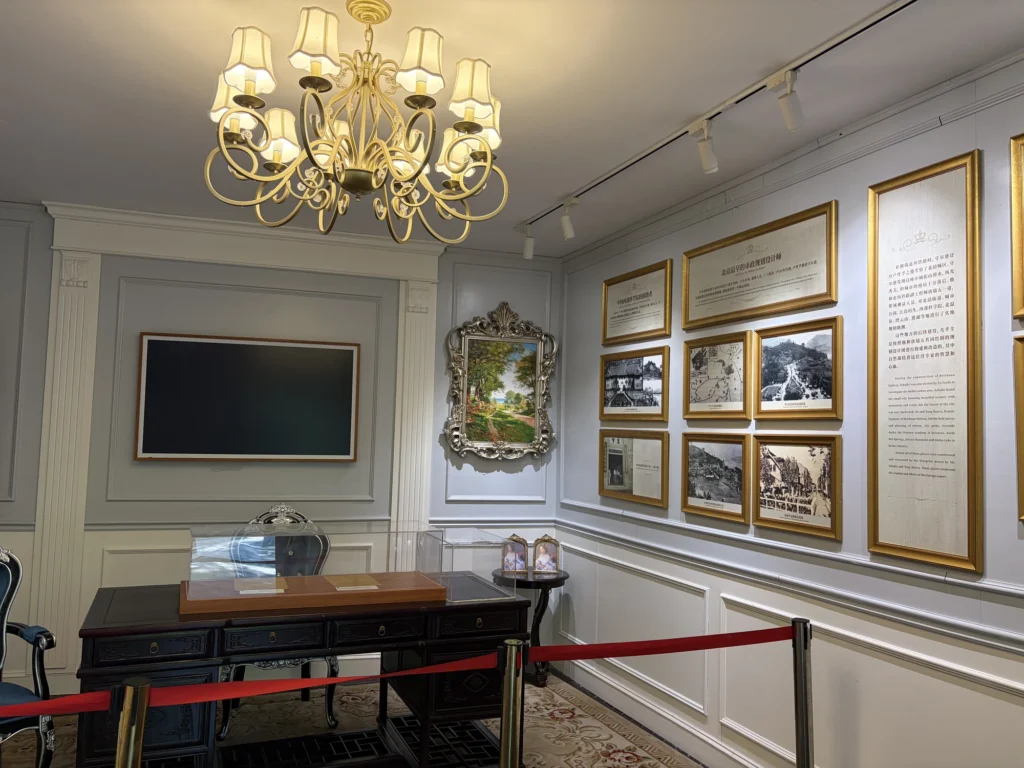 Danish Legation 丹麥公使館
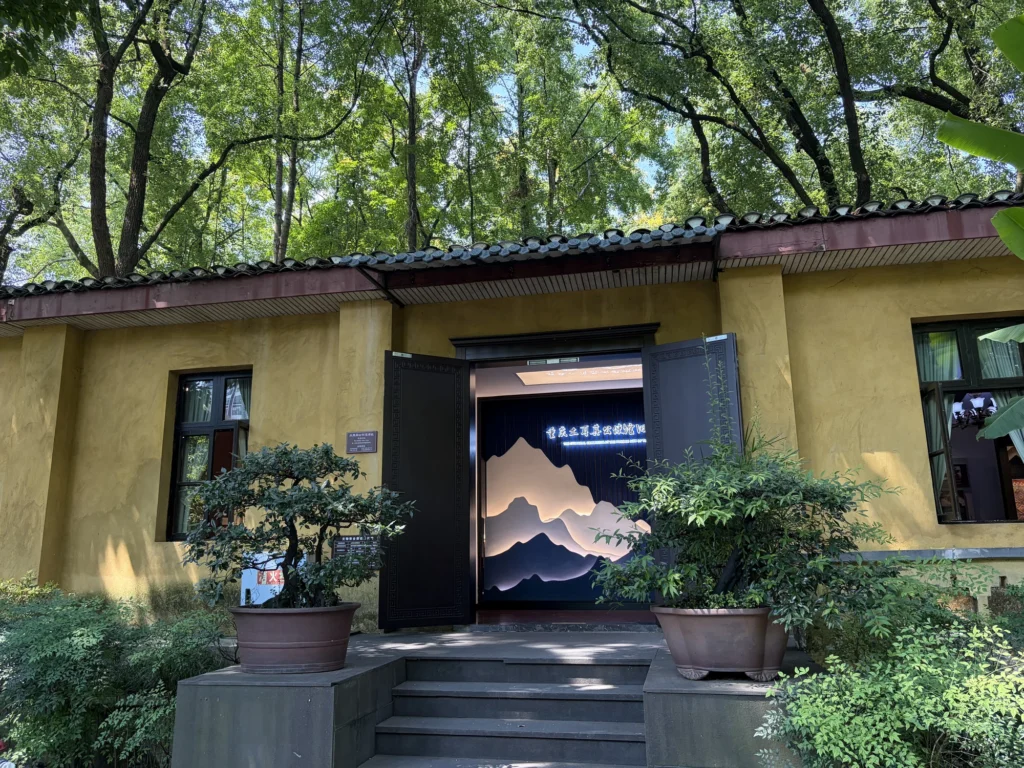 Turkish Legation 土耳其公使館
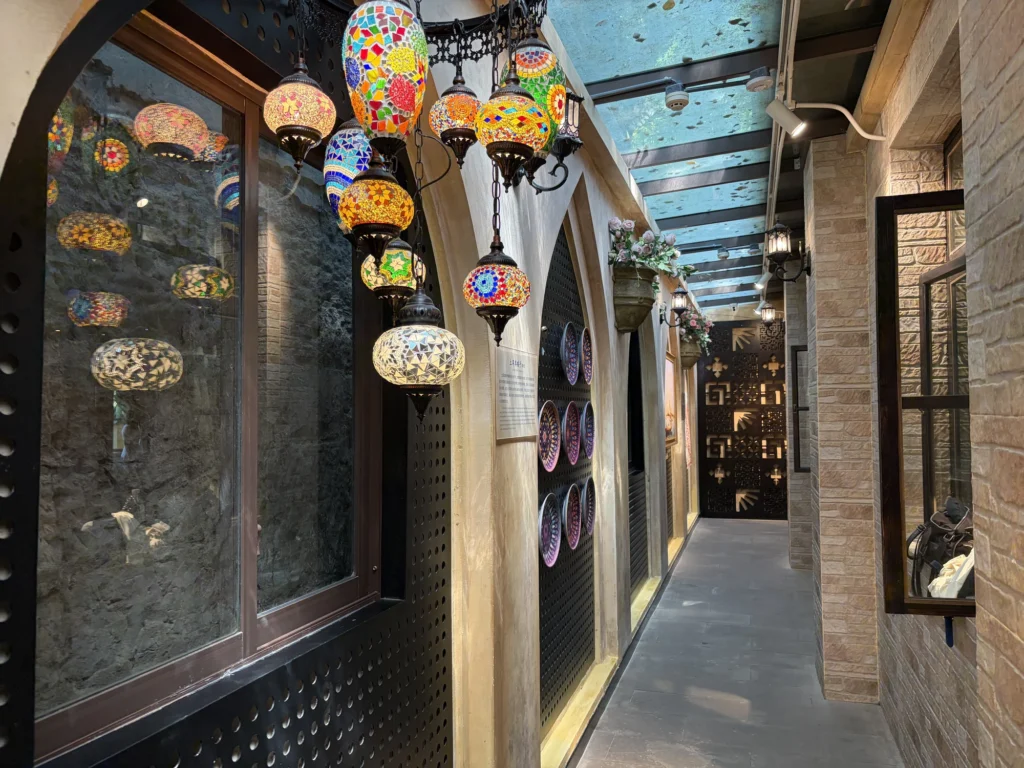 Turkish Legation 土耳其公使館
Exiang Mountain Villa (鹅项山庄)
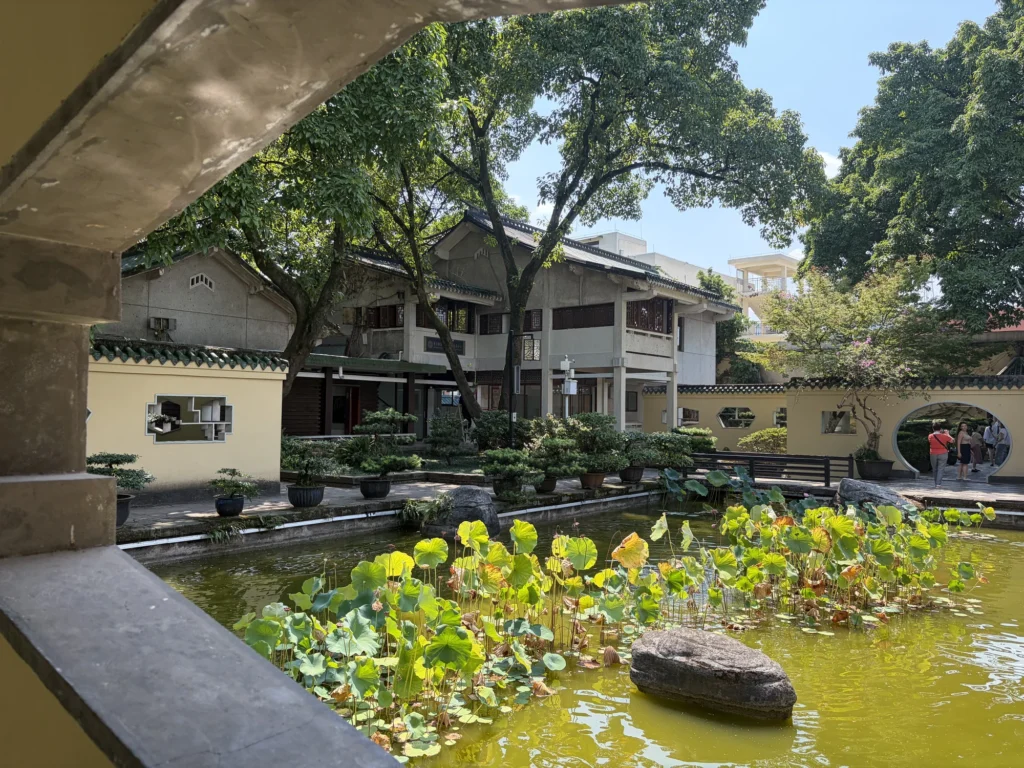
Continue farther into the park and you will reach Exiang Mountain Villa, the busiest part of Eling Park.
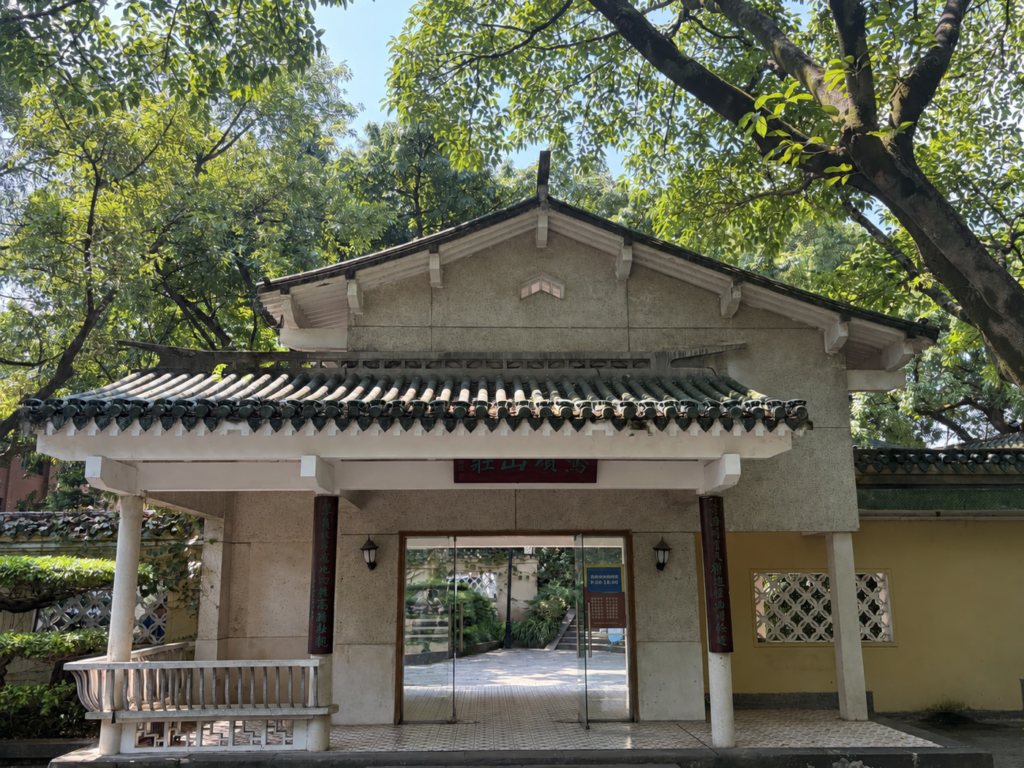
Built in the 1980s as a garden within the larger park, it has ponds, covered walkways, pavilions, and several podocarpus trees more than a century old. Many people come here in traditional ethnic clothing to take photos.
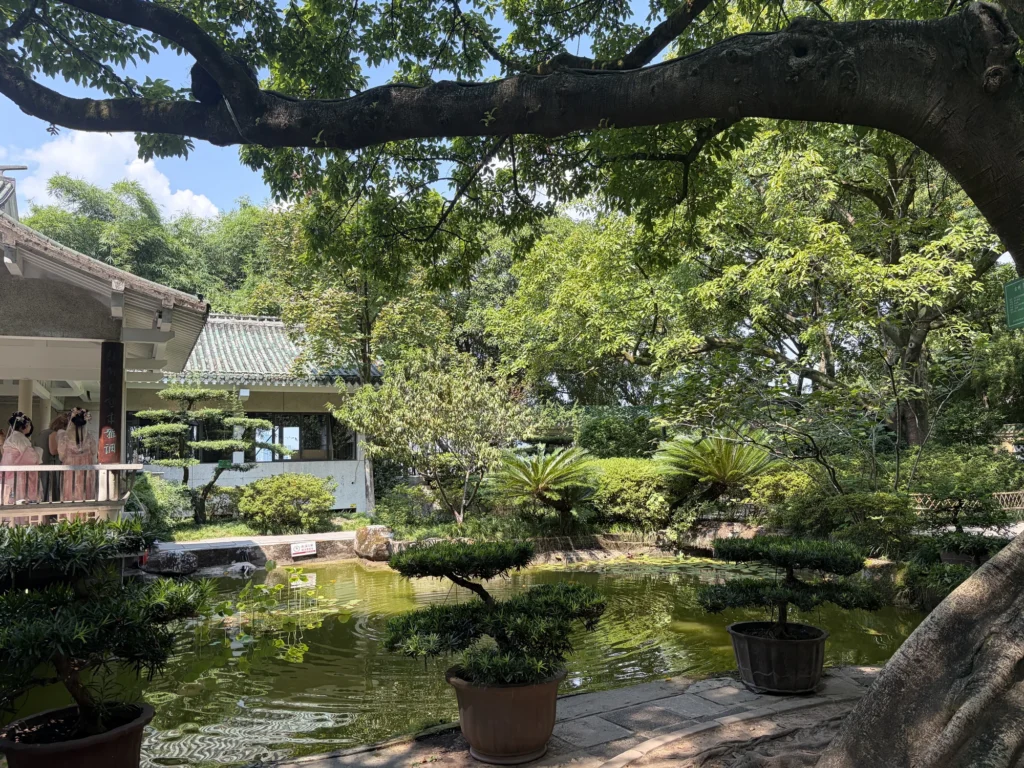
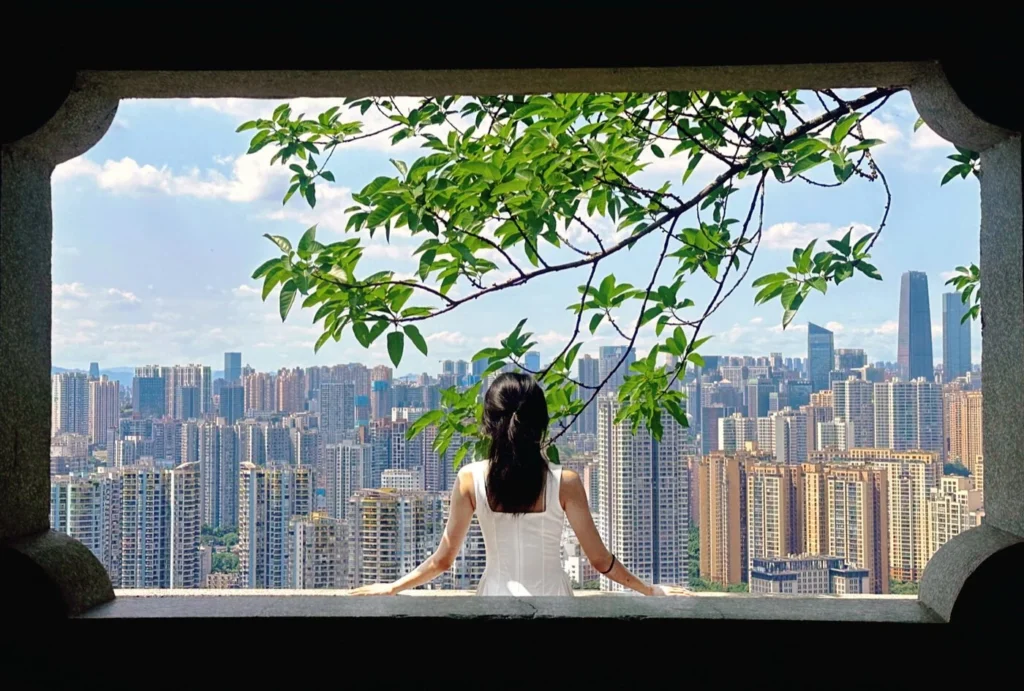
The 城市之窗 (City Window) photo spot, which is popular on Xiaohongshu, is here as well.
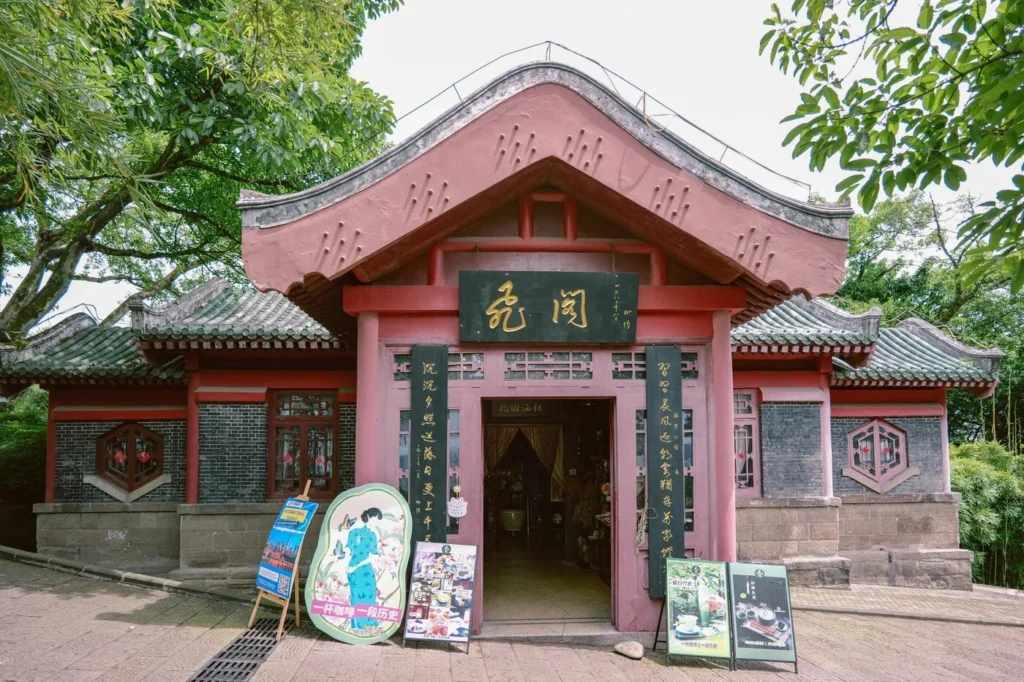
Feige Pavilion (飞阁)
Continue past Exiang Mountain Villa and you will come to Feige Pavilion, a Chinese-style building that is easy to walk past without noticing.
I knew nothing about its history when I passed it and assumed it was simply another Chinese-style building in the park, so I only gave it a quick look.
It was only afterward that I found out it was built in 1939 and had once been one of Chiang Kai-shek and Soong Mei-ling’s residences in Chongqing. An air-raid shelter was also built beneath it for protection from Japanese air raids, and the building later served as the residence of the British ambassador to China.
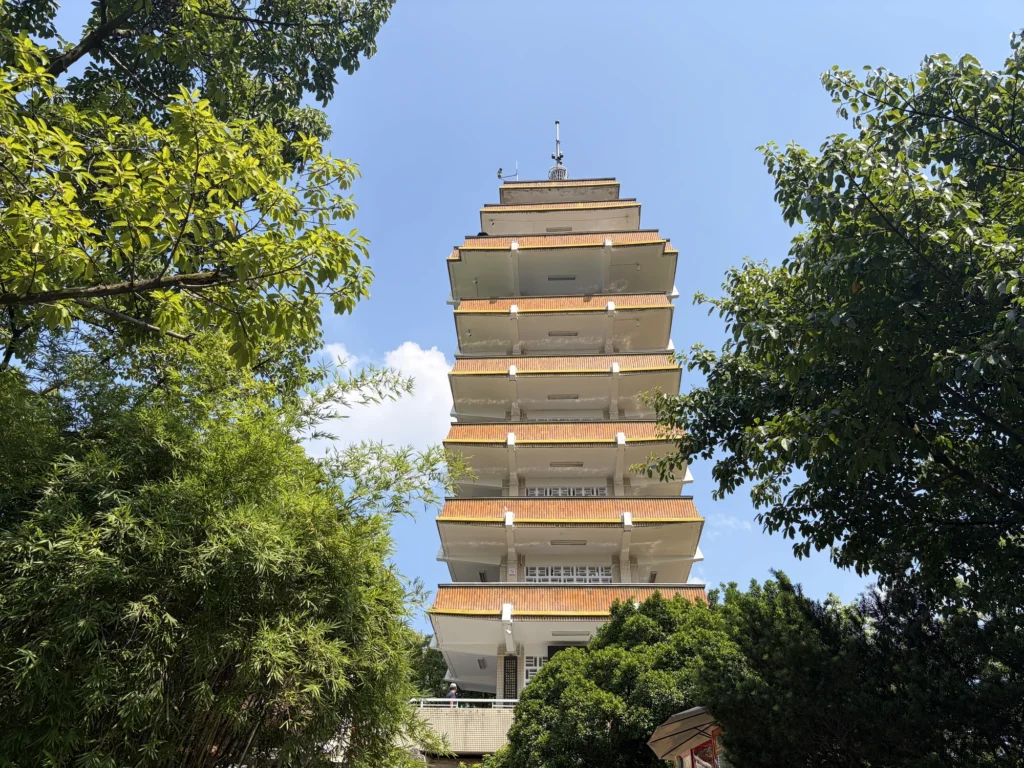
Kansheng Tower (瞰胜楼)
Kansheng Tower, like Exiang Mountain Villa, dates from the 1980s. It stands about 41 meters tall and has seven stories, making it the highest point in the park and the one place here I would not skip.
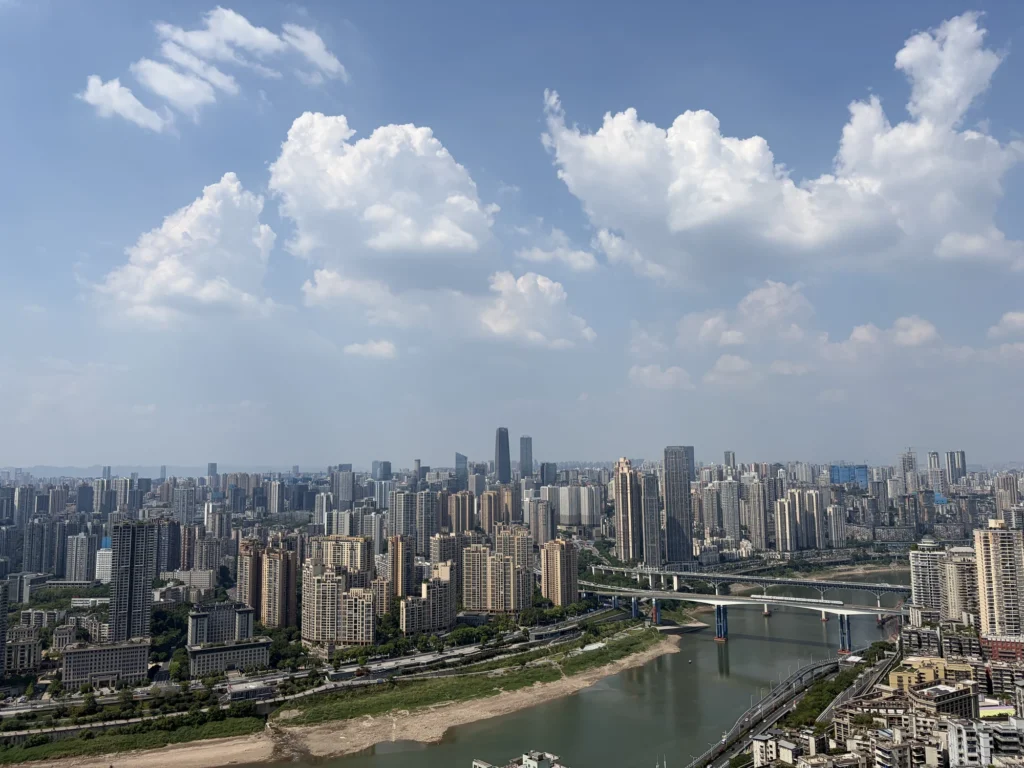
From the top, you get an unobstructed view that stretches almost 360 degrees over the Yangtze and Jialing rivers and the surrounding city.
The only downside is that there is no elevator, so you will need to climb the stairs all the way to the top.
Eling Skywalk (鹅岭栈桥)
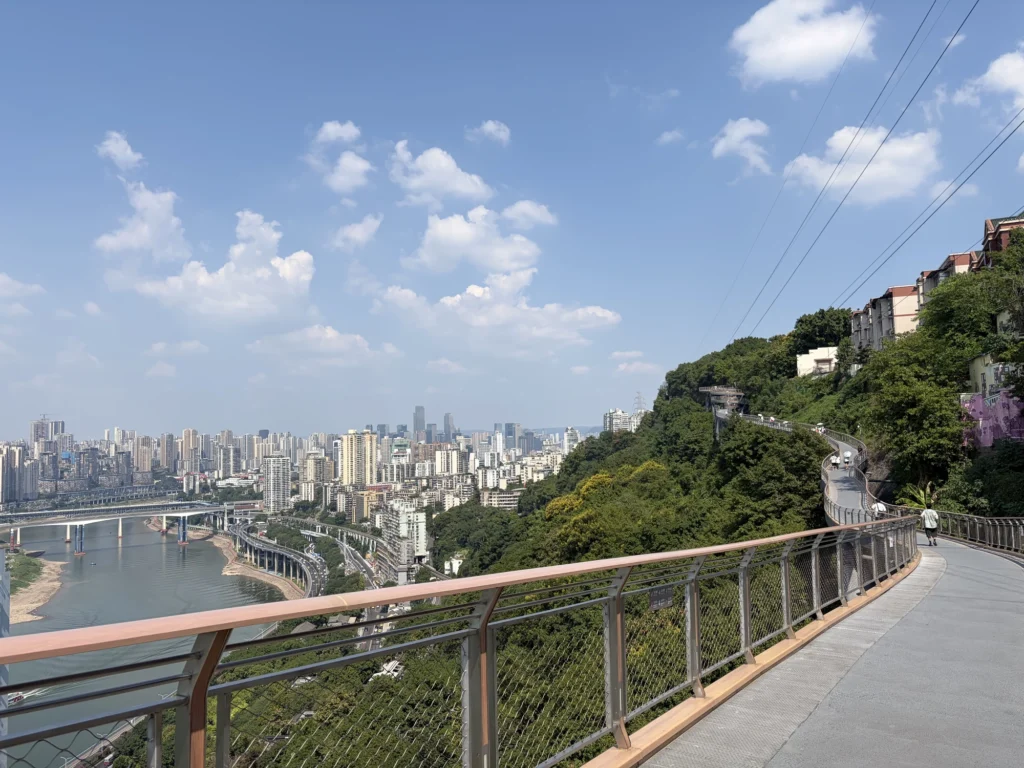
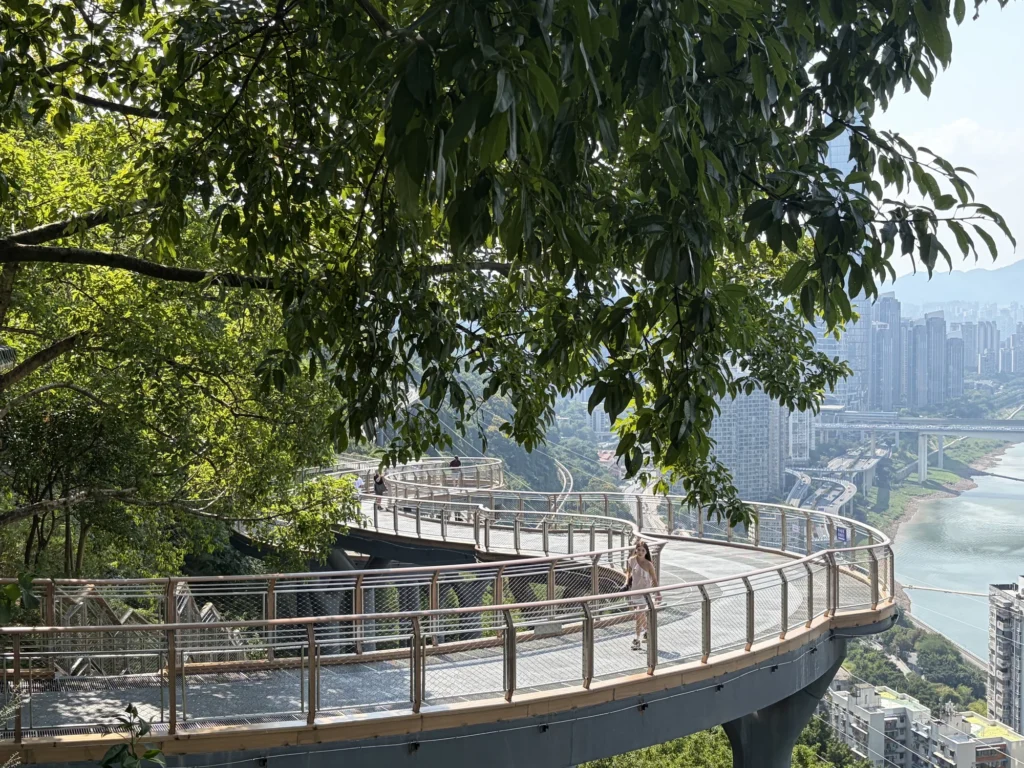
If the sun is not too strong, I would make the Eling Skywalk your first stop before entering Eling Park. The entrance and route are explained in the Getting there section above.
The skywalk runs along the outer edge of the hillside, suspended above the slope with almost nothing blocking the view. The downside is that there is almost no shade anywhere along the route, so in summer, try to avoid the time of day when the sun is strongest.
This time, I walked the whole thing in full sun. The views were good, but the sun was intense!