Chongqing Science and Technology Museum Guide for First-Time Visitors


Aside from amusement parks, the Chongqing Science and Technology Museum is probably the indoor venue in Chongqing where I’ve seen the most kids. The museum doesn’t make science feel unnecessarily complicated. Instead, it turns many scientific principles into hands-on exhibits, so kids can move from one activity to the next while adults don’t end up as bored chaperones. Many of the exhibits are fun for adults to try too.
If you’re planning a visit, I’d recommend coming in the afternoon.
By the time you finish at the museum, it should be around early evening. You can then head straight to the Chongqing Grand Theater next door, where several restaurants on the river-facing side have outdoor seating. Having dinner outside by the river with a breeze coming off the water is especially relaxing.
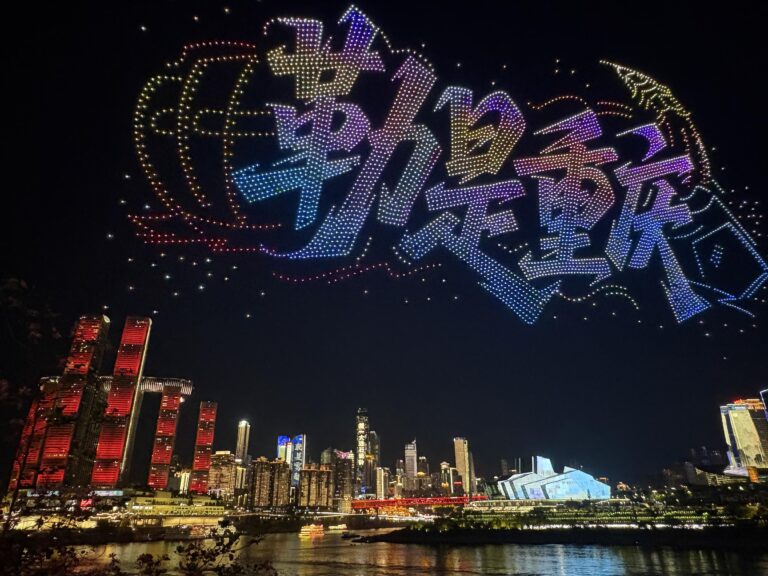
It usually won’t be fully dark by the time you finish eating, so you can walk about three minutes up onto the old city wall at Baoding Gate for a short post-dinner stroll. Once it’s fully dark, go through the gate and head straight to the riverfront. By then, Hongyadong and Qiansimen Bridge across the river will be lit up, so you can end the half-day outing with a classic Chongqing night view.

Getting there
Address: No. 7 Wenxingmen Street, Jiangbeicheng, Liangjiang New Area, Chongqing. For navigation, search for “重庆科技馆” (Chongqing Science and Technology Museum).
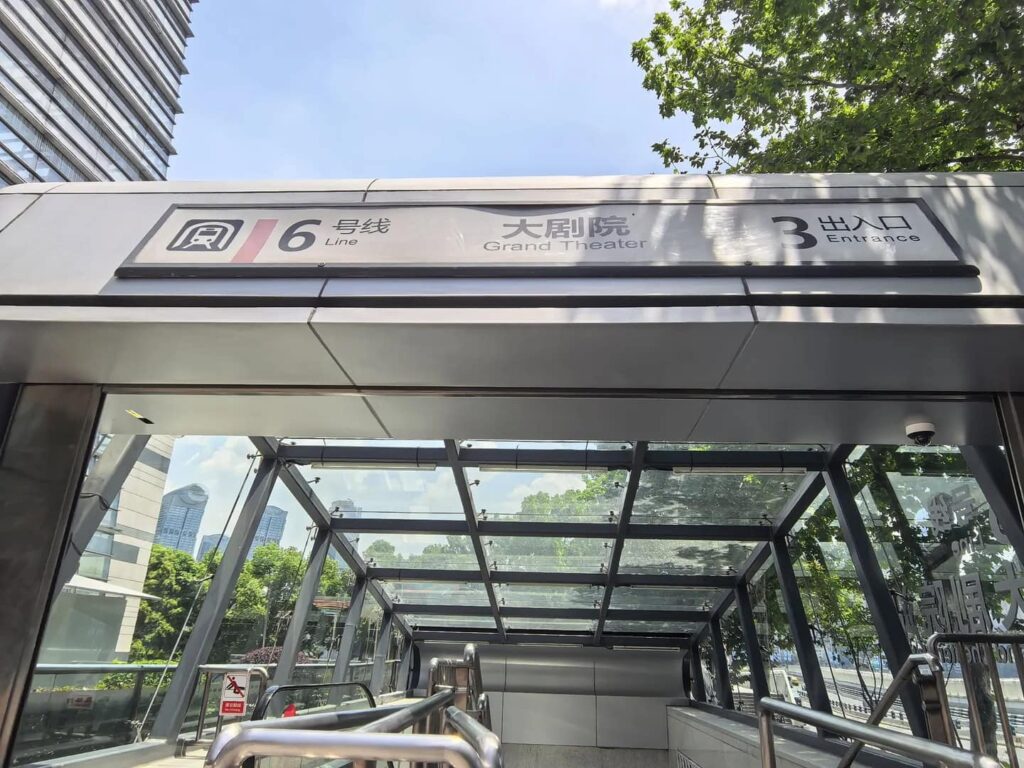
The easiest way to get there is by metro. Take Line 6 to Grand Theater Station and use Exit 3, which brings you out at the museum’s main entrance.
Admission & opening hours
The Chongqing Science and Technology Museum is free to enter, and no reservation is required.
Regular opening hours are 9:30 am to 5:00 pm, with last entry at 4:30 pm. The museum is closed on Mondays, although it may open on Mondays during public holidays or special events.
You still need to show either your passport or the metro QR code in WeChat or Alipay when entering.
What to see on each floor
The museum has four floors. The first is mainly taken up by restaurants and temporary exhibitions, so it can usually be skipped. The second, third, and fourth floors are the ones really worth spending time on.
Second floor
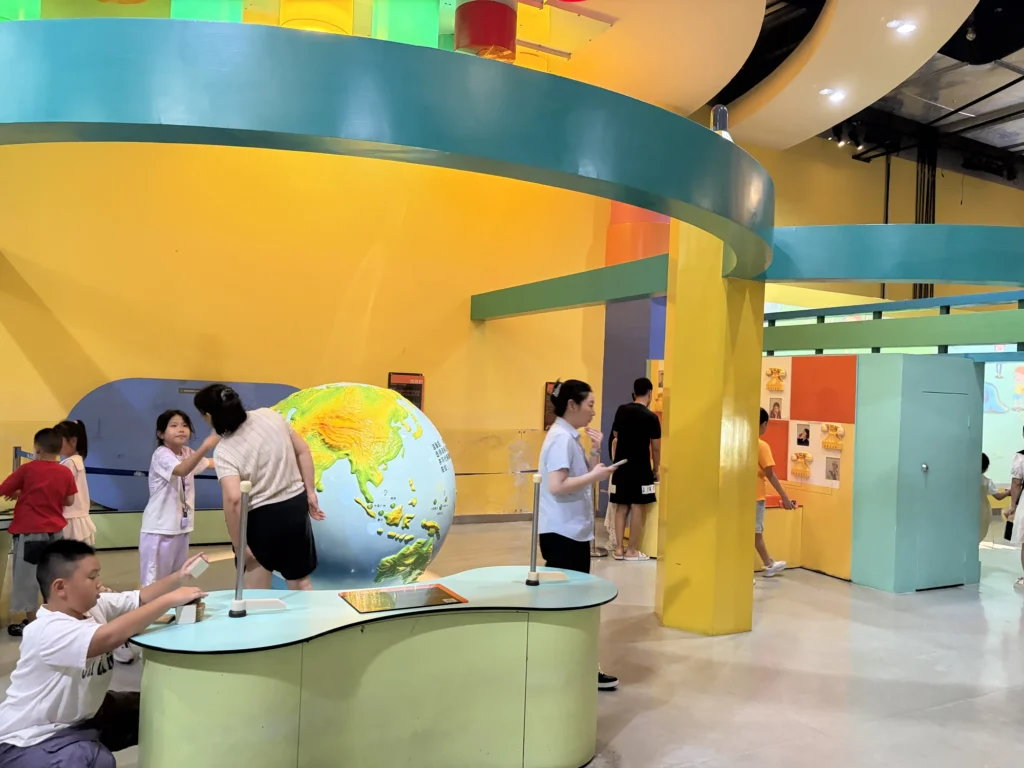
The second floor is divided into the Children’s Hall and the Life Hall. If you’re visiting with younger children, this is where I’d spend the most time.
The Children’s Hall is packed with hands-on exhibits involving water, mechanics, and perception. Kids can learn the science behind them as they play.
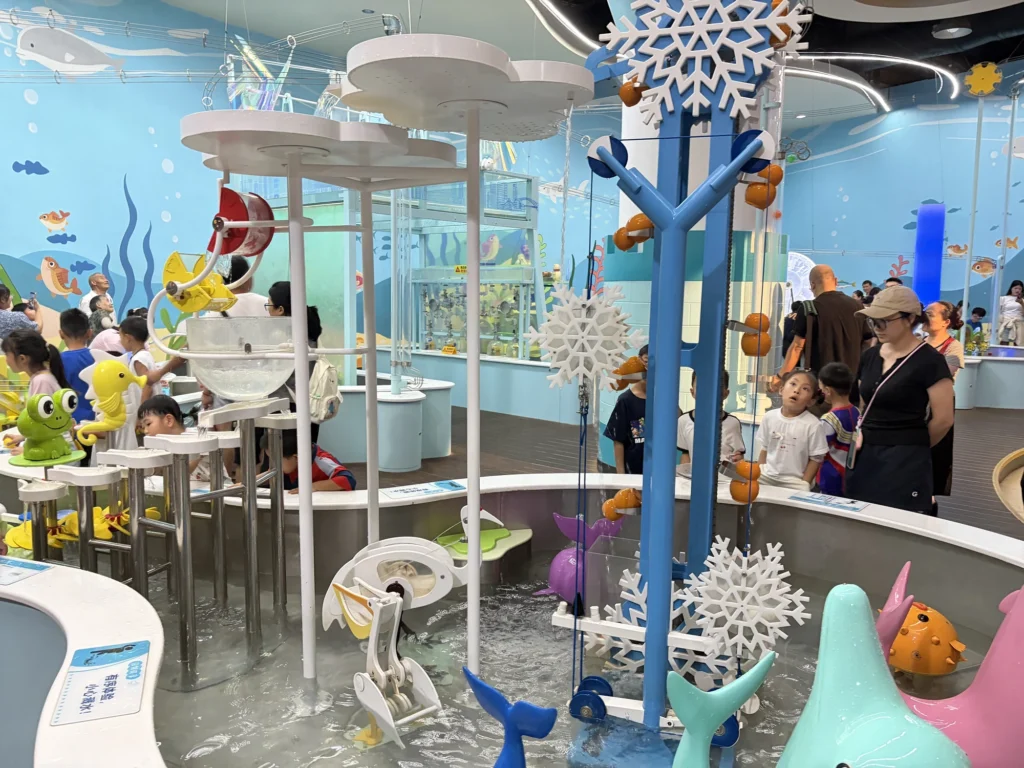
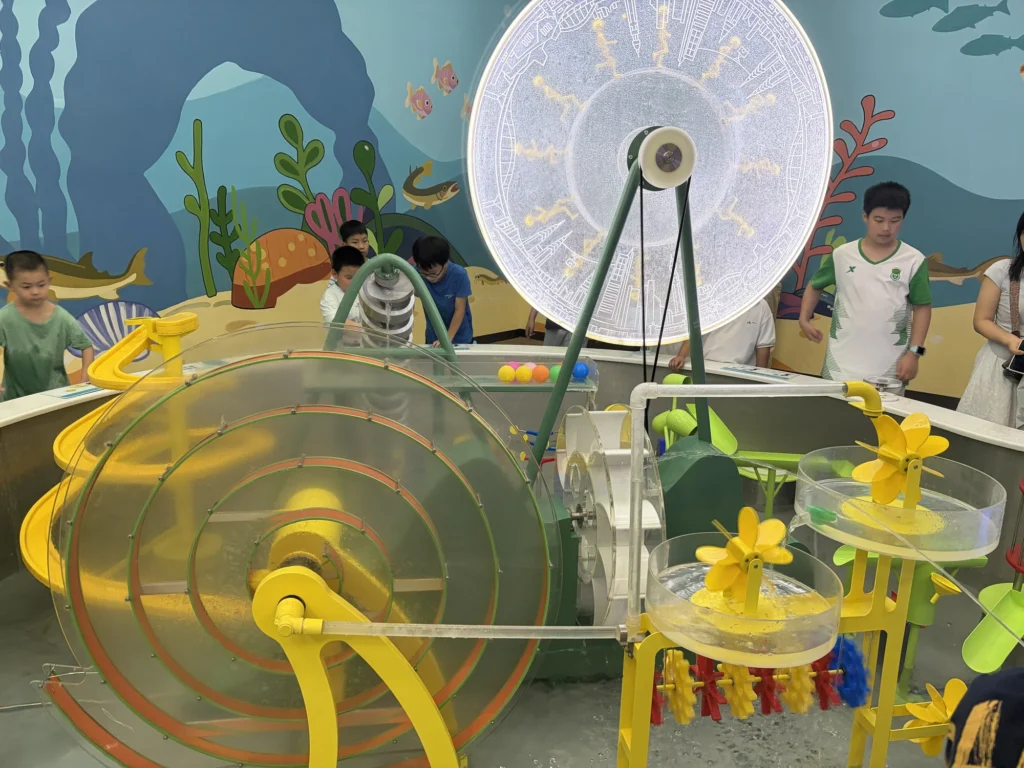
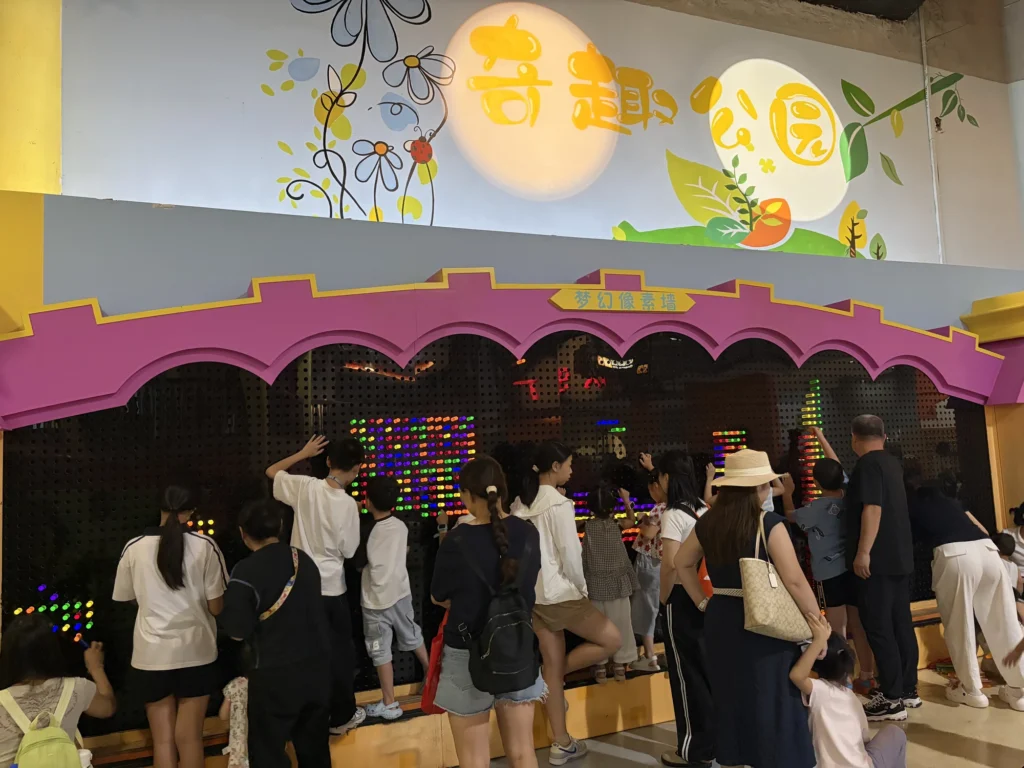
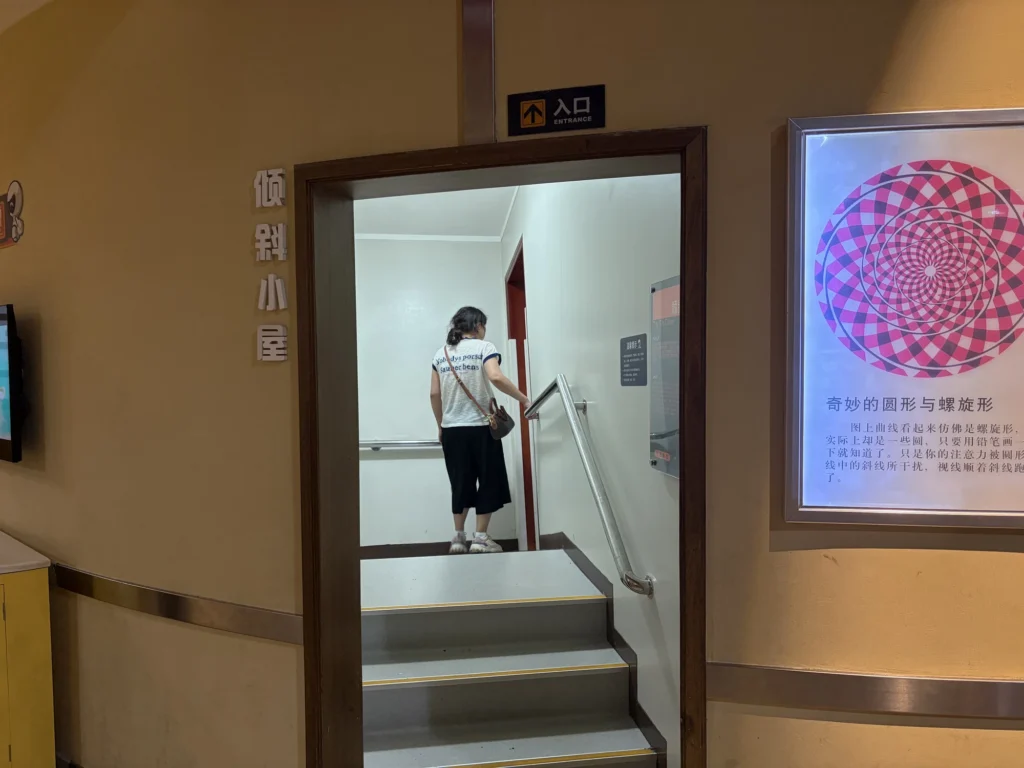
The one that stuck with me most was the Tilted Room. It doesn’t look like much from the outside, but once you step in, the walls, doors, windows, and every other visual reference make your brain think the whole room is sloping.
You keep adjusting your balance without even realizing it. Even though I knew I wasn’t actually going to slide down, I still found myself wobbling as I walked, and I started feeling dizzy after only a few steps.
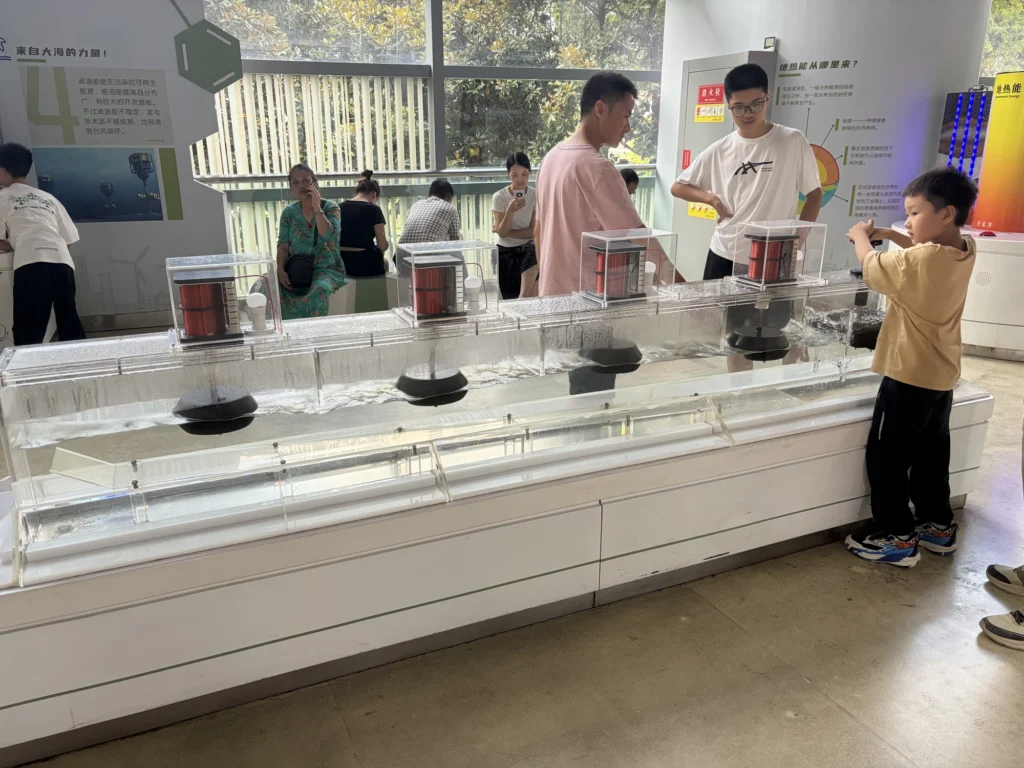
The Life Hall covers everything from everyday life and human health to energy and the environment. Energy takes up the largest section, with exhibits on geothermal, nuclear, hydroelectric, thermal, wind, and solar power. The displays go beyond models and explanations, with plenty of hands-on exhibits mixed in.
Two stood out to me in particular.
One is an exhibit that simulates wave power generation. Press the floating control on one side repeatedly, and the water surface begins to rise and fall, while the float inside moves up and down with it. The light on the exhibit turns on and off in response, making it easy to see how the movement of waves can be turned into electricity.
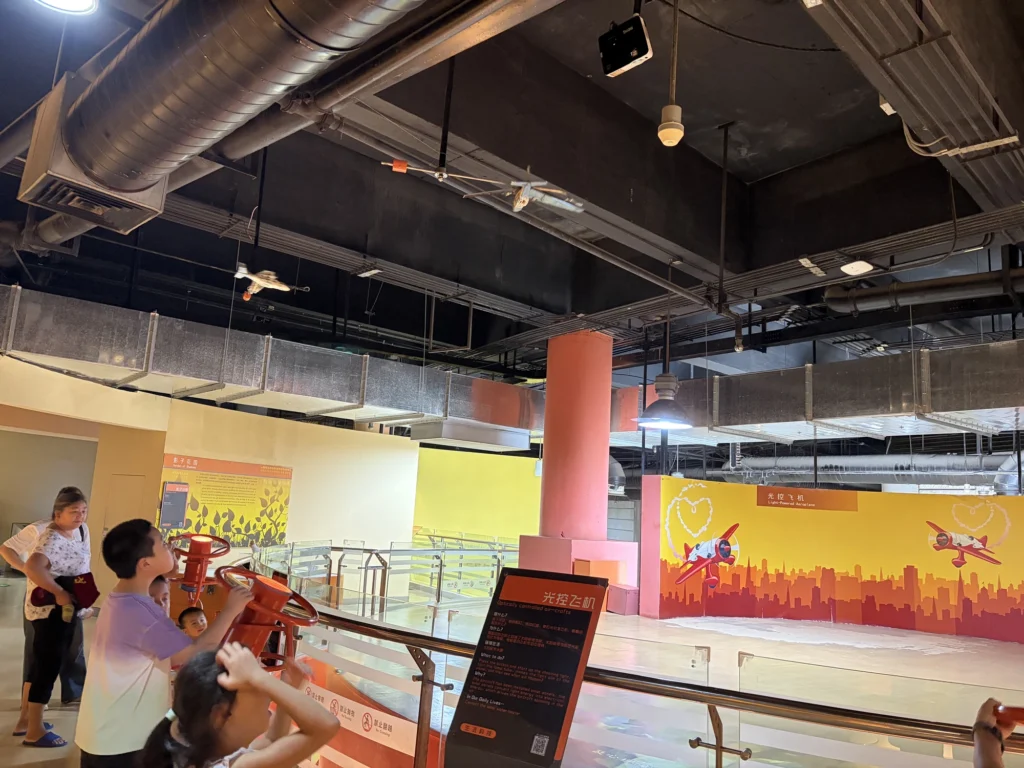
The other is the Light-Controlled Airplane. Kids can aim a spotlight at the solar panel beneath the wing. Once the beam is on the panel, the airplane starts moving along its track; move the light away and it stops. That immediate cause-and-effect makes it easy for kids to understand how light energy can be used to make something move.
Third floor
The third floor is the floor you enter when you come into the museum from Exit 3 of Grand Theater Metro Station. It is divided into three areas: disaster prevention technology, transportation technology, and national defense technology.
In the disaster prevention technology area, you can see content related to natural disasters such as earthquakes, debris flows, storms, fires, and tornadoes. Earthquakes and debris flows also have specially recreated scenes. Cracked ground, damaged buildings, and collapsed mountains make it easy to understand why these kinds of disasters can be so destructive.
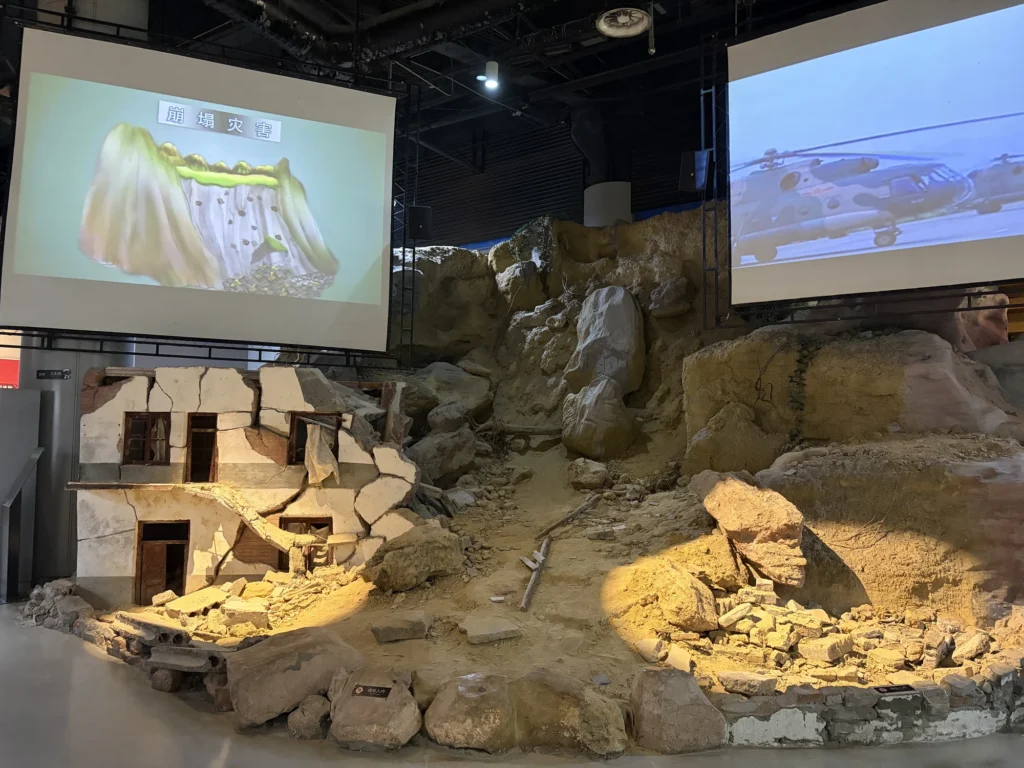
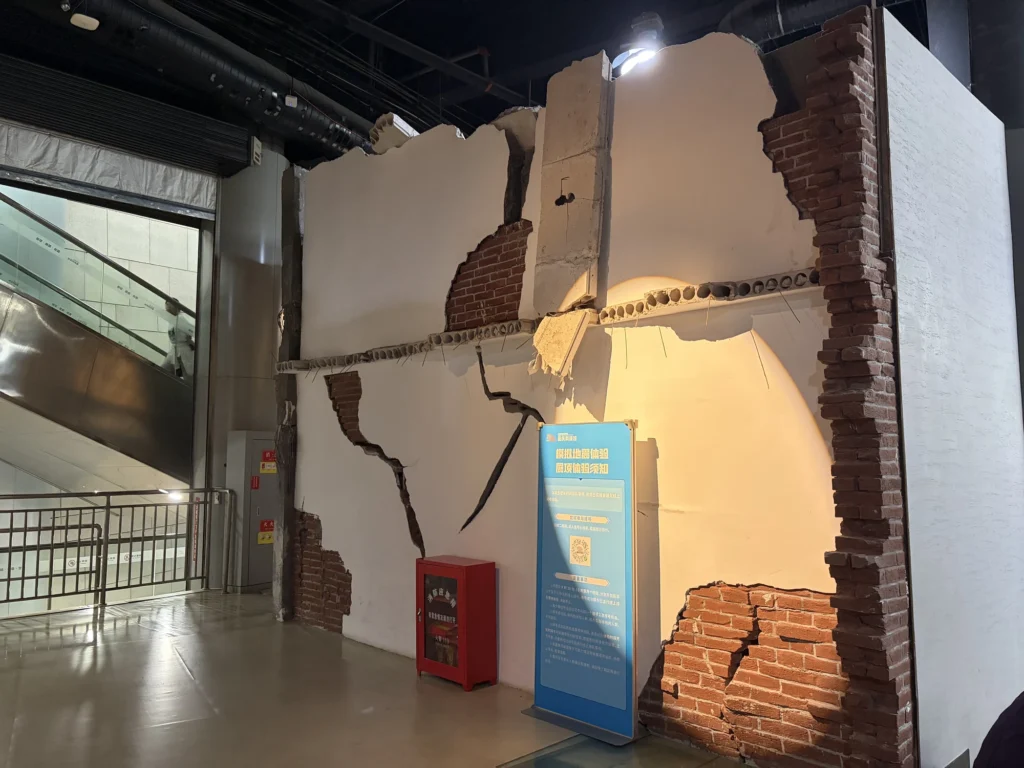
In addition to the recreated scenes, there are several disaster experiences that visitors can take part in, including a storm experience and simulated earthquake, although you need to scan a QR code on site and queue for them.
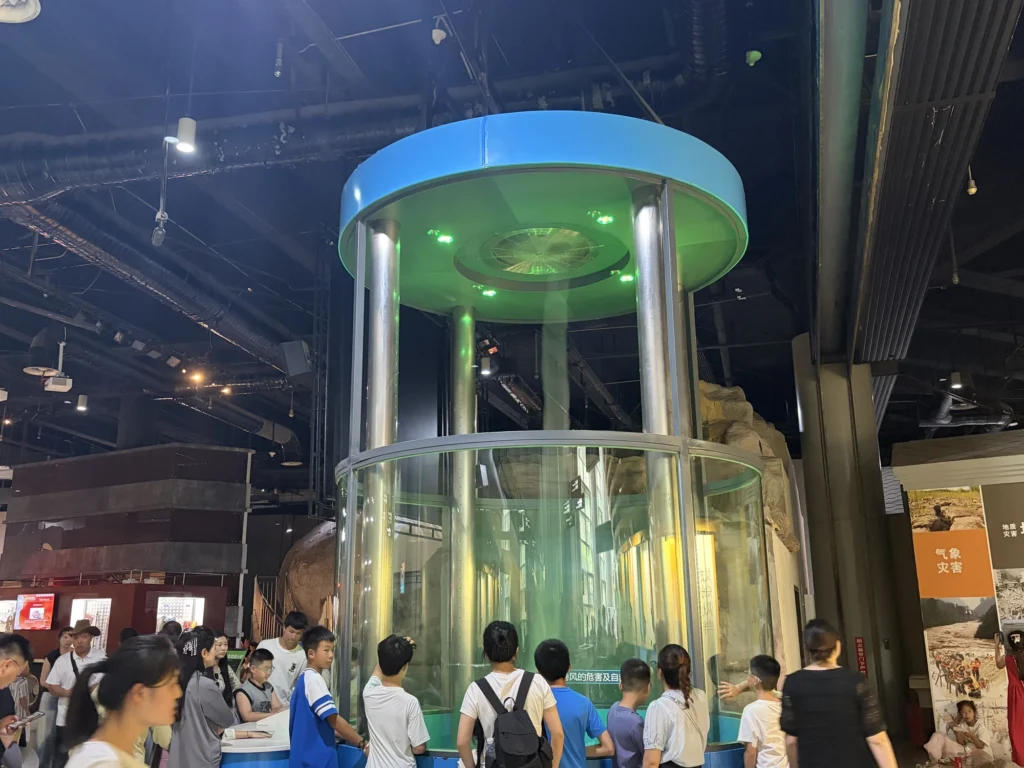
The transportation technology area is also highly interactive. In addition to models such as turbojet engines, there are car and ship driving simulators. Sitting in the cockpit and operating them yourself is much more interesting than simply looking at models.
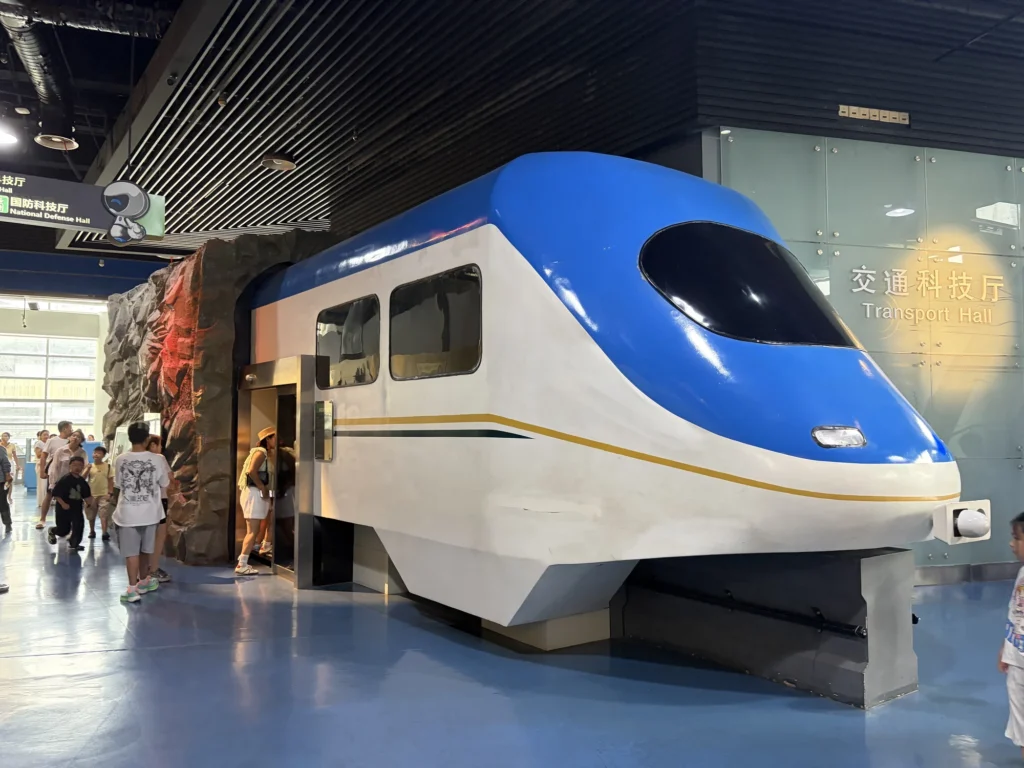
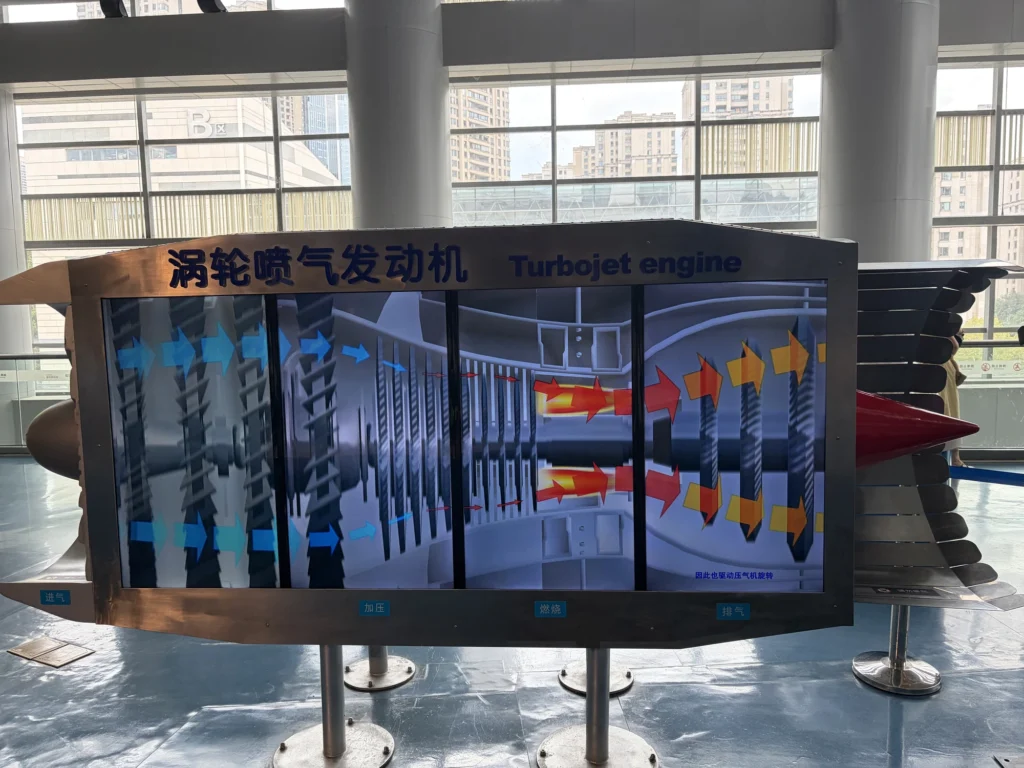
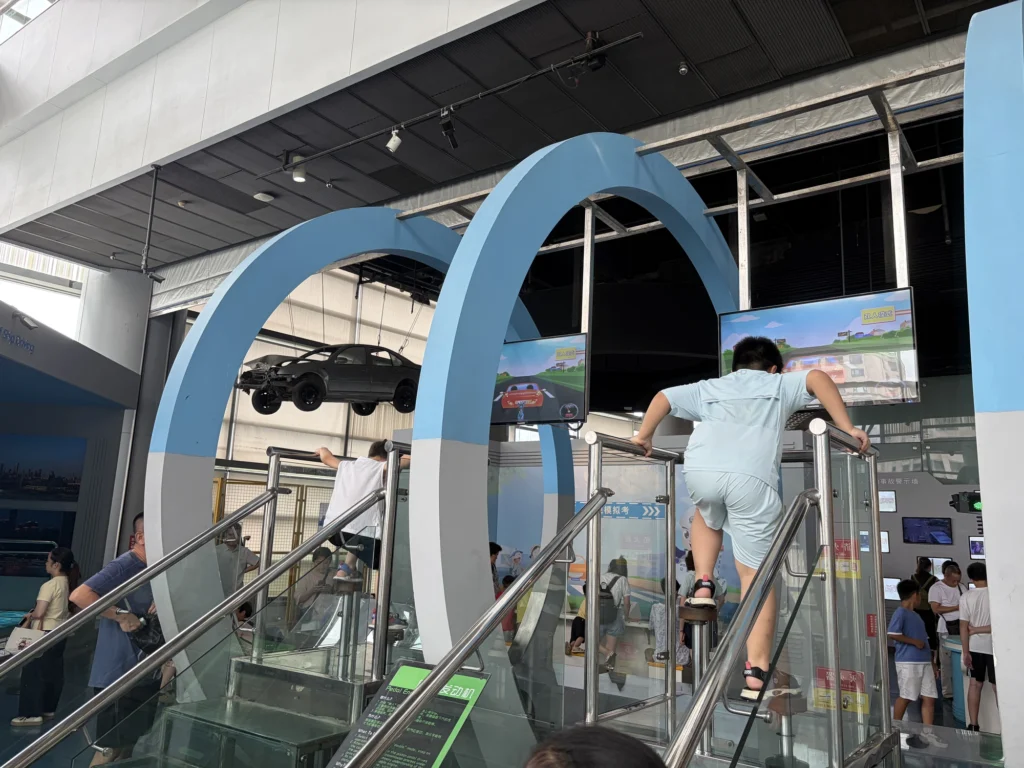
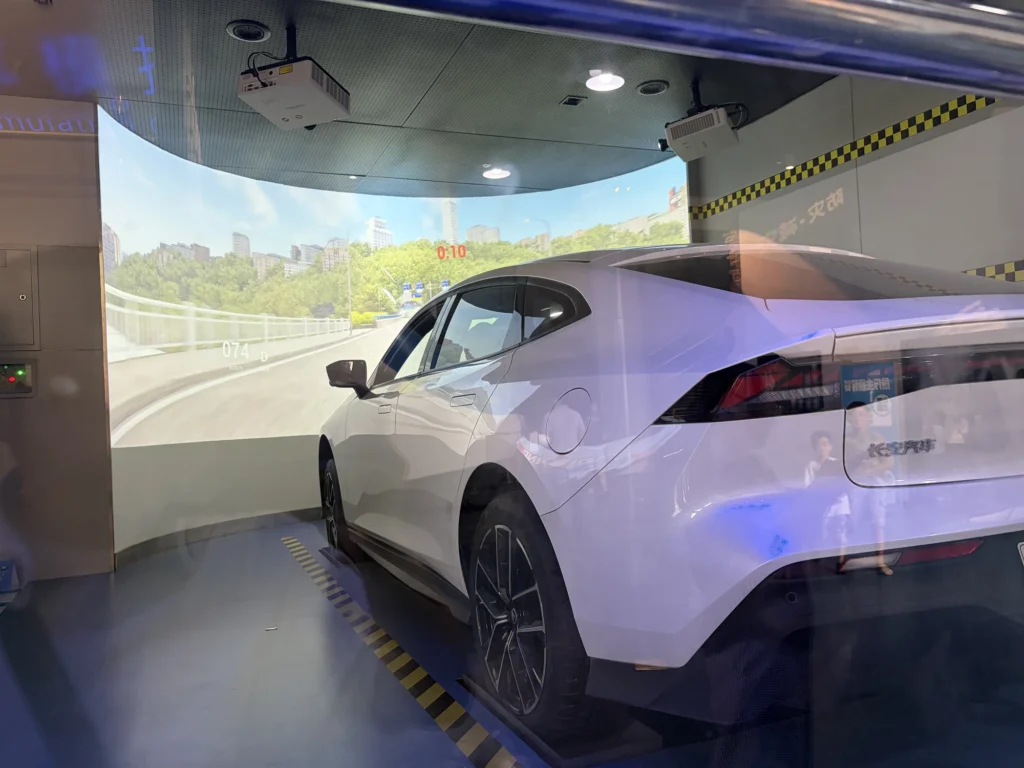
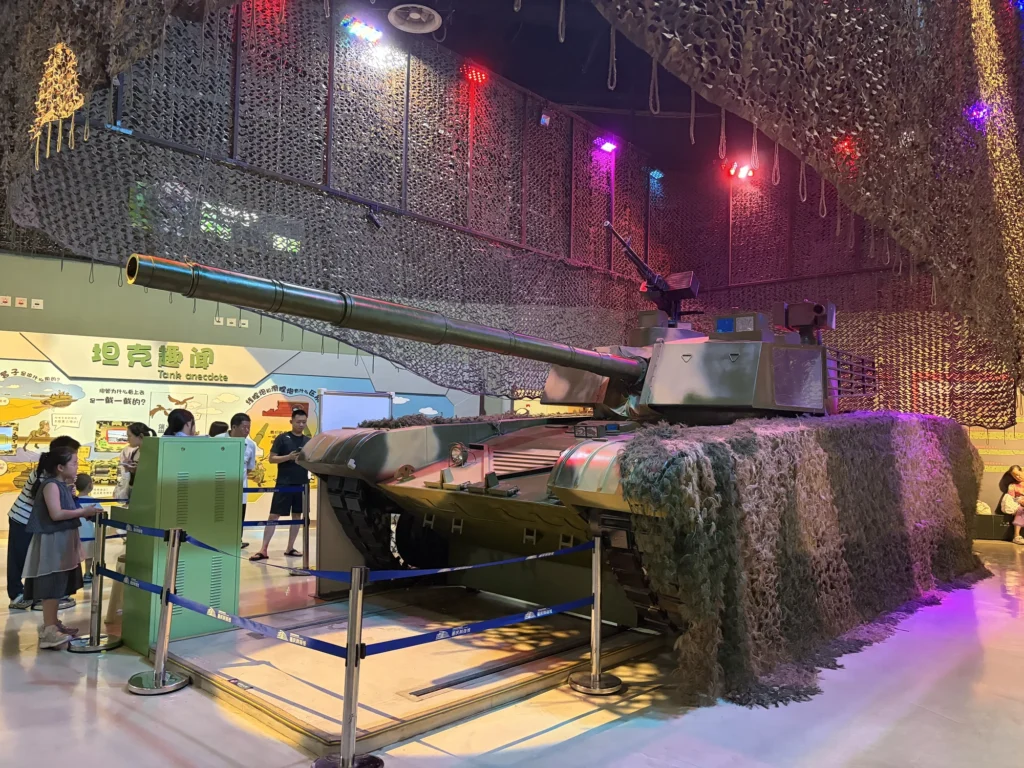
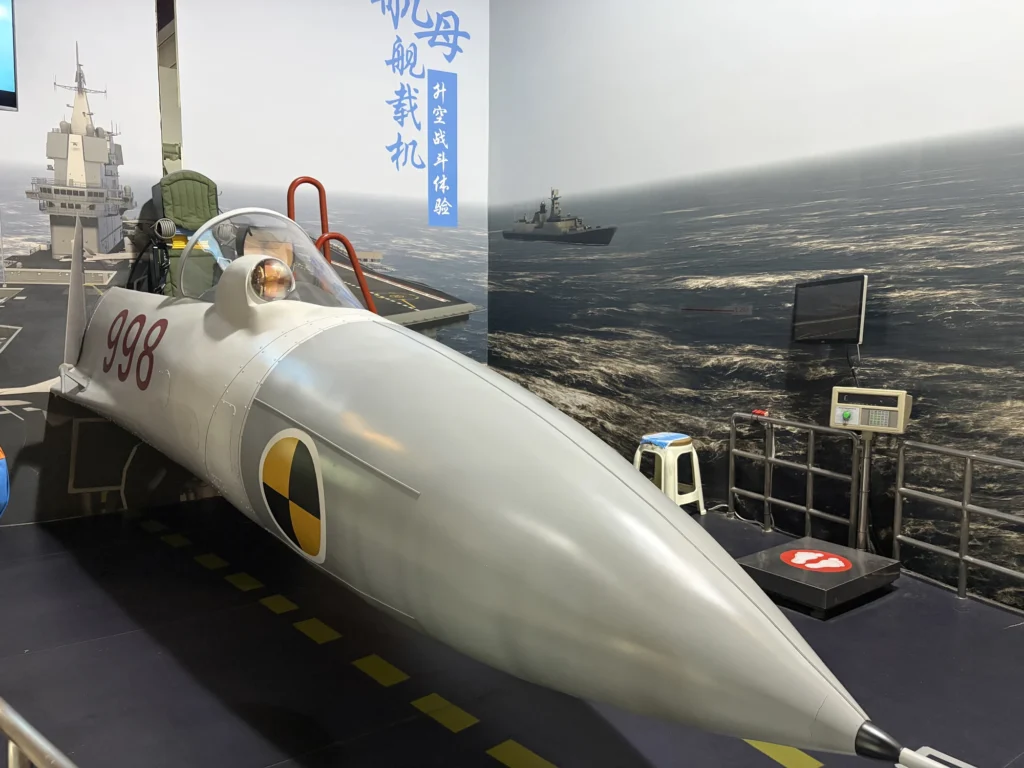
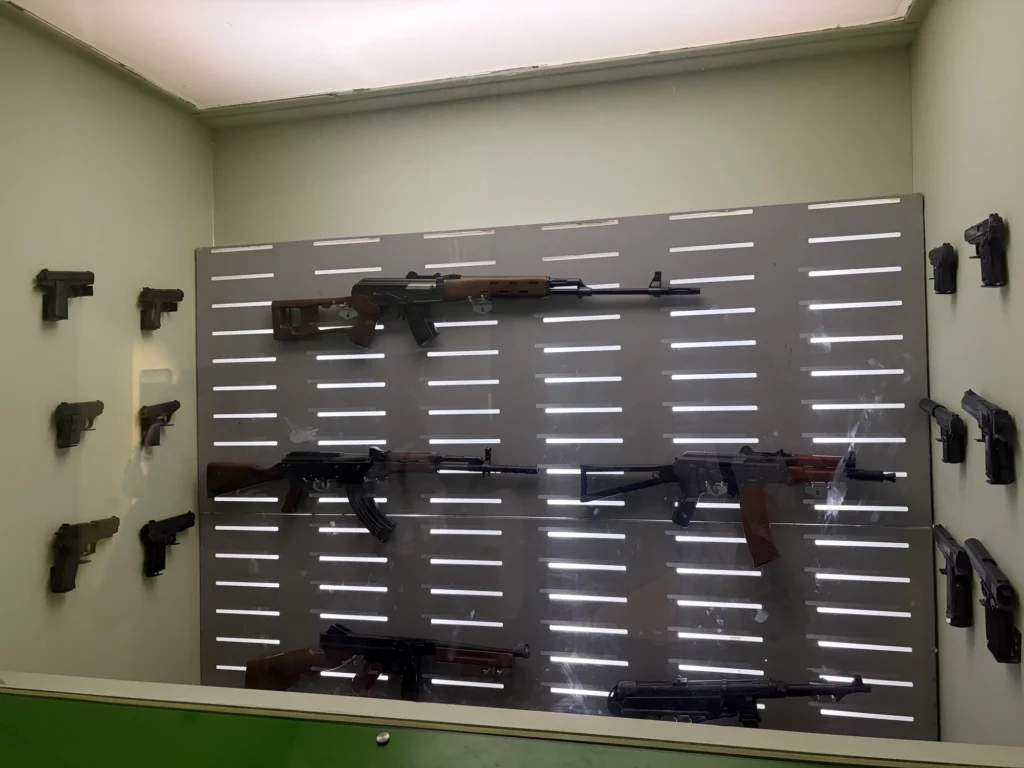
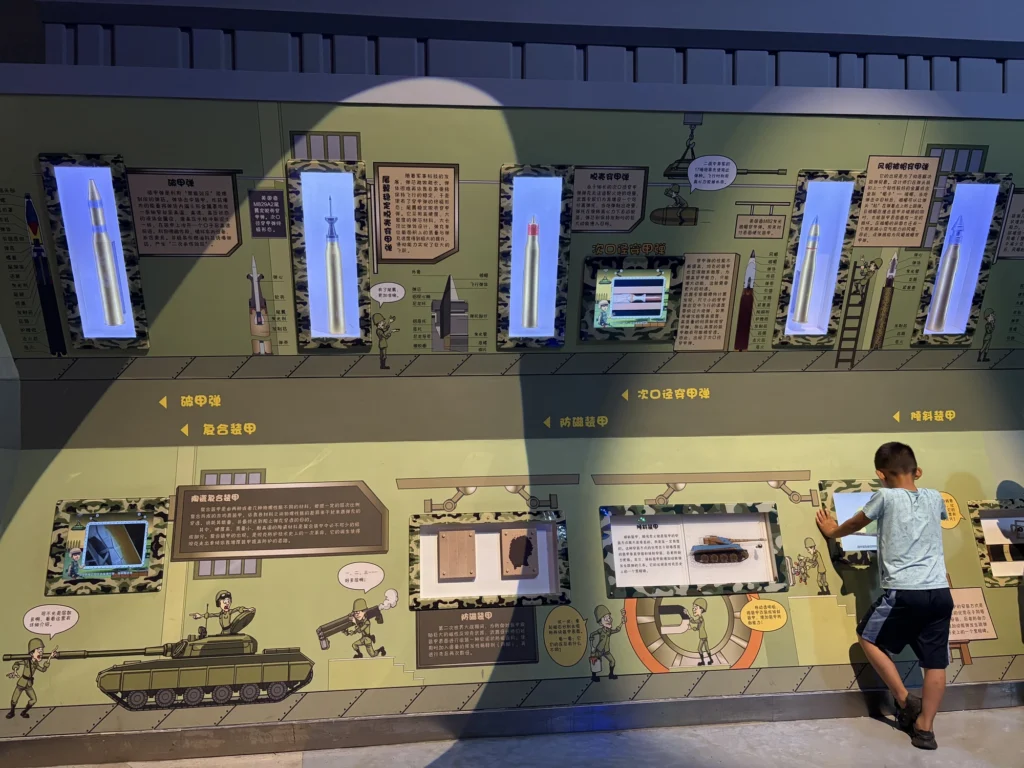
But my favorite is still the national defense technology area, because the exhibits here are quite hardcore. The highlight is a 1:1-scale replica of a Chinese-made Type 98 main battle tank. You can go inside to try simulated driving and firing shells. Unfortunately, all the slots were already taken when I visited, so I’ll have to leave it for next time.
Fourth floor
The fourth floor is divided into the Basic Science Hall and the Aerospace Hall.
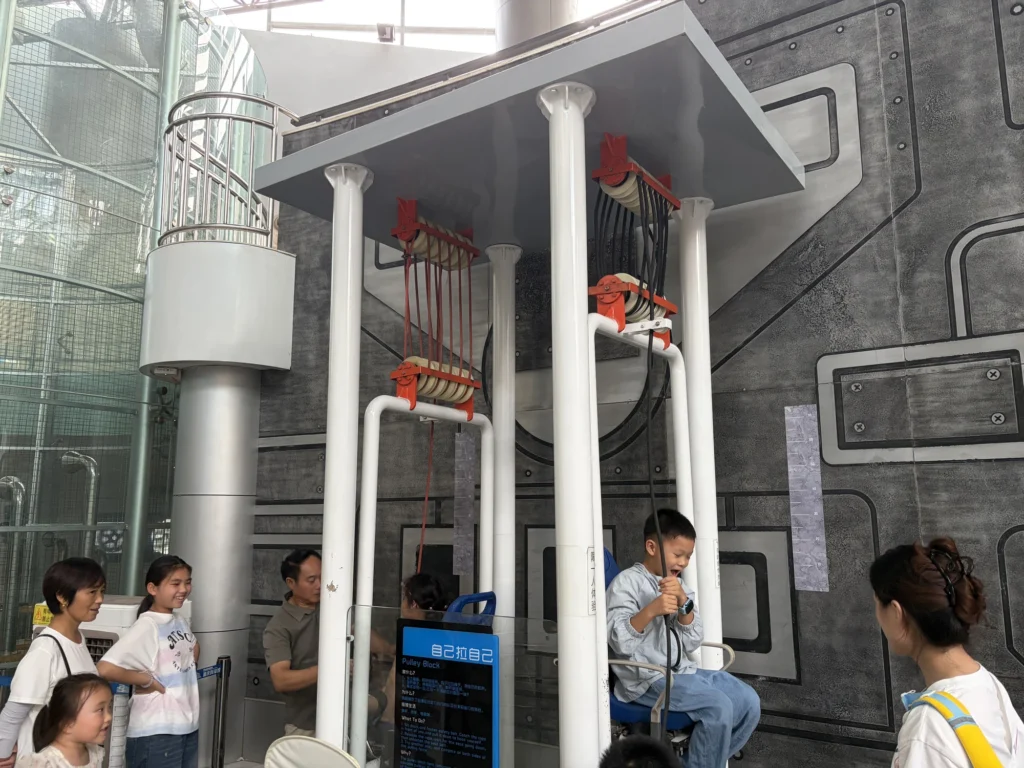
The Basic Science Hall follows a more traditional science museum format, with hands-on experiments covering mathematics, mechanics, electromagnetism, and a range of classic physical phenomena.
A lot of the science will probably be familiar from school. The difference is that instead of just reading about it in a textbook, you can now pull, push, and turn things yourself to see what actually happens.
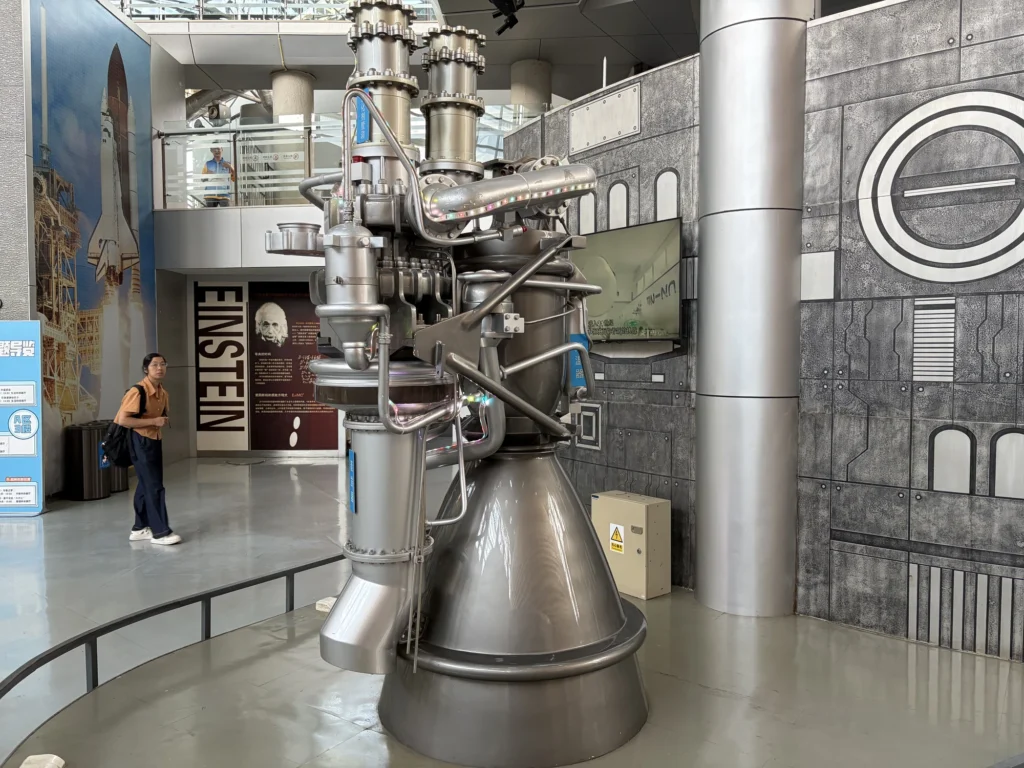
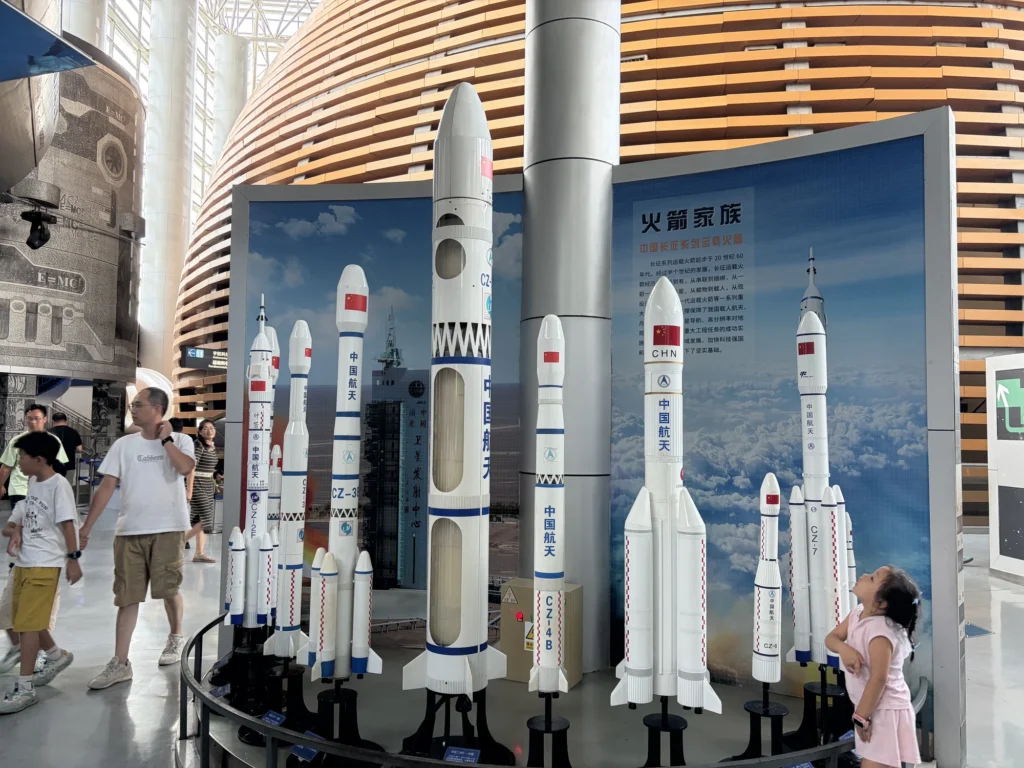
The Basic Science Hall is fun, but for me, the Aerospace Hall is the part of the fourth floor really worth prioritizing.
The most eye-catching exhibit is the Manned Space Laboratory. Rather than a small model sitting behind glass, it’s a full mock-up you can actually enter. Once you pass through the hatch, the space suddenly feels much tighter, with equipment, pipes, and work areas packed around you. There are recreated setups showing how astronauts sleep, use the toilet, work, and carry out experiments.
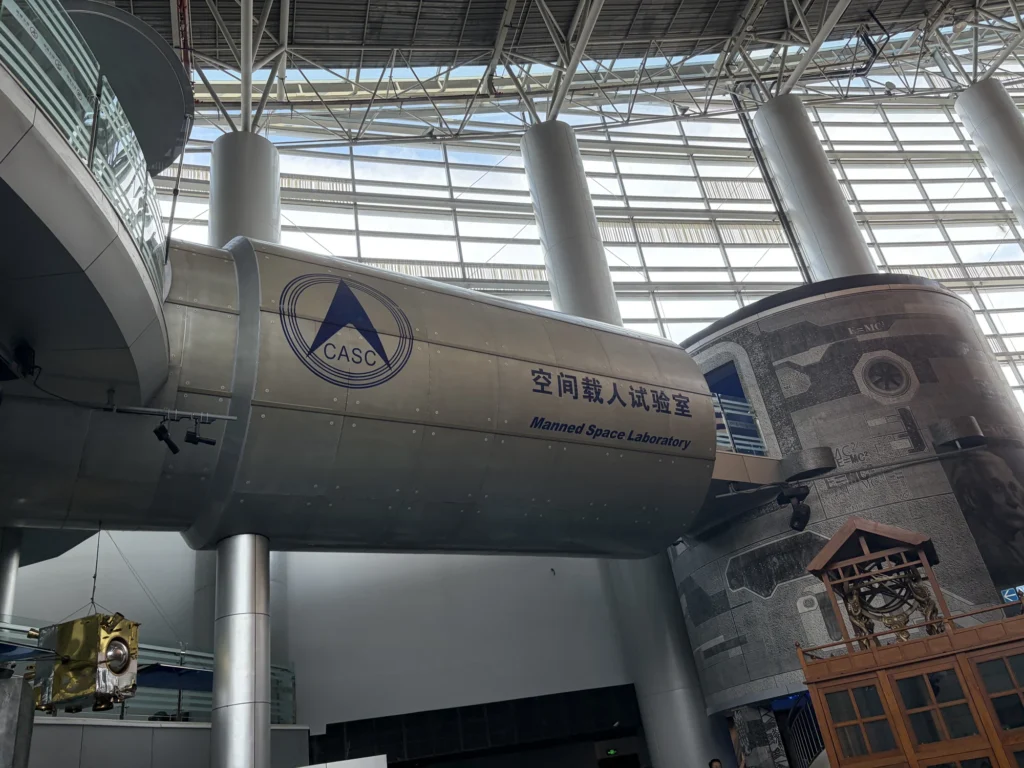
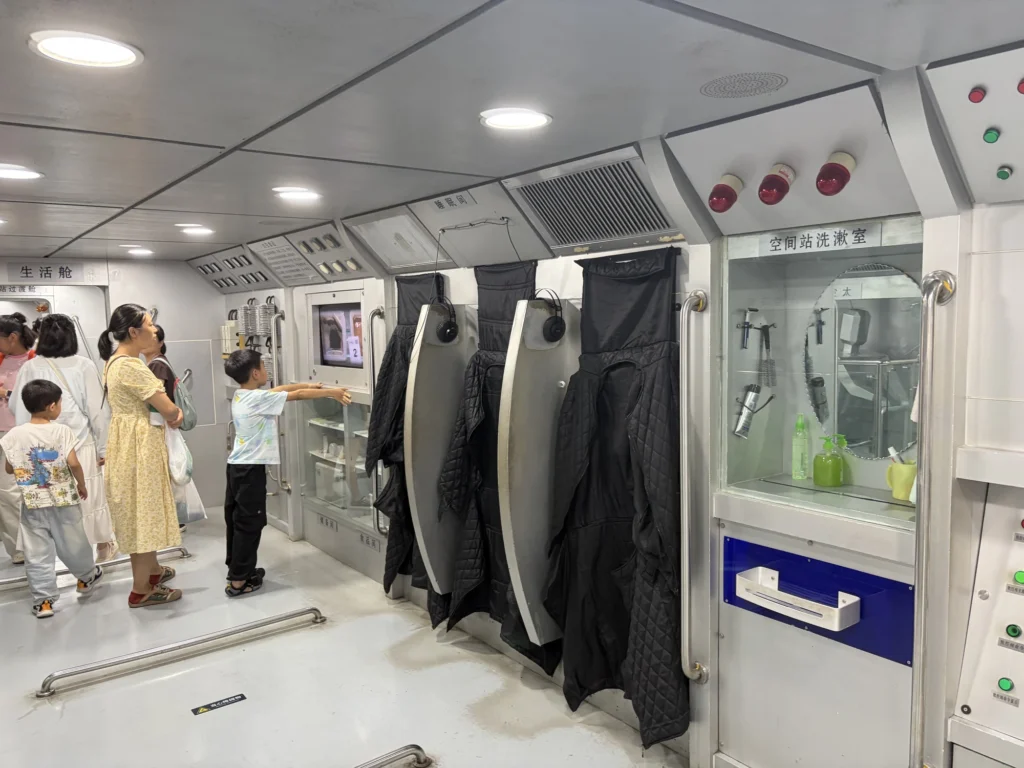
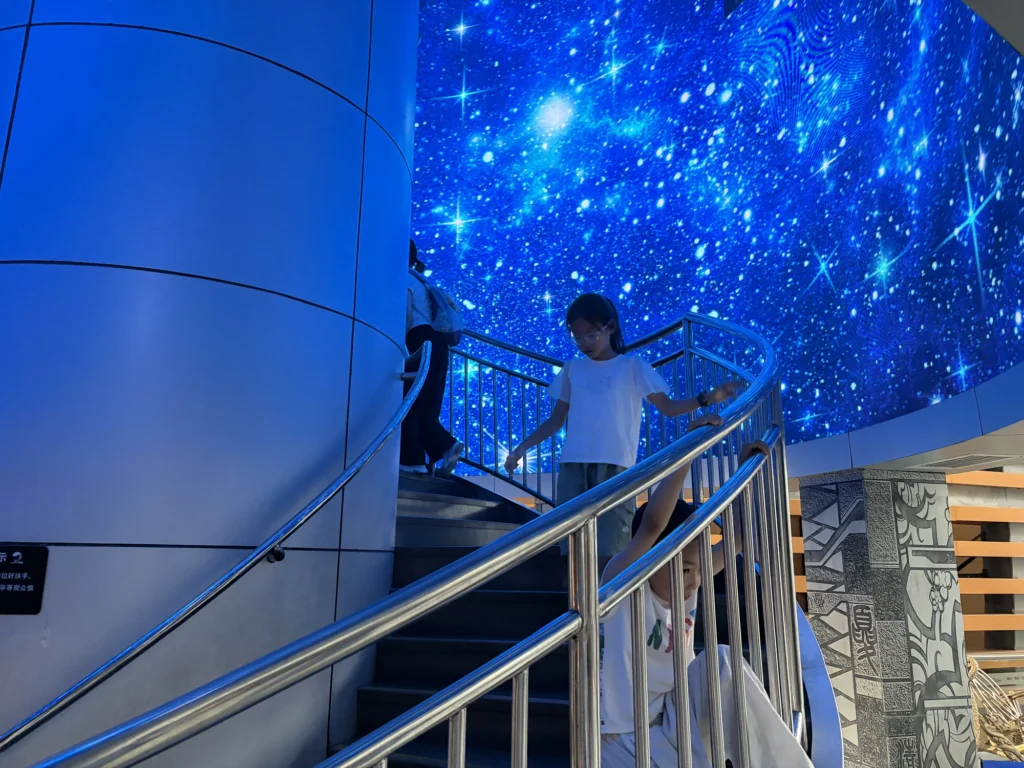
To make the “space experience” feel more complete, the museum has thoughtfully included a rotating starfield passage on the way to the space station. Images of the universe spin continuously around you, and the effect is certainly immersive, perhaps a little too immersive.
After staring at the display for just a few seconds, I started feeling dizzy and disoriented. The steps under my feet were perfectly normal, but my brain was already telling me that the whole world was spinning.
If you’re prone to motion sickness, don’t try too hard to take in the full effect. Just squint a little, keep your eyes on the floor, and walk through.