Hongyadong Guide: Lighting Schedule, Transport & Photo Spots

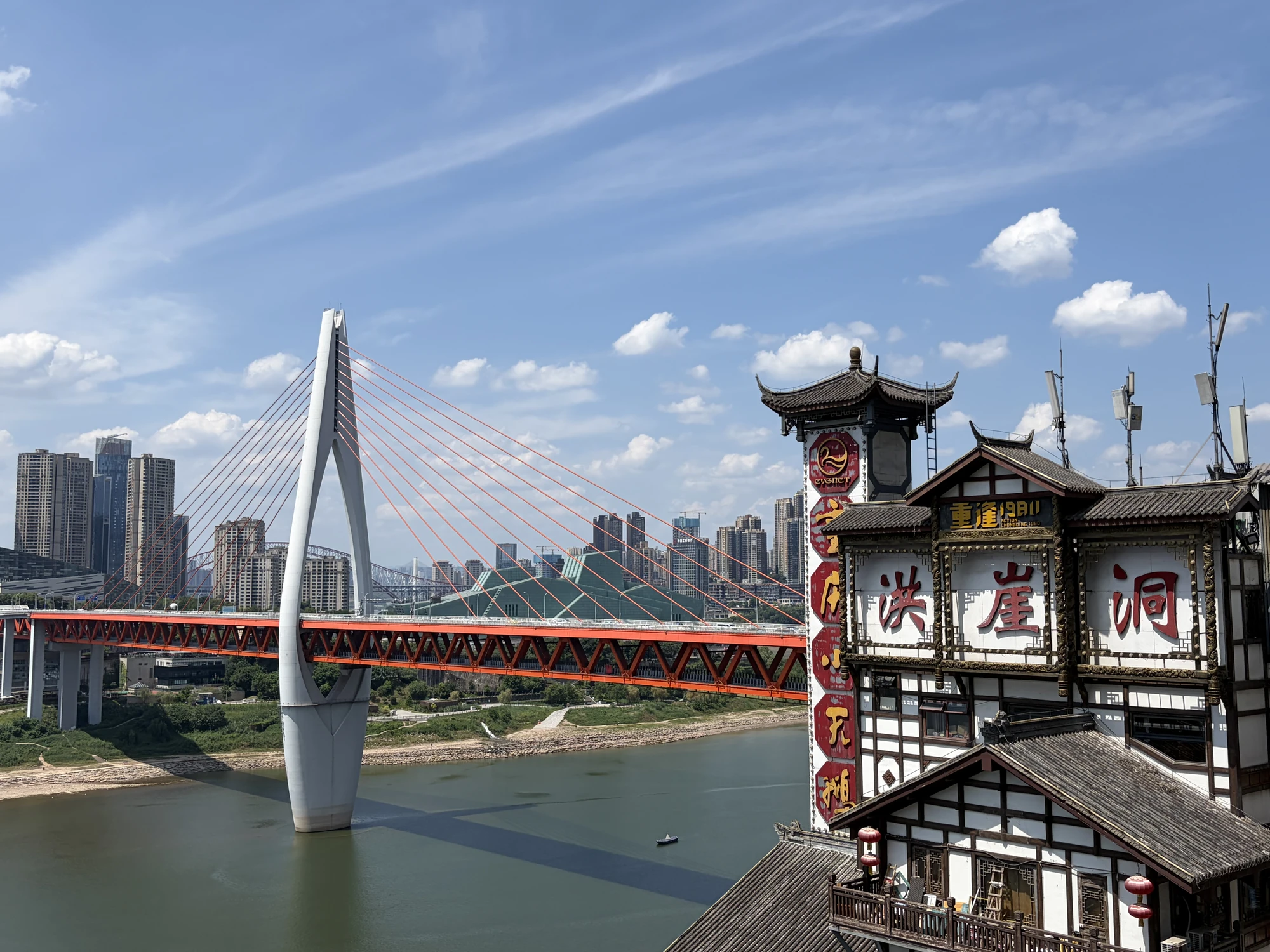
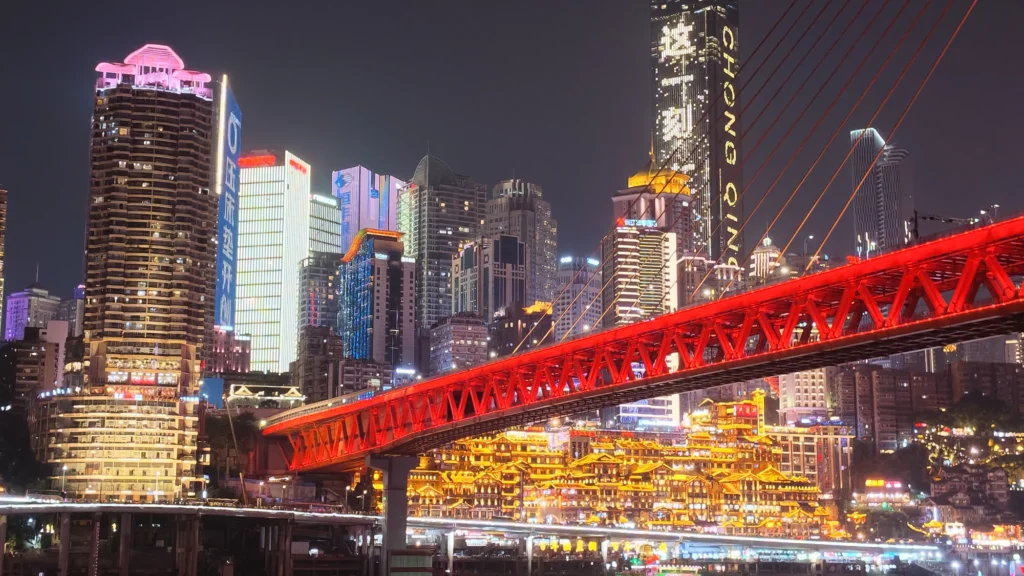
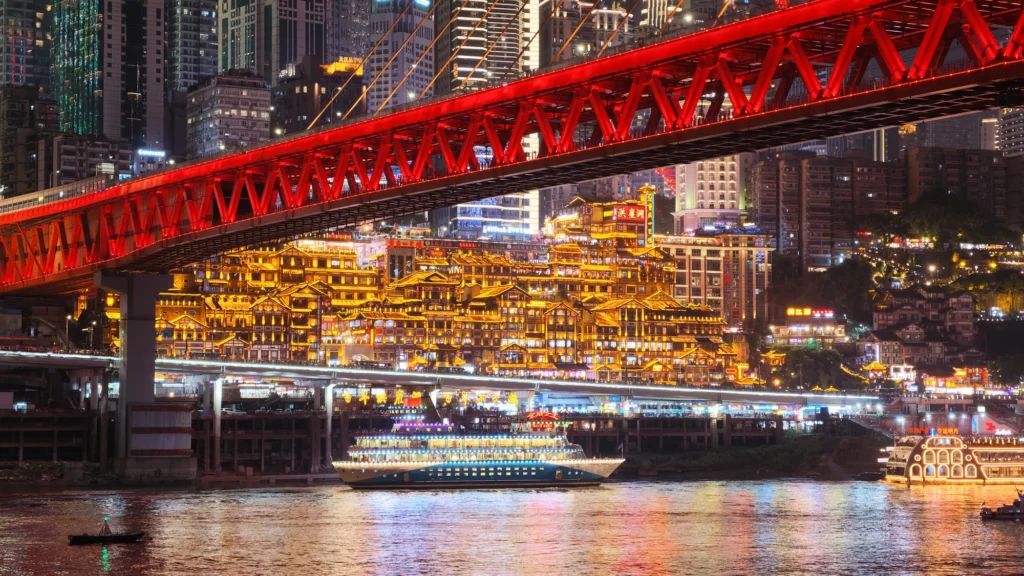
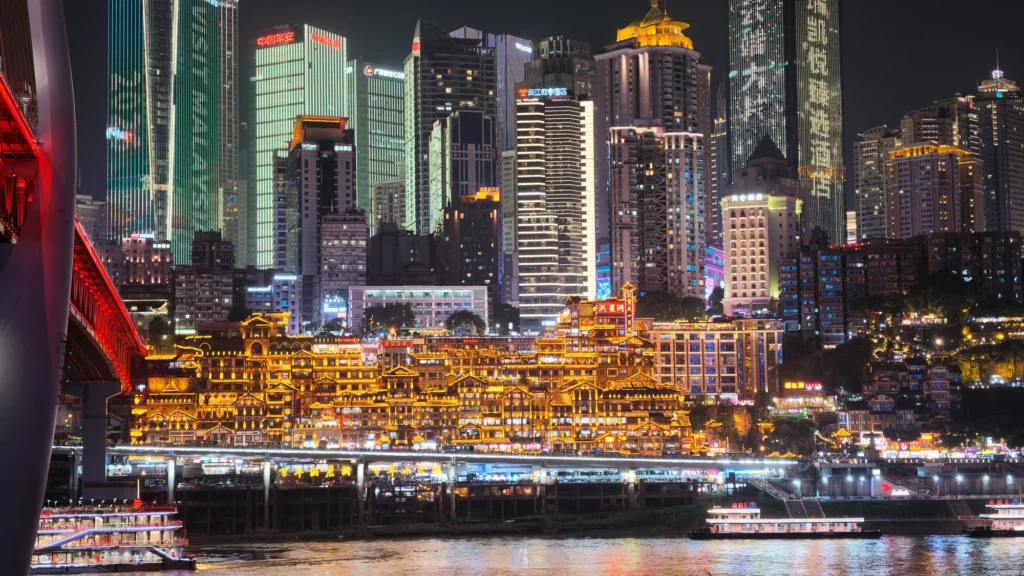
Among Chongqing’s many landmarks, Hongyadong, also known as Hongya Cave, is easily one of the most popular. Even Liziba takes a back seat to it. After all, trains run through the building at Liziba throughout the day, while Hongyadong is at its most striking for only a few hours after the lights come on each evening.
History
The area where Hongyadong stands today once lay just outside Hongya Gate in the old city of Chongqing. Built during the Ming dynasty, Hongya Gate was one of the city’s 17 gates. Chongqing’s gates were traditionally described as “nine open and eight closed,” and Hongya Gate belonged to the latter group. The gate itself is long gone, but the name has remained in use.
As the population along the river grew in the 1920s and 1930s, residents began building stilt houses between the cliff and the riverbank, taking advantage of the steep terrain. The houses rose in layers up the hillside, linked by stone steps, narrow lanes, and wooden walkways. Over time, a hillside settlement took shape.
By the end of the 20th century, most of the original houses had fallen into disrepair, and both living conditions and infrastructure were poor. Demolition and redevelopment of the Hongyadong area began in 2003, and nearly all of the original stilt houses were removed. The Hongyadong seen today was newly planned and constructed on the same site, drawing on the design of traditional Bayu stilt houses built along the hillside. It was completed and opened in 2006.
Getting there
On this visit, I explored Mountain City Trail and Shibati, stopped at Bayi Food Street for something to eat, and then walked about 900 meters from there to Hongyadong.
If you are taking the metro, there are two options.:
① Take Line 2 to Linjiangmen Station, use Exit 2, and walk about 600 meters.
②Take Line 1 or Line 6 to Xiaoshizi Station, use Exit 9, and walk about 500 meters.
If you are interested in temples or traditional Chinese architecture, use Exit 6 at Xiaoshizi instead and visit Luohan Temple first. Admission is RMB 20, and the walk from the temple to Hongyadong is roughly the same distance as the walk from Exit 9.
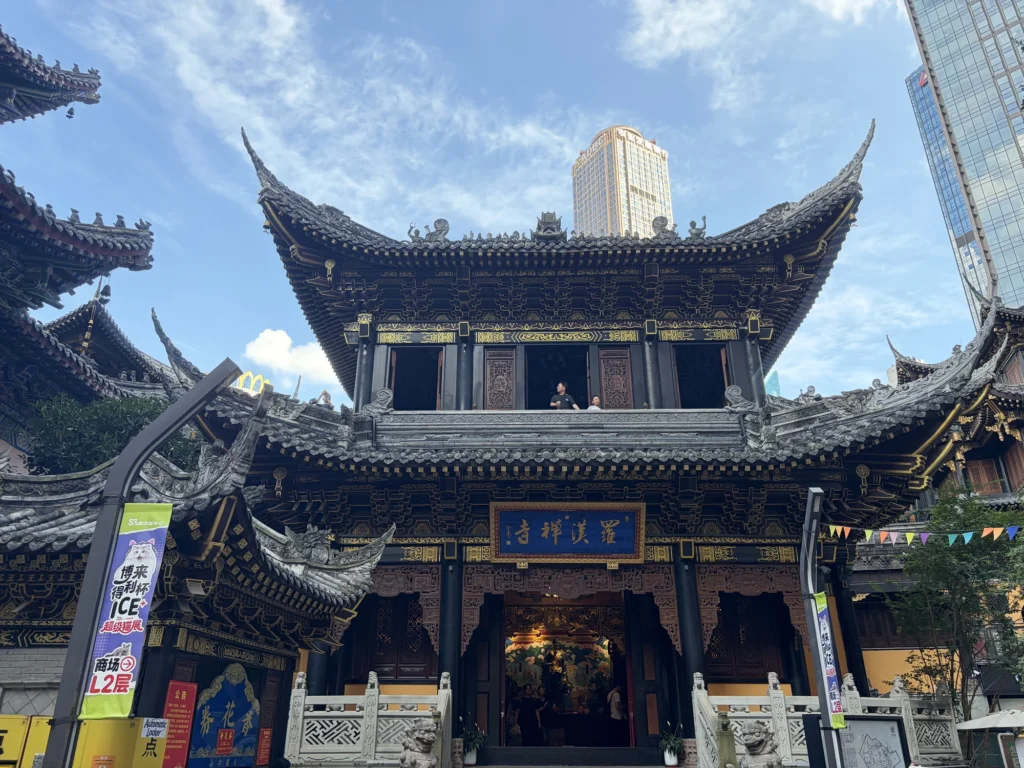
After leaving the station, search for “洪崖洞民俗风貌区5号门” (Hongyadong Gate 5). The destination is at the top of Hongyadong, and you can use the same location if you are taking a taxi.
To reach the road along the Jialing River at the lowest level of Hongyadong, either enter the complex and take an elevator down or search for “洪崖洞民俗风貌区8号门” (Hongyadong Gate 8).
If this is your first visit, however, I recommend a different route. After leaving the station, search for “戴家巷崖壁步道” (Daijiaxiang Cliffside Trail), then follow the trail downhill to Hongyadong.
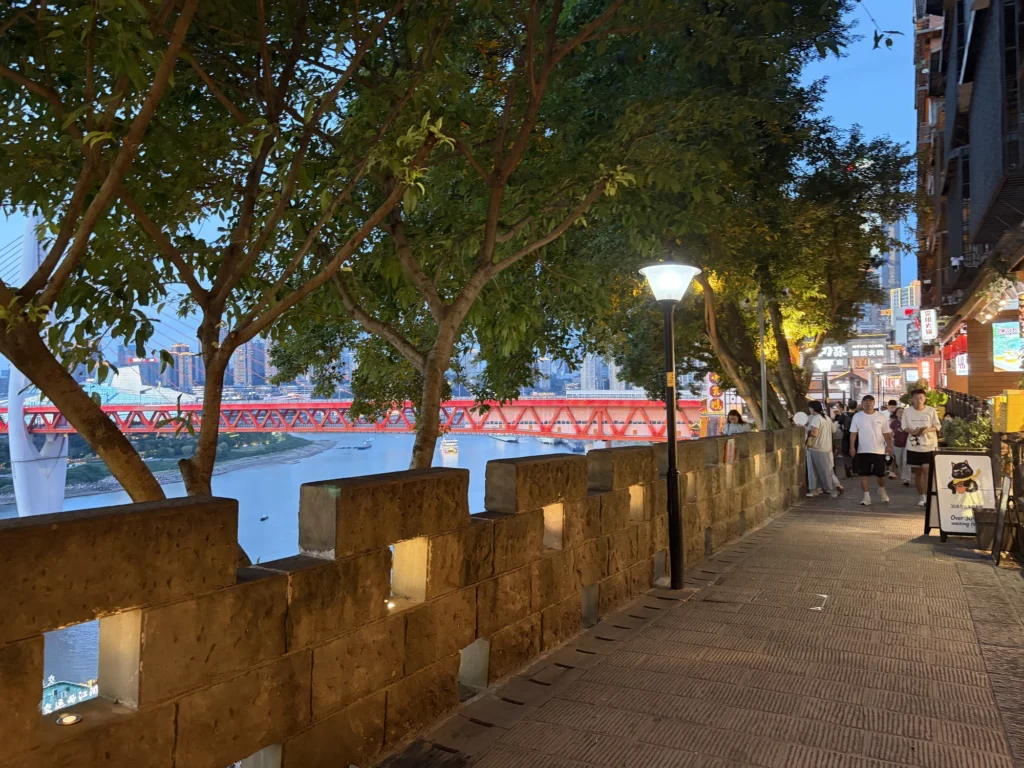
The trail is right beside Hongyadong and is about 750 meters long. It descends along the cliff and a preserved section of the old city wall.
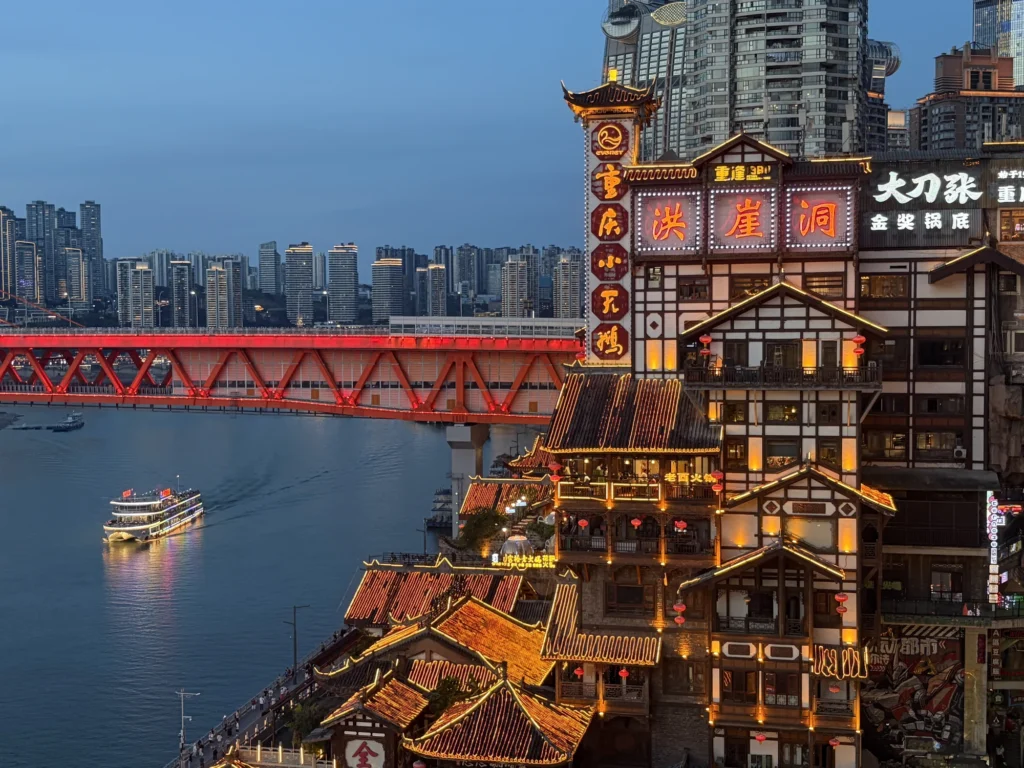
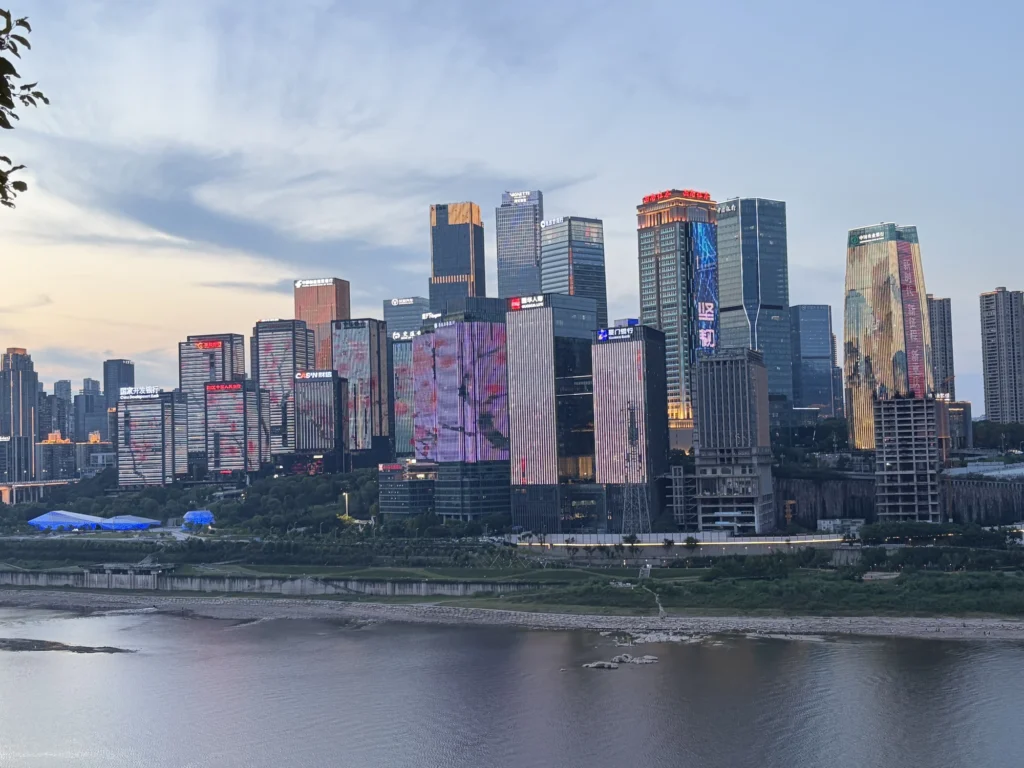
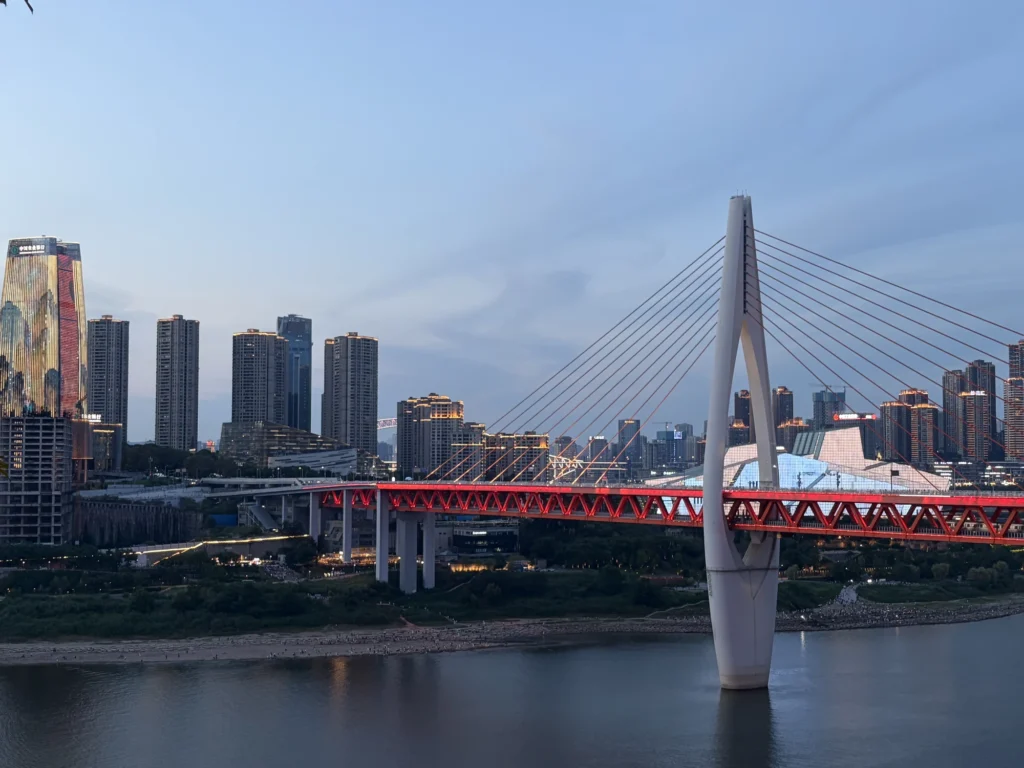
From the trail, you can see the Jiangbeizui Financial District lit up across the river, as well as Hongyadong from the side.
Light-up and lights-off times
Hongyadong’s lights come on at different times depending on the season. The schedule is not fixed year-round, but these approximate times are a useful guide:
Winter: 6:30 to 7:00 p.m.
Spring and fall: 7:00 to 7:30 p.m.
Summer: 7:30 to 8:00 p.m.
The time the lights go off varies less by season and is usually around 11:00 p.m.
Things to do at Hongyadong
Hongyadong is mainly about seeing the night views and taking photos. Inside, it feels more like a large tourist shopping complex, mostly made up of restaurants, shops selling local specialties, and costume photo studios. The interior is far less interesting than the exterior.
Floors 1, 4, and 9 are mostly food and dining areas. Floors 2 and 3 have many costume photo studios offering costumes, makeup, styling, and photo shoots. Several other floors were closed when I visited.
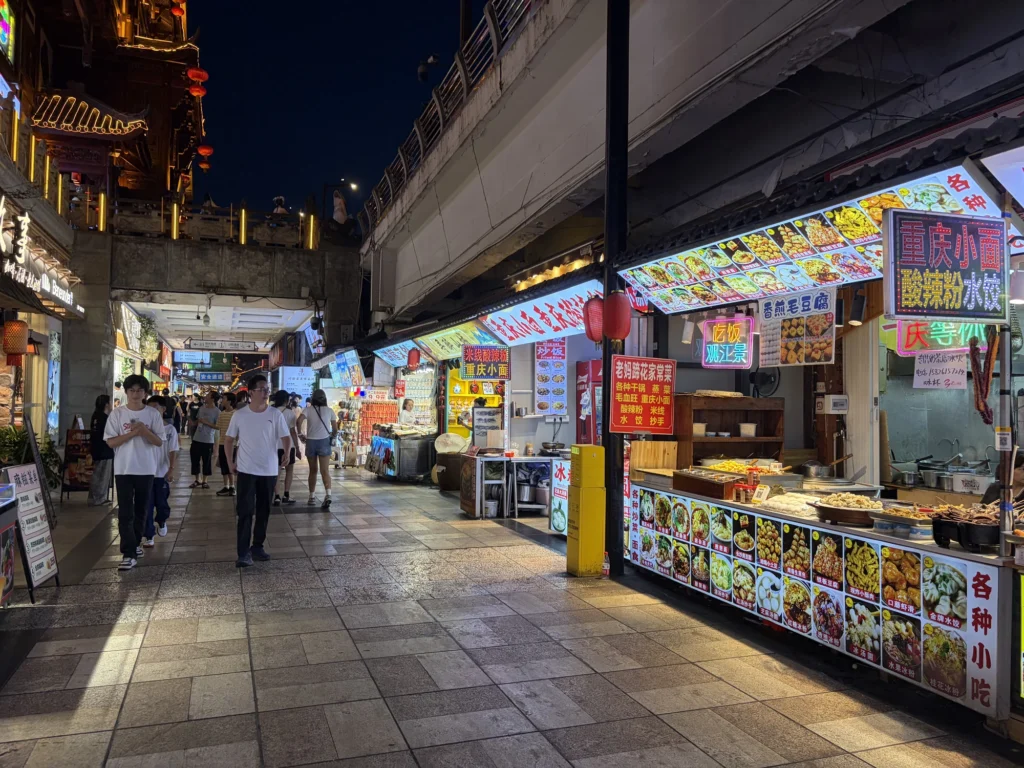
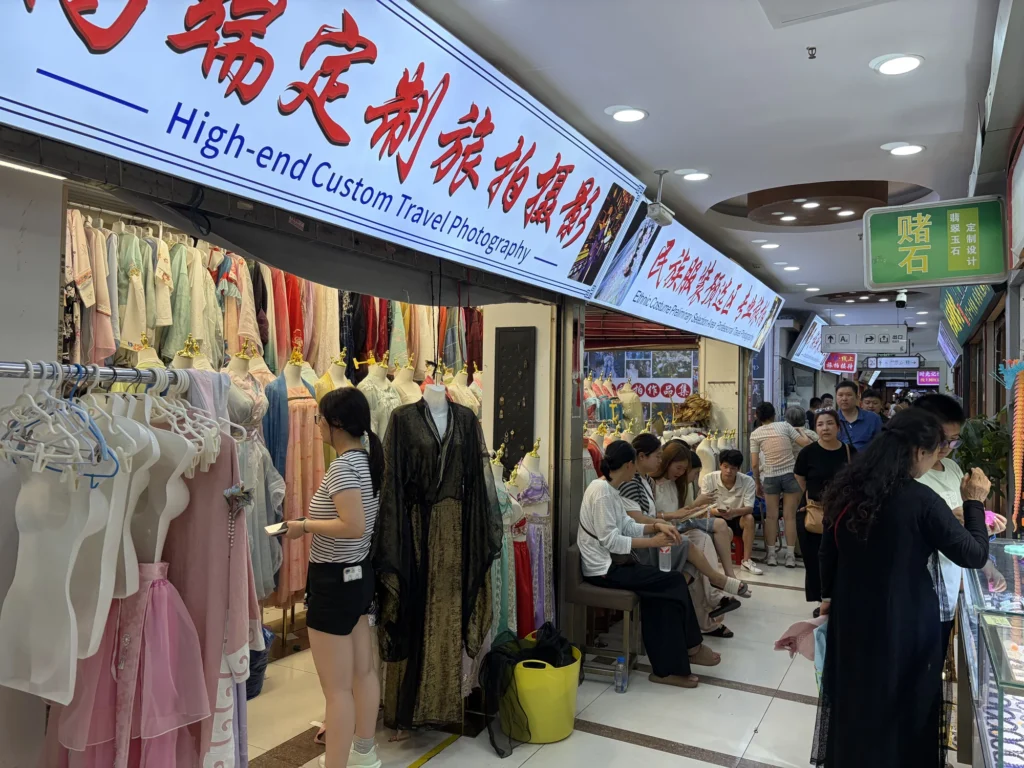
If you have already been to Bayi Food Street and have no interest in costume photo shoots, I do not think it is worth setting aside time specifically to explore the interior. Your time is better spent at the outdoor photo spots.
My route was:
Daijiaxiang Cliffside Trail → Jiabin Road at the lowest level of Hongyadong → Qiansimen Bridge → the opposite bank
Daijiaxiang Cliffside Trail
This is a less well-known route that I covered earlier, so I will not go over it again here. Still, I strongly recommend starting your visit to Hongyadong from here.
Hongyadong’s lowest level (Jiabin Road)
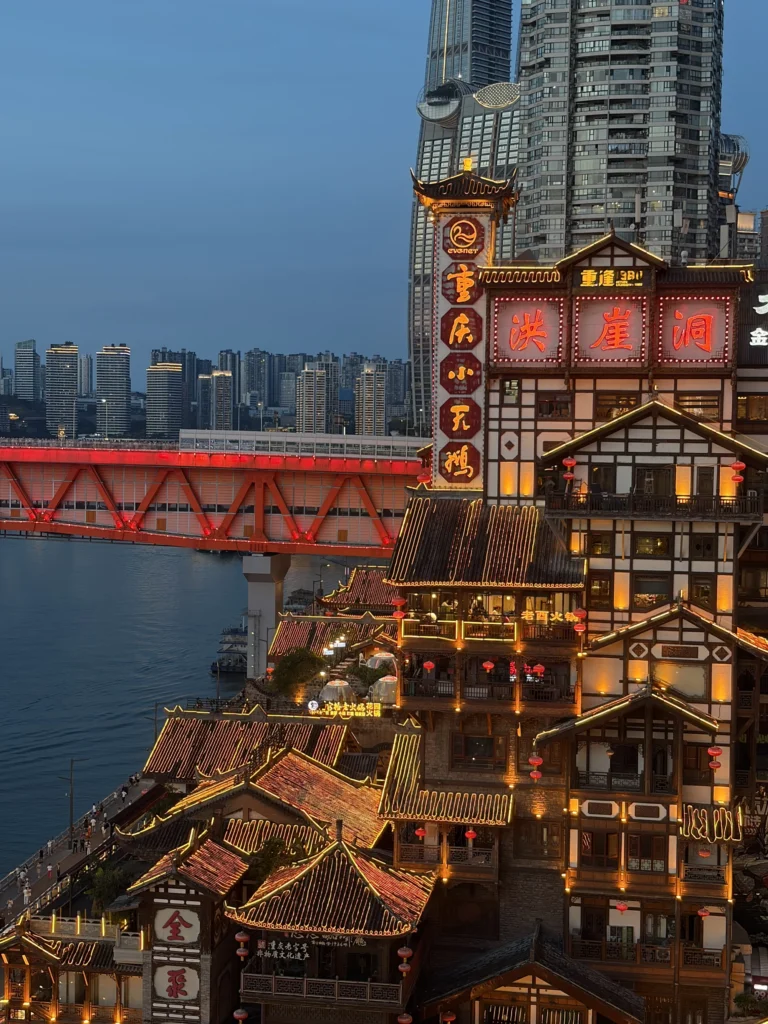
Follow the trail downhill and you will come out on Jiabin Road, which runs along the Jialing River at the lowest level of Hongyadong.
This is a good place to take low-angle photos of Hongyadong from the side. It is also the most crowded area around Hongyadong, often so packed with visitors that it is difficult to walk through.
You may also be approached by people carrying tablets and promoting photo services. Online reviews are generally poor, and the quality of the photos can be hit or miss.
Qiansimen Bridge
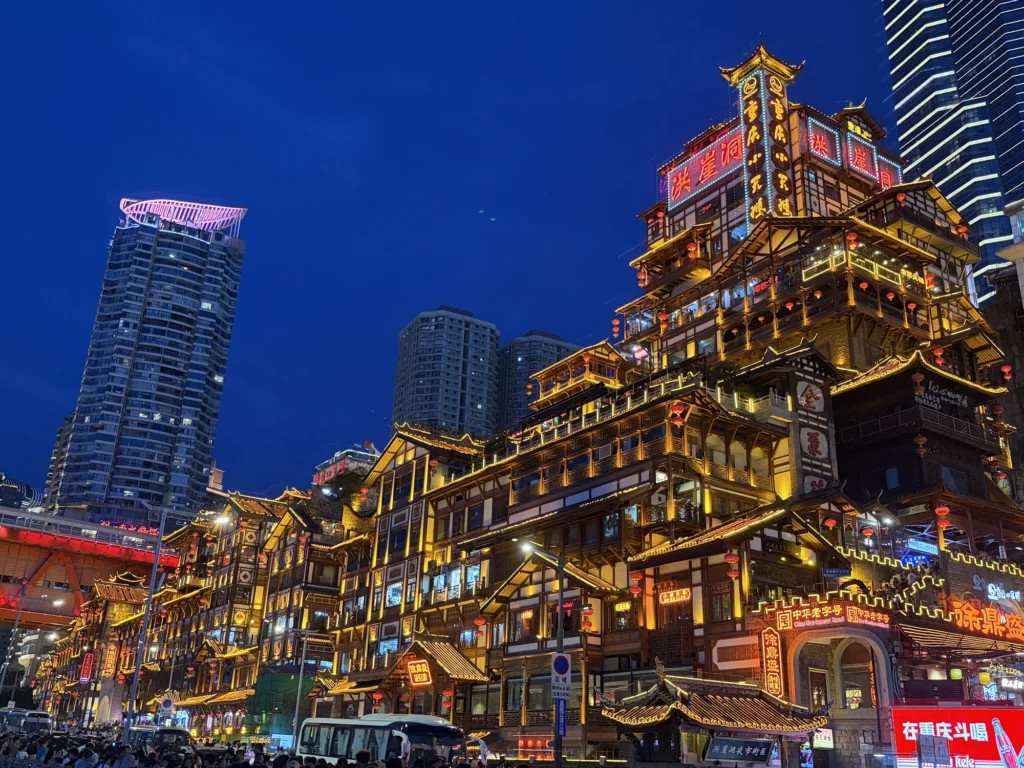
If you are not planning to explore the food streets or have a costume photo shoot, enter Hongyadong and take the elevator to Floor 9. From there, take the escalator to the top of Hongyadong, then walk to Qiansimen Bridge.
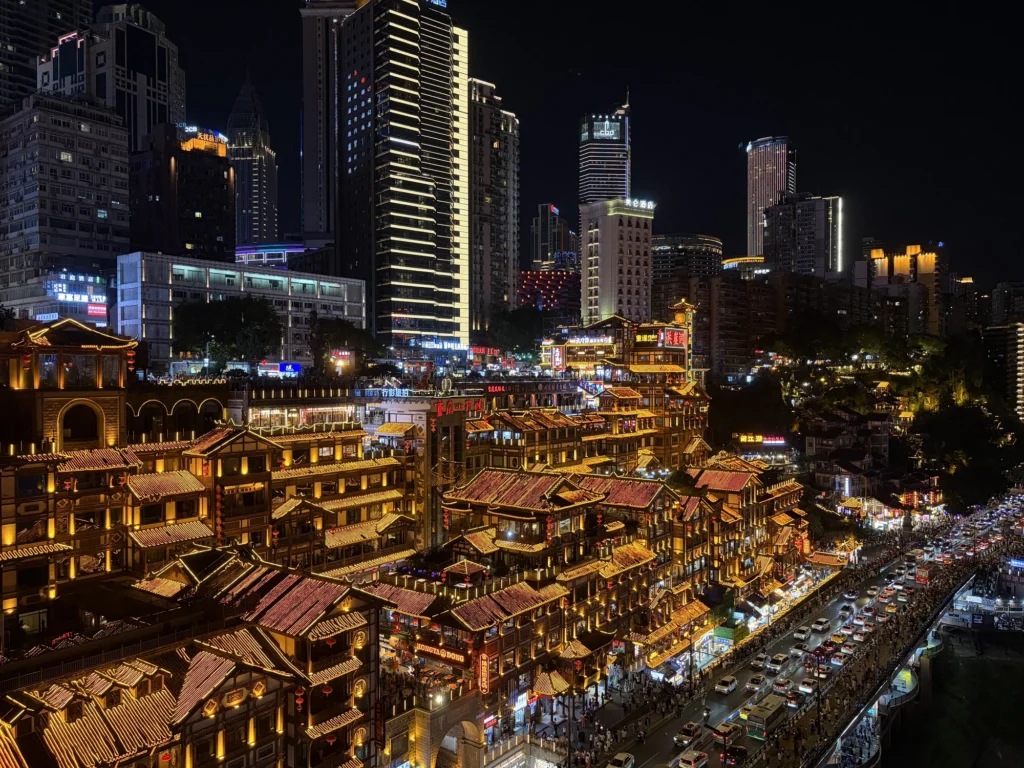
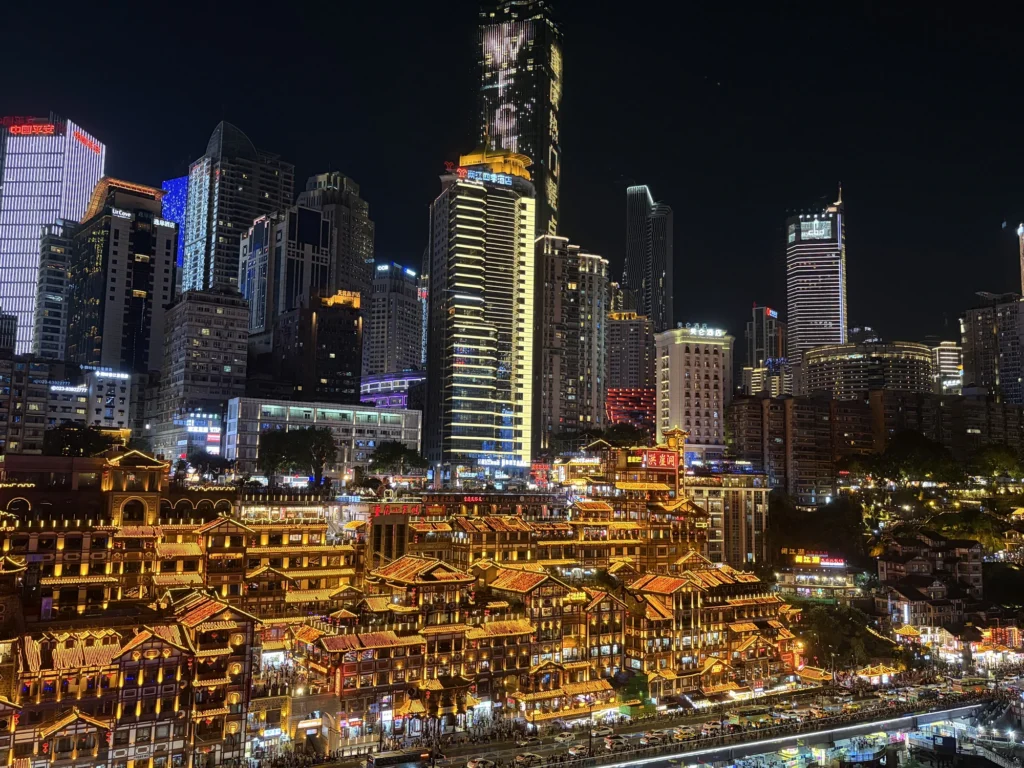
From the bridge, you can photograph Hongyadong from a higher angle, with the Jialing River and the high-rises behind it in the same shot. It is also one of the best-known angles for photographing Hongyadong.
The bridge is just as crowded, however, and the section closest to Hongyadong is often packed with visitors. I actually recommend walking farther toward the middle of the bridge. There are fewer people there, and the background in your photos is more varied.
Riverside park
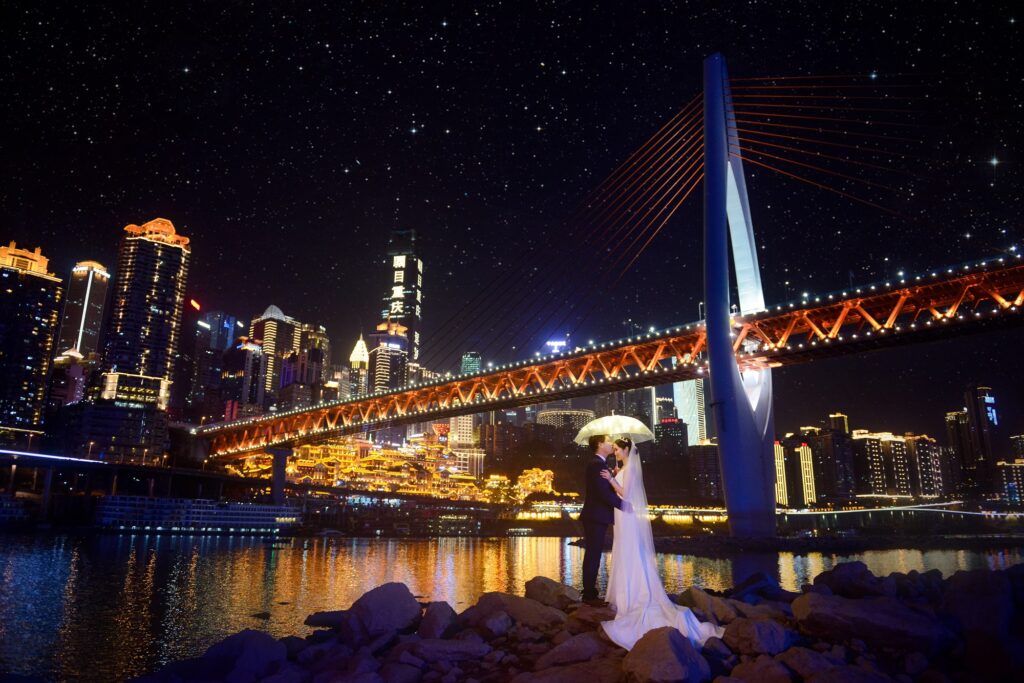
Continue across Qiansimen Bridge to the opposite bank. With the Yuzhong Peninsula behind Hongyadong, this is where I think it looks best, and it is also much less crowded than the area directly below Hongyadong.
If you want to save yourself some walking, you can stop at the bridge approach for photos and the view.
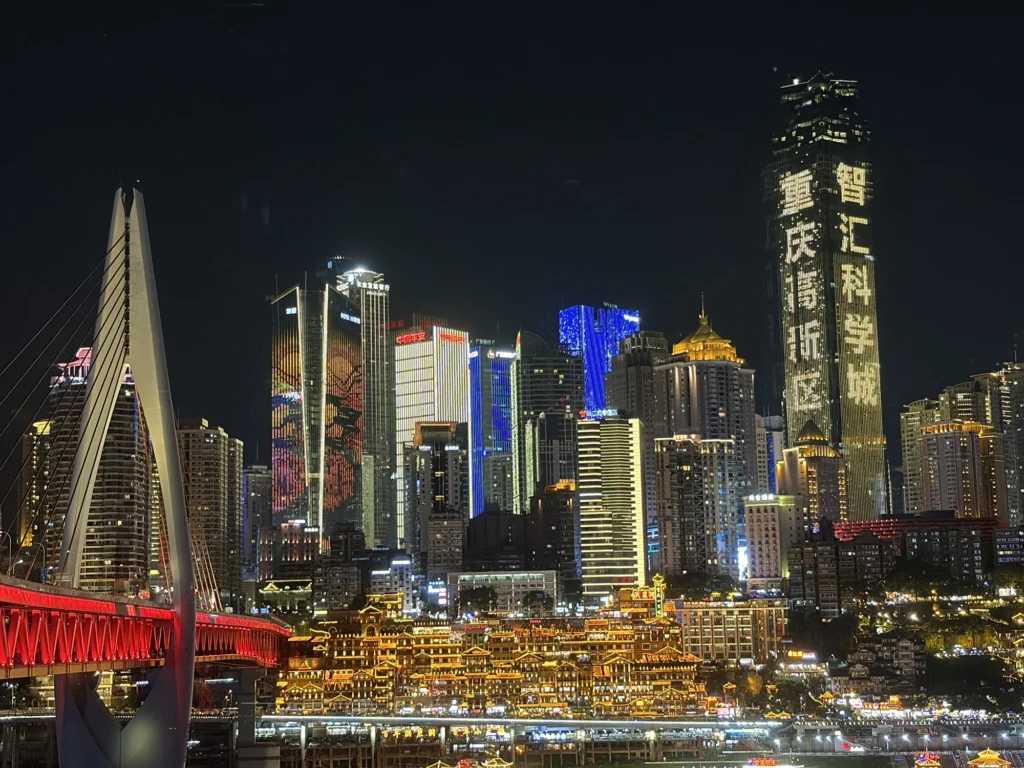
I still recommend walking a few minutes farther, though, and heading down to the riverside park. From Exit 1 of Grand Theatre Station, it is about a three-minute walk toward the river.
The view from the park is similar to the one from the bridge approach, but once you are down by the river, you can photograph Qiansimen Bridge and Hongyadong together. I also had a set of wedding photos taken here. There were more than a hundred photos in the full set, but even now, several of my favorites are still the ones taken here.