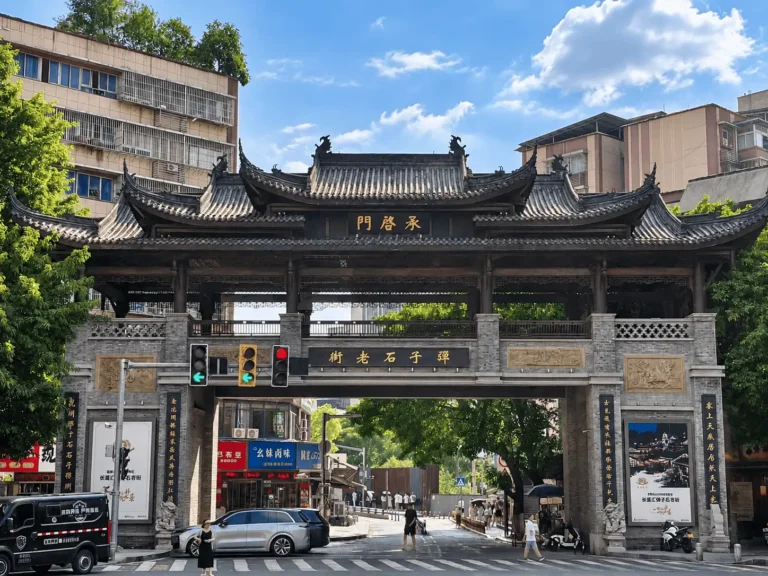
Guide to Huangjueya Old Street and Huangge Ancient Road


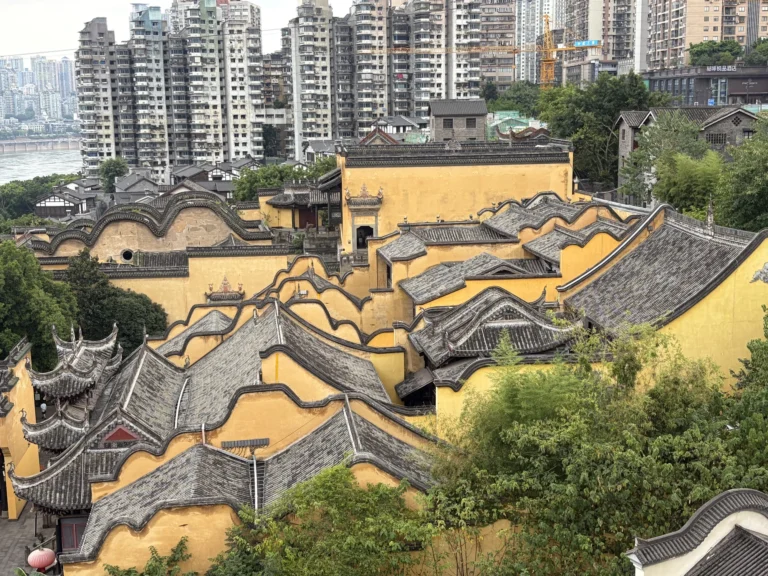
Huangjueya Old Street lies on Nanshan. Compared with more popular old streets such as Longmenhao, Xiahaoli, and Shibati, it sees far fewer visitors, and commercial development remains limited. Many residents still live here.
That is why Huangjueya still looks more like an ordinary old street in Chongqing. There is not much to explore, however, so it works better as a stop after Laojundong on a half-day trip around Nanshan than as a destination in its own right.
Getting there
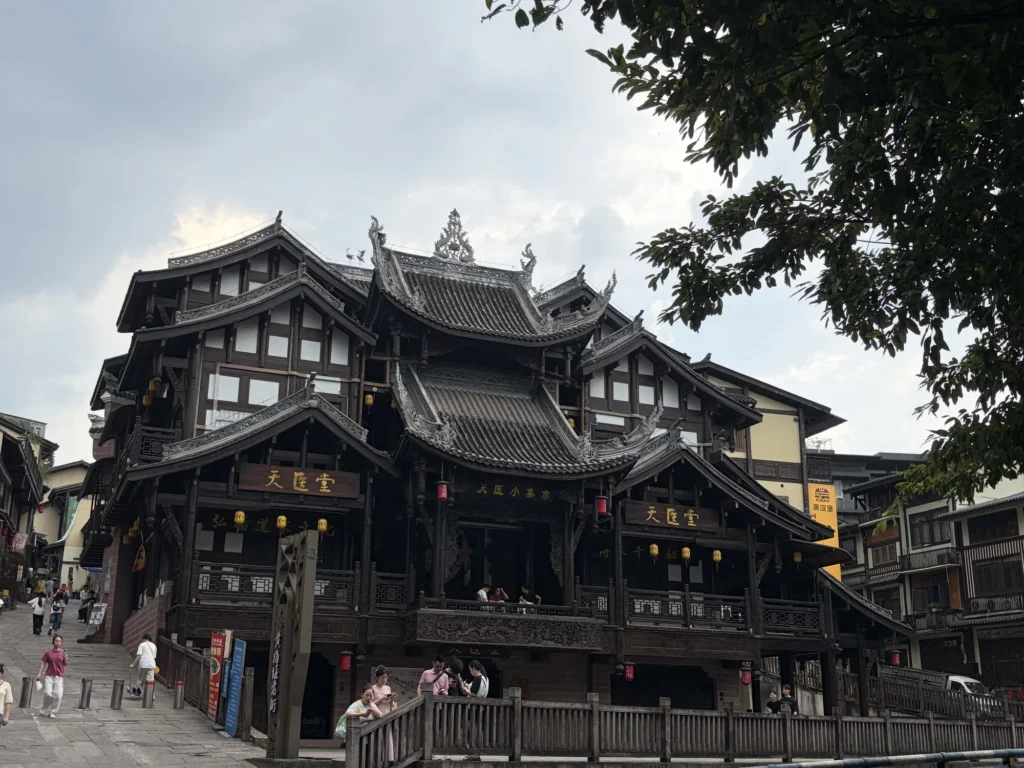
There is no metro station near Huangjueya Old Street. You can take a bus, but the routes are somewhat complicated, so I recommend taking a taxi or booking a ride instead. Set your destination to “贵州商会馆” (Guizhou Guild Hall). The building is shown below, and the entrance to the old street is right beside it.
A better option is to visit Laojundong first, as I did. Once you have finished there, leave through the west gate and walk to Huangjueya Old Street. The walk takes about eight minutes. The route is almost entirely flat and stays under tree cover the whole way, so it is manageable even on a very sunny day.
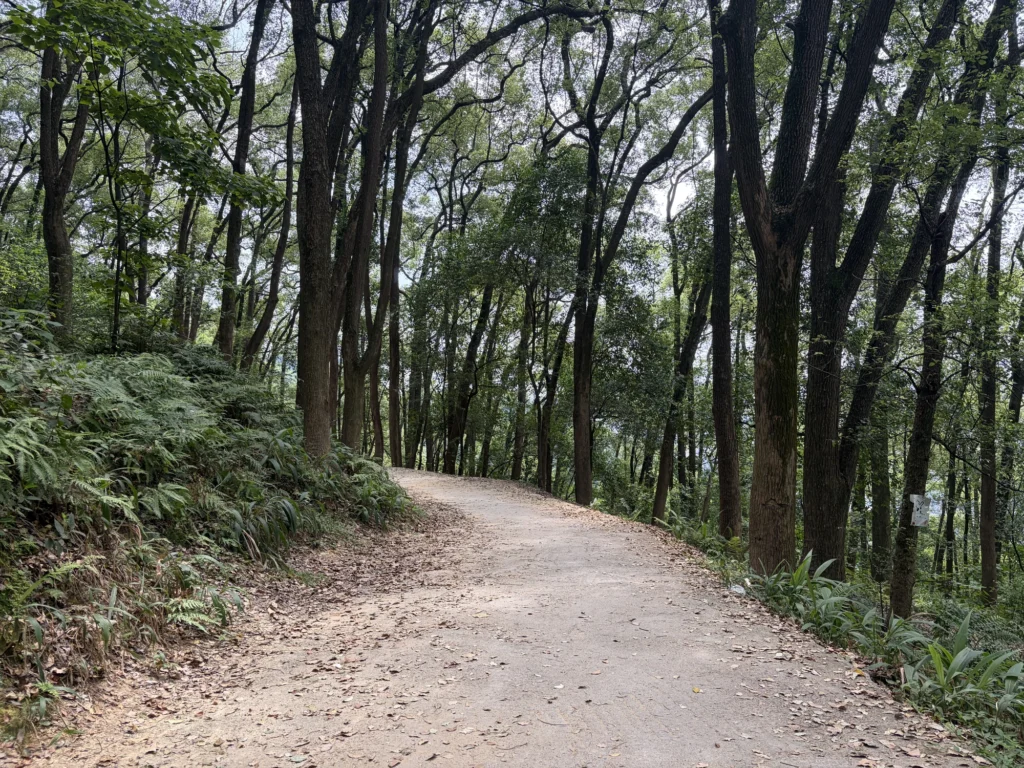
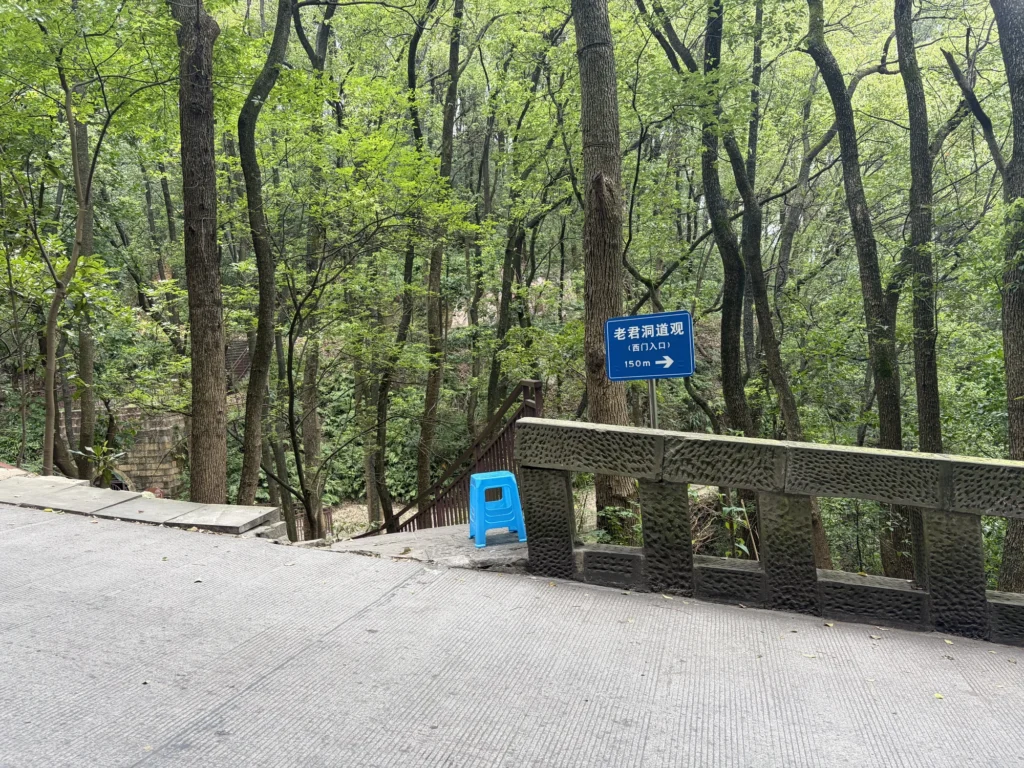
After leaving Laojundong through the west gate, follow the road for about 200 meters. When you reach the end of the stone railing, you will see the entrance to the footpath leading to Huangjueya Old Street. The photo below shows the exact location.
How to explore Huangjueya Old Street
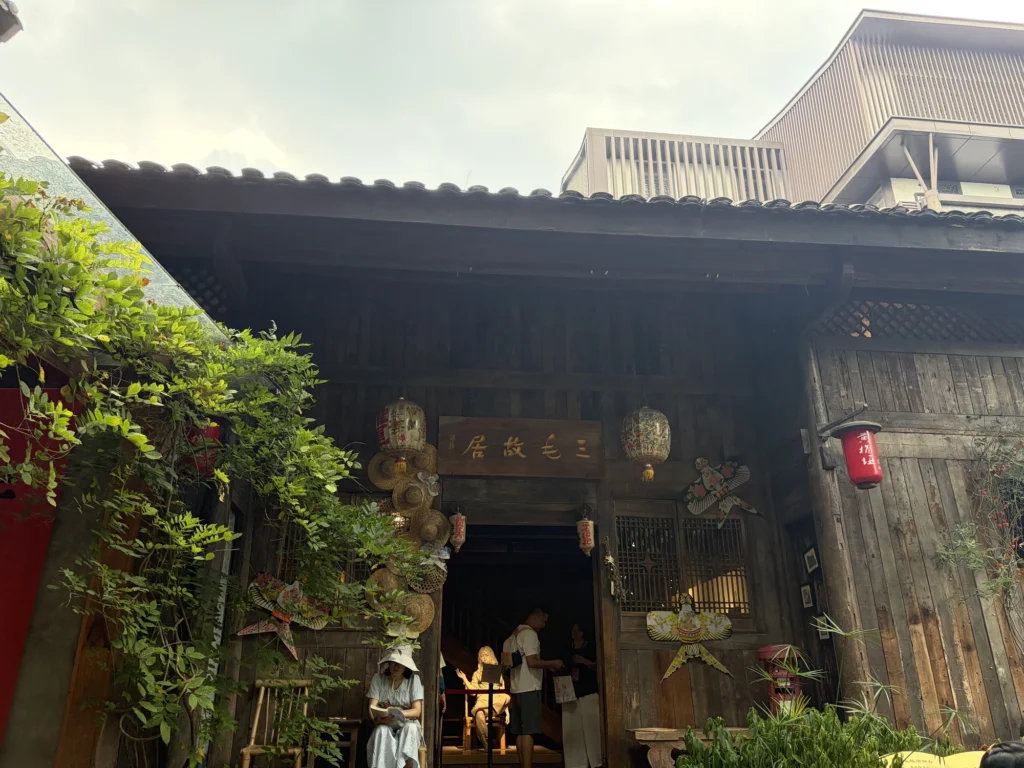
Huangjueya Old Street is small and does not have many sights. The main place to stop is the former home of Taiwanese writer Sanmao. It is an old house with a roof of small gray clay tiles. The building was later renovated and is now open to visitors. Admission is RMB 10.
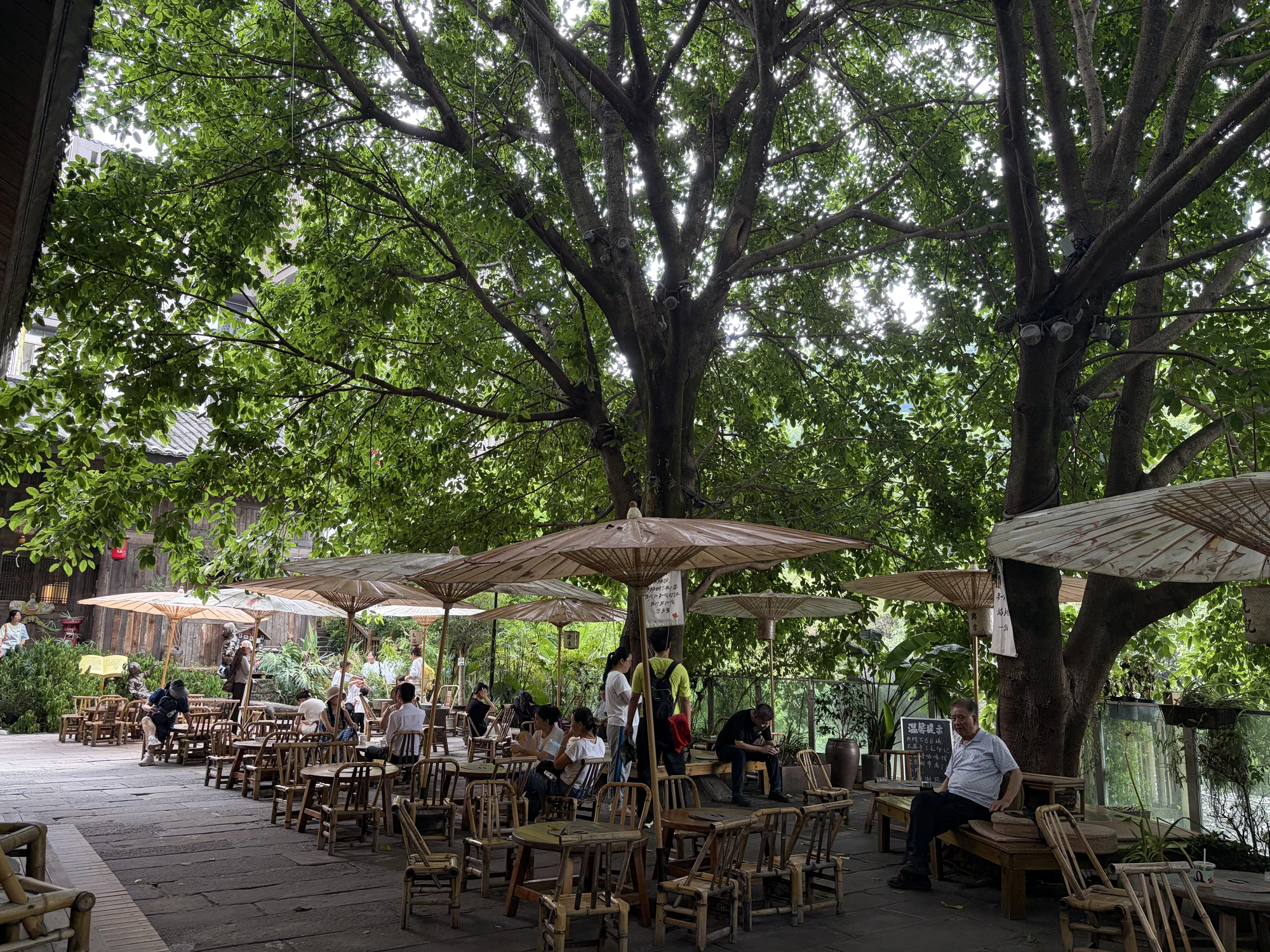
Next door is a café with an open area shaded by several large huangjue trees. The space beneath them is filled with bamboo tables and chairs, much like the open-air streetside tea spots common in Chongqing. It is also the liveliest part of the old street. If you are not in a hurry, you can order a coffee and sit here for a while.
The nearby Huangge Ancient Road, however, is worth more of your time than Huangjueya Old Street. It once served as an important official road and trade route linking Chongqing with Yunnan and Guizhou. Porters, packhorse caravans, and merchants all passed this way.
The uppermost flight of stone steps was cut during the Tang dynasty, more than 1,100 years ago. Centuries of footsteps and repeated repairs gradually shaped it into what you see today.
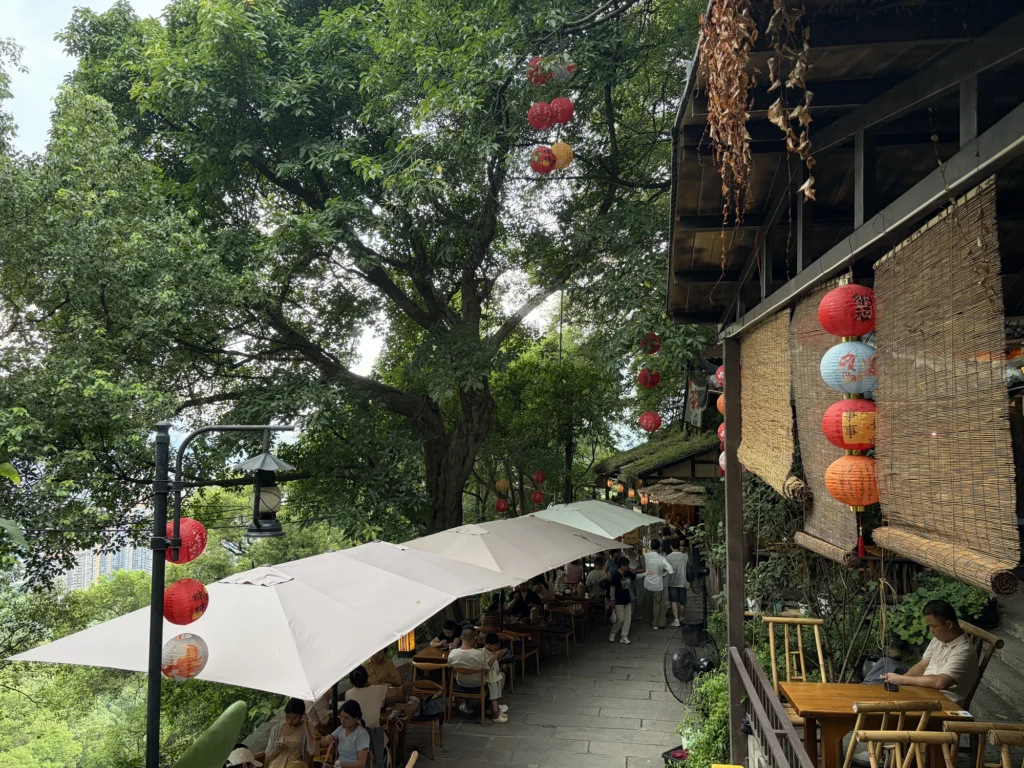
The old road descends the hillside, with several teahouses along the way and woods all around. The only sounds are birdsong and the hum of cicadas. On the day I visited, the forecast called for a high of 38°C, so I had expected it to feel hot and muggy. Instead, sitting in the shade felt perfectly comfortable, and when a mountain breeze came through, the air was actually quite cool.
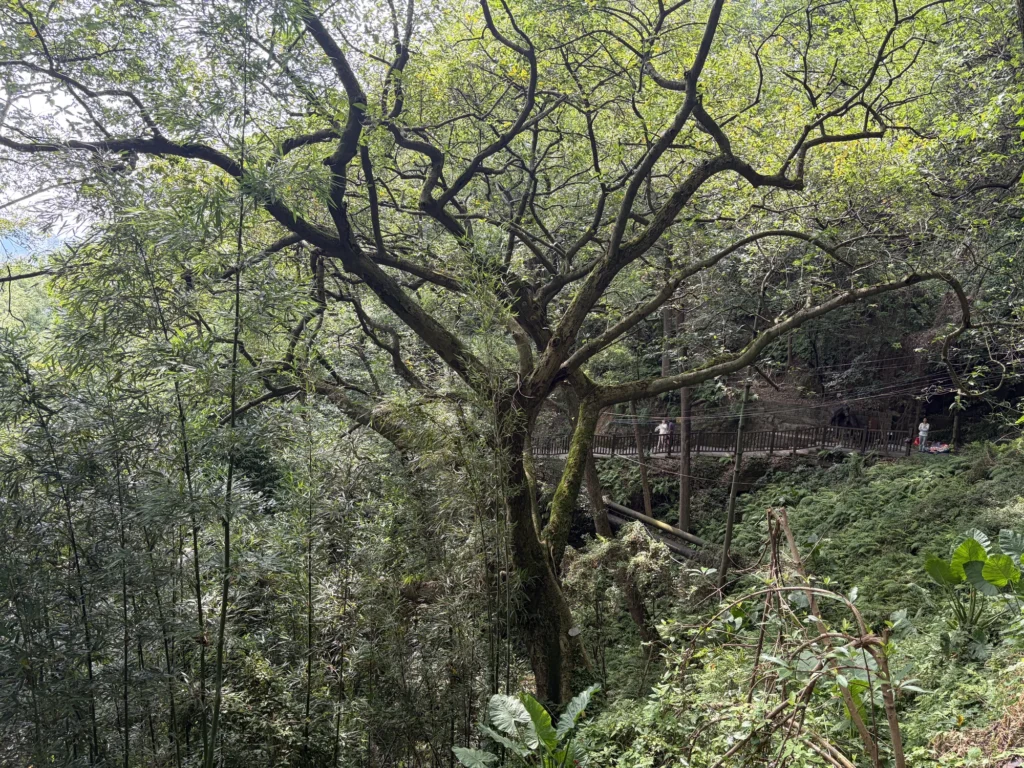
Many large trees grow along the ancient road, including huangjue trees, also known as huangge trees, that are more than a century old. These old huangjue trees have thick trunks and dense canopies that shade most of the stone steps. Huangge Ancient Road takes its name from them.
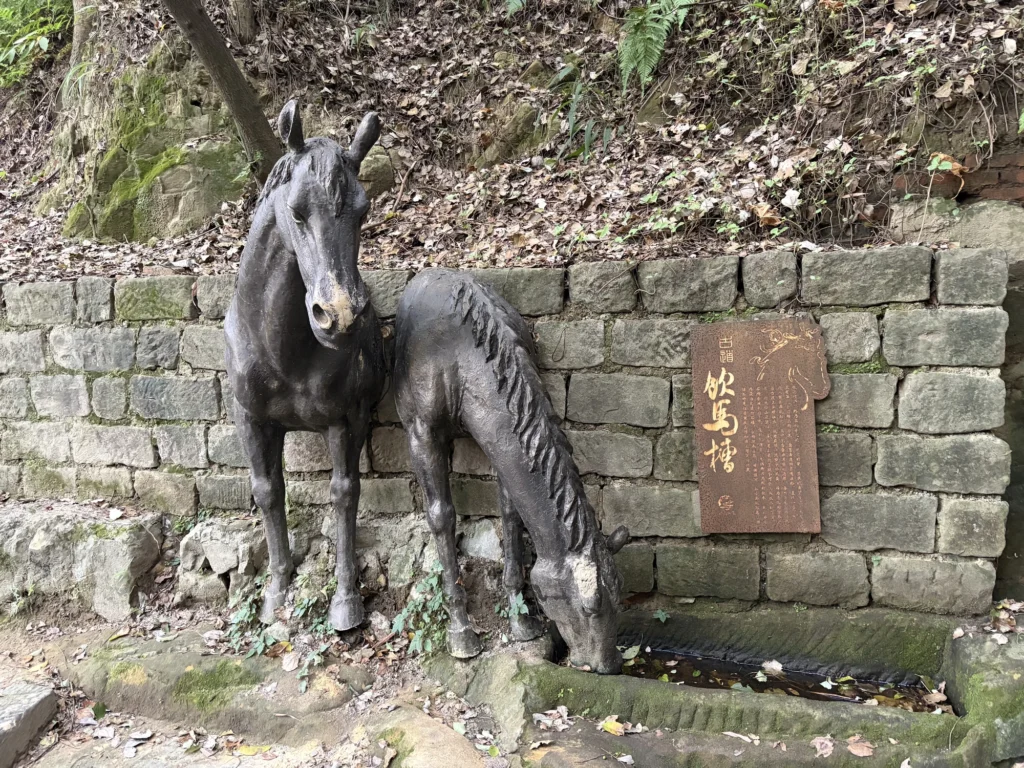
The only remaining horse trough on Huangge Ancient Road was cut directly into the rock beside the road with chisels. It is an original feature, not a later replica. When filled with water, it gave passing horses a place to drink. This unassuming stone trough is a surviving trace of the road’s former role as a transport route.
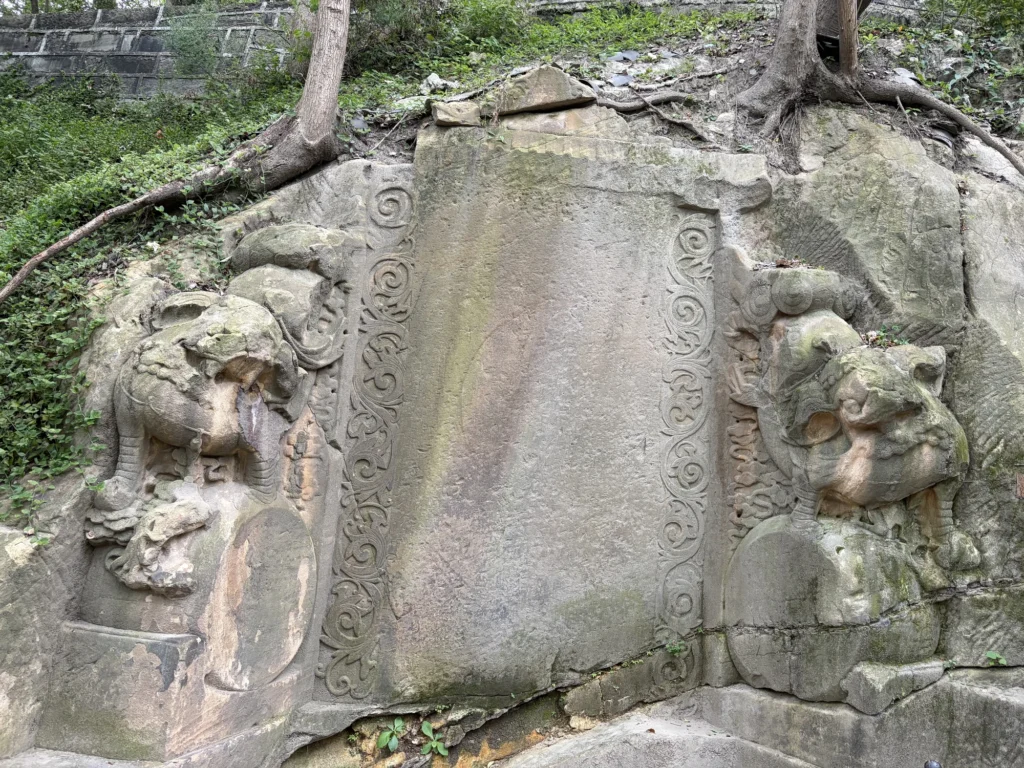
There is also an unusual uninscribed panel carved directly into the rock face. A local story links the blank panel to Zhang Jing, a Southern Ming general, and explains why no inscription was ever added.
According to the story, Zhang retreated to Huangjueya and held out against Qing forces here for more than a decade. He built fortified camps and organized soldiers and civilians to farm the land and repair the roads, allowing nearby residents to live relatively stable lives for a time amid the fighting.
Taoist priests at Laojundong wanted to carve an inscription in his honor, but the situation was still unstable, they could not openly leave words praising a general who was resisting the Qing. They carved out the inscription panel and the decoration around it but never added any text. Zhang was later defeated and captured, and the stone panel has remained blank ever since.
The walk down took me about 30 minutes, with stops along the way. If you do not have a car parked at Laojundong, I would not recommend retracing your steps. Instead, continue to the parking lot at the end of Huangge Ancient Road, then take a taxi or book a ride from there.