Guide to Chongqing Guotai Arts Center and Chongqing Art Museum


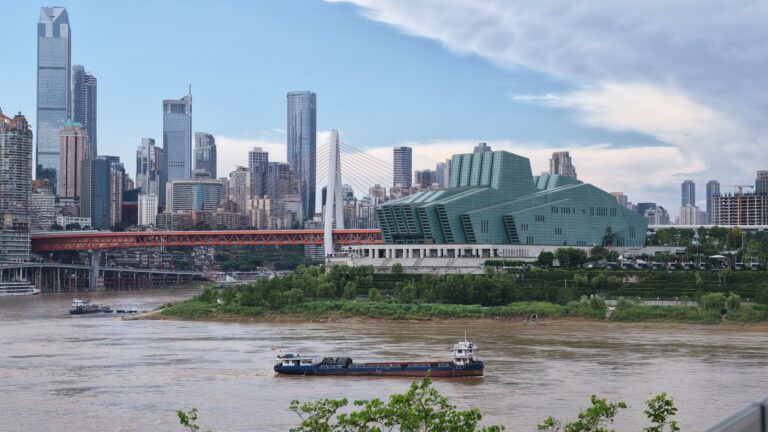
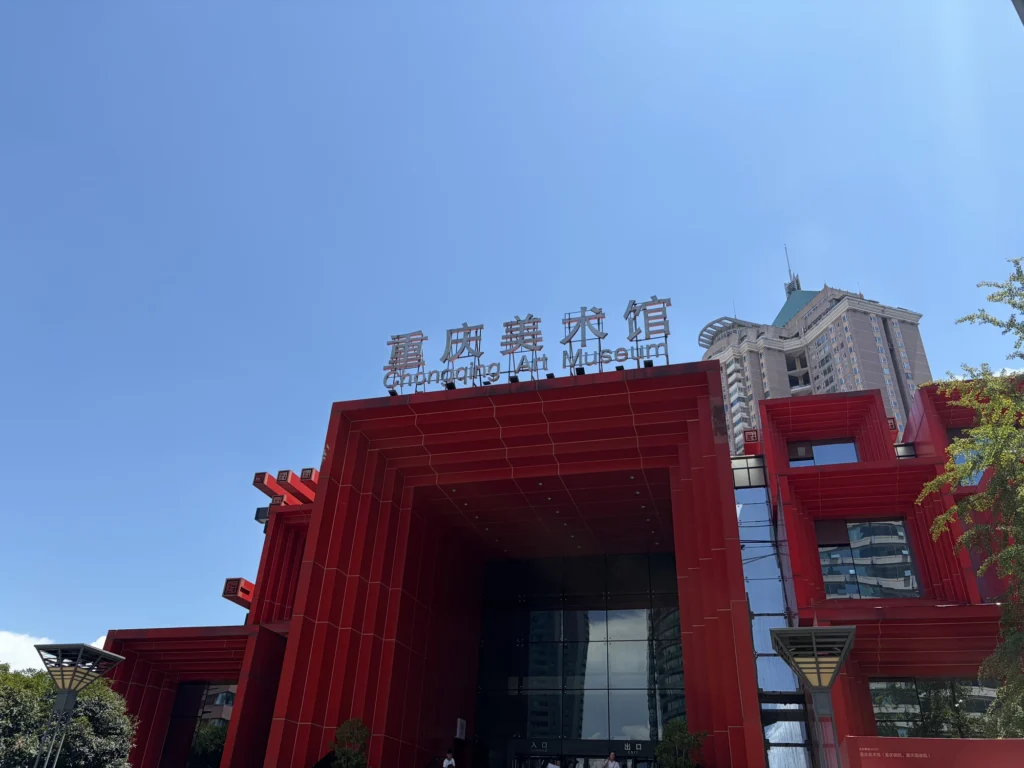
Chongqing Guotai Arts Center stands next to Jiefangbei. Its exterior looks like countless chopsticks overlapping in layers, so it is often jokingly called the “Chopstick Building”. It has become one of Chongqing’s most recognizable and widely photographed landmarks.
But it is more than a photo stop. The building is also a public arts venue, housing both the Guotai Grand Theater and Chongqing Art Museum.
Getting there
Take Line 2 to Linjiangmen Station and use Exit 2. From there, walk about 300 meters to Chongqing Guotai Arts Center.
If you are walking from Jiefangbei to Hongyadong, you will pass the building along the way. Search for “国泰艺术中心1号门” (Gate 1 of Chongqing Guotai Arts Center) in your map app. The elevator beside Gate 1 takes you directly to the fifth-floor side entrance of Chongqing Art Museum.
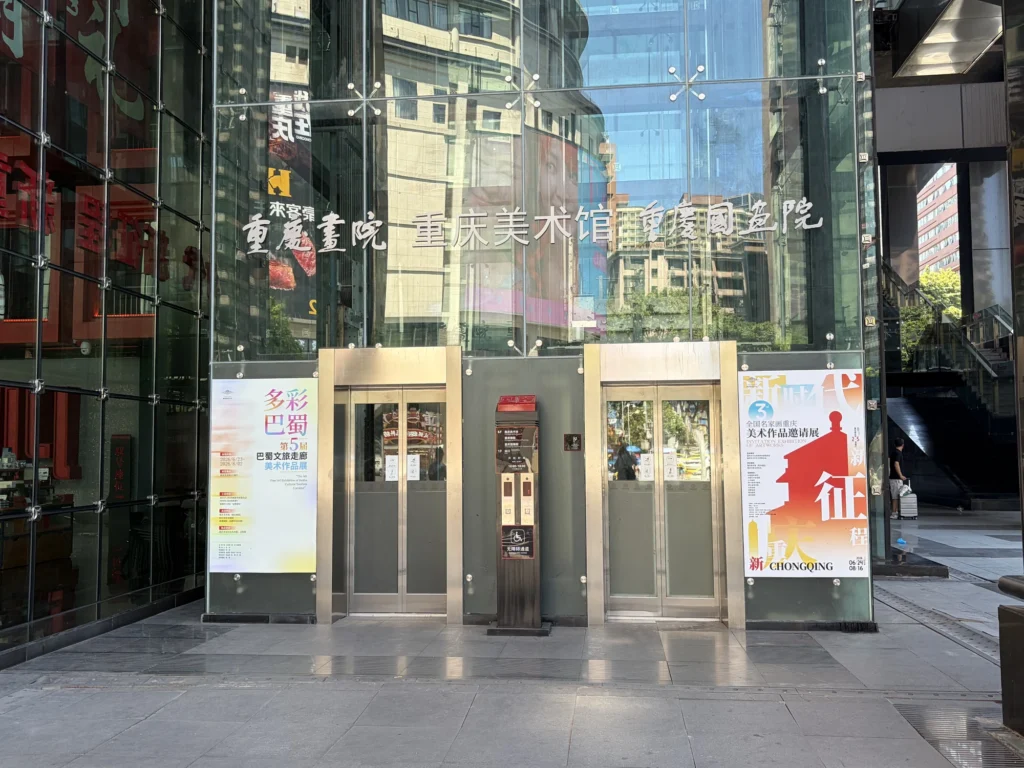
For a little more sense of occasion, search for “重庆美术馆” (Chongqing Art Museum) and enter through the main entrance instead.
Tickets and opening hours
Admission to Chongqing Art Museum is free, and no advance reservation is required.
The museum is open Tuesday through Sunday from 10:00 a.m. to 6:00 p.m., with last admission at 5:30 p.m. It is normally closed on Mondays, except when a public holiday falls on a Monday.
For performances at Guotai Grand Theater, tickets are available through the “重庆国泰艺术中心” WeChat Mini Program or at the venue.
How to visit
I stopped by on my way to Hongyadong. Since I had no plans to see a performance, I only looked around Chongqing Art Museum briefly, took a few photos outside, and then continued on to Hongyadong.
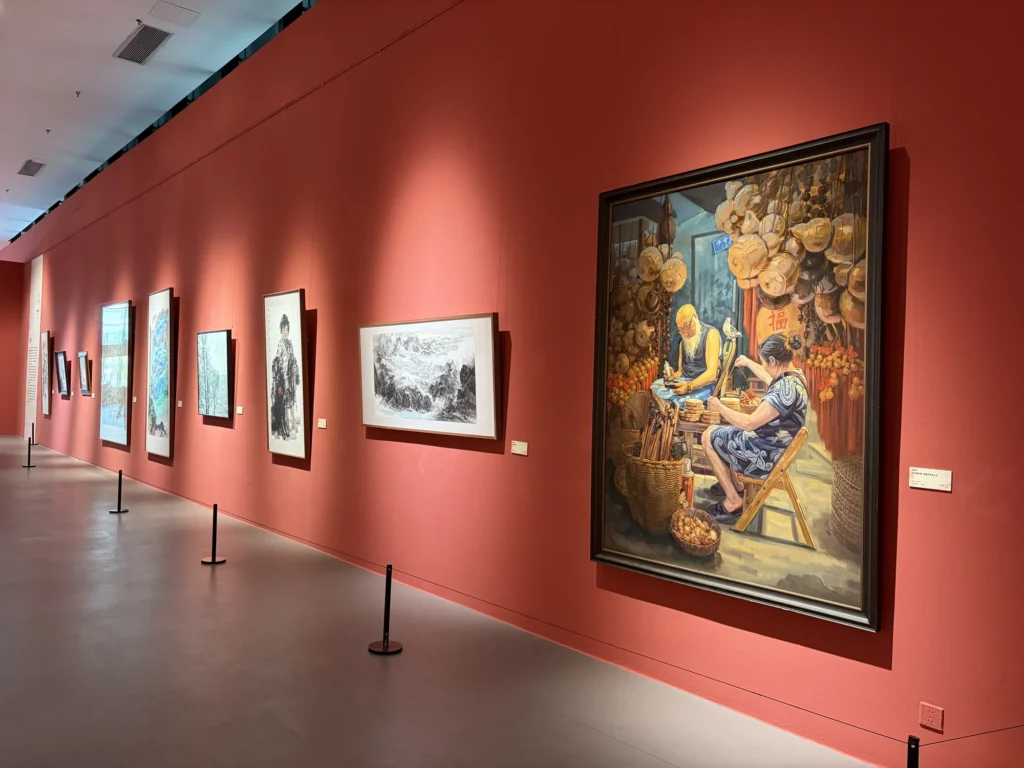
The museum occupies two floors. Most of the works on display are Chinese painting and calligraphy, covering subjects such as landscapes, flowers and birds, city scenes, and everyday life. There are also oil paintings, prints, and a few other types of work.
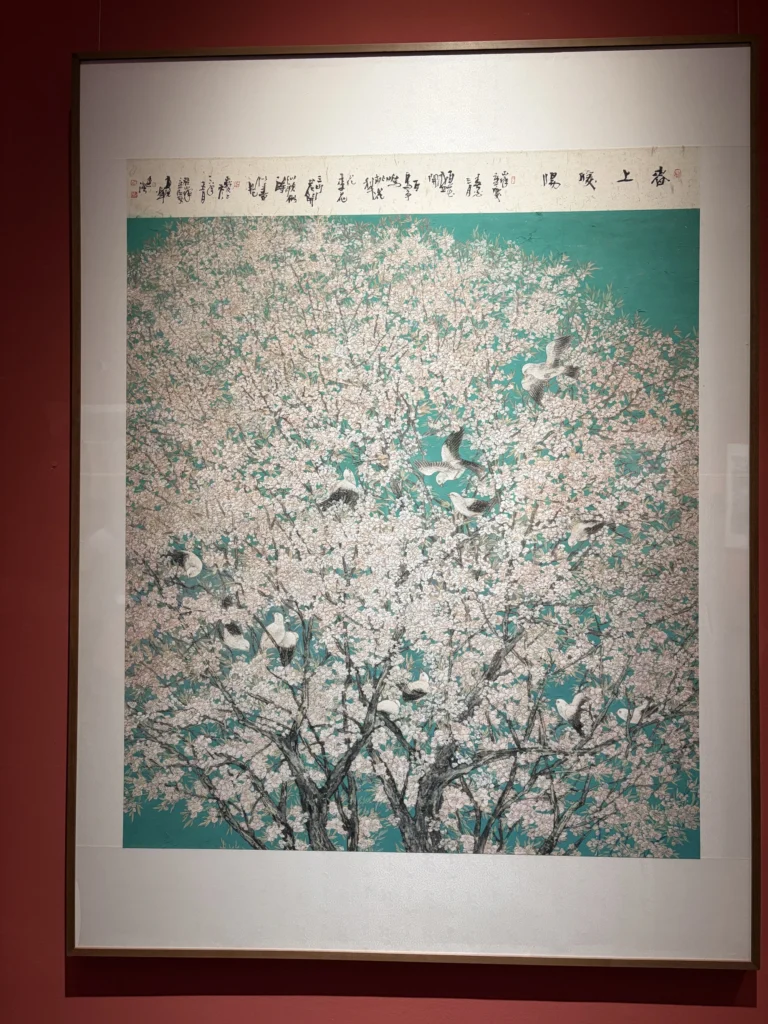
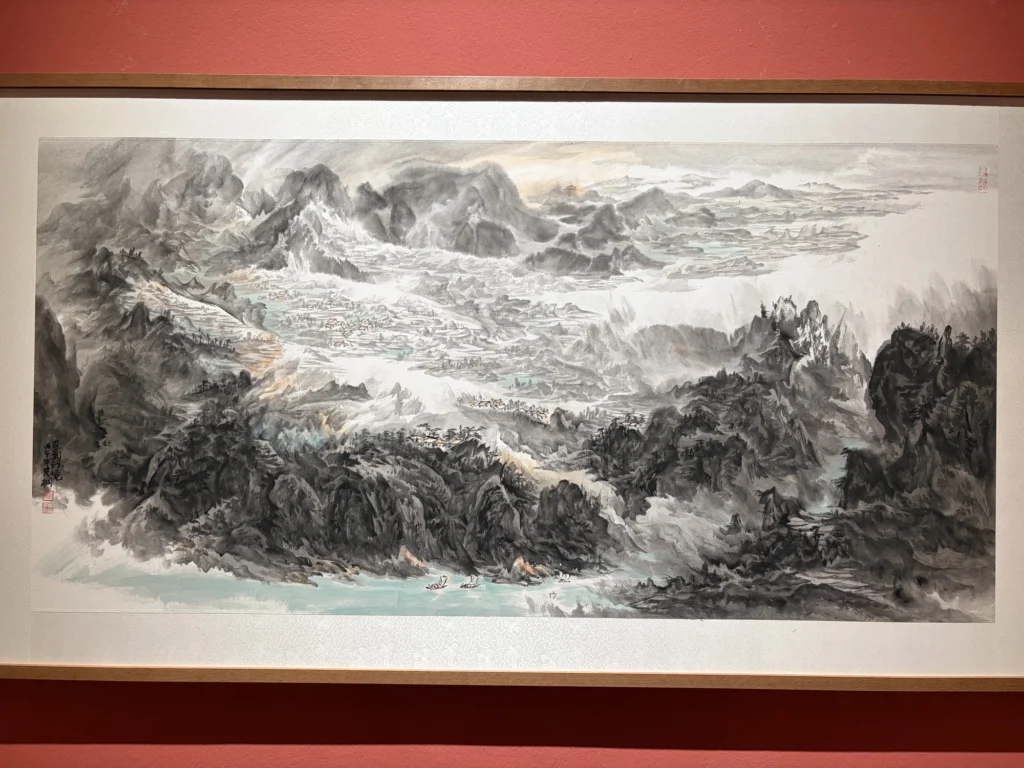
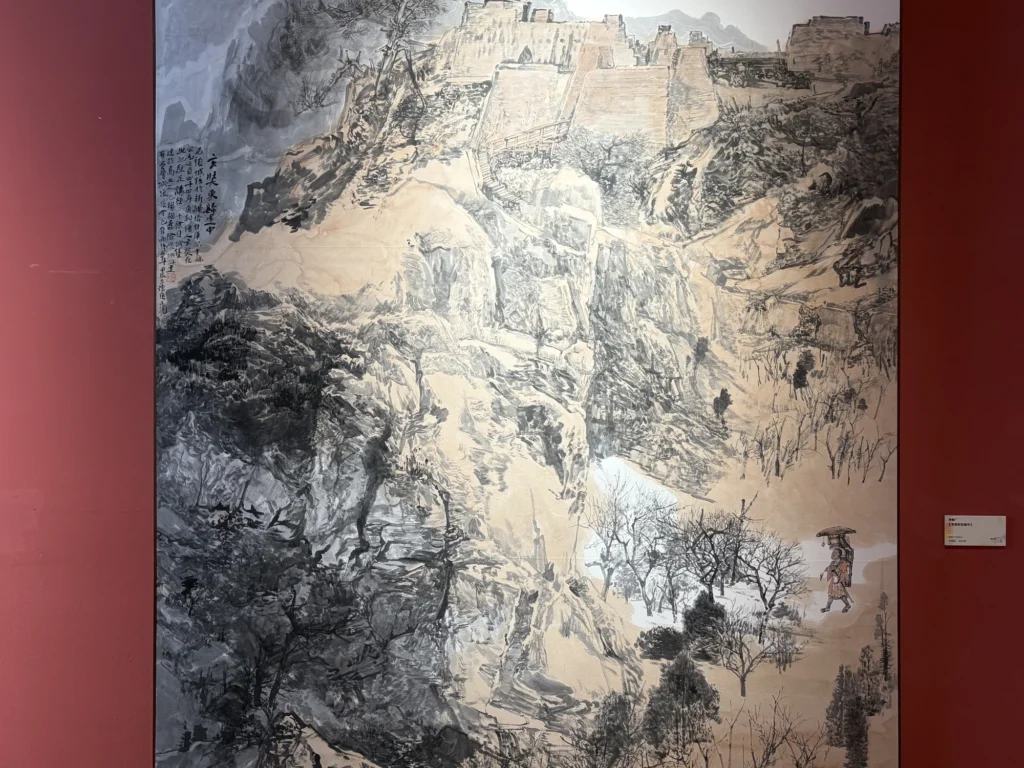
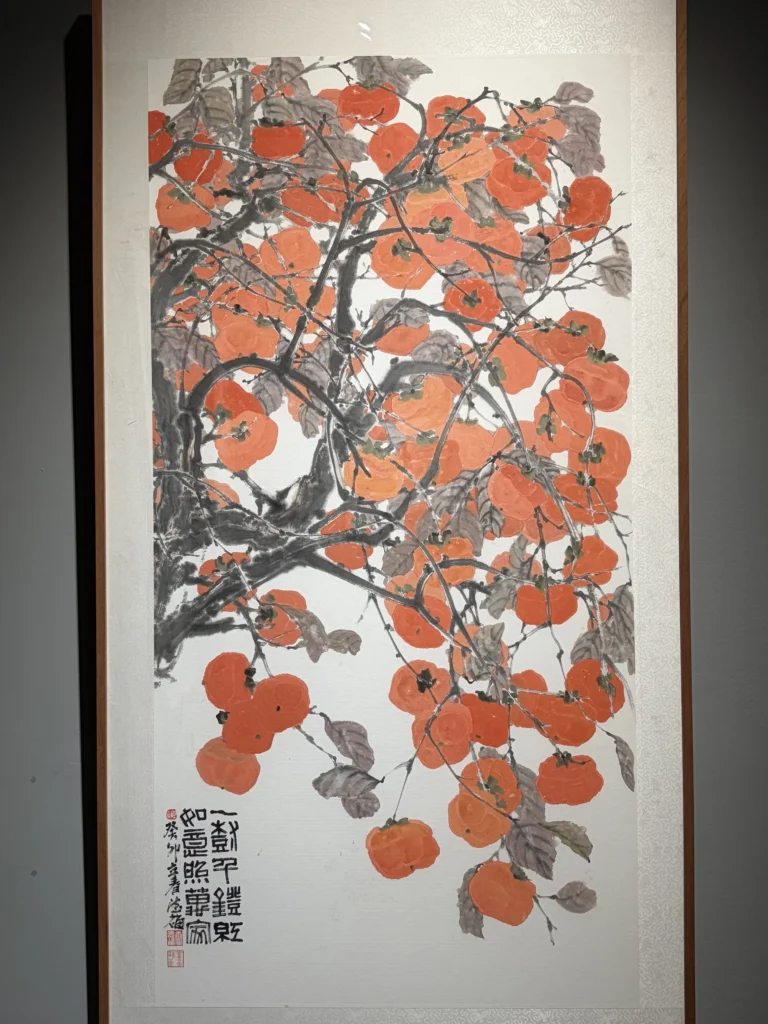
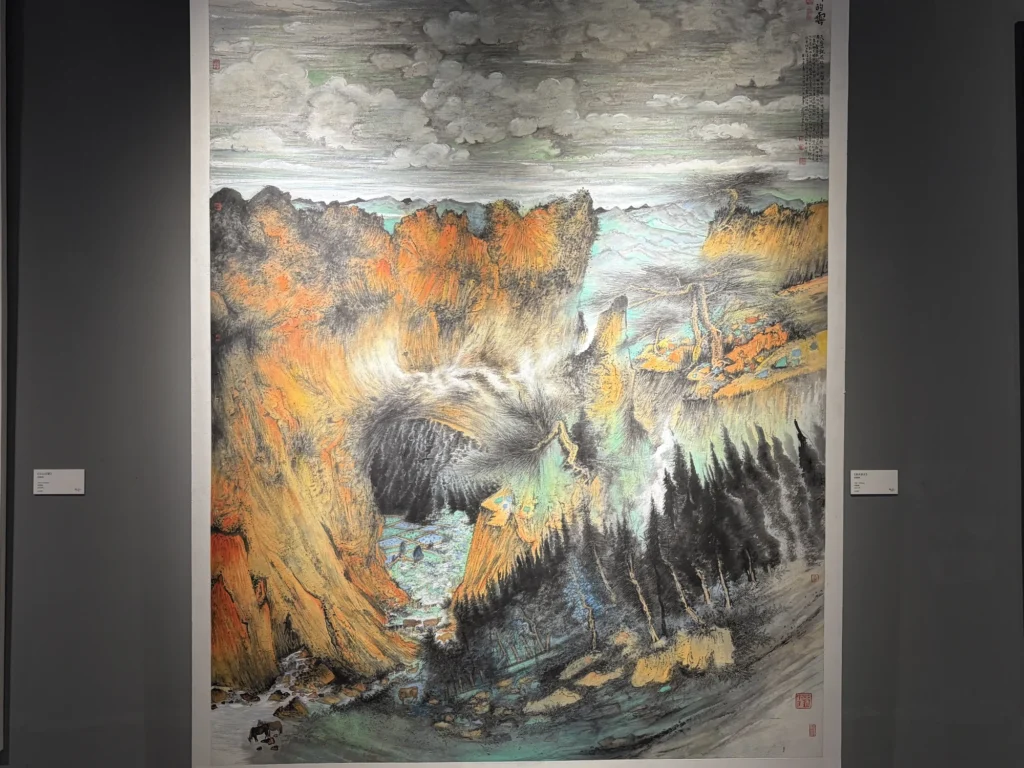
I preferred the prints. They use more vivid colors, along with bolder lines and blocks of color. Even without knowing much about the artists or the context behind the works, the images still convey a strong sense of emotion and rhythm.
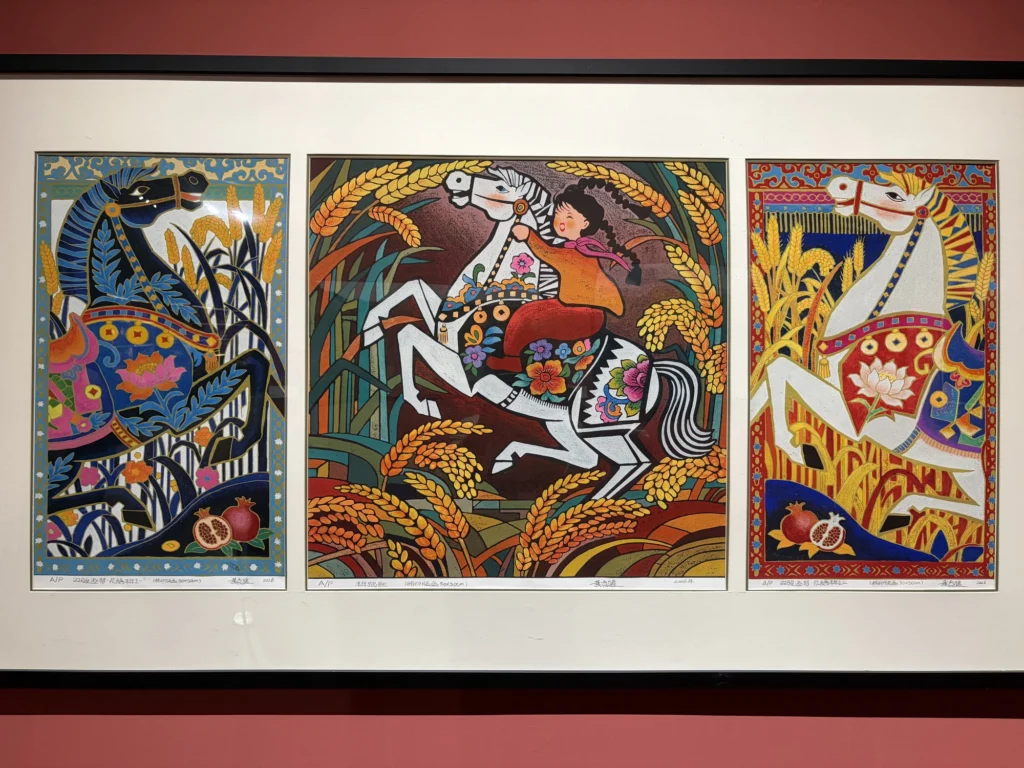
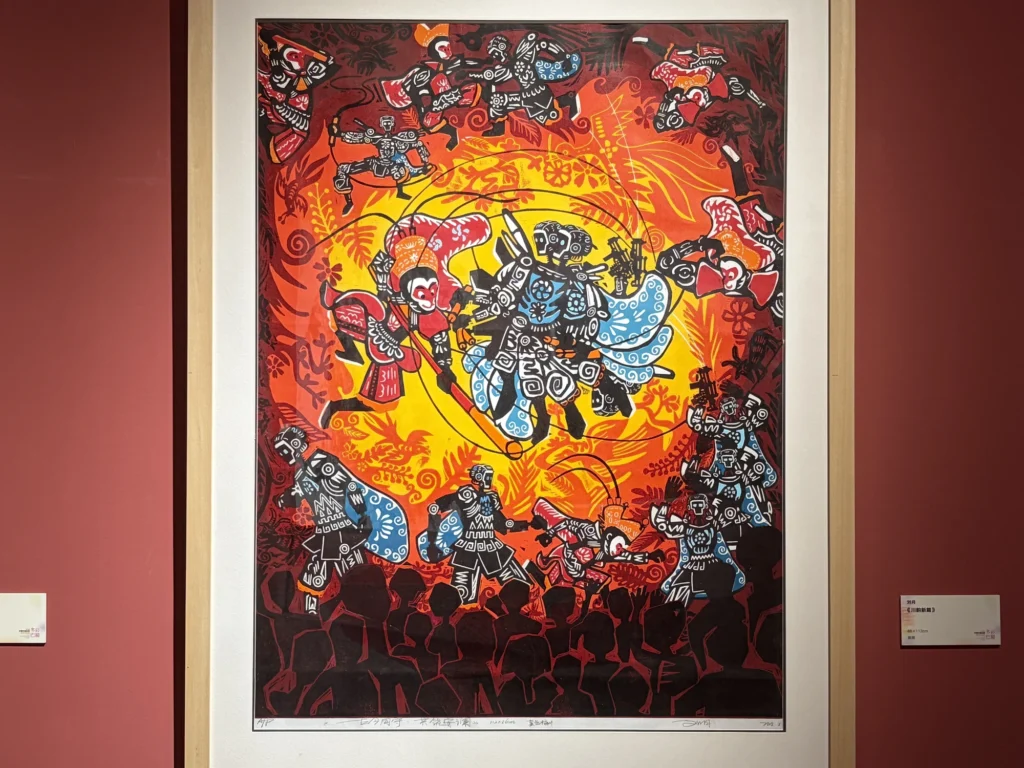
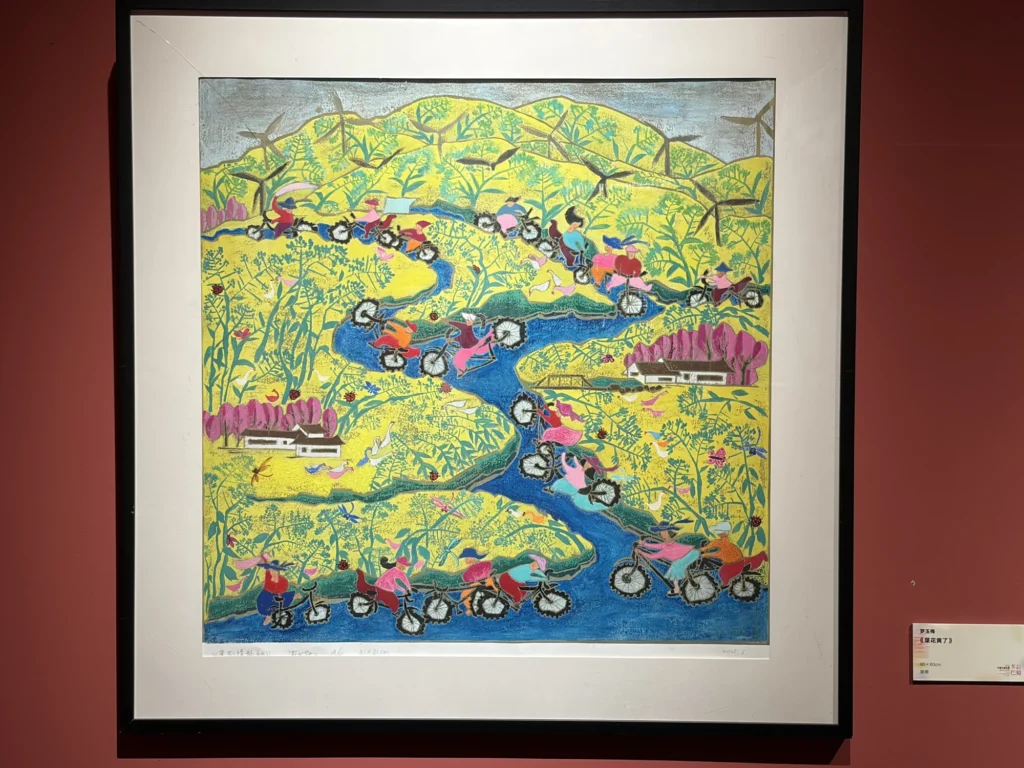
That said, I would keep expectations modest. At least during my visit, most of the works on display were from the previous two years, and I did not see anything by a well-known artist. For that reason, you do not need to set aside much time here. Thirty minutes is enough.
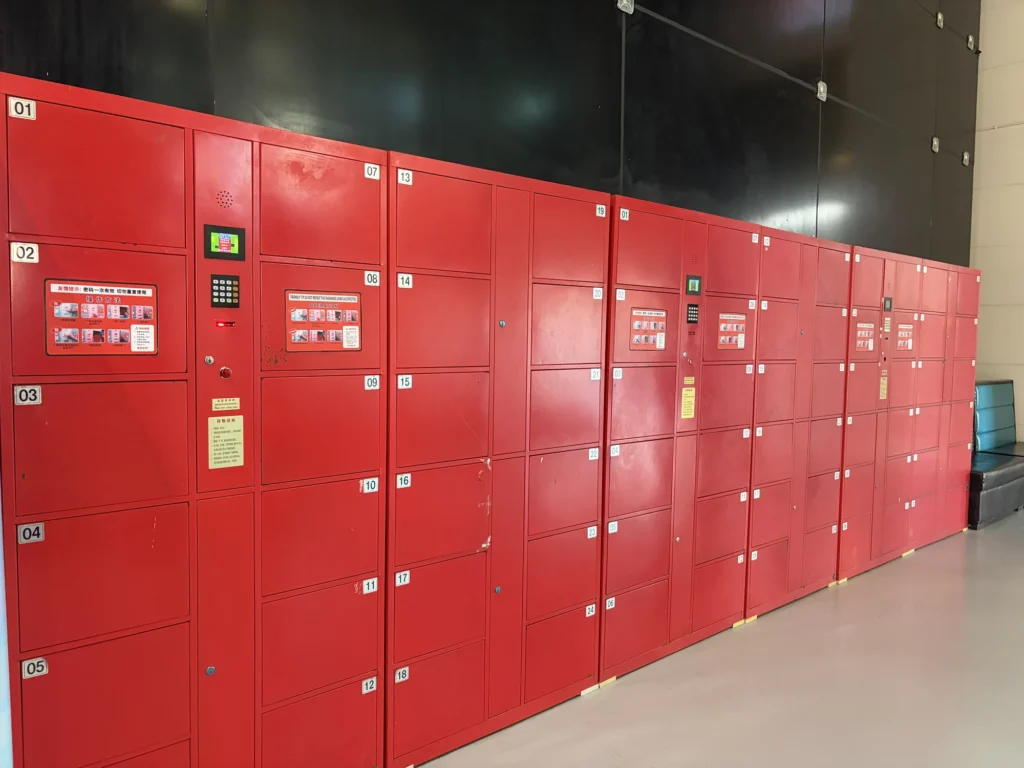
One thing to know before entering is that food and water are not allowed inside, although bags are permitted. If you are carrying food or water, free lockers are available at the entrance.
After leaving Chongqing Art Museum, cross the footbridge outside the entrance and continue to the street on the Hongyadong side. This is where Chongqing Guotai Arts Center looks its best. The cantilevered “chopsticks” along the side create strong visual tension. High-rises and a clear sky fill the background, while the treetops happen to hide the more cluttered parts of the frame, making the overall composition feel just right.
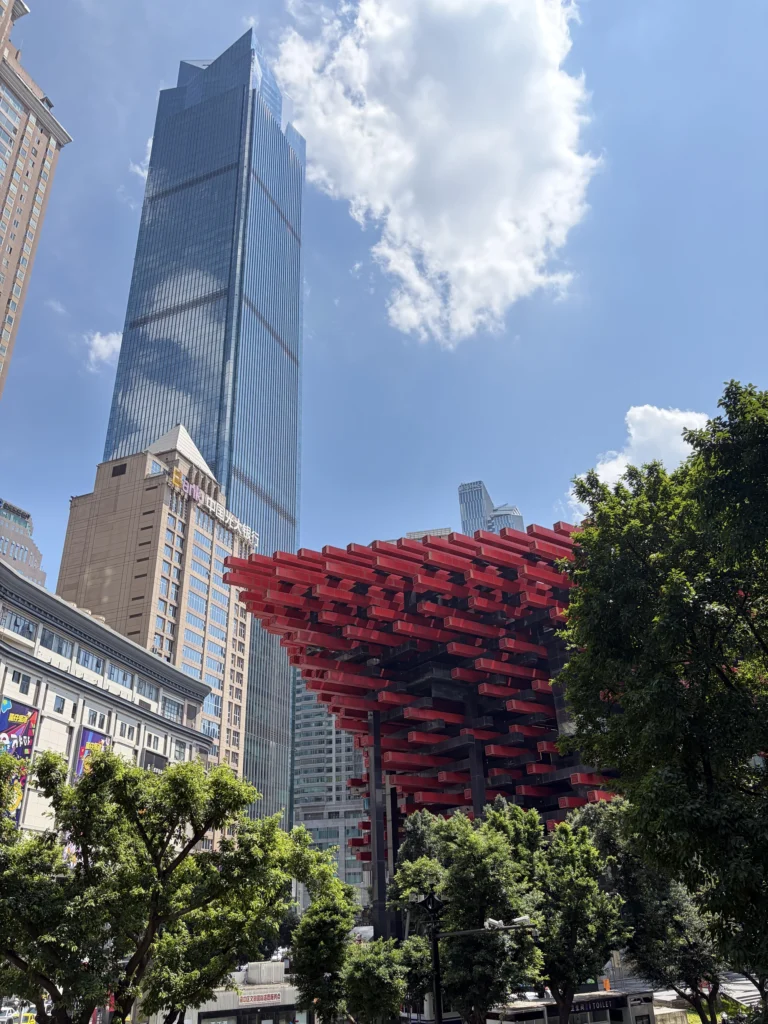
This angle also gives the clearest view of the layered, intersecting elements across the exterior. They were not arranged at random simply to create an exaggerated form. Instead, the design draws on the multi-tiered dougong brackets of Chongqing Huguang Guild Hall and the Han dynasty construction method known as Ti-cou, translating those references into a modern steel structure. The result retains the layered effect of traditional timber construction while still looking distinctly modern.
More interestingly, the red and black elements are not purely decorative. Some of the red elements help ventilate the building, while some of the black ones hold water that acts as a cooling medium. Together, they form an energy-saving ventilation and cooling system integrated into the exterior. In other words, the building’s most recognizable exterior feature is also part of how it functions.