Chongqing Travel Guide: Where to Stay, Getting Around & Things to Do


Chongqing is often described as a “cyberpunk city”, and the city is laid out very differently from most places. So I’ll start this guide by showing you how the different areas fit together and where most of the popular sights are concentrated.
With that geography in mind, choosing a high-speed rail station and deciding where to stay becomes much more straightforward. The rest of the guide covers transport, accommodation, and sights in central Chongqing and farther out.
Chongqing’s districts and sightseeing areas
Chongqing may be a city, but administratively it is much closer to a province in scale, covering 82,400 square kilometers.
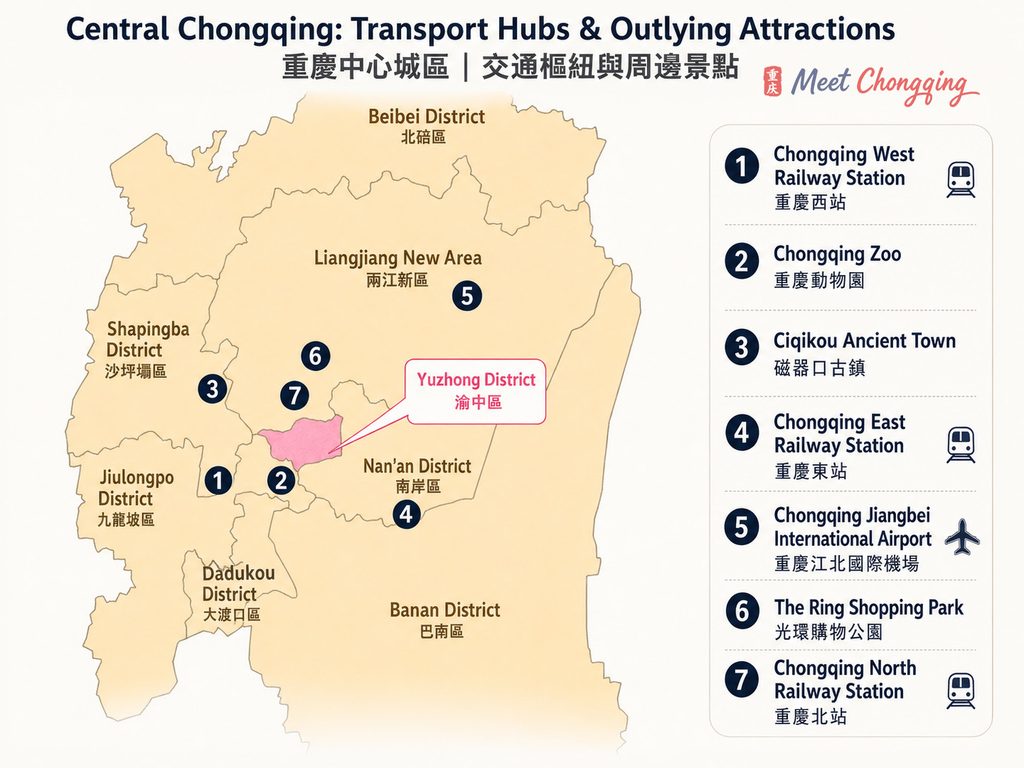
When people talk about “Chongqing,” though, they usually mean only the central urban area. Places such as the Three Natural Bridges, Dazu Rock Carvings, and Chongqing Baiheliang Underwater Museum are all part of Chongqing too, but they are quite far from the center and usually need a separate day, sometimes longer.
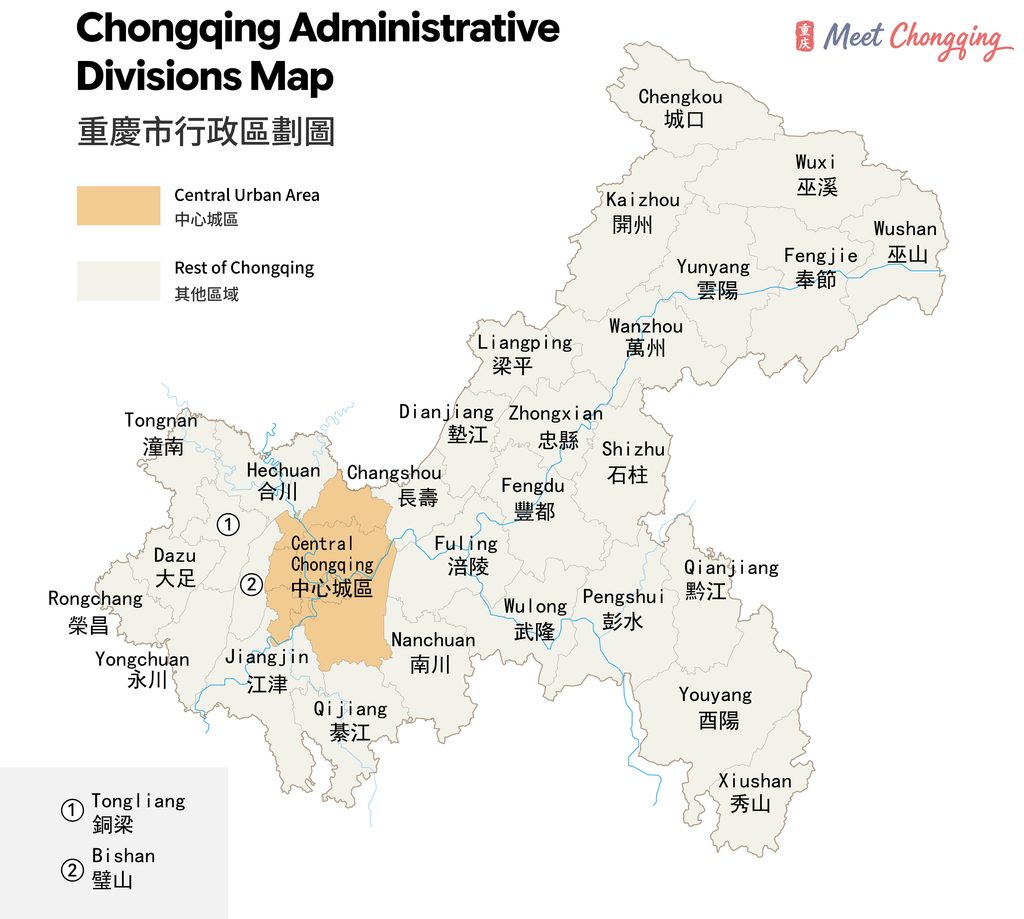
For most visitors, the bulk of a Chongqing trip is spent along both sides of the Yangtze and Jialing rivers.
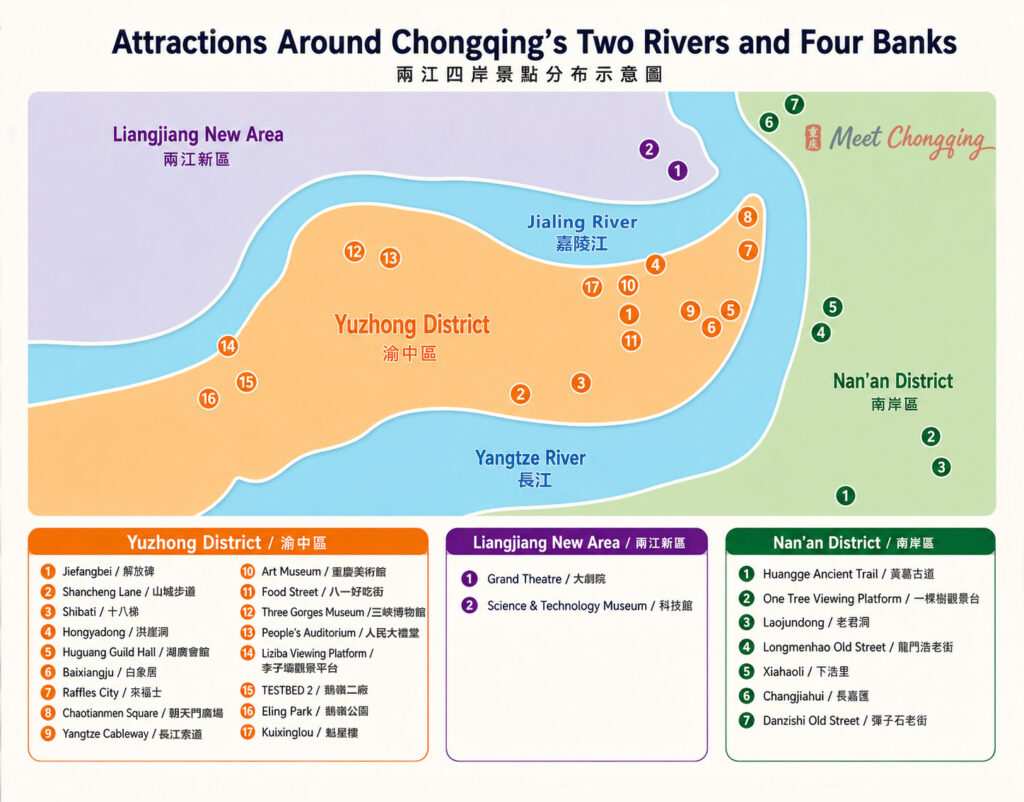
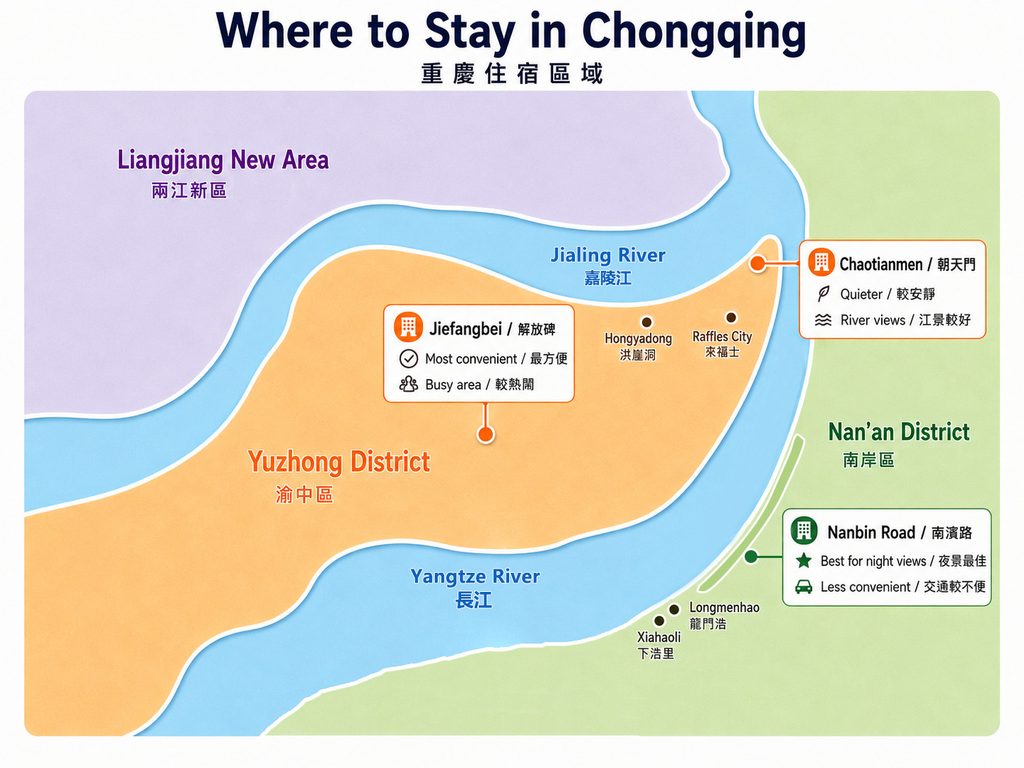
At the heart of this area is Yuzhong District, Chongqing’s historic core. Many of the city’s popular sights are concentrated on the peninsula, including Jiefangbei, Hongyadong, Chaotianmen, Raffles City Chongqing, Shibati, Mountain City Trail, Liziba, and TESTBED 2.
Across the Jialing River is Liangjiang New Area. There are relatively few sights here. The main ones are Chongqing Grand Theatre and Chongqing Science and Technology Museum, directly across the river from Raffles City, along with the Guanyinqiao shopping district and The Ring Shopping Park. But it is an important gateway into and out of Chongqing, with Chongqing Jiangbei International Airport and Chongqing North Railway Station both located here.
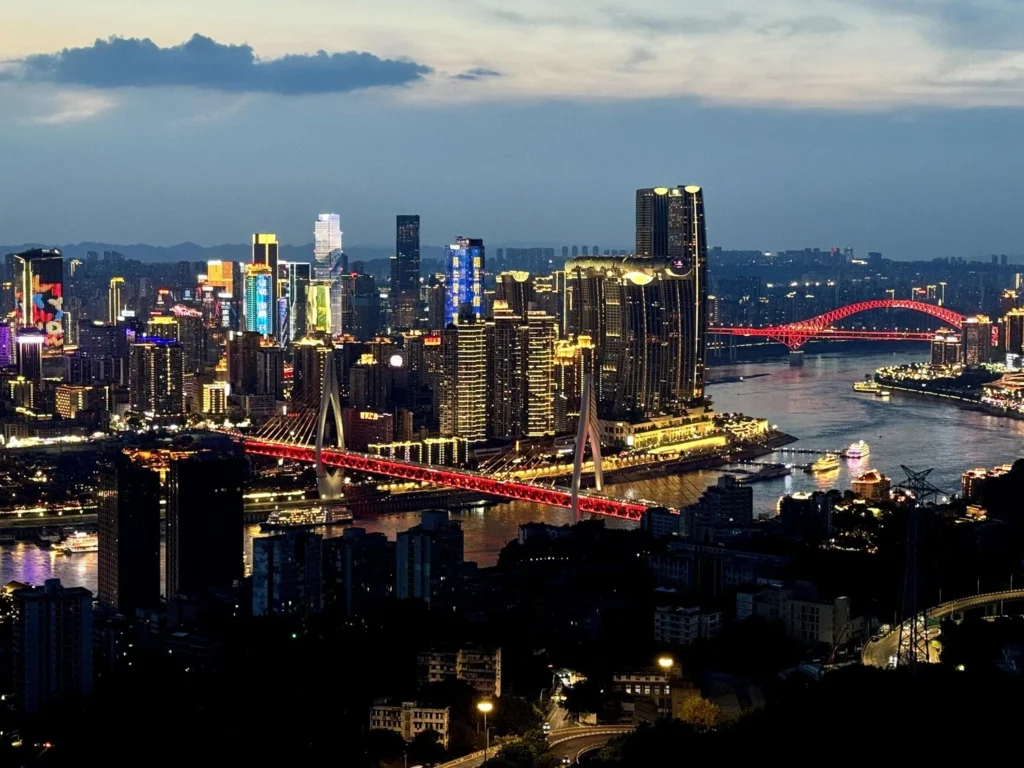
South of the Yuzhong Peninsula, across the Yangtze, is Nan’an District. This is where you’ll find Longmenhao, Xiahaoli, and Laojundong, along with Nanshan Yikeshu, the best viewpoint for overlooking the Yuzhong Peninsula at night. If there is a drone show during your visit, Changjiahui, the best place to watch it, is also in Nan’an District.
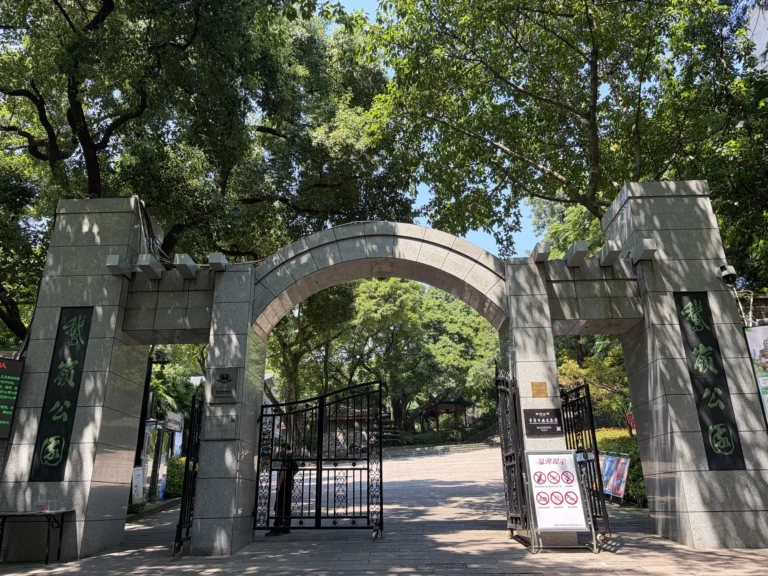
Two other popular sights sit a little farther from this central area. Chongqing Zoo is in Jiulongpo District, while Ciqikou Ancient Town is in Shapingba District, but both are directly served by the metro.
Getting to and around Chongqing
Flying
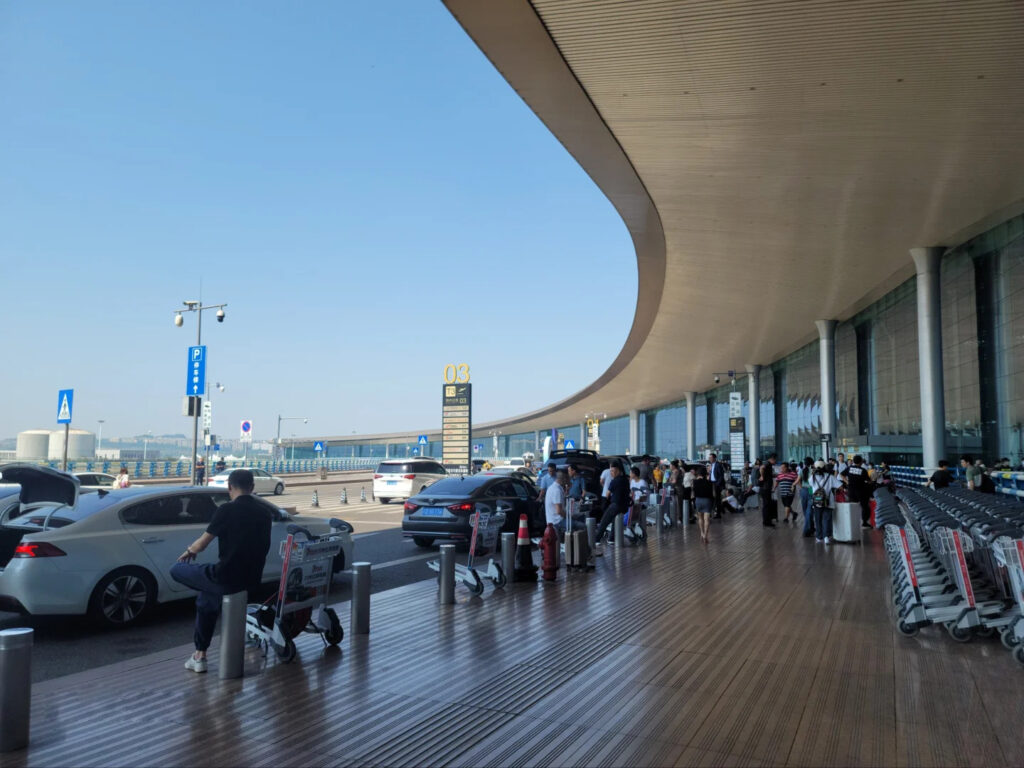
Chongqing Jiangbei International Airport is the city’s main airport, located in Liangjiang New Area. It has three terminals, but all passenger flights are currently handled at Terminal 3. From there, you can take Metro Line 10 directly to downtown Chongqing.
Note: On domestic flights within mainland China, power banks must carry a clearly visible CCC certification mark. Without one, they cannot be taken on board.
High-speed rail
There are currently four operating railway stations in Chongqing’s main urban area, but visitors mainly use three: Chongqing North Railway Station, Chongqing East Railway Station, and Chongqing West Railway Station.
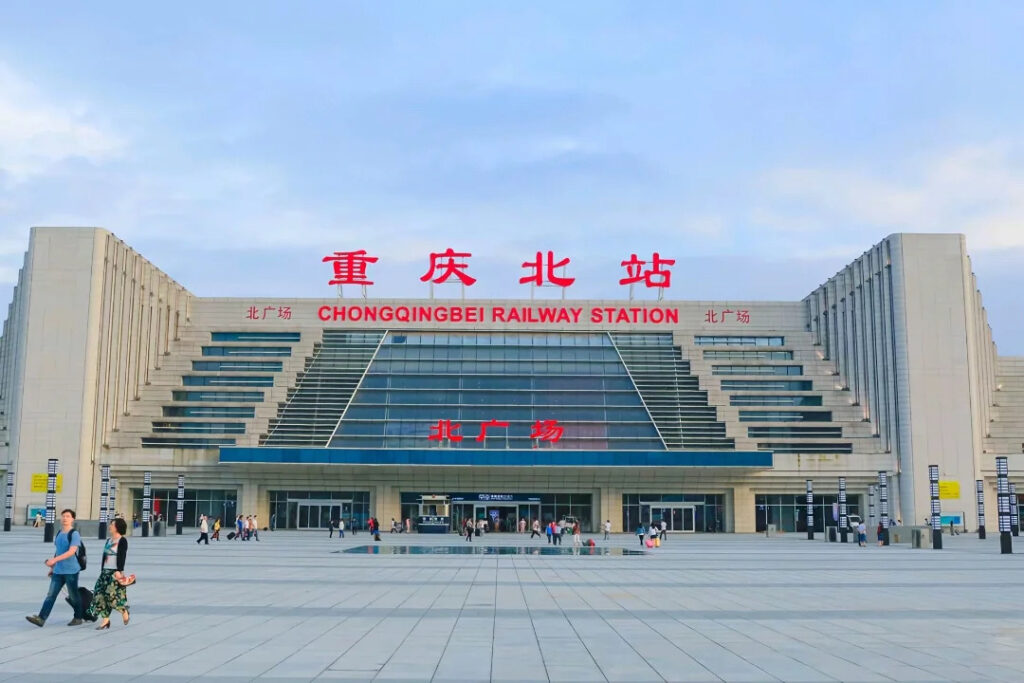
If you’re staying in Yuzhong District, Chongqing North Railway Station is the first one I’d look at. It has been operating for longer and has the most train services, with Lines 3, 4, and 10 plus the Loop Line providing good connections to the rest of the city.
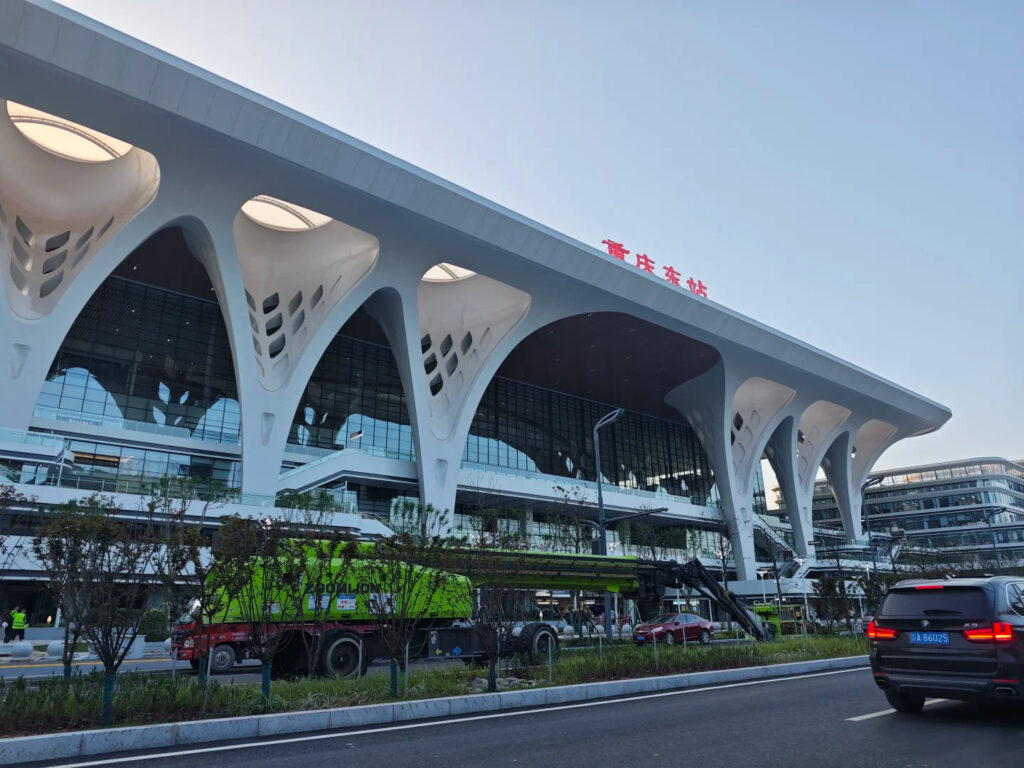
That said, if you can get a train to or from Chongqing East Railway Station, I actually prefer the East Station. It only opened in 2025 and is connected to Yuzhong District by Metro Line 6. It is slightly farther from Yuzhong than Chongqing North Railway Station, but Line 6 takes you directly to Xiaoshizi Station, with plenty of hotels nearby and sights such as Hongyadong and Raffles City Chongqing within walking distance.
The more important reason I recommend using Chongqing East, though, is that the station itself is worth seeing. Elon Musk even reposted a video of it on X.
Its biggest drawback for now is that there are still fewer train services than at Chongqing North, and only one metro line serves the station.
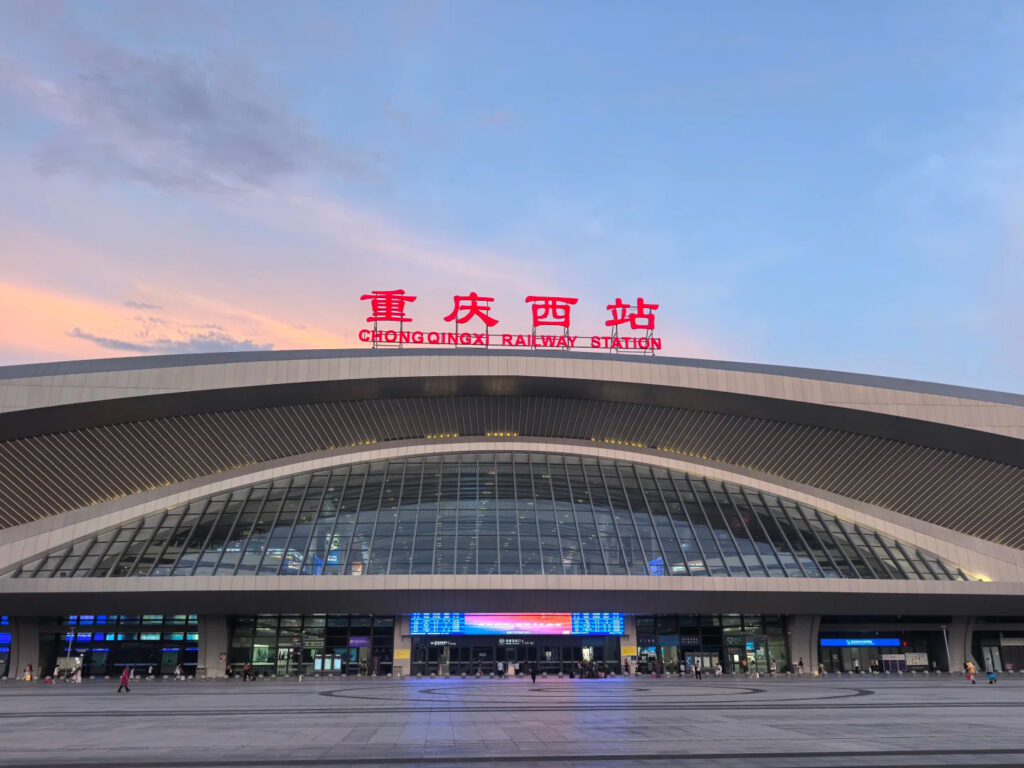
Chongqing West Railway Station is farther from Yuzhong District, and there are few well-known sights nearby apart from Ciqikou Ancient Town. So when you have a choice, I’d look at Chongqing North and Chongqing East first.
Chongqing West is still an important high-speed rail hub, however. It has more trains to cities such as Guiyang, Kunming, Guilin, Guangzhou, and Shenzhen, and direct high-speed trains between Chongqing and Hong Kong also use this station.
Getting around Chongqing
The metro and walking can get you to the vast majority of Chongqing’s popular sights. For anywhere the metro does not reach, DiDi is usually enough.
For the metro, I recommend setting up the Chongqing transit QR code in Alipay. You simply scan it when entering and leaving the station. A WeChat transit code works as well.
If you would rather not set one up, single-journey tickets can also be bought at stations with cash or QR-code payment. Staffed ticket counters accept Visa, Mastercard, JCB, and American Express cards as well.
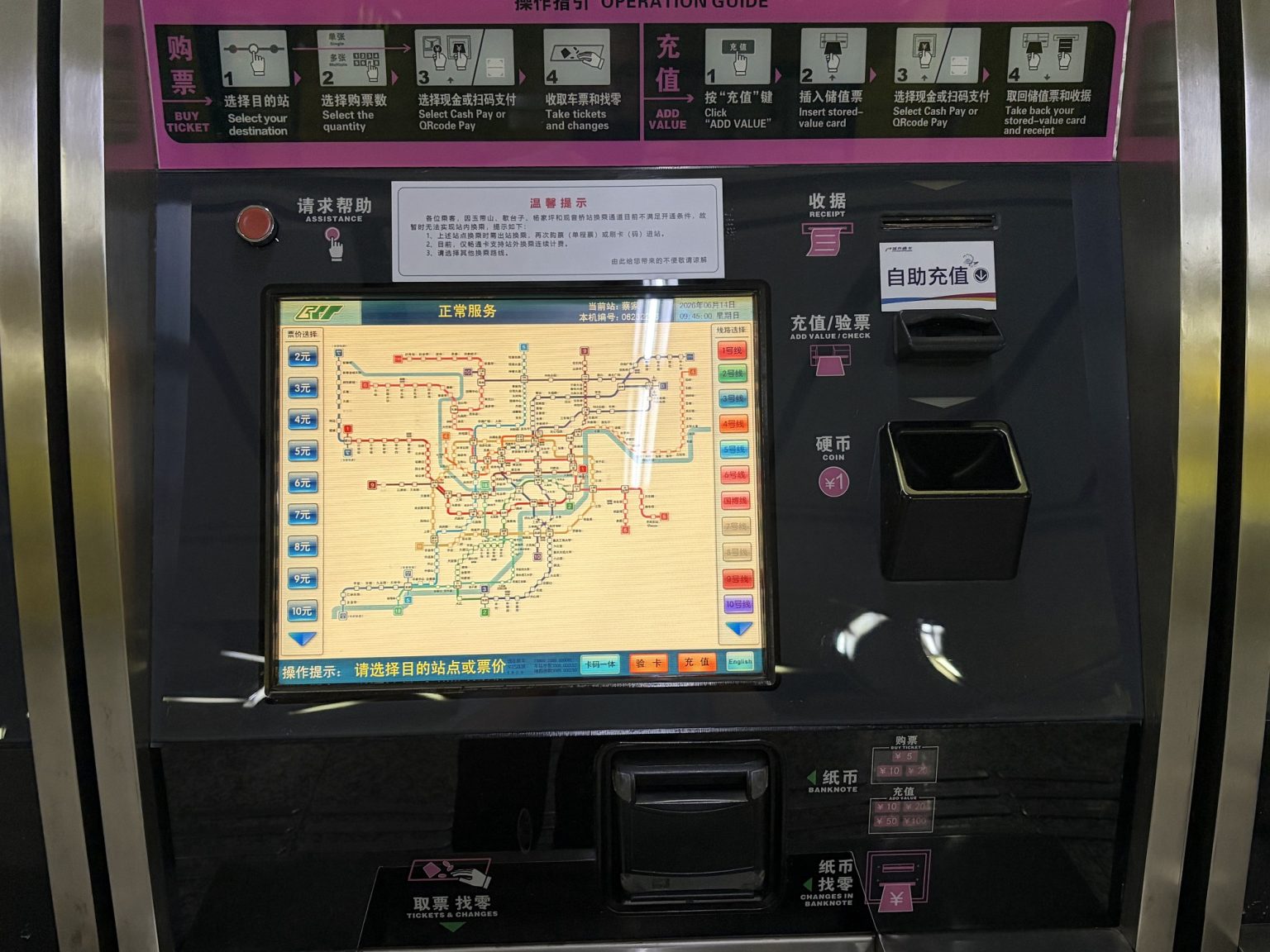
If you expect to use the metro frequently over several days, one-day, three-day, and five-day passes are available for RMB 18, RMB 45, and RMB 70. They give you unlimited metro rides for 24, 72, and 120 hours respectively, starting from the first use.
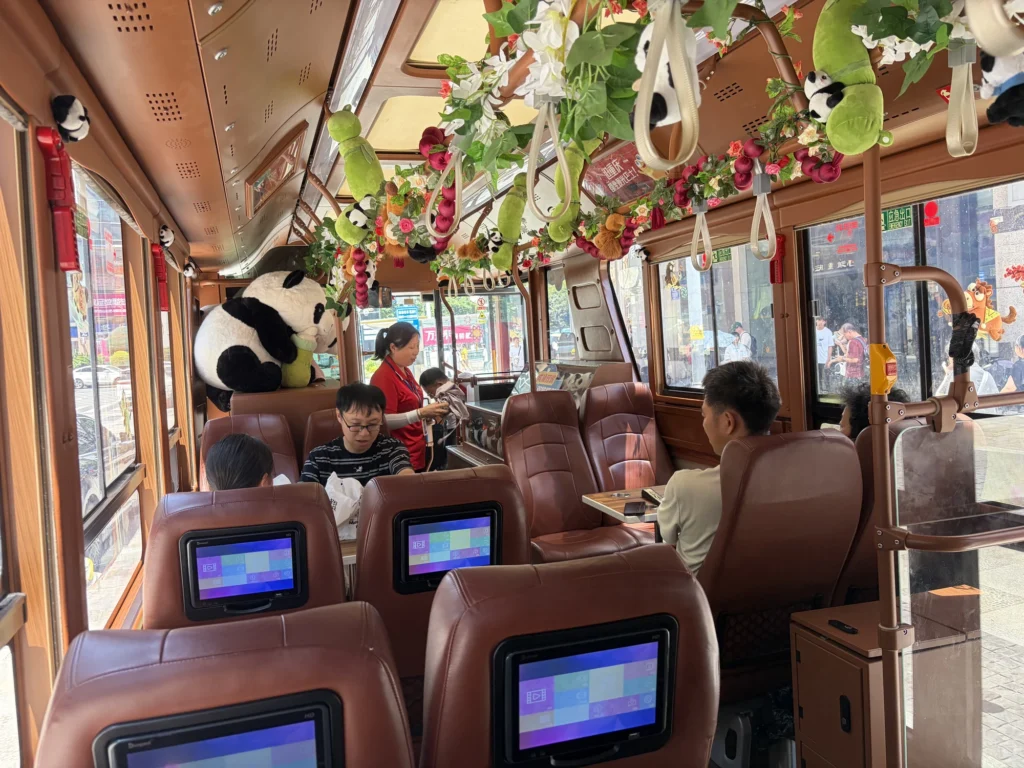
Regular city buses are more complicated to navigate and often get caught in traffic, so I do not recommend relying on them to get around. There are, however, several sightseeing bus routes connecting places such as Jiefangbei, Hongyadong, and Chongqing Grand Theatre, with special nighttime sightseeing services on Saturdays. They save you from having to work out transfers on the regular bus network, so you could give one of these routes a try if it fits your plans.
Where to stay
Most of Chongqing’s main sights are concentrated around Yuzhong District and the two rivers. For sightseeing, I’d stay in Yuzhong District, especially around Jiefangbei or Chaotianmen.
Jiefangbei is the easiest base, but also the busiest. There are plenty of restaurants, malls, and hotels, and many popular sights are within walking distance. It just isn’t particularly quiet.
For somewhere quieter, look at Chaotianmen. You’re still in Yuzhong, close to Jiefangbei and Hongyadong, while Raffles City and the confluence of the two rivers are right here. There are also more river-view hotels in this area.
If you enjoy night views, consider Nanbin Road in Nan’an District. It faces the Yuzhong Peninsula across the river, with Longmenhao and Xiahaoli nearby.
However, Nanbin Road isn’t very convenient for getting around. Metro stations are relatively far away, and you’ll need to take a taxi or use a ride-hailing service to get to Yuzhong District.
Things to do in Chongqing
In central Chongqing
Hongyadong
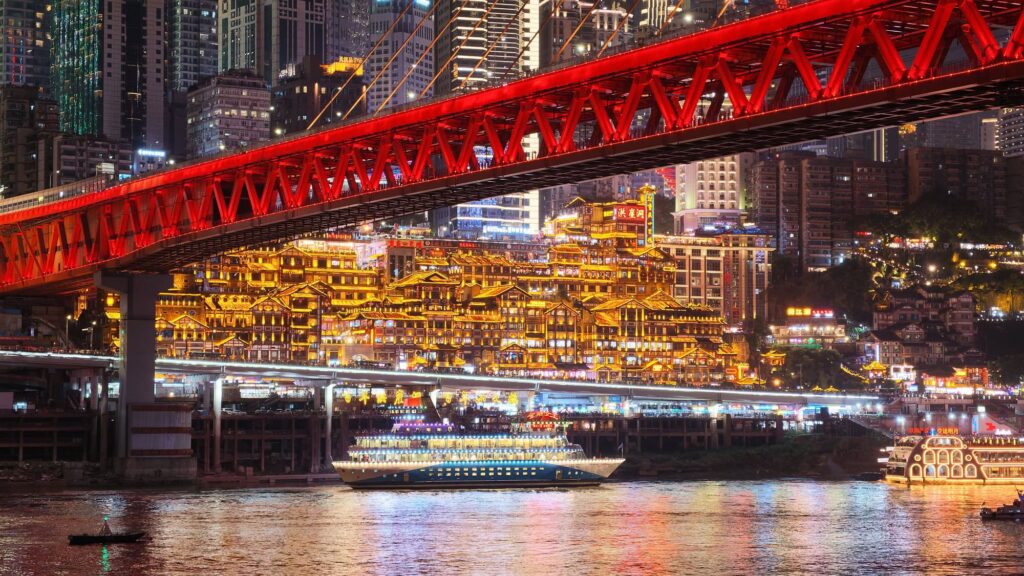
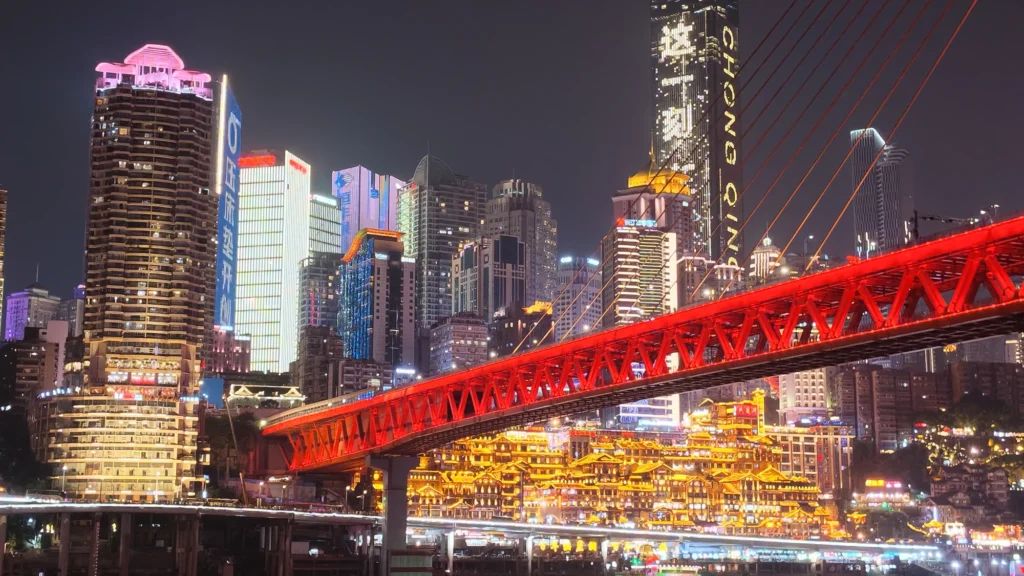
Hongyadong (洪崖洞) is easily Chongqing’s most famous attraction. Built into the cliffs along the Jialing River, it is a complex modeled on Chongqing’s traditional stilt houses. There are snack streets and restaurants inside, but it is the night view once the buildings are lit up that really made Hongyadong famous.
Jiefangbei
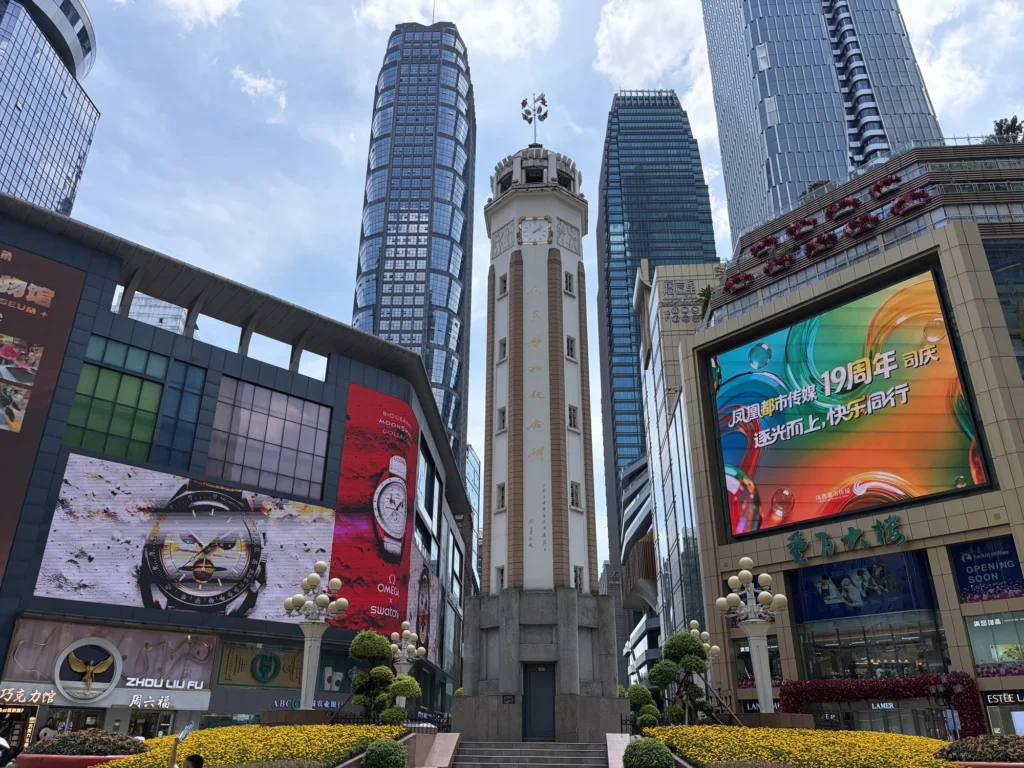
Jiefangbei (解放碑) refers both to the People’s Liberation Monument itself and to the commercial district surrounding it. This is the heart of Chongqing, with popular sights such as Bayi Food Street, Hongyadong, Shibati, and Mountain City Trail all nearby.
Chaotianmen and Raffles City Chongqing
Chaotianmen (朝天门) sits at the confluence of the Yangtze and Jialing rivers and was once Chongqing’s most important city gate. The original gate was demolished in the 20th century, and the gate you see today was reconstructed later.
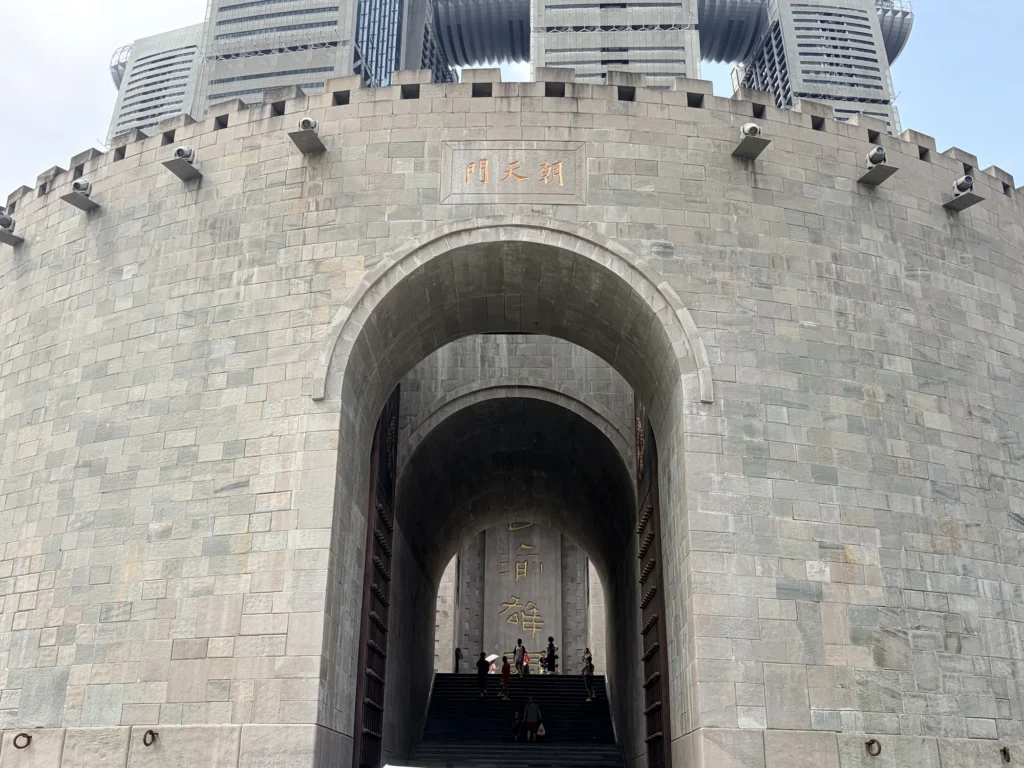
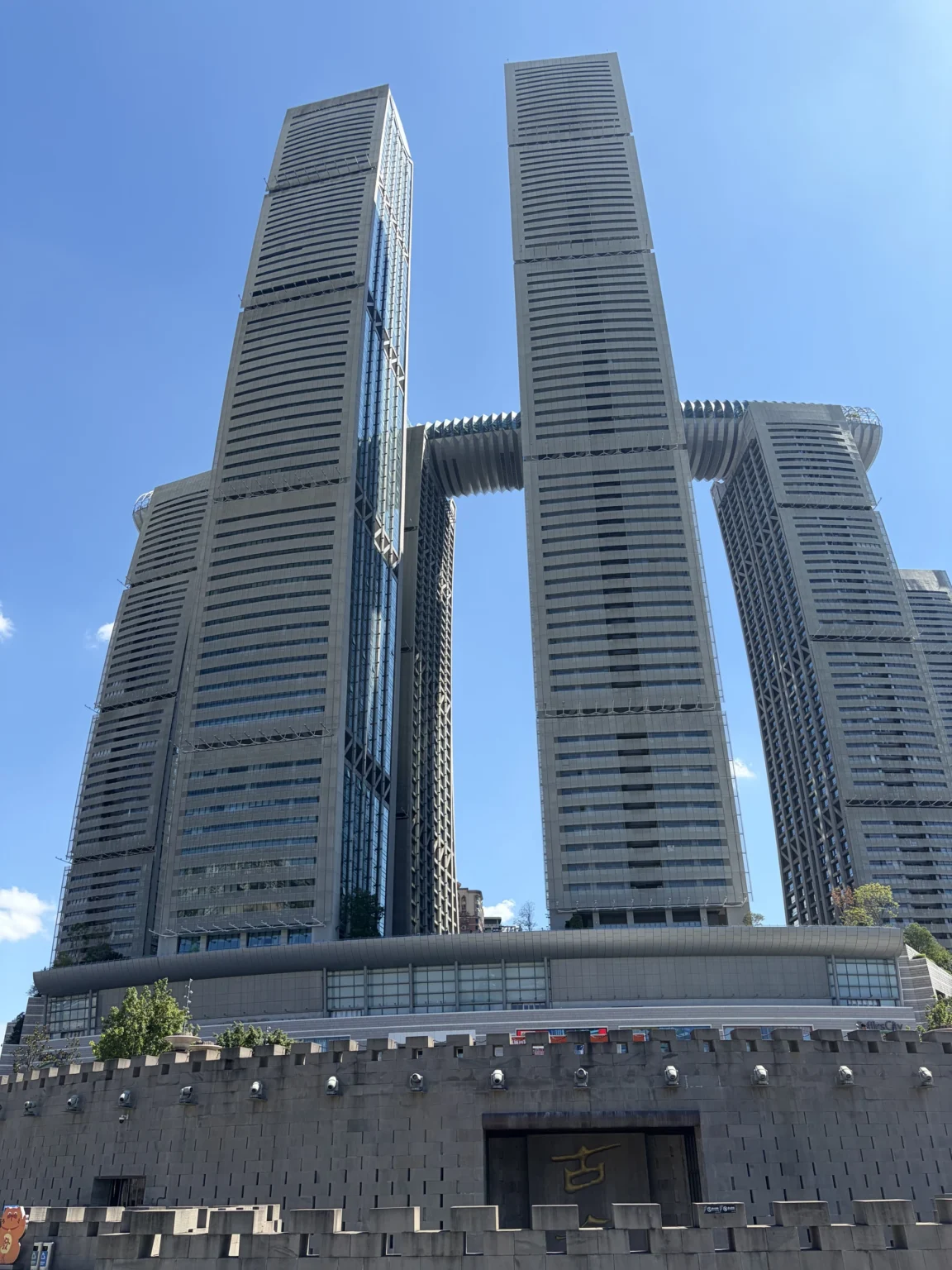
Behind it is Raffles City Chongqing (重庆来福士), a group of sail-shaped buildings and one of the city’s best-known landmarks.
Liziba Station
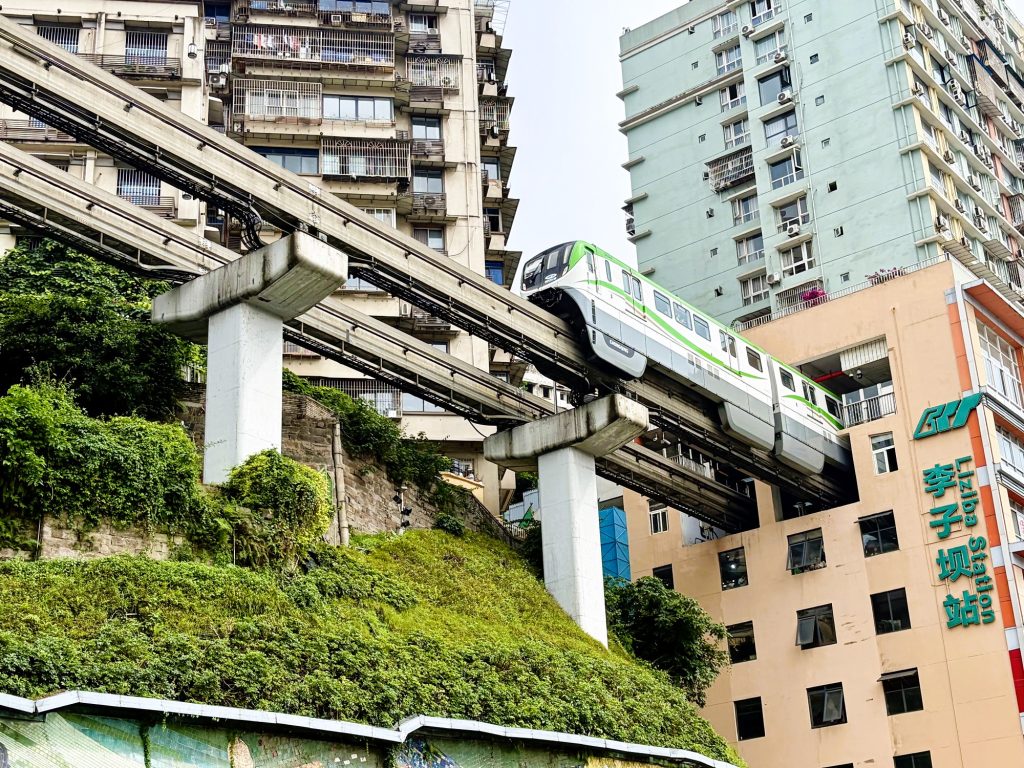
Liziba (李子坝) is a good example of how transport and everyday life are stacked together in Chongqing. Line 2 runs straight through a residential building, with the station, shops, and apartments all sharing the same structure.
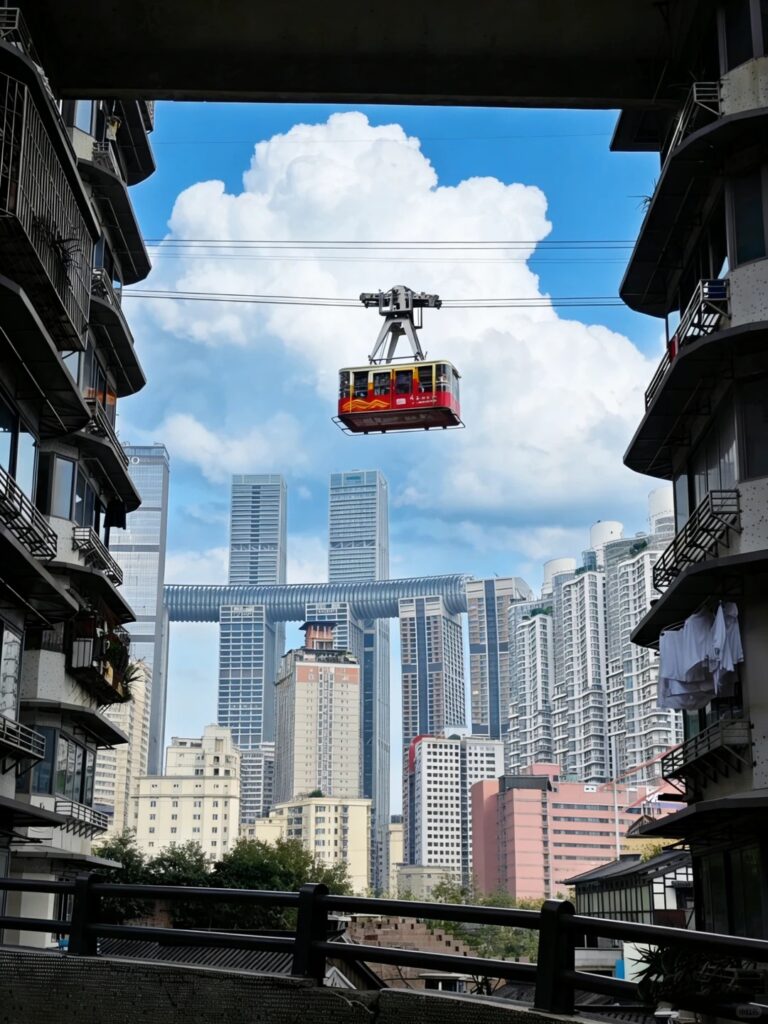
Yangtze River Cableway
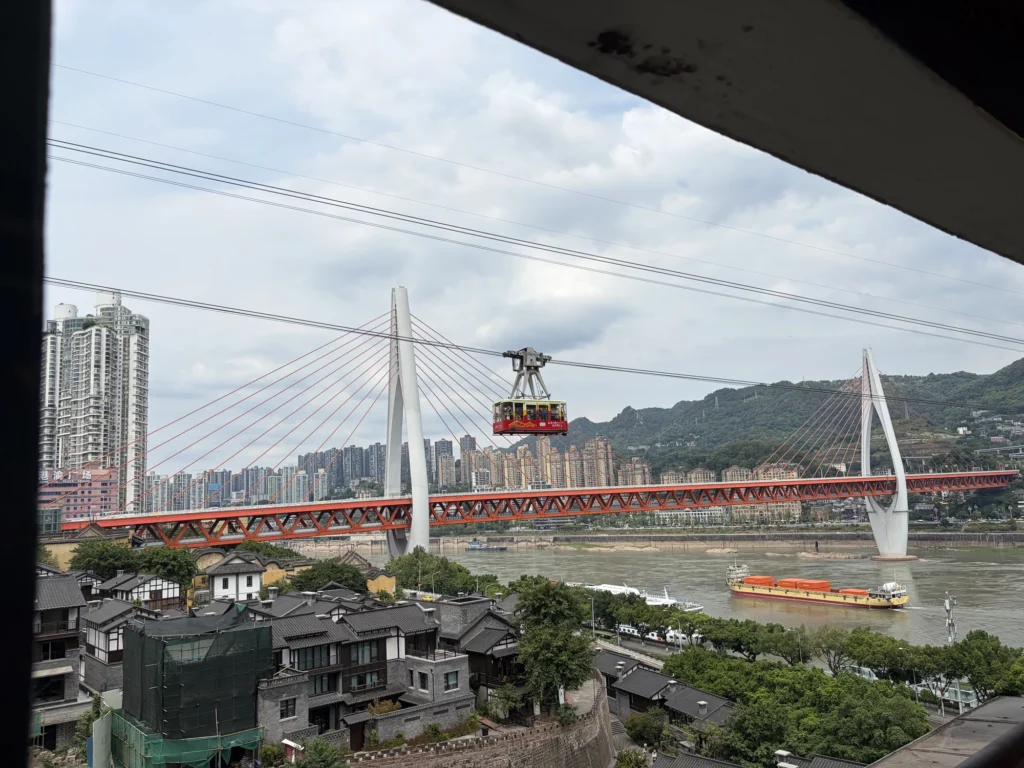
Before Chongqing had so many bridges, the Yangtze River Cableway was an everyday way for residents to cross between Yuzhong and Nan’an. Few locals use it for commuting now; most passengers today are tourists.
Ciqikou Ancient Town
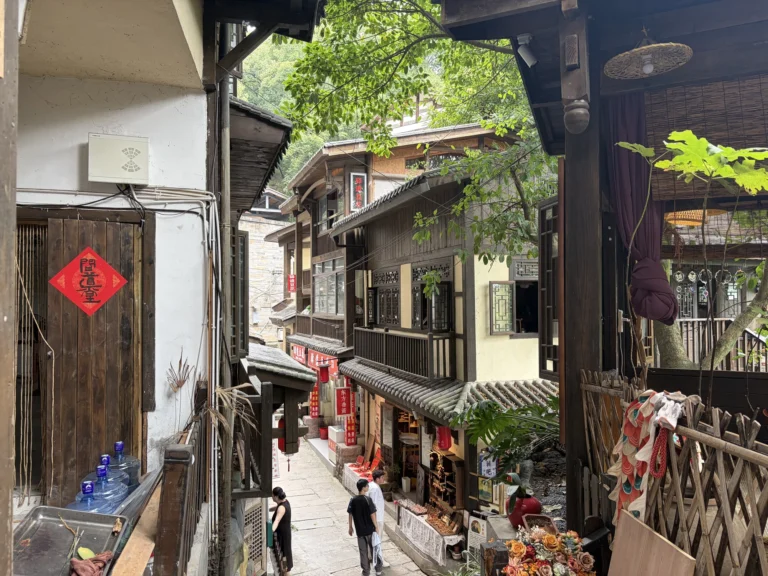
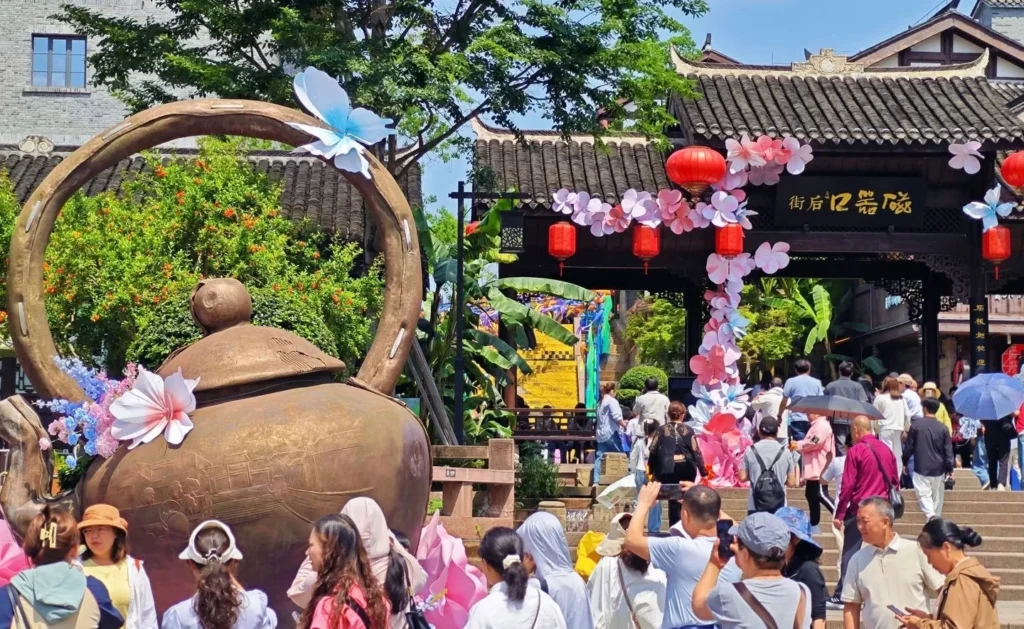
Ciqikou (磁器口古镇) is one of Chongqing’s best-known ancient towns. Its overall layout and many of its buildings have survived from earlier periods, rather than being part of a faux-historic district built in recent years.
It is highly commercialized today, but you can still get a real sense of an old Chongqing market town. The streets are also relatively level, so you do not have to deal with the uphill walking and stair climbing common at many sights in Yuzhong District.
Longmenhao and Xiahaoli
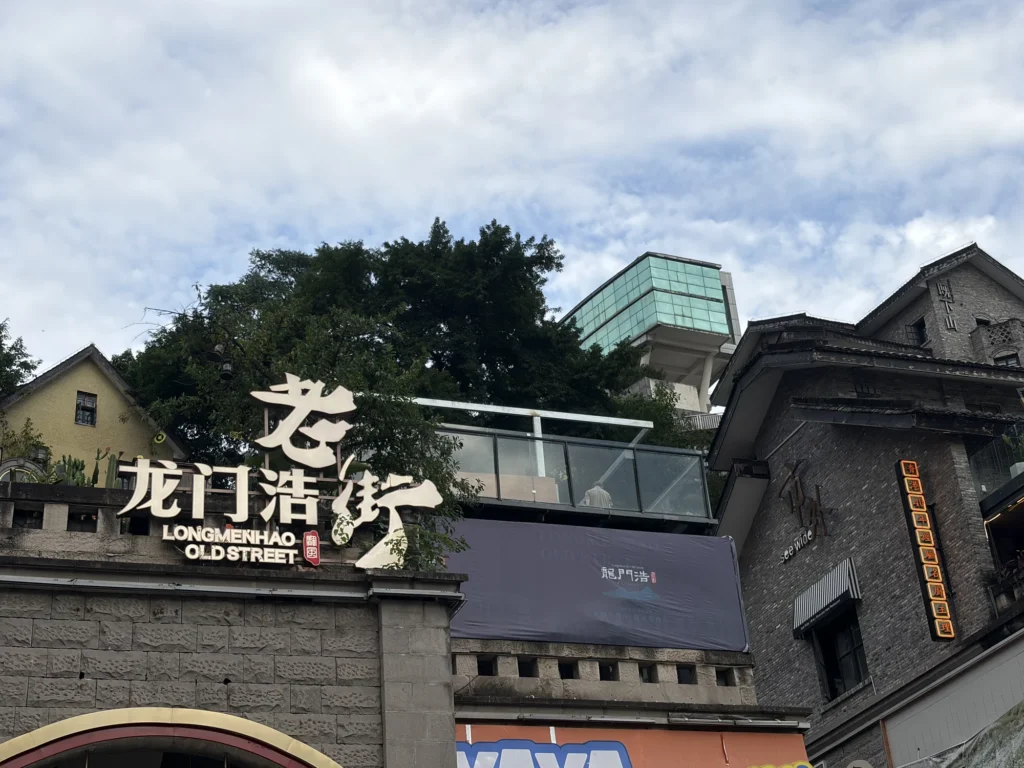
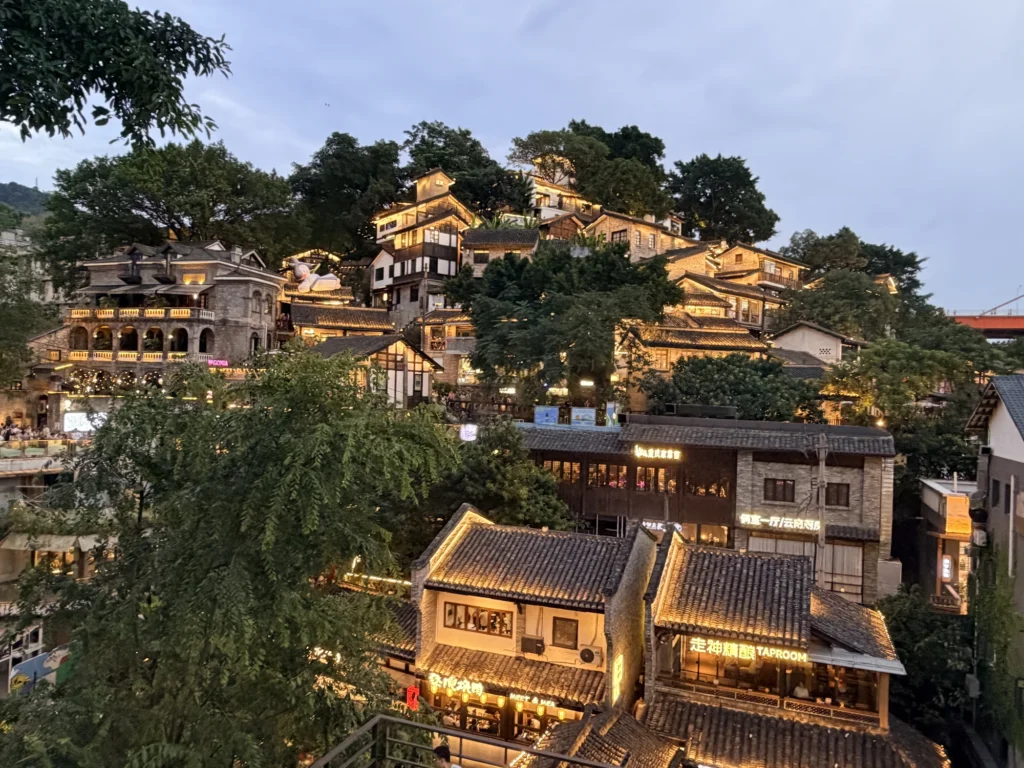
Longmenhao and Xiahaoli (龙门浩&下浩里) are two adjoining old neighborhoods with many Republican-era buildings, including the former sites of the Italian, Belgian, and American embassies.
Unlike Ciqikou, both neighborhoods are built into the hillside, with stone steps and steep slopes throughout. Longmenhao is better for seeing the old architecture during the day, while Xiahaoli is better known for its night views.
Three Gorges Museum and Chongqing People’s Auditorium
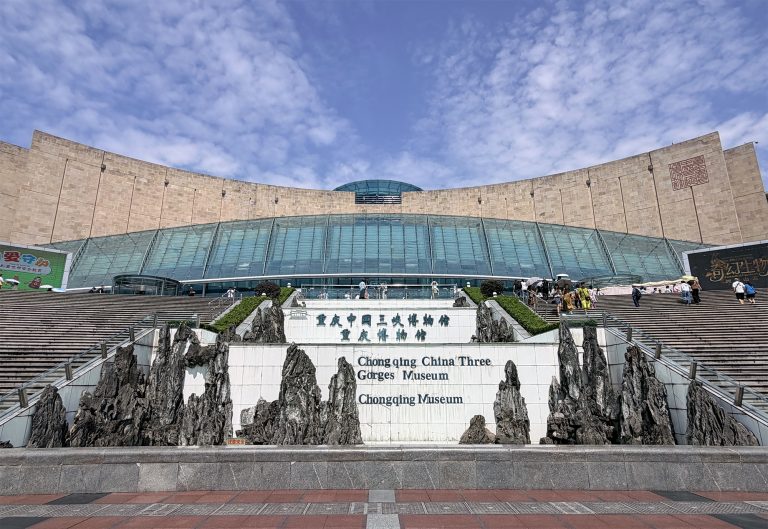
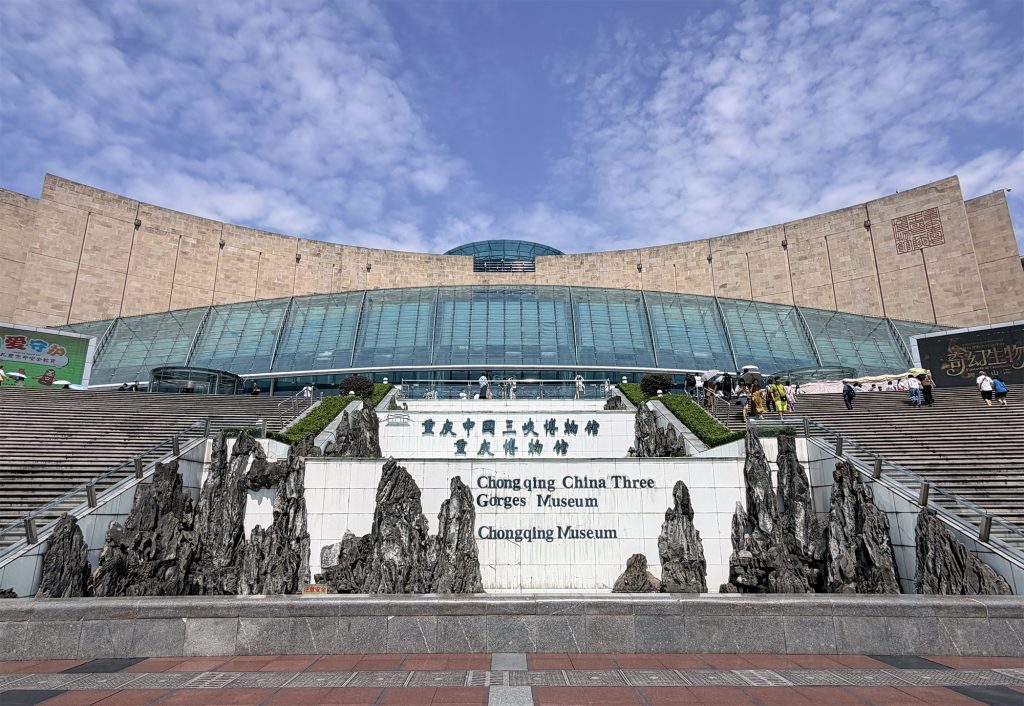
The Three Gorges Museum (三峡博物馆) is Chongqing’s most important comprehensive museum, with exhibits covering prehistoric Bayu culture, Three Gorges artifacts, Chongqing during the Second Sino-Japanese War, and how the city changed in modern and contemporary times. It has more than 110,000 objects in its collection.
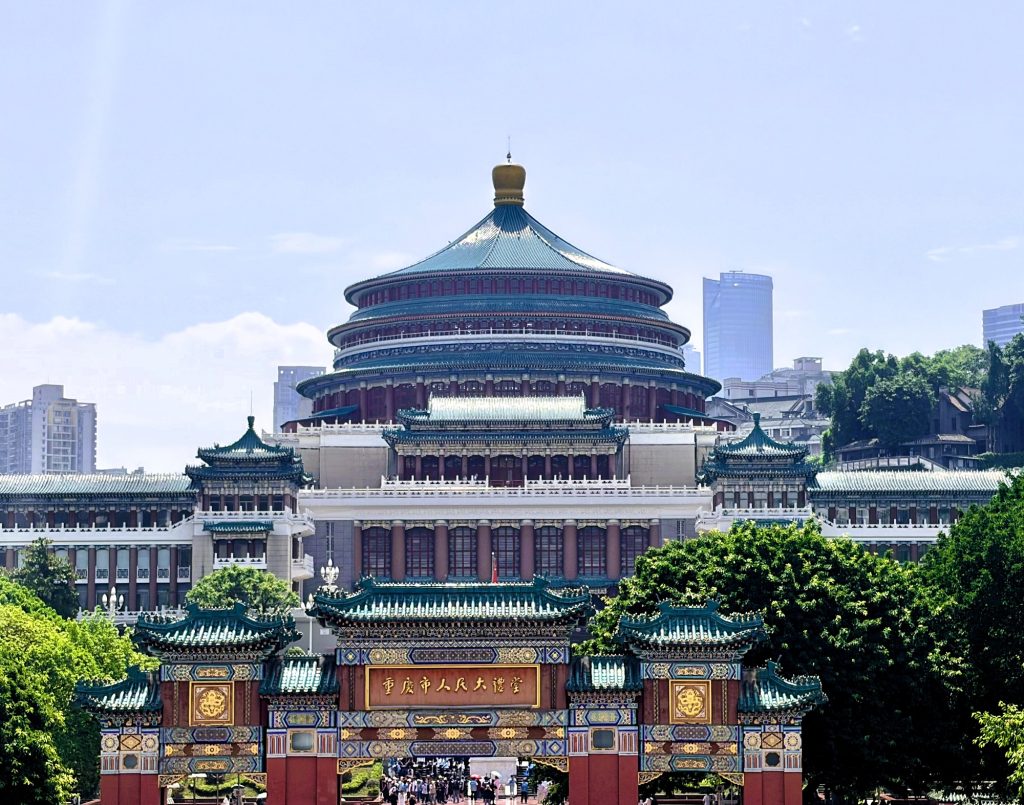
Directly opposite is Chongqing People’s Auditorium (重庆人民大礼堂). Its main building draws on the Temple of Heaven in Beijing and other forms of traditional Chinese architecture. It is also often nicknamed “Chongqing’s Little Temple of Heaven” and is one of the city’s traditional landmarks.
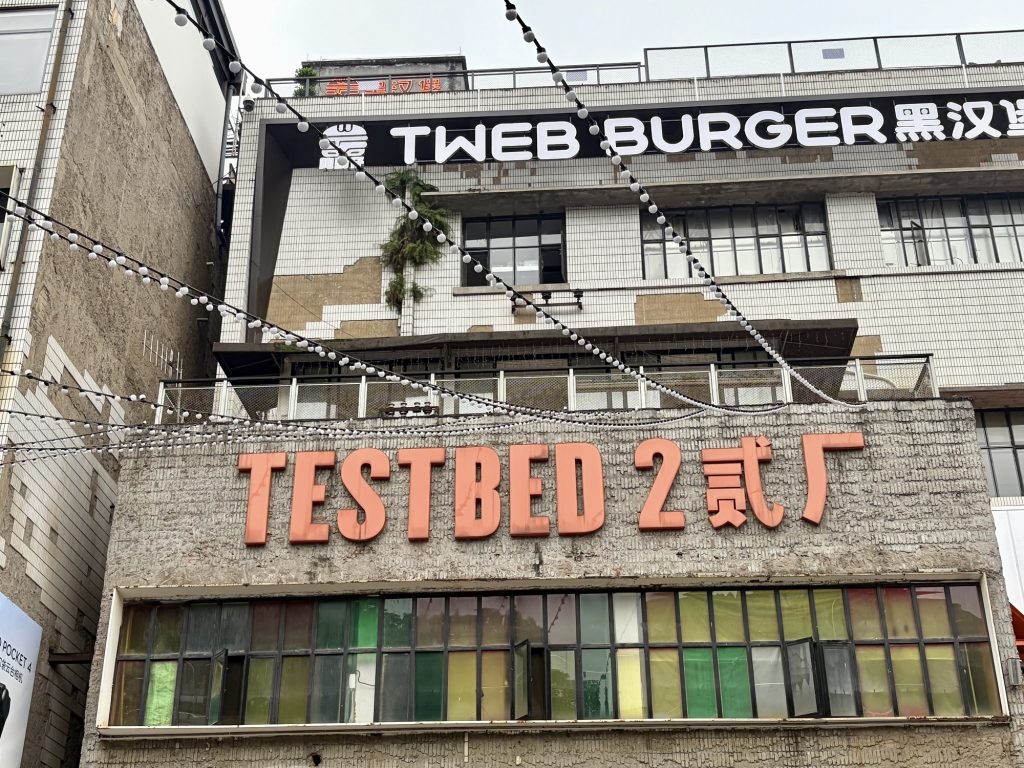
TESTBED 2
TESTBED 2 (鹅岭二厂) was once Chongqing Printing Factory No. 2. The old factory buildings were later converted into a cultural and creative park.
Chongqing Zoo
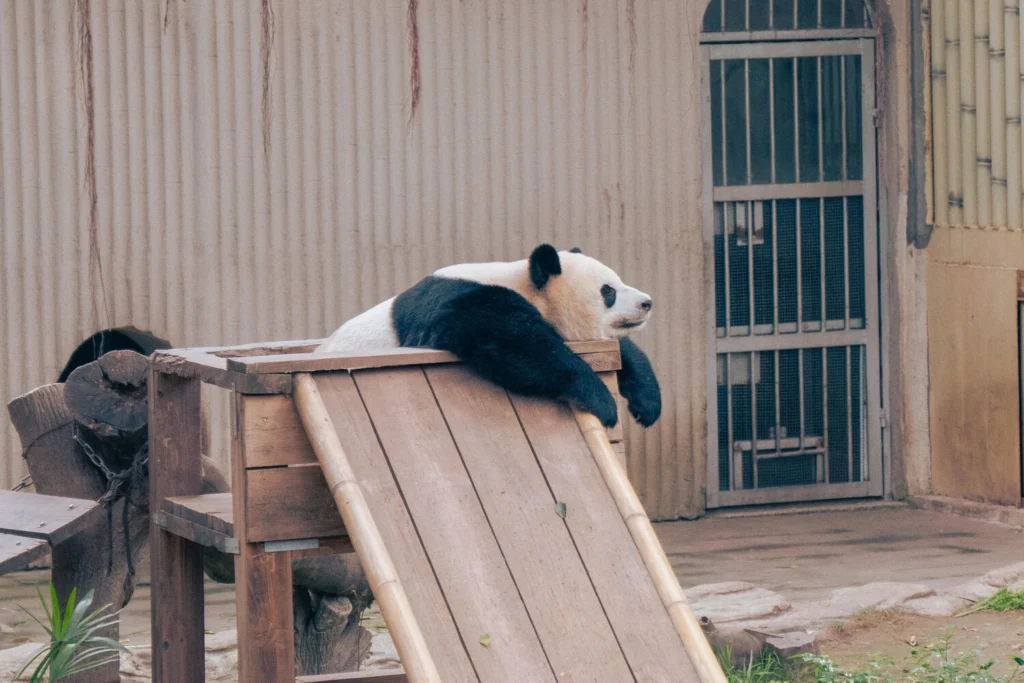
Most visitors come to Chongqing Zoo (重庆动物园) for the giant pandas. More than 20 live here, giving the zoo the largest captive giant panda population of any urban zoo in China. Metro Line 2 goes directly there.
Kuixinglou Square
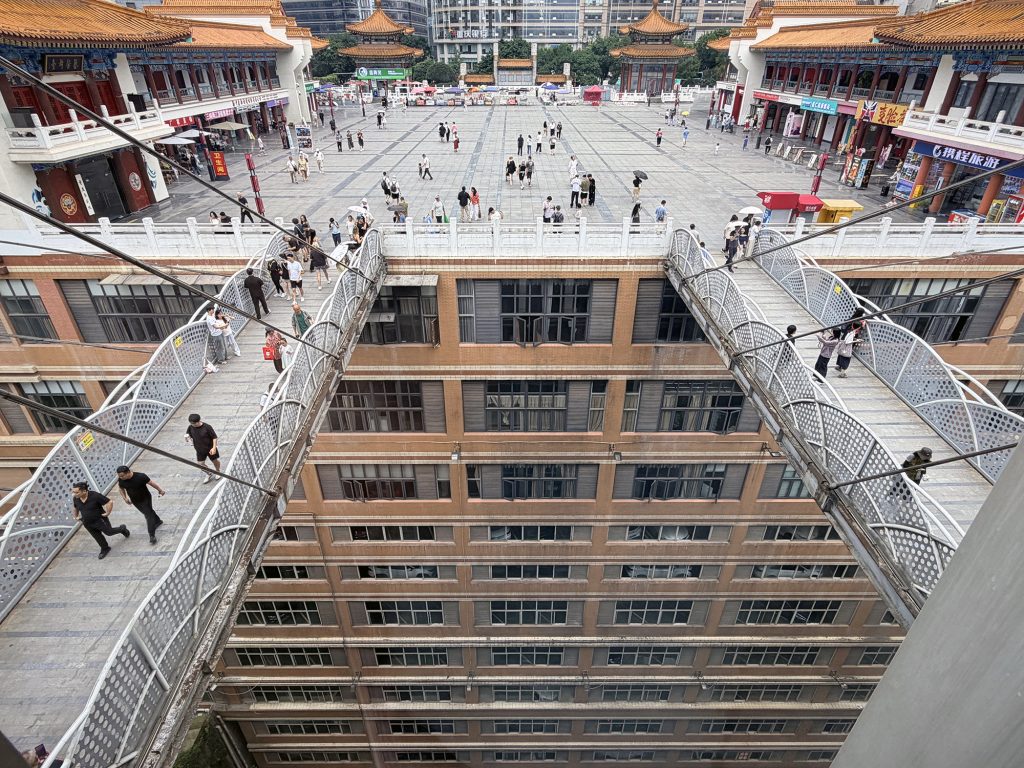
Kuixinglou Square (魁星楼广场) is the place where you think you’re on the first floor, only to discover you’re actually on the 22nd. It only takes about 15 minutes to look around.
Shibati (18 Steps)
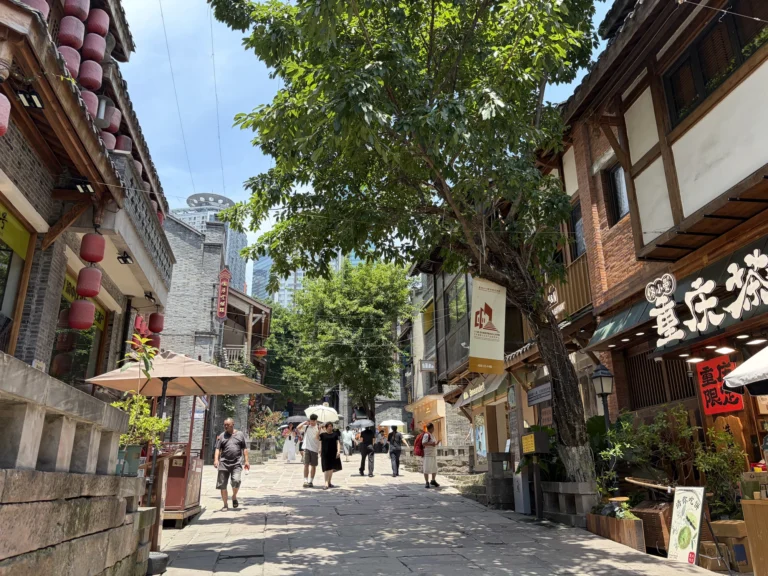
Shibati (十八梯) was once an important route between Chongqing’s Upper City and Lower City. After extensive redevelopment and reconstruction, it is now largely a commercial old-street district.
Mountain City Trail
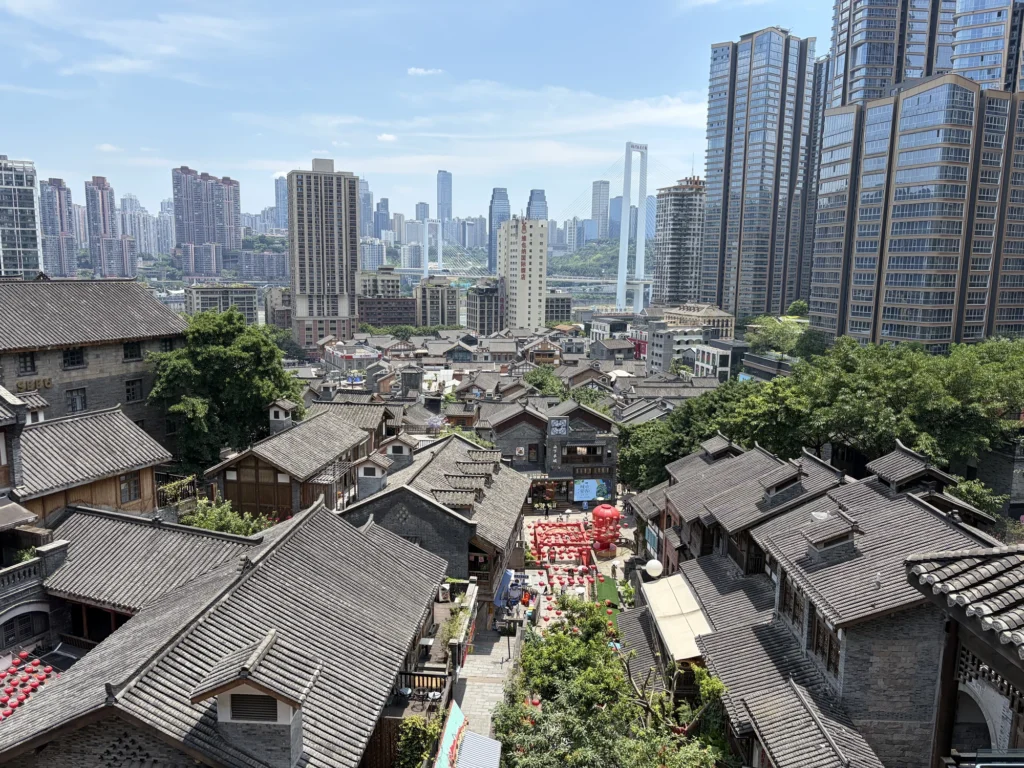
Mountain City Trail (山城步道) runs along the hillside, with slopes and stone steps throughout. Along the route, you’ll pass old city walls, churches and other historic buildings, as well as traditional Chongqing homes. It feels noticeably less commercial than Shibati.
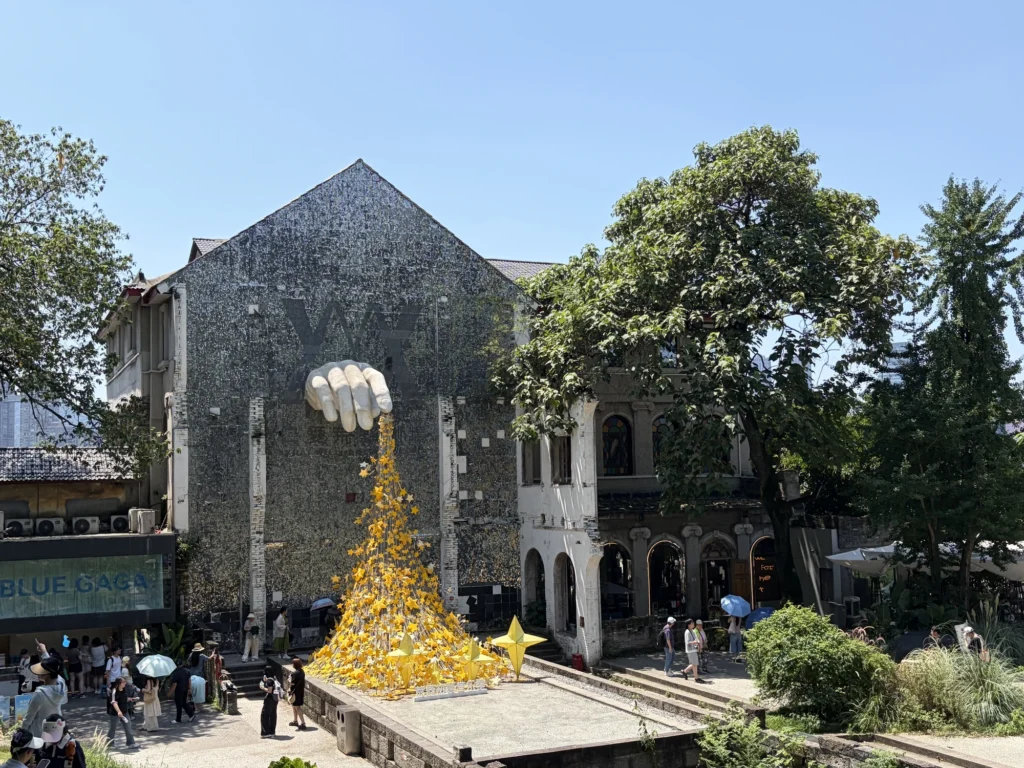
Baixiangju
Baixiangju (白象居) is a group of older residential buildings that are still inhabited. Its tallest block has 24 floors and no elevators, yet the 1st, 10th, and 15th floors all open directly onto streets.
It is the same kind of “sight” as Kuixinglou.
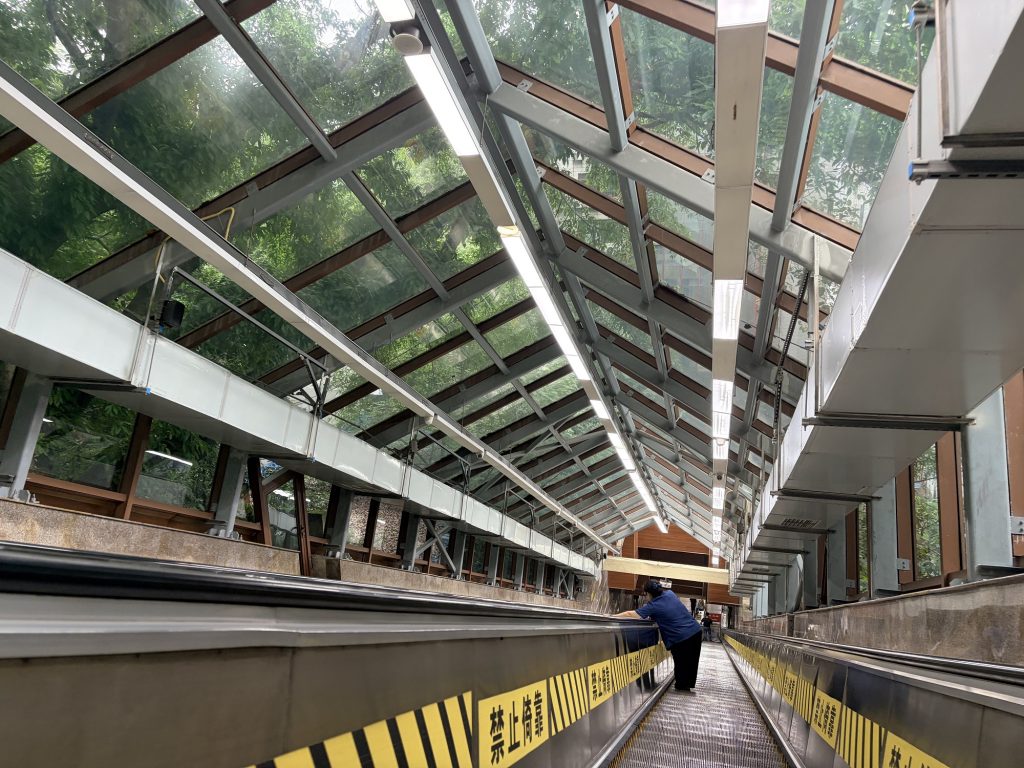
Crown Escalator
The Crown Escalator (皇冠大扶梯) is another form of transport that feels distinctly Chongqing. It is about 112 meters long, with a vertical rise of roughly 53 meters, making it the longest single-run inclined escalator in China and the second-longest in Asia.
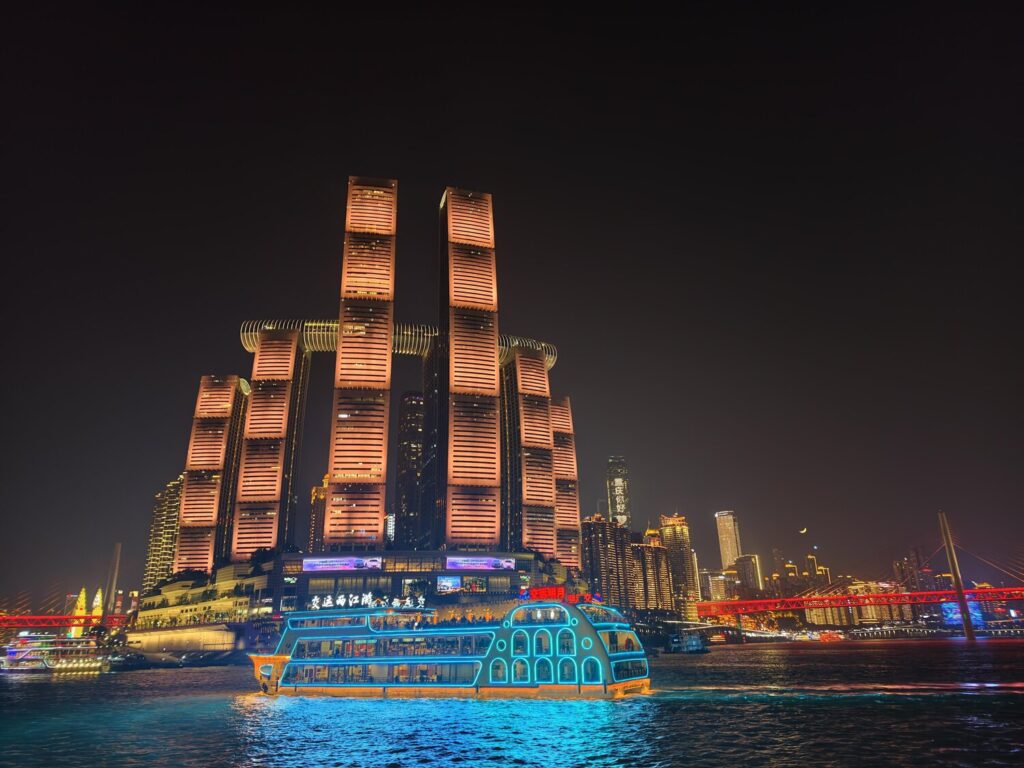
Two Rivers Cruise
The Two Rivers Cruise (两江游) is basically a boat ride that lets you see the night views along the banks of both the Yangtze and Jialing rivers from the water. It takes about an hour. Along the way, you’ll pass landmarks including Hongyadong, Qiansimen Bridge, Chongqing Grand Theatre, Chaotianmen, Raffles City Chongqing, Nanbin Road, and the Yangtze River Cableway.
Yikeshu Viewing Platform
Set halfway up Nanshan, Yikeshu Viewing Platform (一棵树观景平台) is one of Chongqing’s classic night-viewing spots. However, getting there is inconvenient. You can only get up there by taxi or bus, and traffic jams are common during busy evening hours.
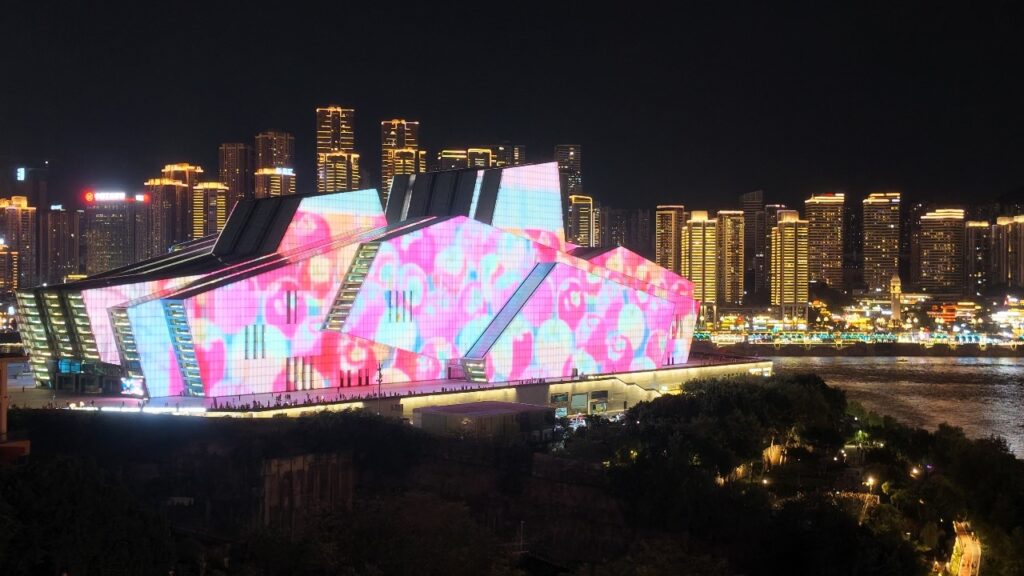
Chongqing Grand Theatre and the riverbank park
Chongqing Grand Theatre (重庆大剧院) sits across the river from Chaotianmen and Raffles City Chongqing, and the whole building lights up at night. However, most visitors who come here are really here for the night view of Hongyadong across the river.
I recommend continuing down from the Grand Theatre to the riverbank park below. From there, you can photograph Hongyadong and Qiansimen Bridge together.
Laojundong
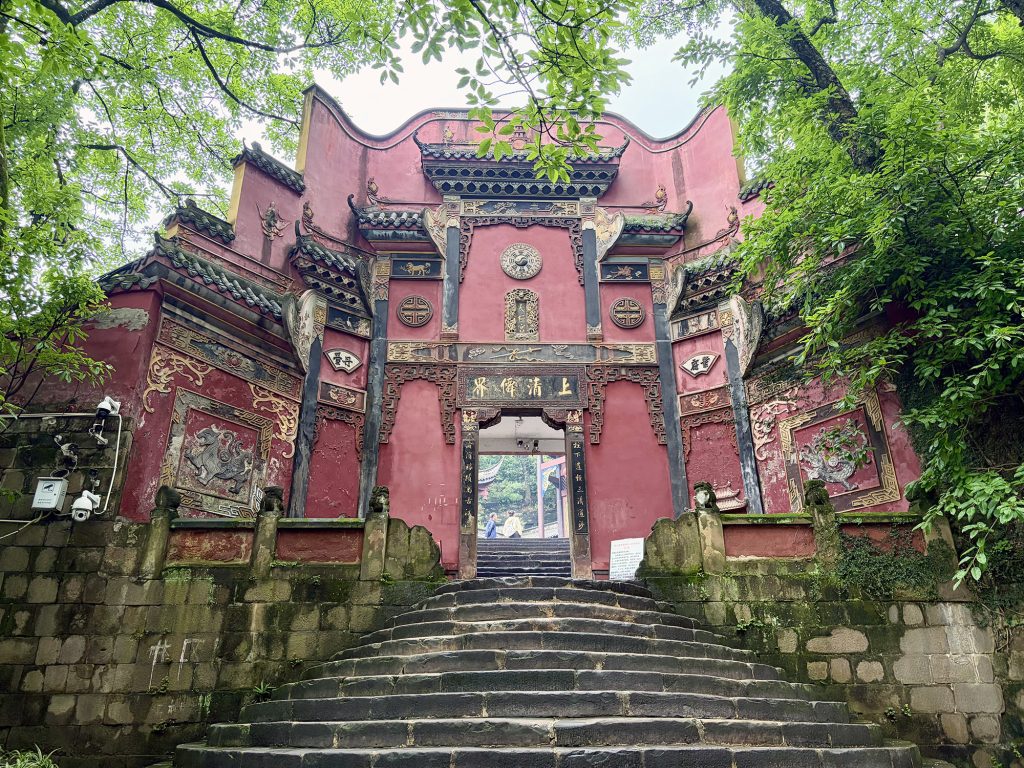
Laojundong (老君洞) has a history of more than 1,300 years and is traditionally known as “the foremost Taoist temple in eastern Sichuan”.
Besides burning incense and praying for blessings, you can also see Ming dynasty stone carvings, cliff inscriptions, and other historic remains here. The view from the top is even better than at Nanshan Yikeshu Viewing Platform. Unfortunately, Laojundong closes at night; otherwise, the night view here would easily be one of the best in Chongqing.
The Ring Shopping Park
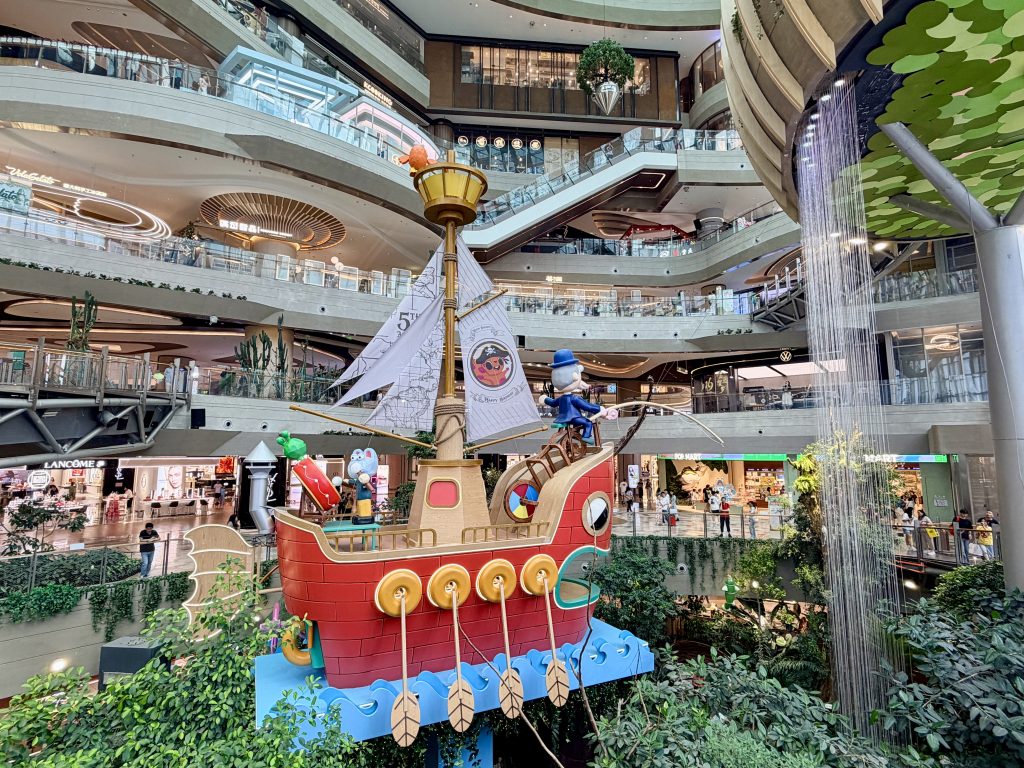
The Ring (光环购物公园) is a shopping complex with a huge indoor botanical garden called Muguang Forest. It contains nearly 300 species and around 70,000 tropical and subtropical plants, along with a suspended forest and an indoor waterfall.
Huguang Guild Hall
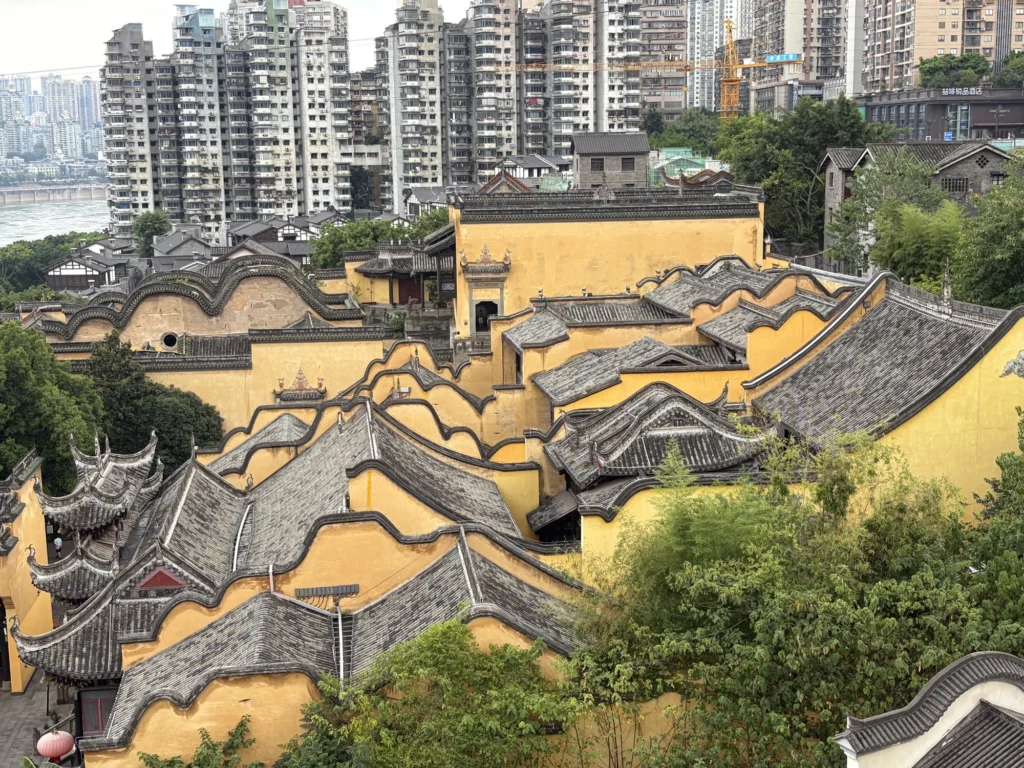
Huguang Guild Hall (湖广会馆) dates back to the Qing dynasty and was built by migrants who came to Chongqing from other provinces. The old buildings are covered with detailed wood carvings, while the site also preserves an important part of Chongqing’s migration history.
Chongqing Science and Technology Museum
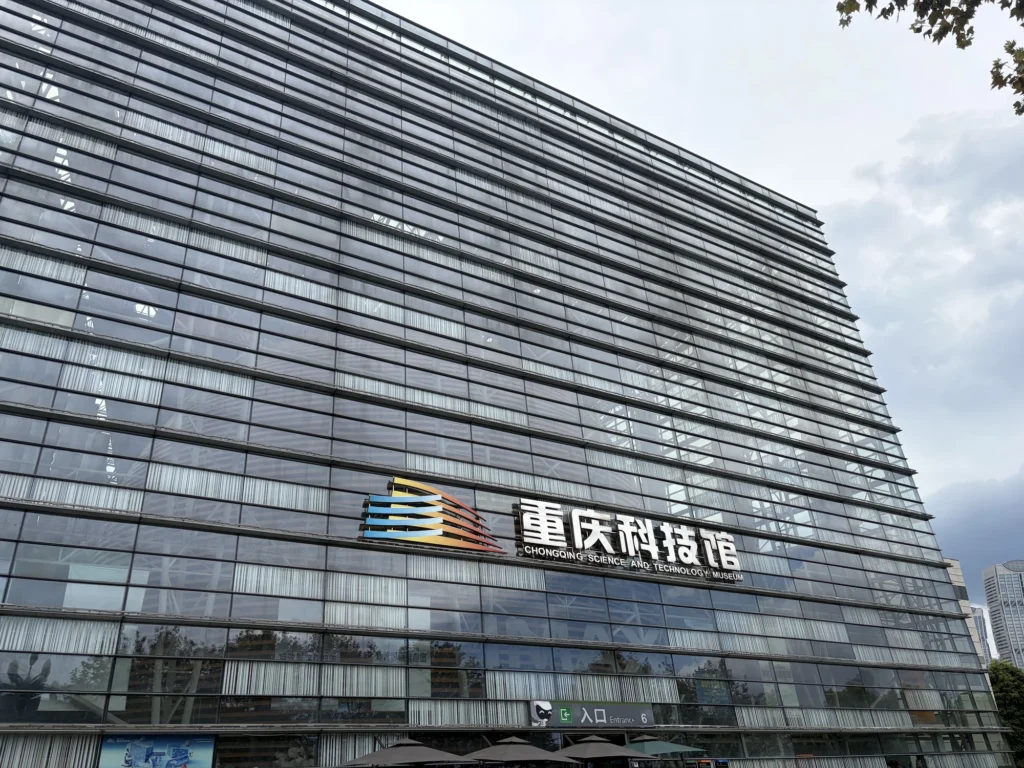
Next to Chongqing Grand Theatre, Chongqing Science and Technology Museum (重庆科技馆) is very hands-on, with many exhibits you can operate yourself. It covers everything from basic physics, mechanics, and electromagnetism to spaceflight, the universe, and the human body.
The second floor also has a large Children’s Science Park designed for younger children, so it’s a good choice for families with kids.
Drone shows
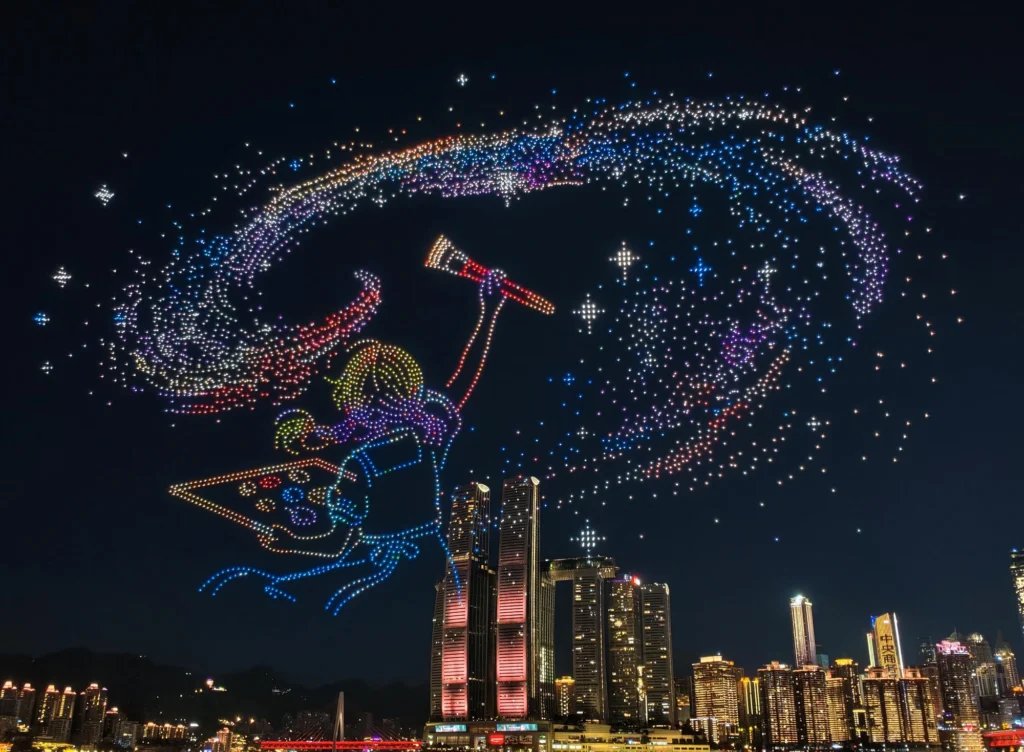
Weather permitting, Chongqing holds a drone show every Saturday night over the river in front of Raffles City and Chongqing Grand Theatre. The best viewing spot is Changjiahui Shopping Park on Nanbin Road across the river. You can also watch from the Grand Theatre or Raffles City, but some formations can look distorted from those angles.
Outside central Chongqing
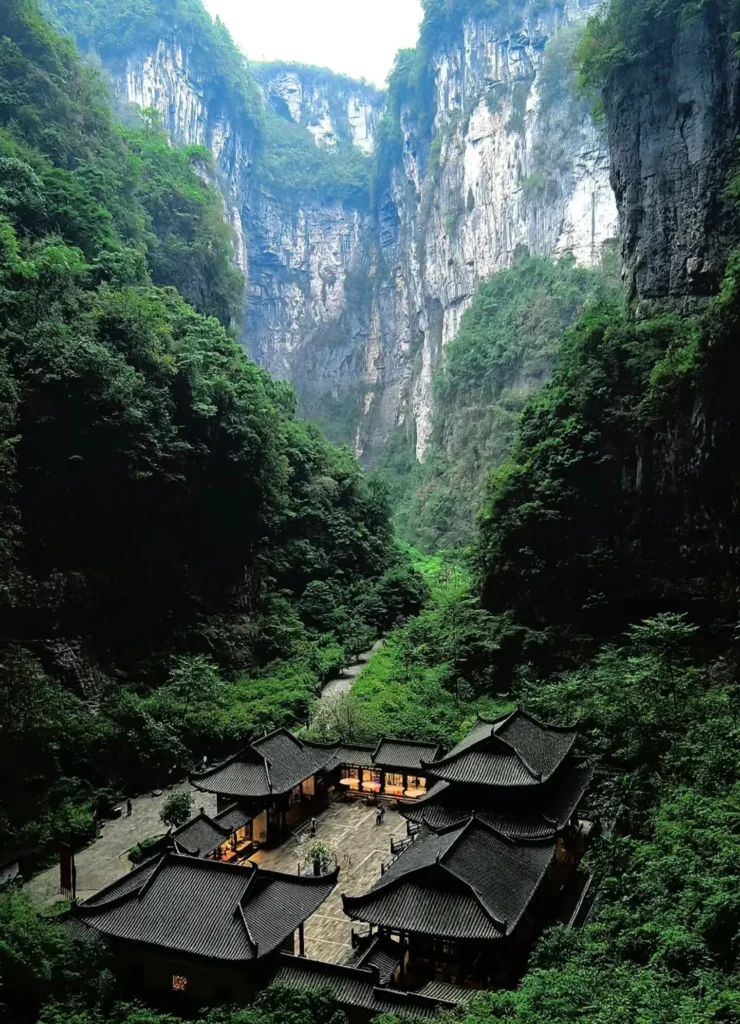
Wulong
The scenery in Wulong (武隆) is completely different from central Chongqing.
Karst landscapes dominate here, with sinkholes, natural bridges, gorges, waterfalls, alpine grasslands, and forests. Three Natural Bridges, Furong Cave, and Fairy Mountain are all in Wulong.
Dazu Rock Carvings
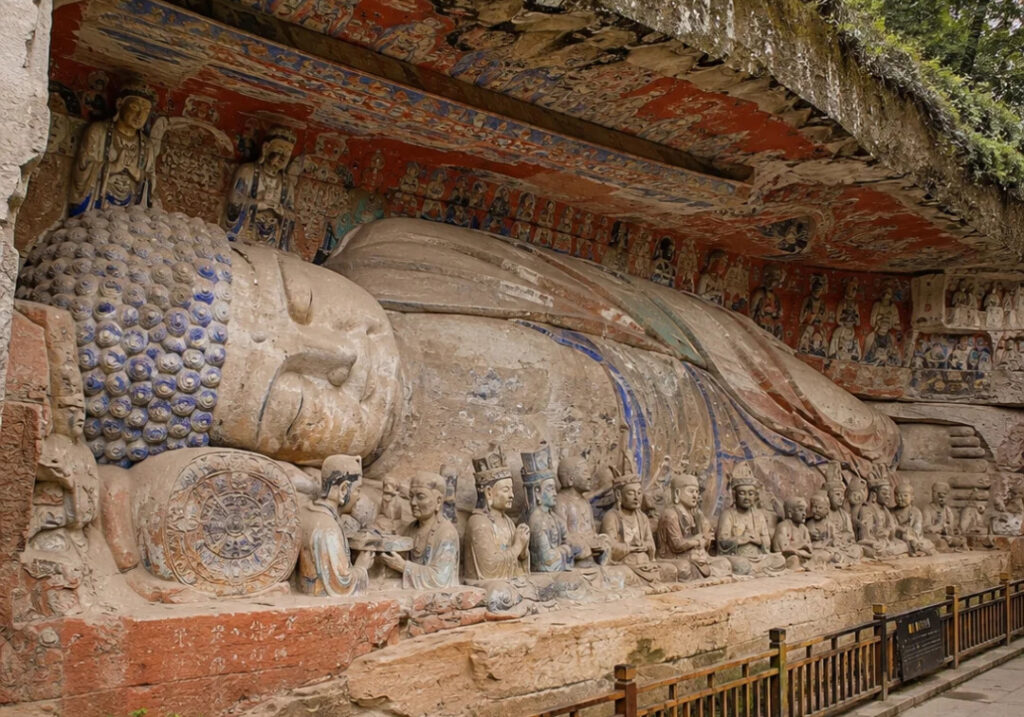
The Dazu Rock Carvings (大足石刻) are more than 1,000 years old and are Chongqing’s only cultural site on the UNESCO World Heritage List. More than 50,000 carved figures survive today, with mostly religious themes.
Chongqing Baiheliang Underwater Museum
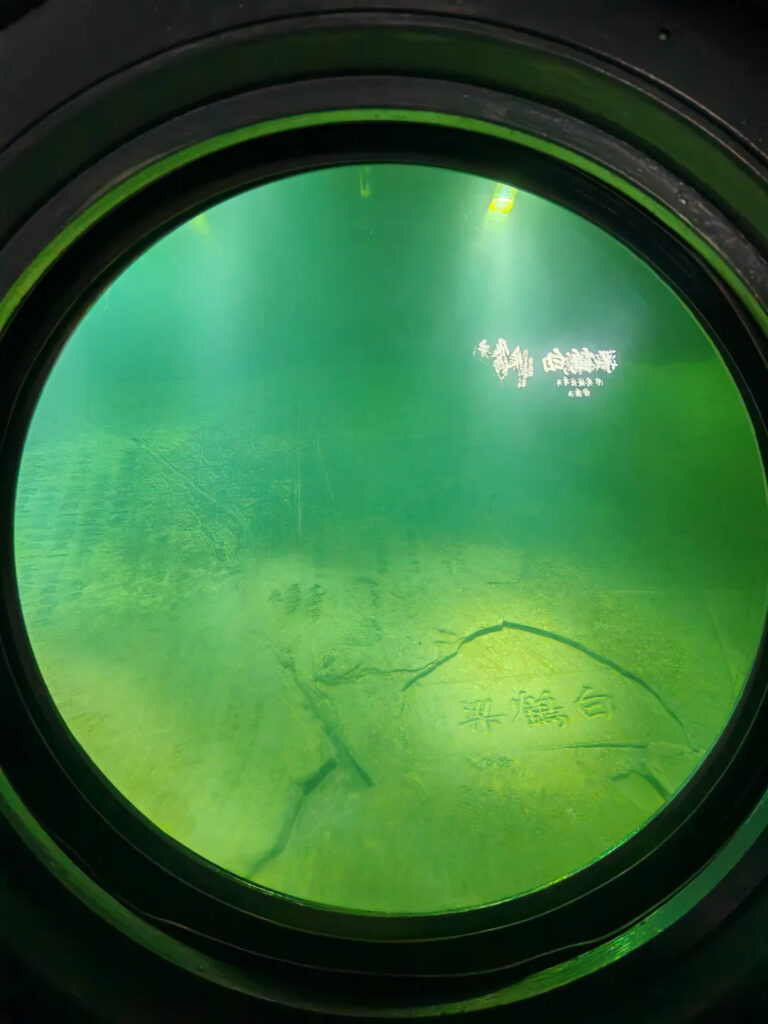
Baiheliang (白鹤梁) is a natural stone ridge in the Yangtze River at Fuling that used to emerge only during the dry season. Since the Tang dynasty, people have left inscriptions and carved stone fish into the rock, recording changes in the Yangtze’s low-water levels over more than 1,200 years.
After the Three Gorges Project raised the water level, Baiheliang remained submerged beneath the river. Today, you can enter the Chongqing Baiheliang Underwater Museum and look through observation windows at the ancient inscriptions still preserved in their original location.