3 Days in Chongqing: A Local’s Tried-and-Tested Itinerary

Over the past few months, I’ve visited the main attractions across central Chongqing. I put together this three-day itinerary with two priorities: avoid unnecessary detours and take downhill routes wherever possible.
Along the way, you’ll experience some of Chongqing’s distinctive ways of getting around, explore old streets, see giant pandas, visit museums, and enjoy the city’s night views from different vantage points.
This itinerary assumes you’re staying near Jiefangbei. If you’re based elsewhere, you can adjust the route to suit your location.
Day 1
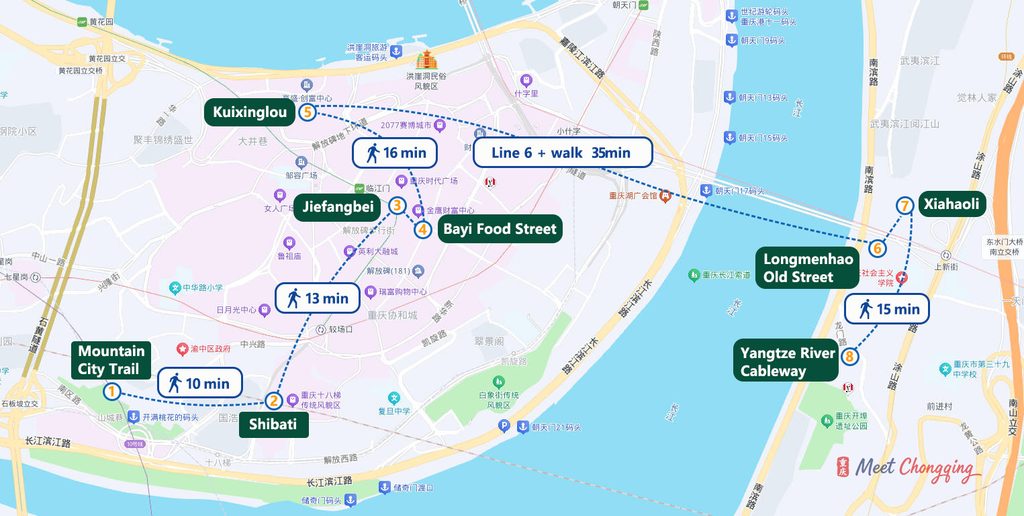
Route: Mountain City Trail → Shibati → Jiefangbei & Bayi Food Street → Kuixinglou → Longmenhao Old Street → Xiahaoli → Yangtze River Cableway
Day 1 covers the older part of Yuzhong District and two old streets on the south bank of the Yangtze River. Spend the morning exploring old Yuzhong, with lunch at Jiefangbei and a photo stop at Kuixinglou. In the afternoon, cross the river by metro to Longmenhao Old Street, then spend the evening enjoying Xiahaoli’s night views before returning to Yuzhong on the Yangtze River Cableway.
Despite the number of stops, most are within walking distance of one another. The metro takes care of the first river crossing and the cableway brings you back, so there’s no need to retrace your steps.
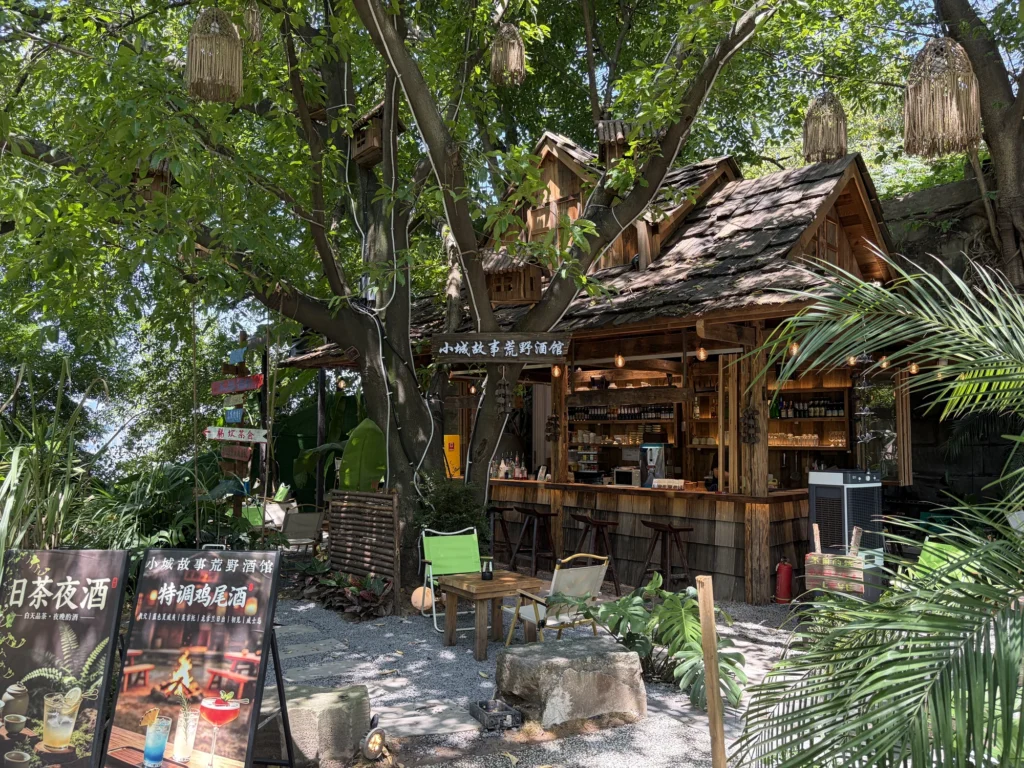
Stop 1: Mountain City Trail (山城步道)
Mountain City Trail once connected the upper and lower parts of old Chongqing for local residents. Unlike more popular attractions such as Shibati and Hongyadong, it hasn’t undergone large-scale commercial development, and many of the city’s old houses remain.
The stone steps lead downhill past sections of the old city wall, a church, elevated walkways, and traditional stilt houses, with views of the Yangtze River along the way.
To me, this feels much closer to the old Chongqing I know, which is why I chose it as the first stop.
Stop 2: Shibati (十八梯)
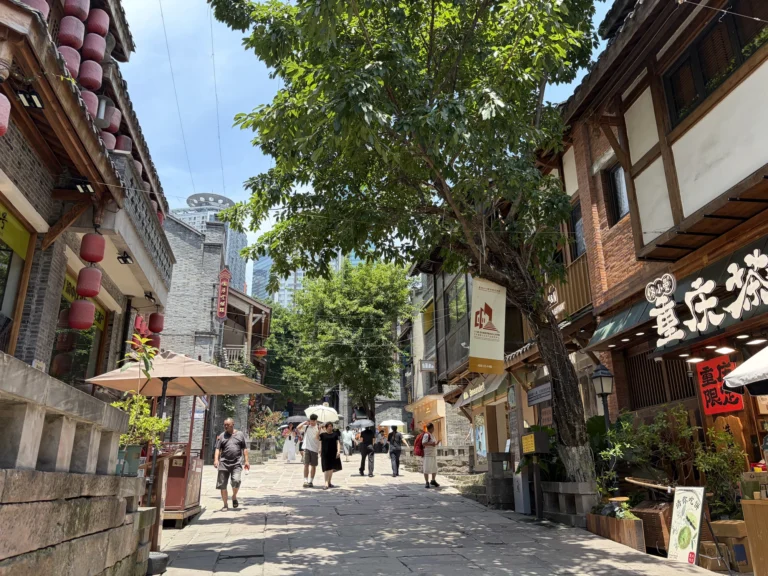
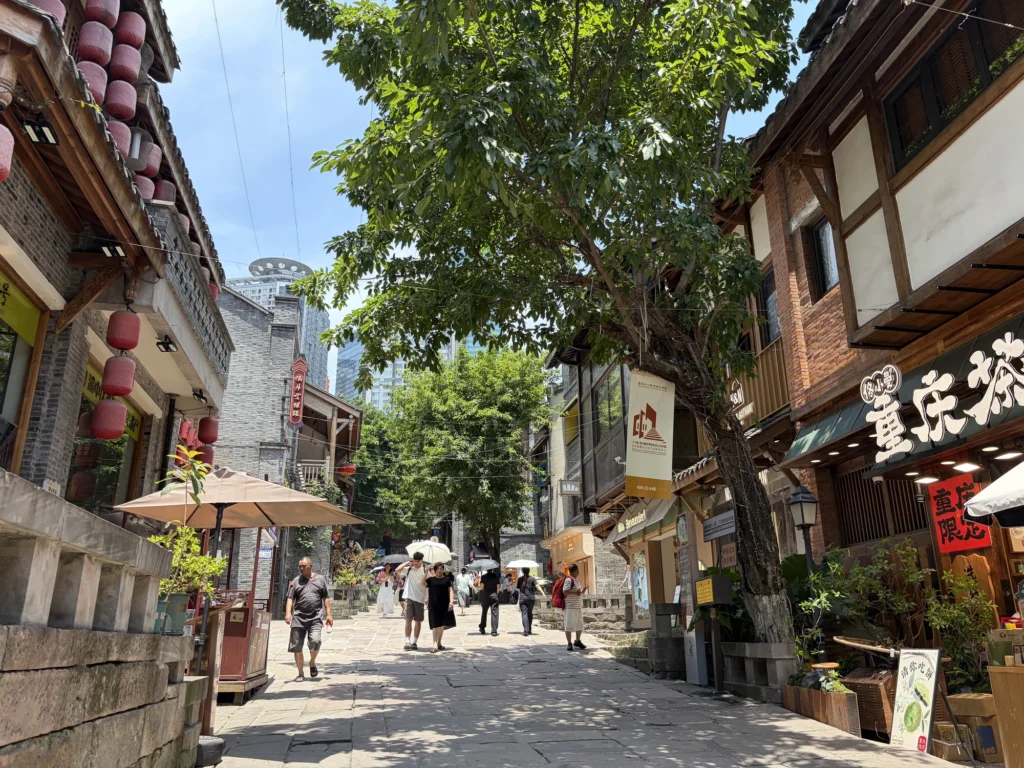
Shibati is now a busy commercial district near Jiefangbei, though it once served as another route between the upper and lower parts of old Chongqing. Most of its buildings were constructed more recently, and the area feels considerably more commercial than Mountain City Trail.
The main street is lined with snack shops, souvenir stores, and shops selling arts and crafts, along with plenty of places to stop for tea. Most of these businesses are fairly typical of tourist areas.
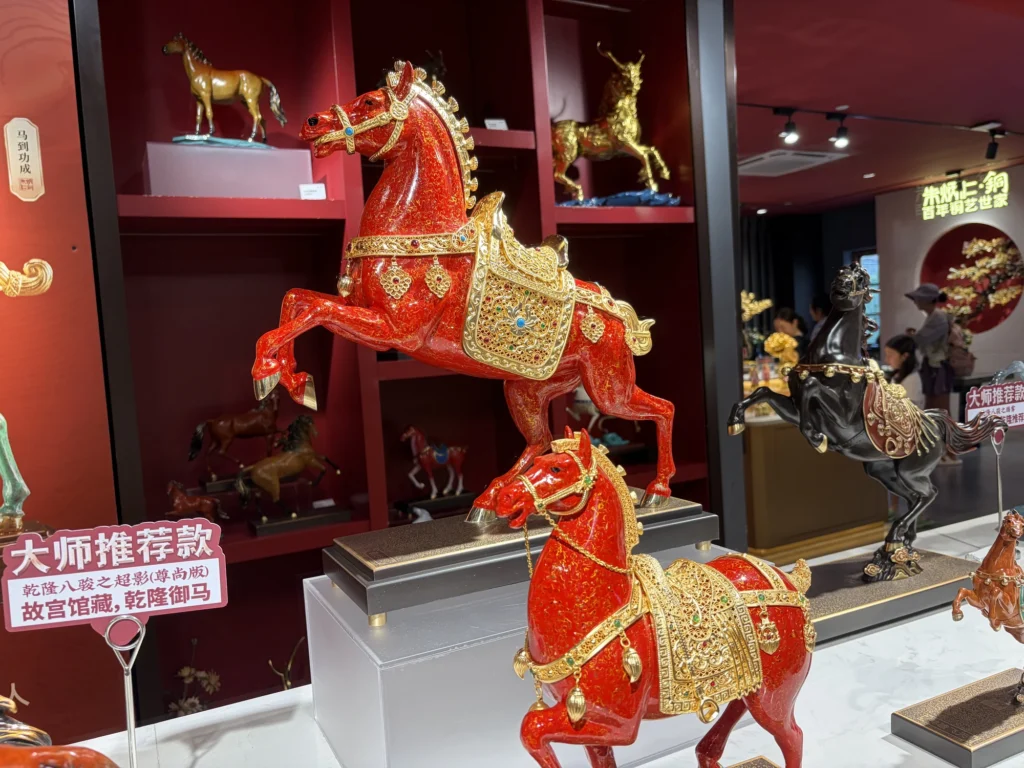
One place I’d recommend visiting, though, is the Zhu Bingren Art Museum (朱炳仁艺术博物馆), which has a collection of finely crafted copper sculptures.
Stop 3: Jiefangbei & Bayi Food Street (解放碑 & 八一美食街)
By the time you finish exploring Shibati, it should be around lunchtime. Jiefangbei is only about a 10-minute walk from Exit A of Shibati.
Jiefangbei, officially known as the People’s Liberation Monument, is one of Chongqing’s best-known landmarks. The monument stands in the middle of a busy pedestrian shopping district.
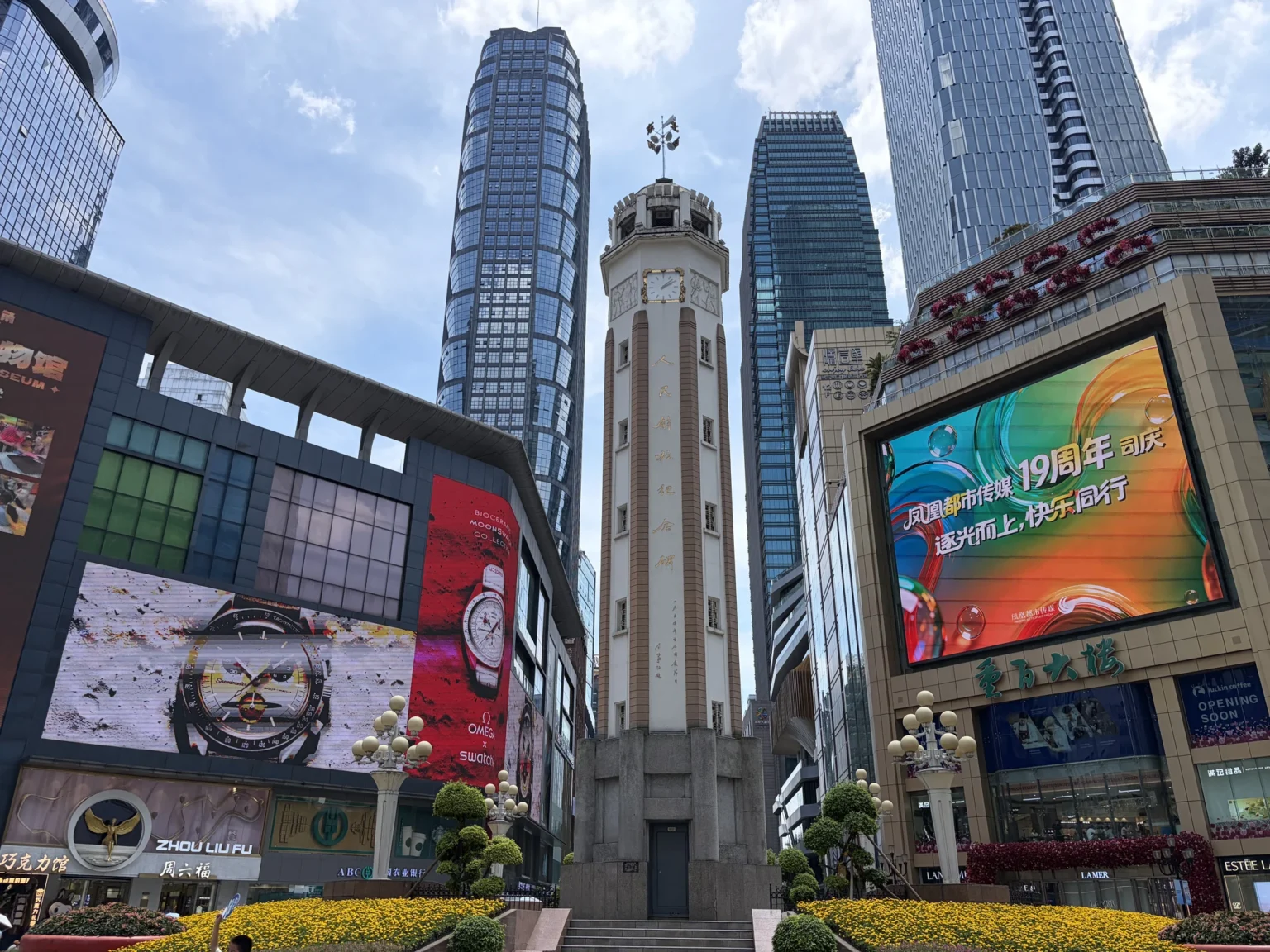
You won’t need long here. After taking a few photos, head to nearby Bayi Food Street (八一好吃街) to try some local snacks.
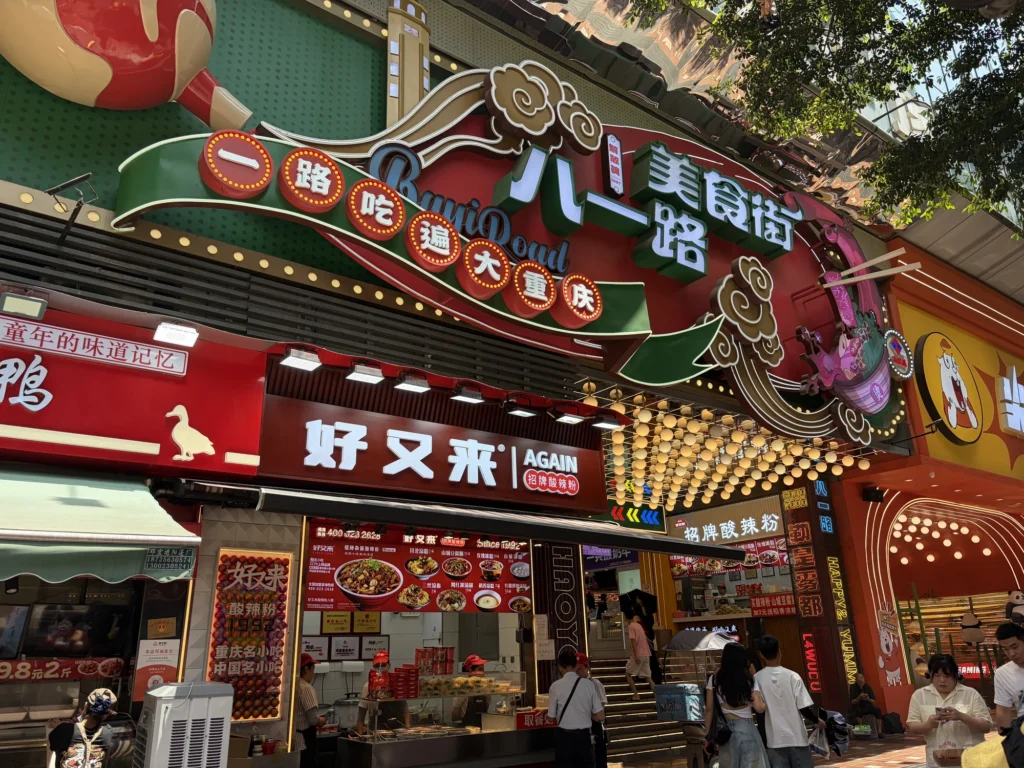
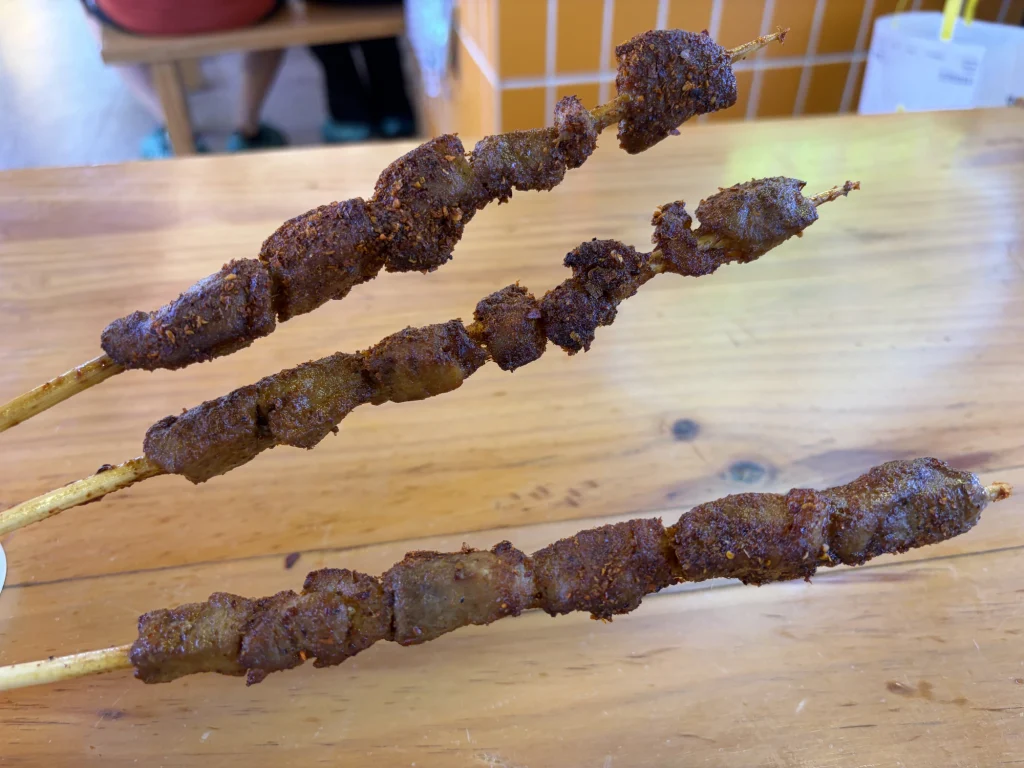
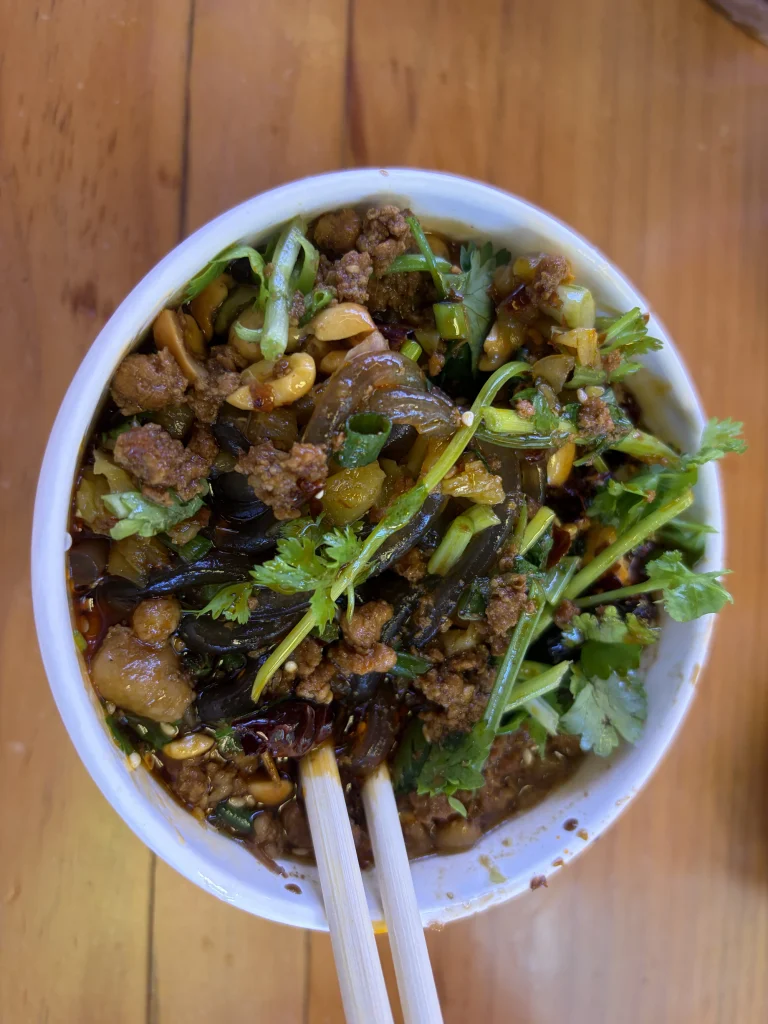
There are plenty of Chongqing specialties to choose from, but some of my favorites are the hot-and-sour noodles at Haoyoulai (好又来酸辣粉), the meat skewers at Mailisi (麦丽丝大肉串), and the saltwater duck at Pangzima (胖子妈盐水鸭).
All three shops were already here when I first visited more than a decade ago. If you don’t handle spicy food well, I’d suggest trying Pangzima’s saltwater duck.
Stop 4: Kuixinglou (魁星楼)
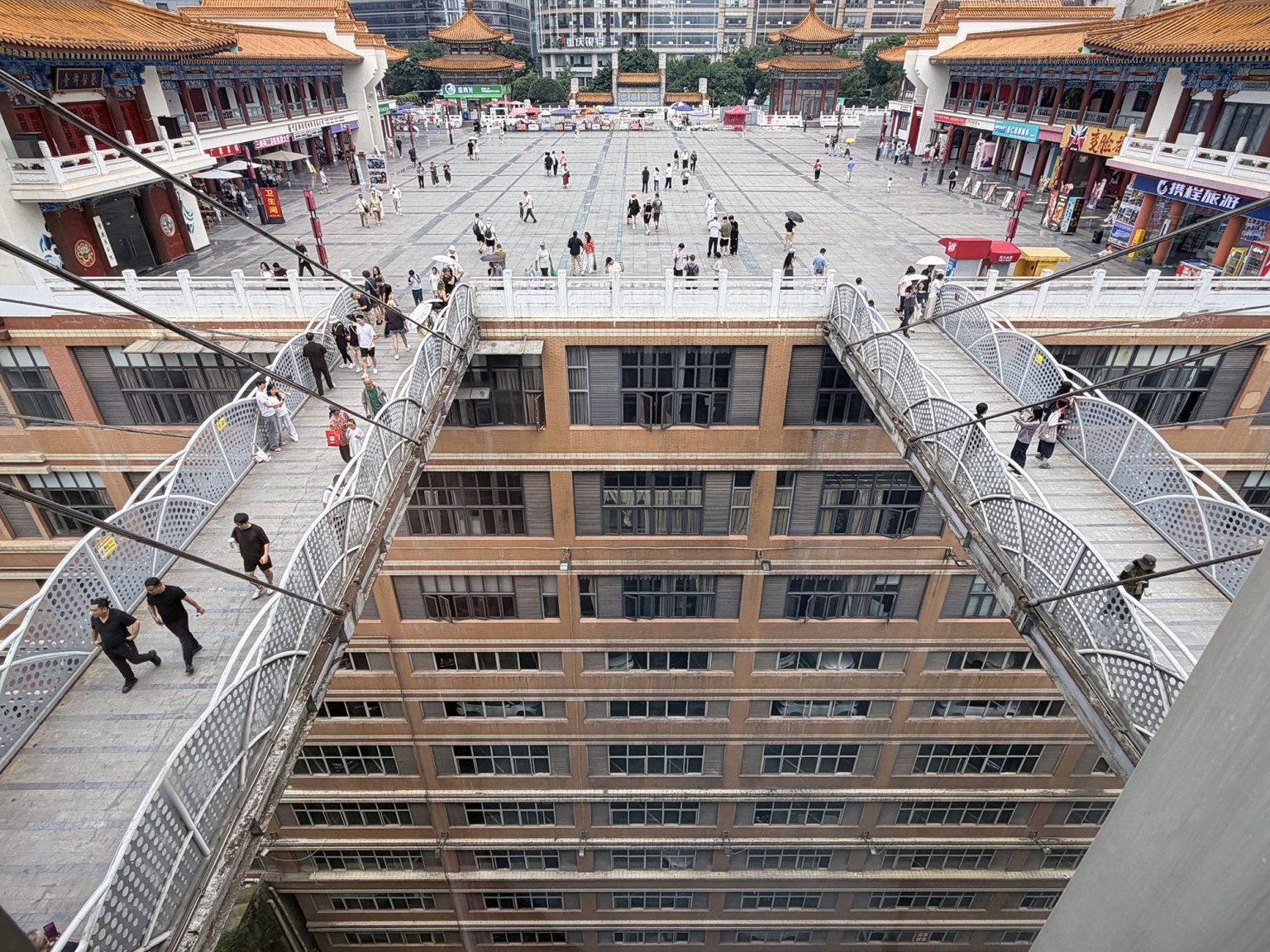
At Kuixinglou, you might think you’re on the first floor, but a skybridge connects it directly to the 22nd floor of the office building opposite.
It’s one of the clearest examples of Chongqing’s unusual changes in elevation.
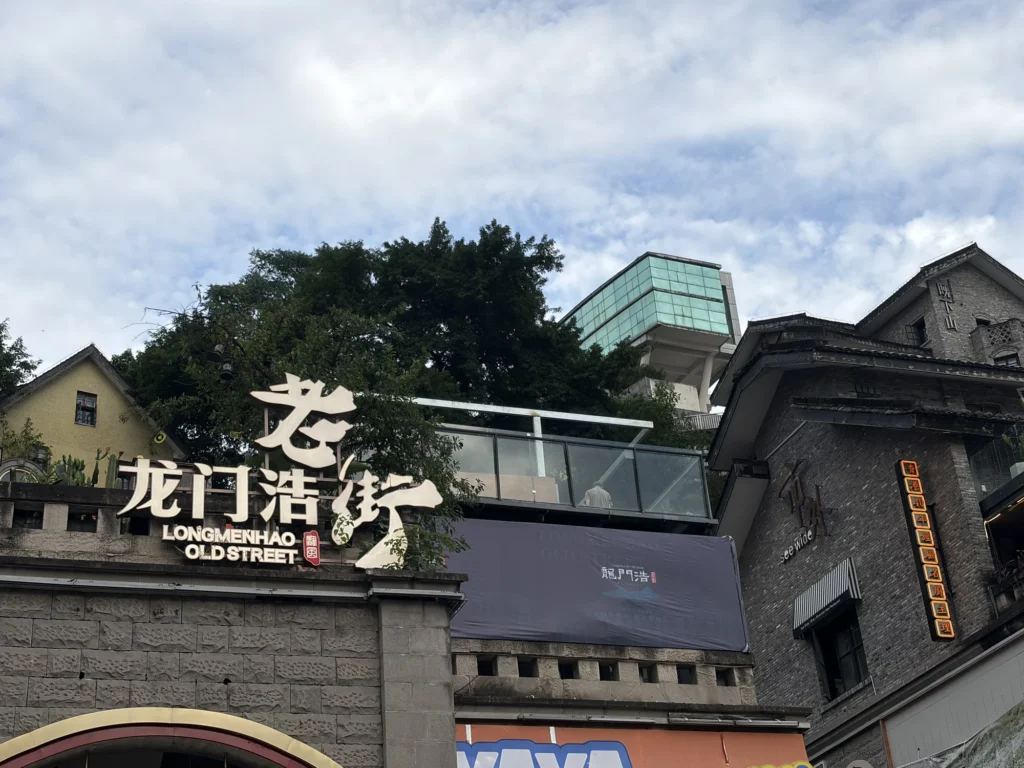
Stop 5: Longmenhao Old Street (龙门浩老街)
When Chongqing opened to foreign trade in the late 19th century, Longmenhao’s location near the Yangtze River docks began attracting foreign merchants and trading companies.
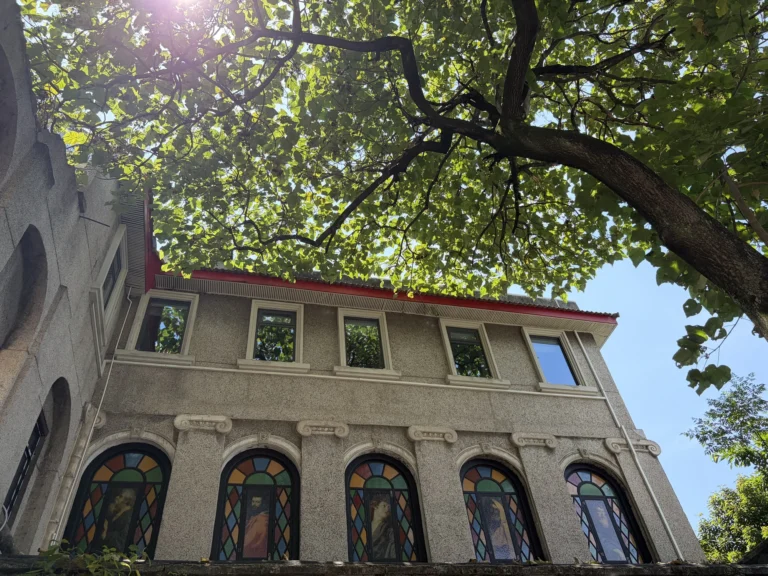
Several foreign diplomatic missions were also based here during China’s War of Resistance Against Japan. The area still has a number of historic buildings that combine Chinese and Western architectural styles.
These buildings are the main reason to explore Longmenhao Old Street.
Stop 6: Xiahaoli (下浩里)
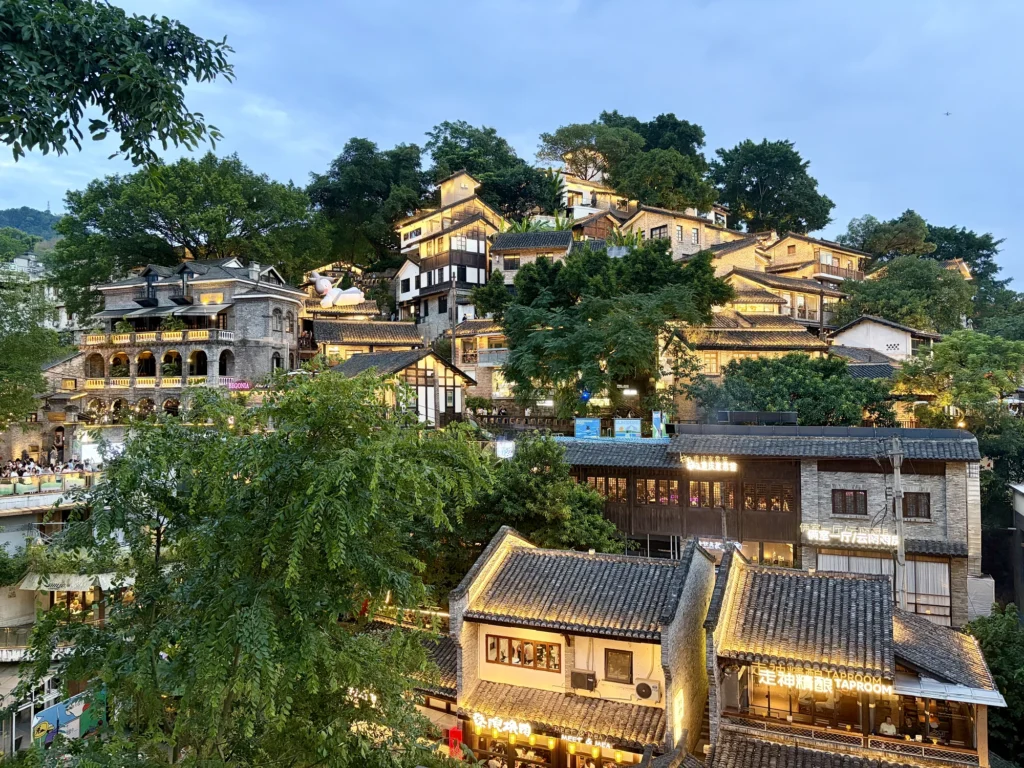
Xiahaoli connects directly to Longmenhao Old Street, but the two areas feel quite different. Longmenhao is known for its blend of Chinese and Western architecture, while Xiahaoli is known for its night views and is generally more popular.
For that reason, I’d explore Longmenhao in the afternoon, have dinner nearby or in Xiahaoli, then take my time wandering through Xiahaoli after the lights come on.
Stop 7: Yangtze River Cableway (长江索道)
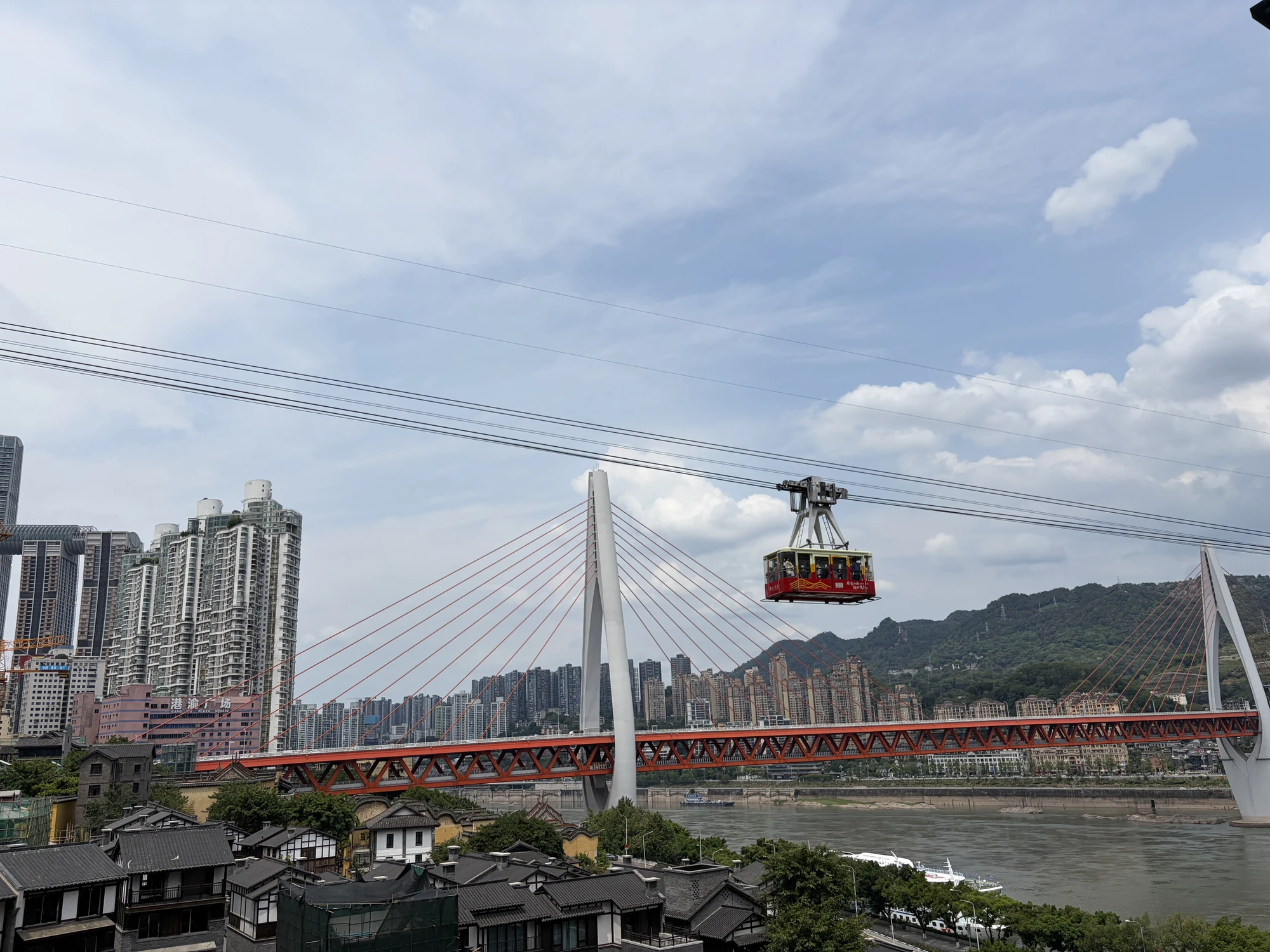
Once you’ve reached Nanbin Road from Xiahaoli, the Yangtze River Cableway‘s South Station is about another 10 minutes away on foot. The cable car will take you directly back to Yuzhong District.
Queues at the South Station are usually shorter than at the North Station, and the evening ride offers views of both riverbanks after dark.
This way, the cableway also serves as your return journey, so there’s no need to make a separate trip just to experience it.
Day 2
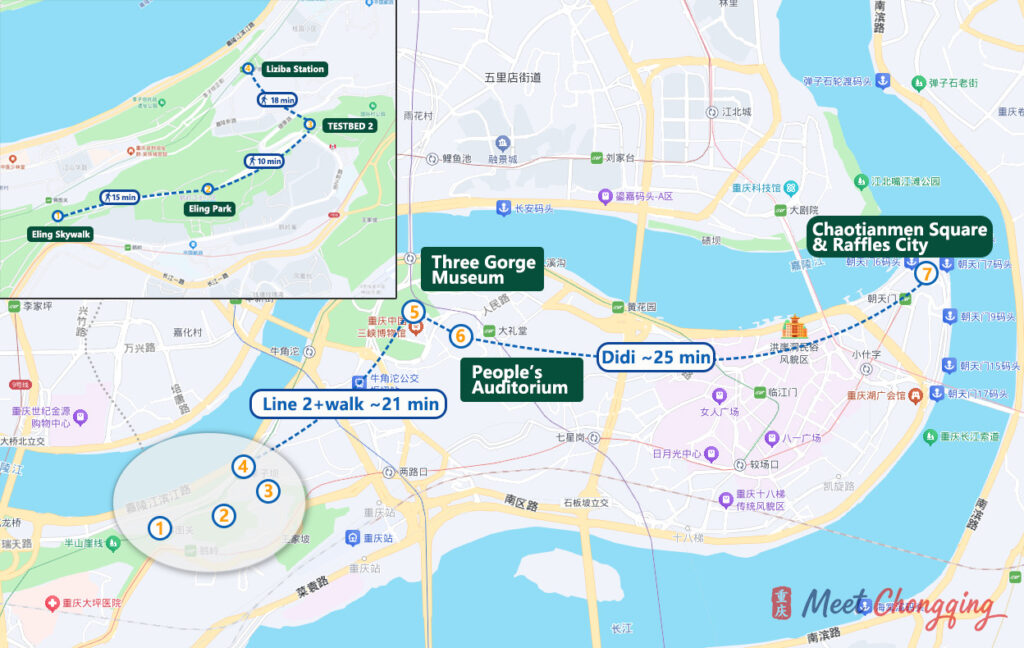
Route: Eling Park & Eling Skywalk → TESTBED2 → Liziba → Three Gorges Museum → Great Hall of the People → Chaotianmen Square & Raffles City Chongqing
Day 2 starts at Eling Park and continues to TESTBED2 and Liziba, following the downhill route to make the walk less tiring.
The afternoon is spent indoors at the Three Gorges Museum, a particularly welcome break during Chongqing’s hot summers.
Afterward, the route continues to Chaotianmen and Raffles City for views of the Yangtze and Jialing rivers meeting. Dinner and a visit to the Raffles City observation deck round off the day.
Stop 1: Eling Park & Eling Skywalk (鹅岭公园 & 鹅岭栈桥)
Eling Park was originally the private garden of a wealthy Chongqing merchant and dates back more than a century. Alongside its traditional Chinese gardens, the park still has several former foreign diplomatic sites dating from the War of Resistance Against Japan.
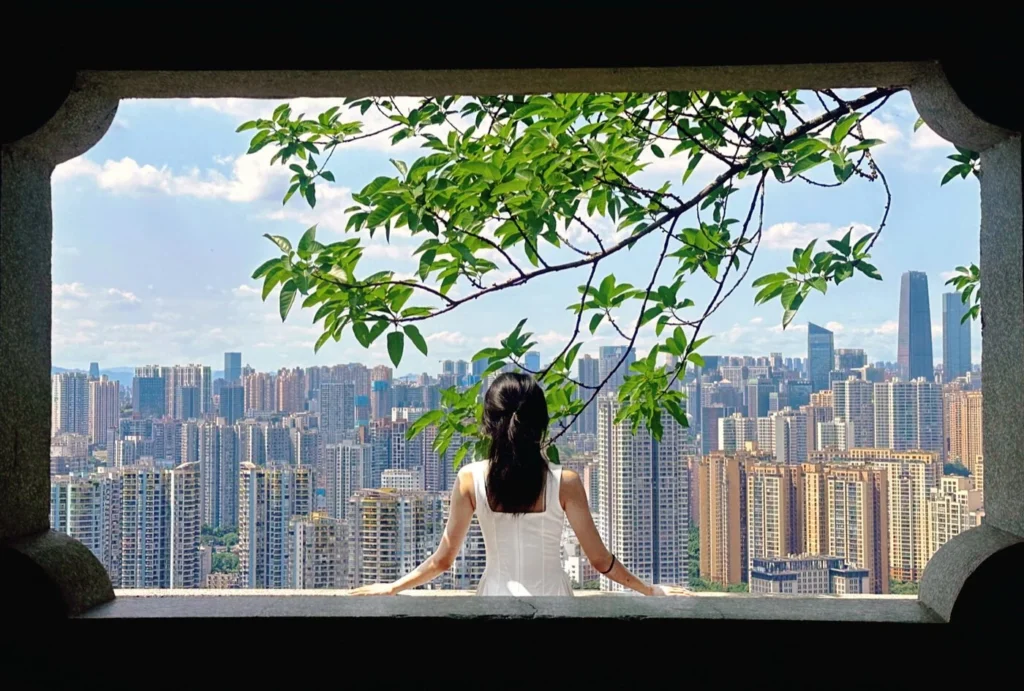
My favorite spot is Kansheng Tower (瞰胜楼). The views from the top floor extend across central Chongqing in almost every direction.
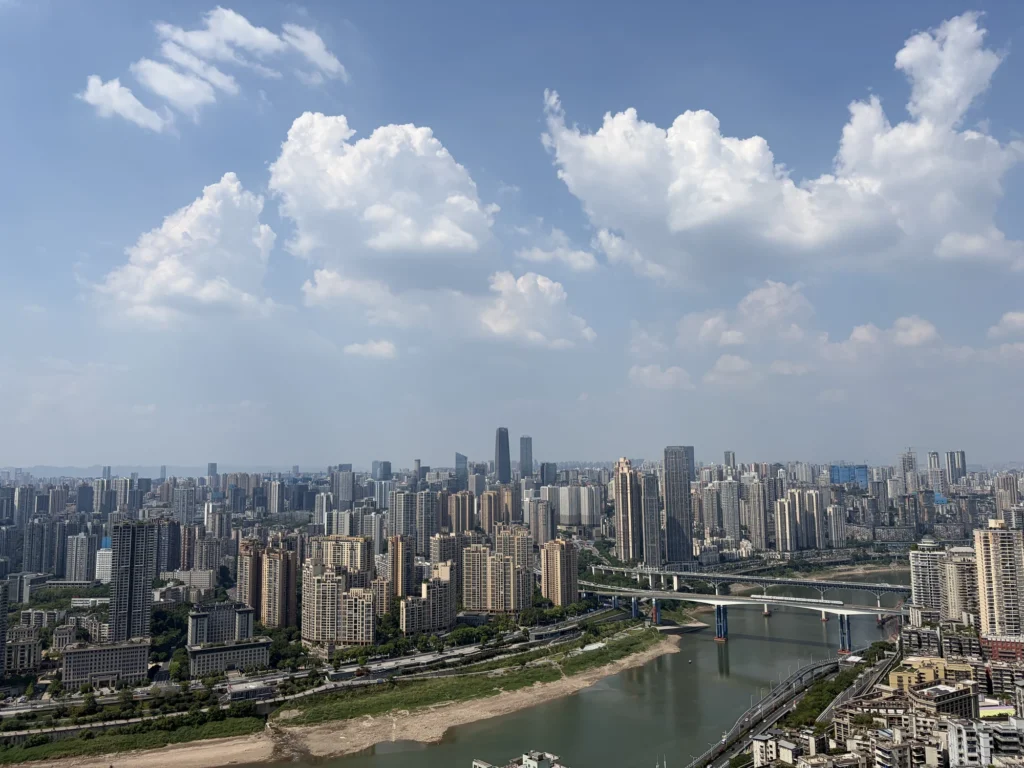
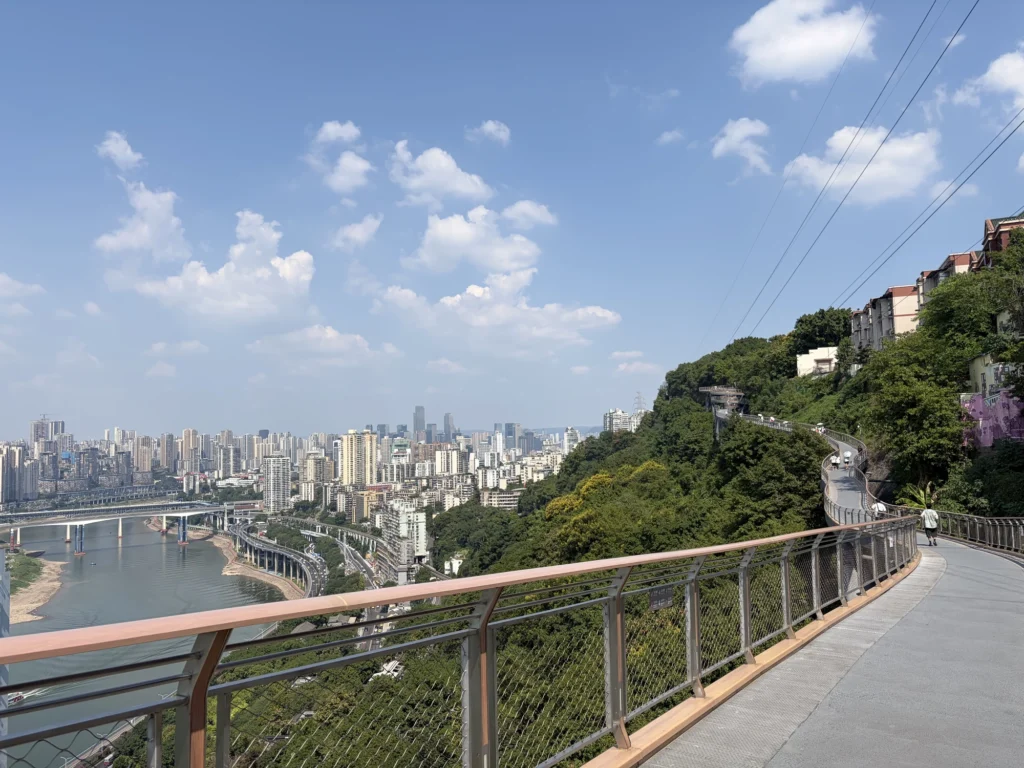
Beside the park is the newer Eling Skywalk (鹅岭栈桥), a roughly 460-meter-long walkway suspended along the cliffside. The views are similarly open.
To walk the skywalk, take Exit 1 at Eling Station and head first to the South Gate of Fotuguan Park (佛图关公园南门). The skywalk begins here and ends inside Eling Park.
Bring identification, as you’ll need to register on site before entering.
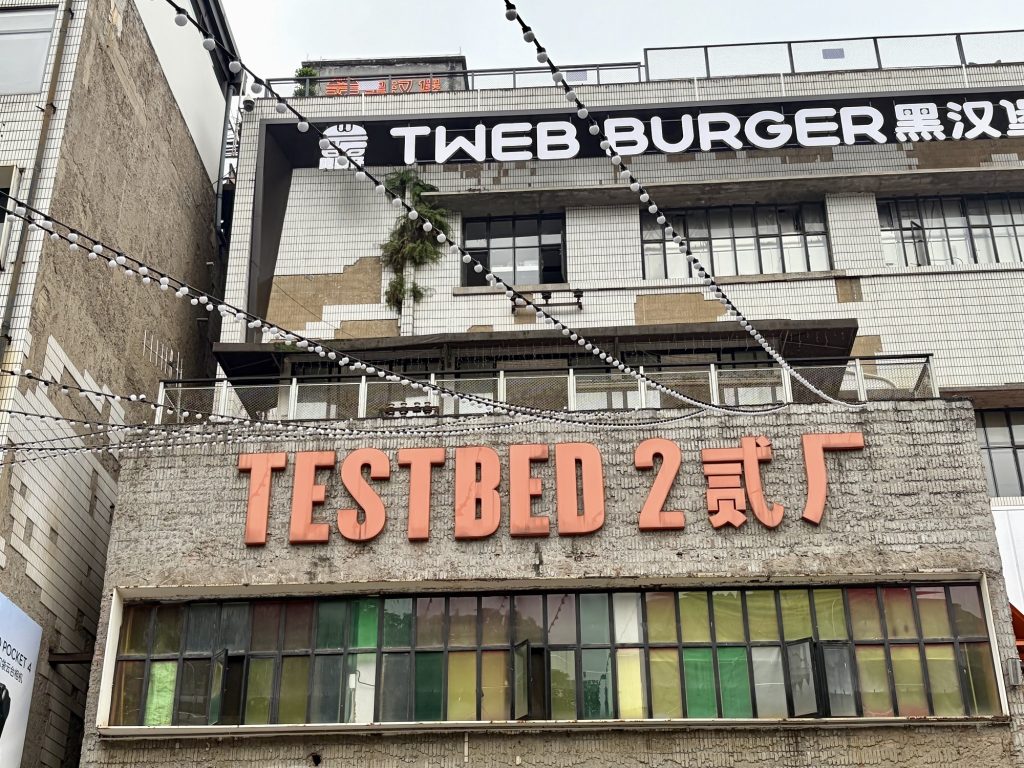
Stop 2: TESTBED2 (鹅岭二厂)
TESTBED2 was once a printing factory before being converted into a creative arts district. Much of its industrial character has been retained, including old factory buildings, iron doors, and staircases.
Today, the former factory complex is filled with small shops, art exhibitions, graffiti walls, and creative installations, making it a good place for photography.
Stop 3: Liziba Station (李子坝站)
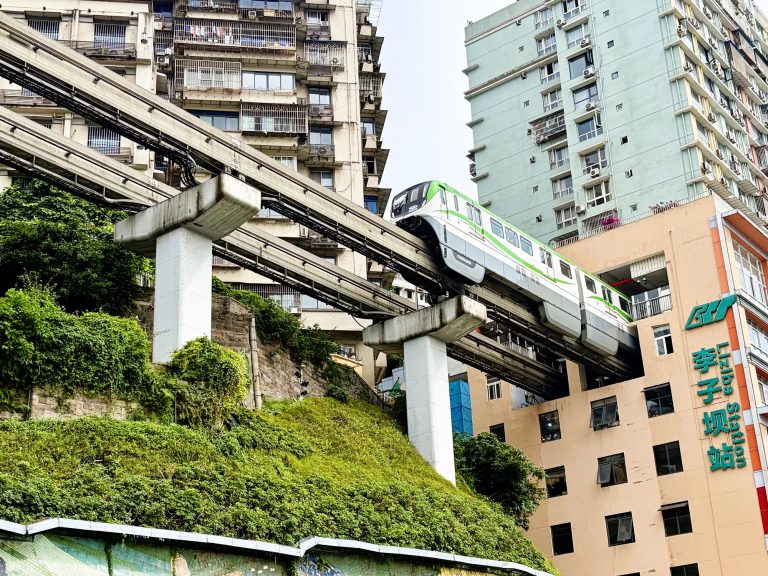
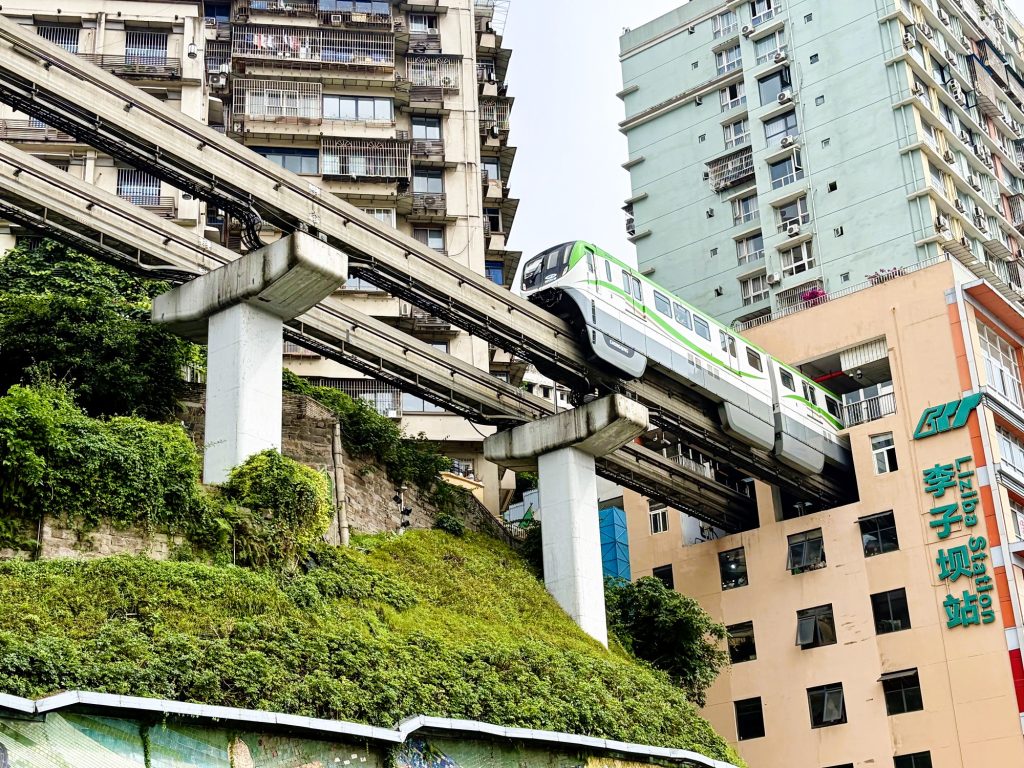
Liziba is one of Chongqing’s most unusual sights. Chongqing Rail Transit Line 2 passes straight through a 19-story building that combines residential and commercial space.
Shops and offices occupy floors 1 through 5, while the rail station takes up floors 6 through 8, with trains passing through the eighth floor. The upper floors, from 9 to 19, are residential apartments.
Although the railway station and building appear to form a single structure, their main supporting structures are separate, allowing the trains to pass through without interfering with the building.
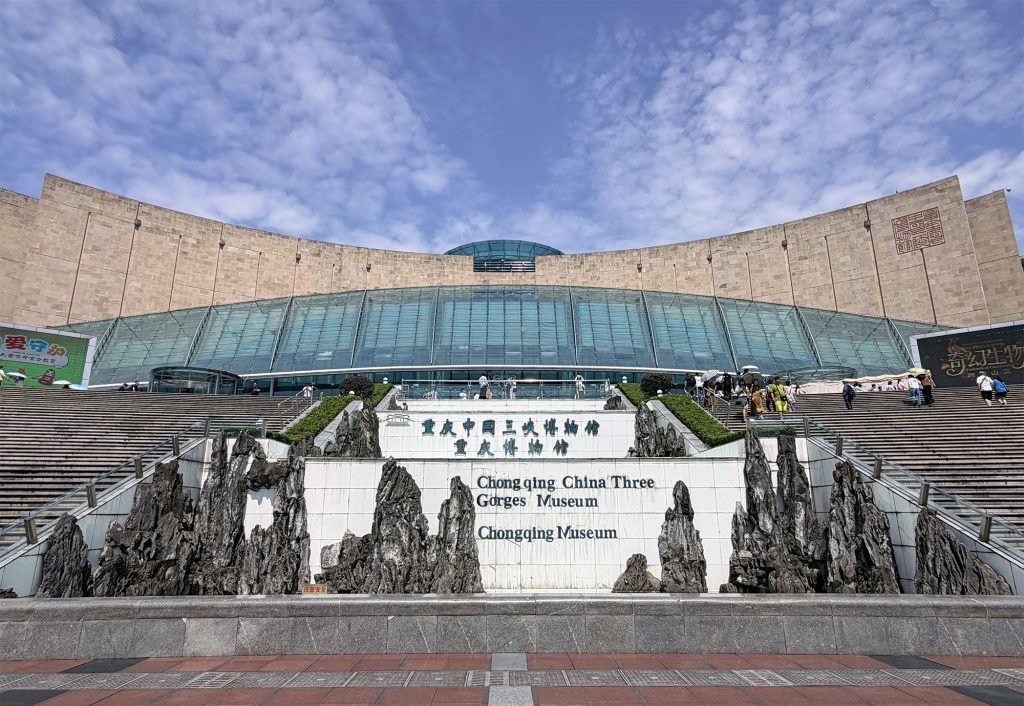
Stop 4: Three Gorges Museum (三峡博物馆)
Despite its name, the Three Gorges Museum covers much more than the Three Gorges region along the Yangtze River..
The exhibits range from prehistoric stone tools through ancient bronzes, pottery figurines, porcelain, and coins to Chongqing’s history during the War of Resistance Against Japan, covering nearly every major period of the city’s history, from prehistory to the modern era.
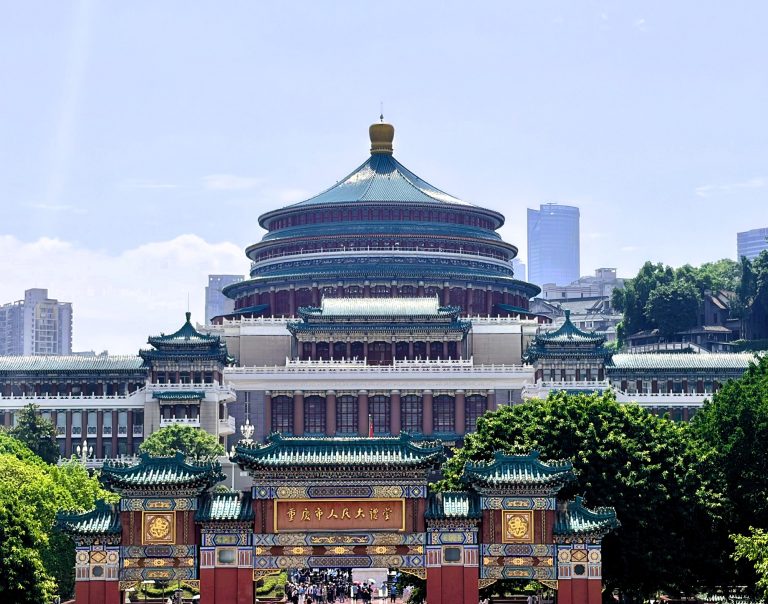
Stop 5: Chongqing People’s Auditorium (重庆人民大礼堂)
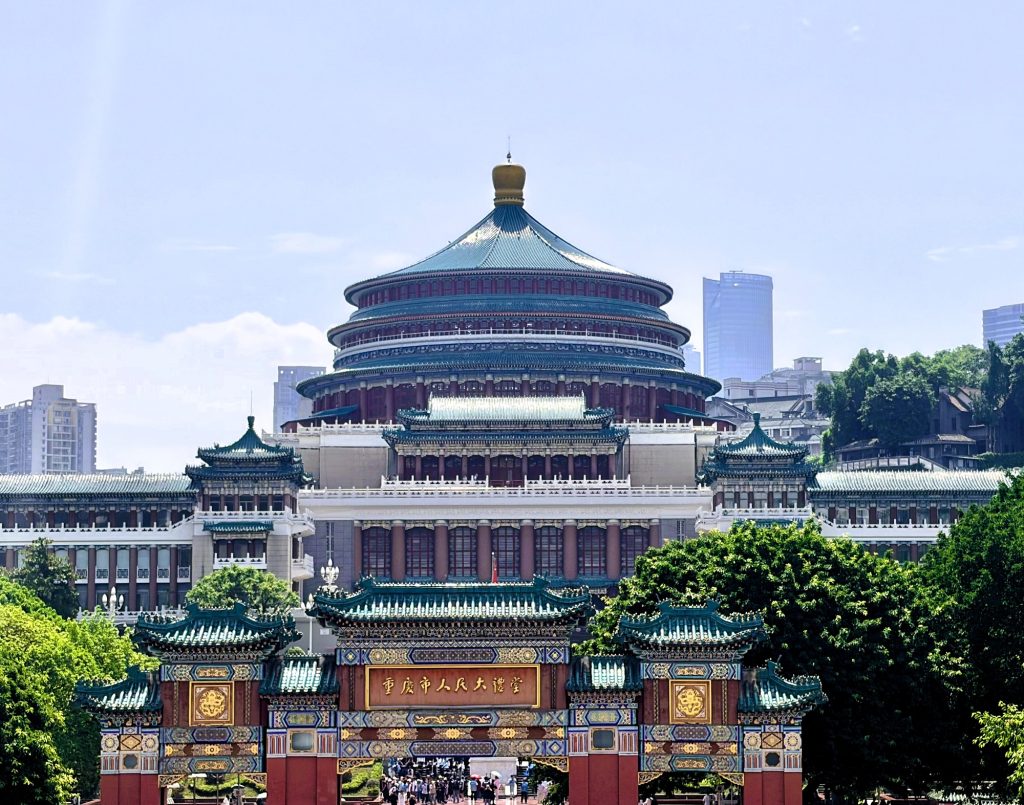
Directly across from the Three Gorges Museum stands the Chongqing People’s Auditorium, often nicknamed “Chongqing’s Little Temple of Heaven” because of its resemblance to Beijing’s Temple of Heaven.
For this itinerary, I’d generally just stop for a few photos outside, although you can also buy a ticket to see the interior if time permits.
Stop 6: Chaotianmen Square & Raffles City (朝天门广场 & 来福士)
Chaotianmen was once one of the most important city gates and river docks in old Chongqing. It’s also where the Yangtze and Jialing rivers meet.
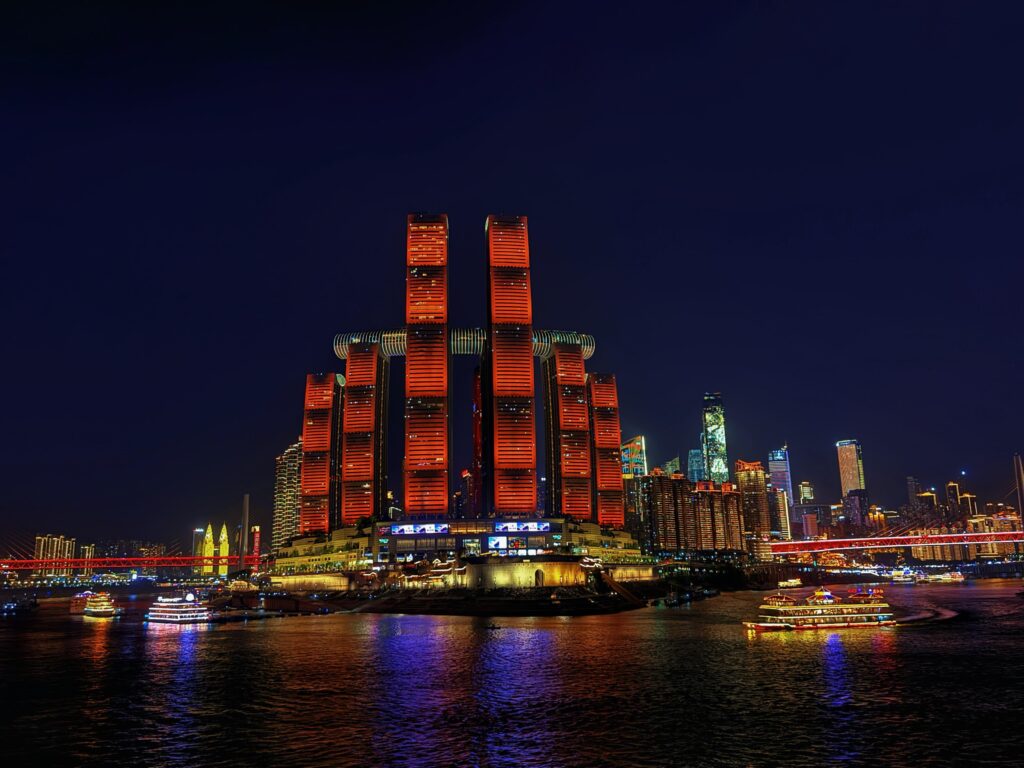
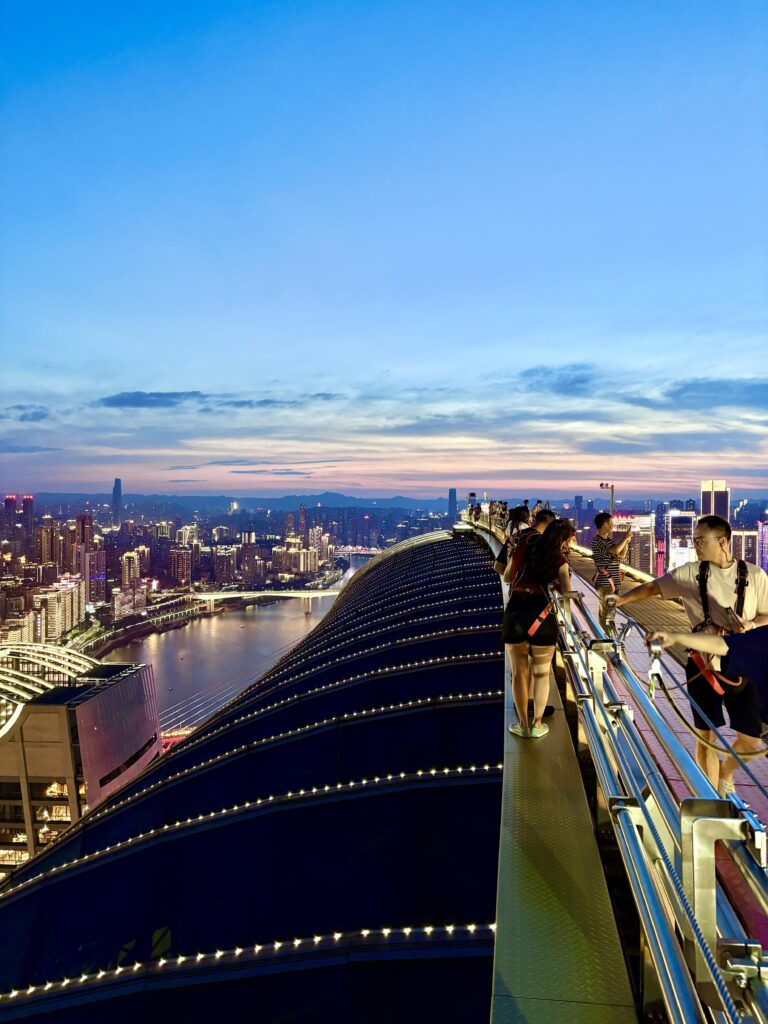
Behind Chaotianmen stands Raffles City Chongqing, a large commercial complex made up of eight skyscrapers connected by an elevated skybridge. It’s now one of the city’s best-known landmarks.
The main attraction here is the confluence of the Yangtze and Jialing rivers. When their colors contrast, the Jialing appears greenish while the Yangtze looks more yellow, creating a distinct boundary where the two rivers meet.
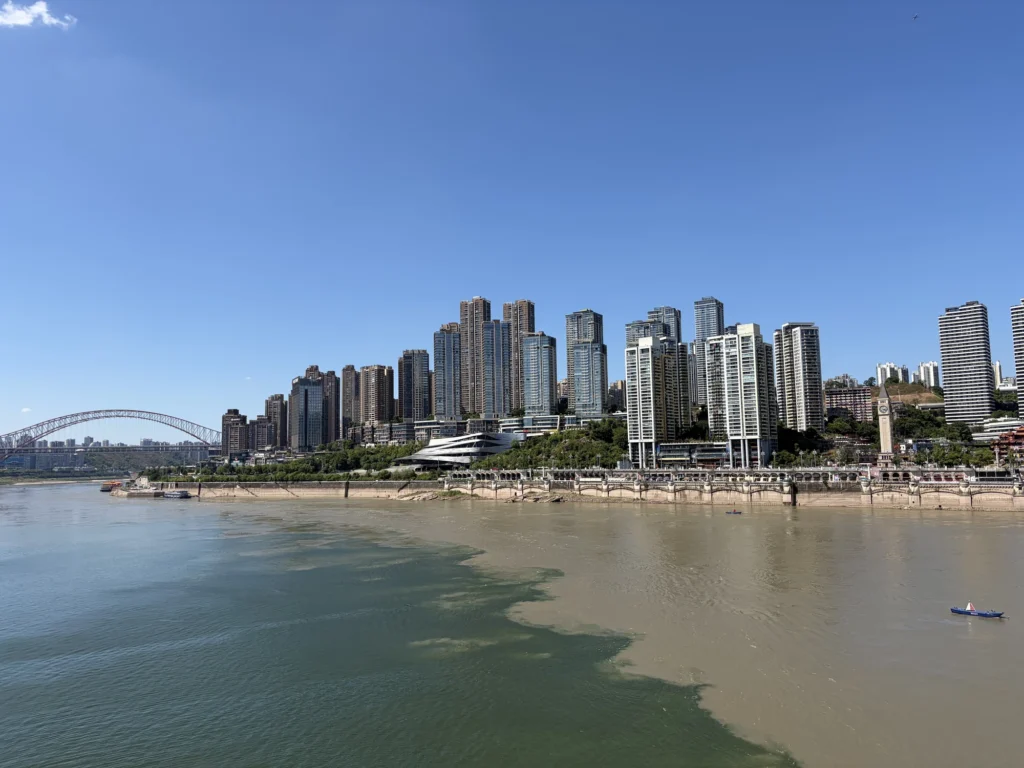
However, rainfall upstream affects the water colors, so this boundary isn’t clearly visible every day.
Make sure you arrive during daylight if you want to see the confluence. That means keeping an eye on the time at the Three Gorges Museum earlier in the afternoon.
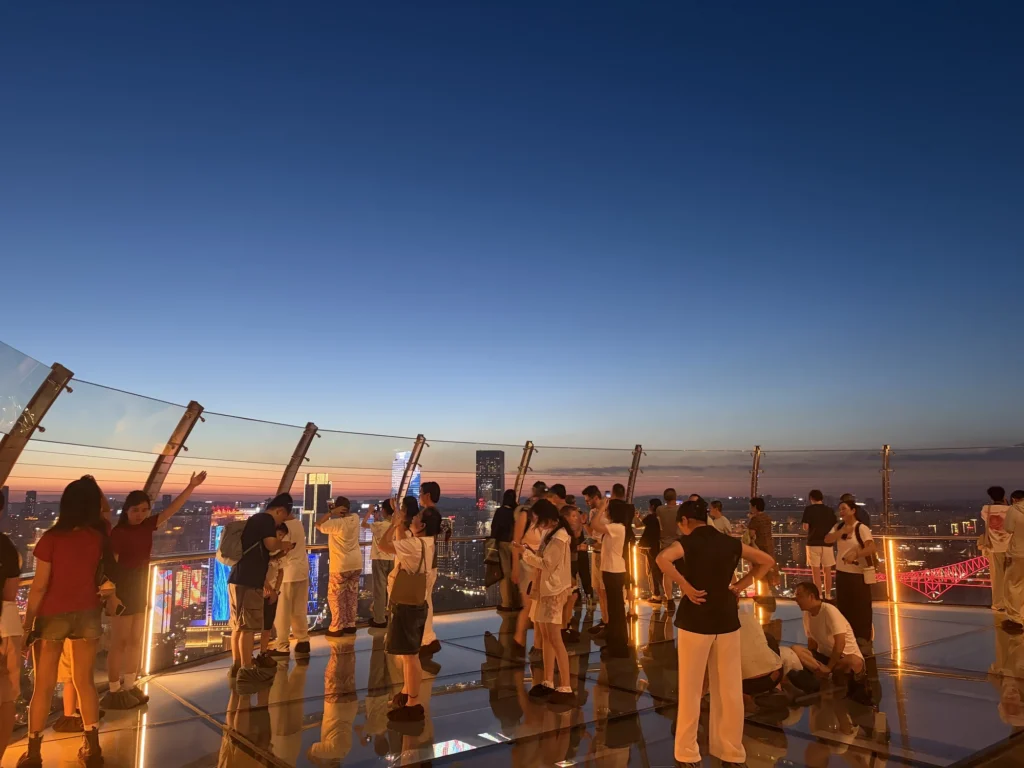
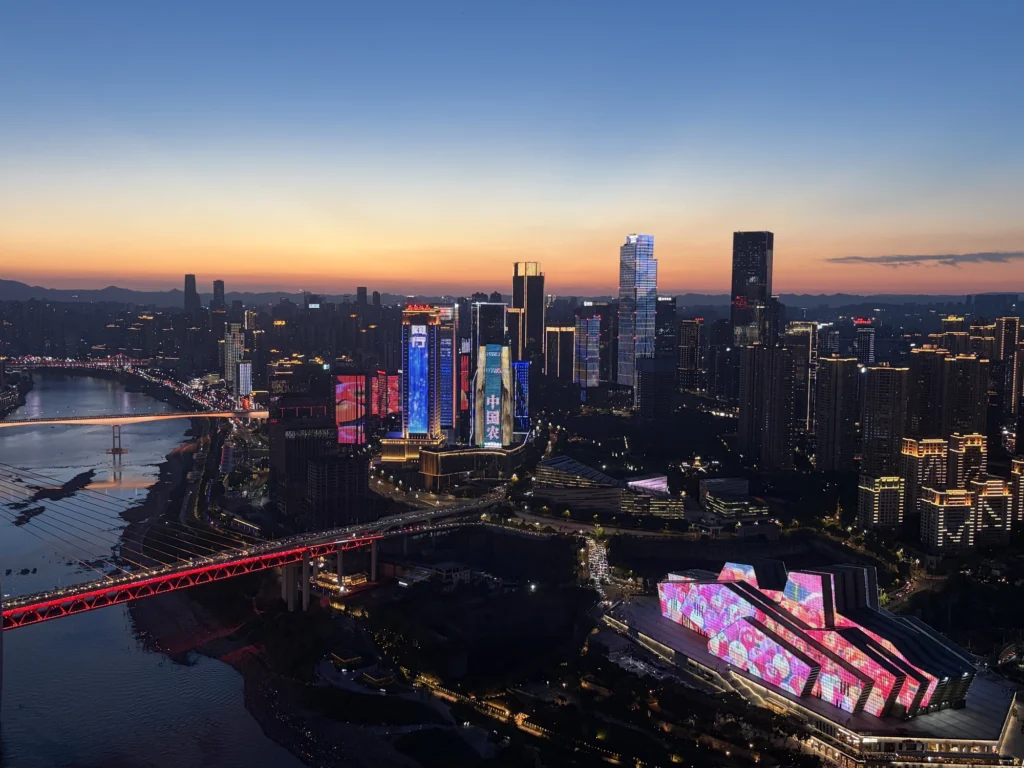
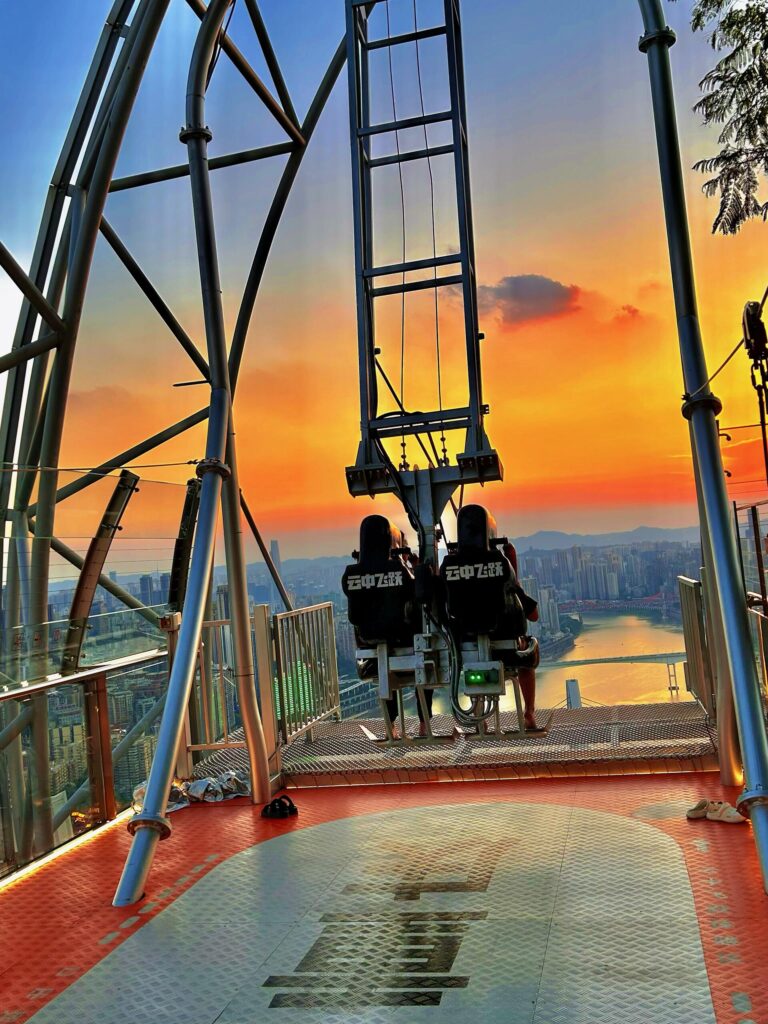
Afterward, have dinner and take a break inside Raffles City before heading up to the observation deck about 250 meters above the ground for views of Chongqing at night.
Day 3
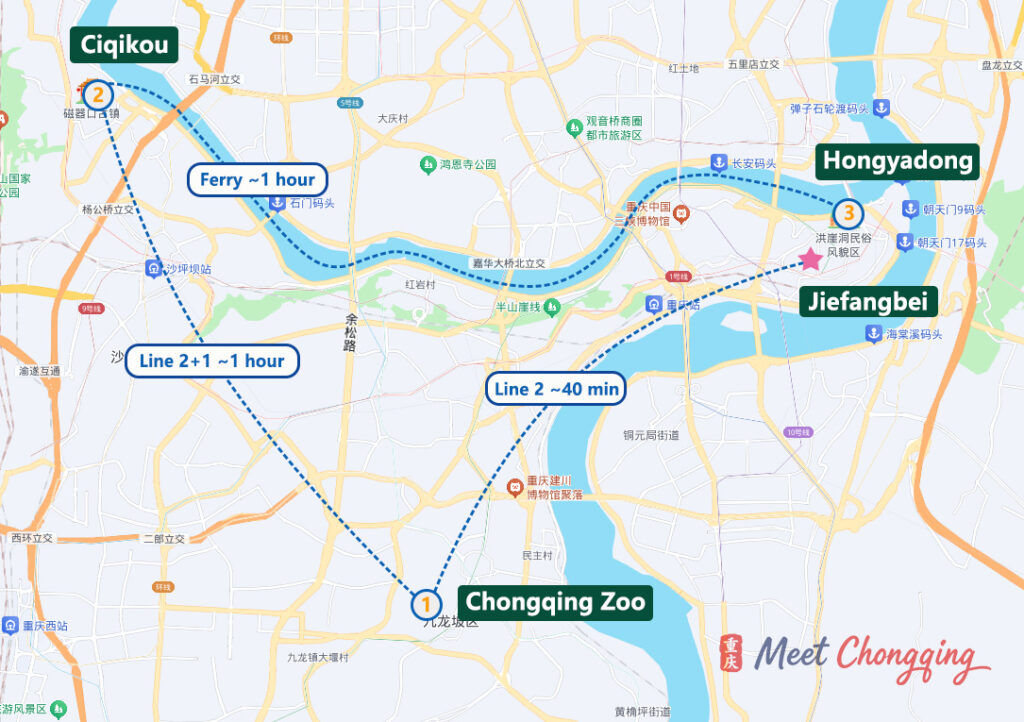
Route: Chongqing Zoo → Ciqikou Ancient Town → Jialing Xiaodu Ferry → Hongyadong
Day 3 combines two popular attractions farther from Yuzhong District: Chongqing Zoo and Ciqikou Ancient Town. The route ends with a ferry ride along the Jialing River back to Yuzhong, followed by the night views of Hongyadong.
Two things are particularly important for this day’s timing: getting into the zoo early in the morning and allowing enough time to reach Ciqikou Pier before the sunset cruise departs.
Stop 1: Chongqing Zoo (重庆动物园)
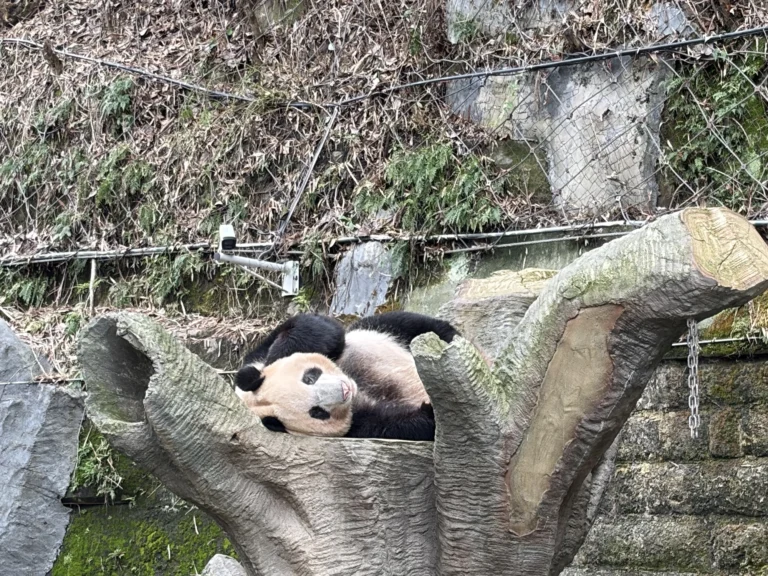
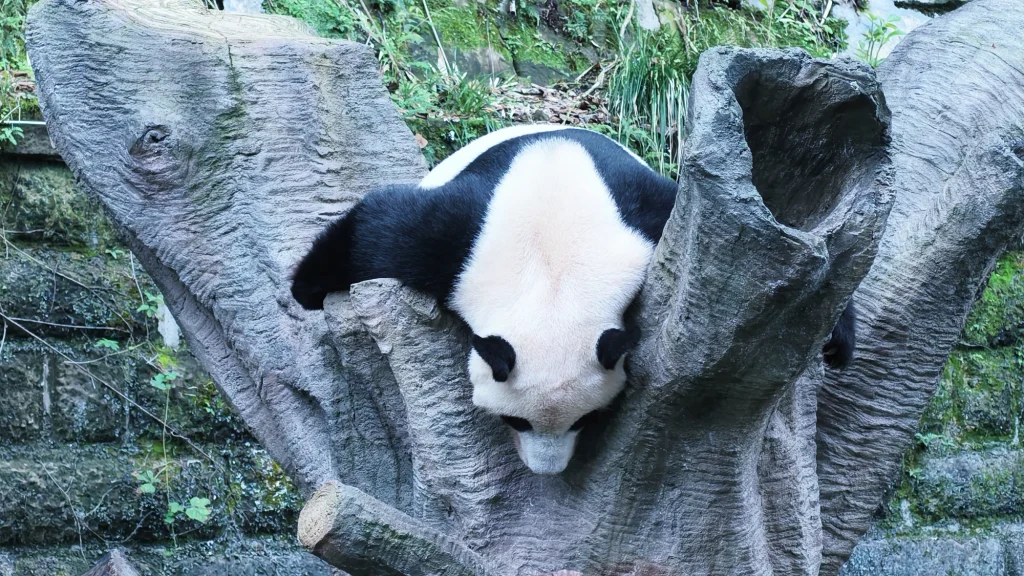
Chongqing Zoo has more giant pandas than any other zoo in China. If you’re not planning to visit the Chengdu Research Base of Giant Panda Breeding, it’s a good alternative.
According to the zoo’s visitor guide, the pandas are generally more active between 8:30 and 10:00 AM and again between 2:00 and 4:00 PM.
I’ve noticed, though, that some pandas start sleeping sometime after 9:00 AM and don’t wake up until around 2:00 PM.
For a morning visit, I’d aim to arrive before 9:00 AM.
Stop 2: Ciqikou Ancient Town (磁器口古镇)
Ciqikou is Chongqing’s best-known ancient town, with a main street and a back street. The back street was built in recent years and feels more like an ordinary shopping district.
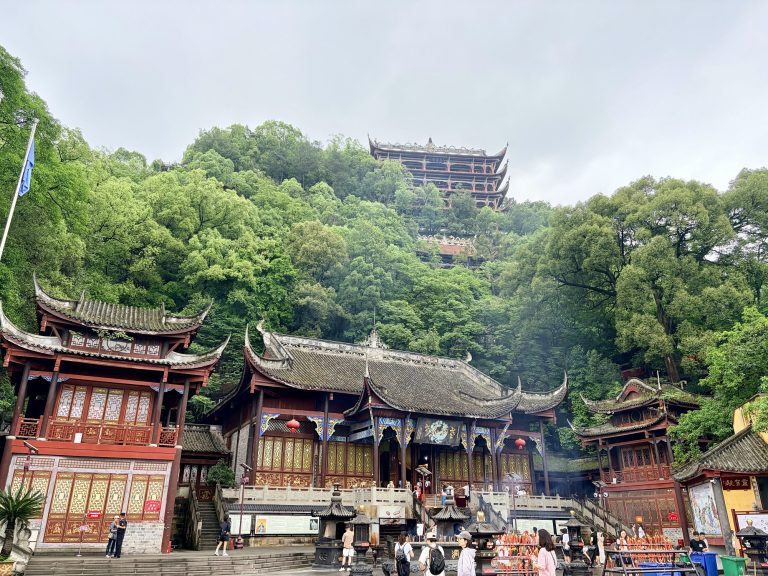
I prefer entering the main street through Huangjueping Archway (黄桷坪牌坊), where more of Ciqikou’s original character remains. Several historic buildings, including Zhong Family Courtyard (钟家院), Baoshan Palace (宝善宫), and Baolun Temple (宝轮寺), are also concentrated in this area.
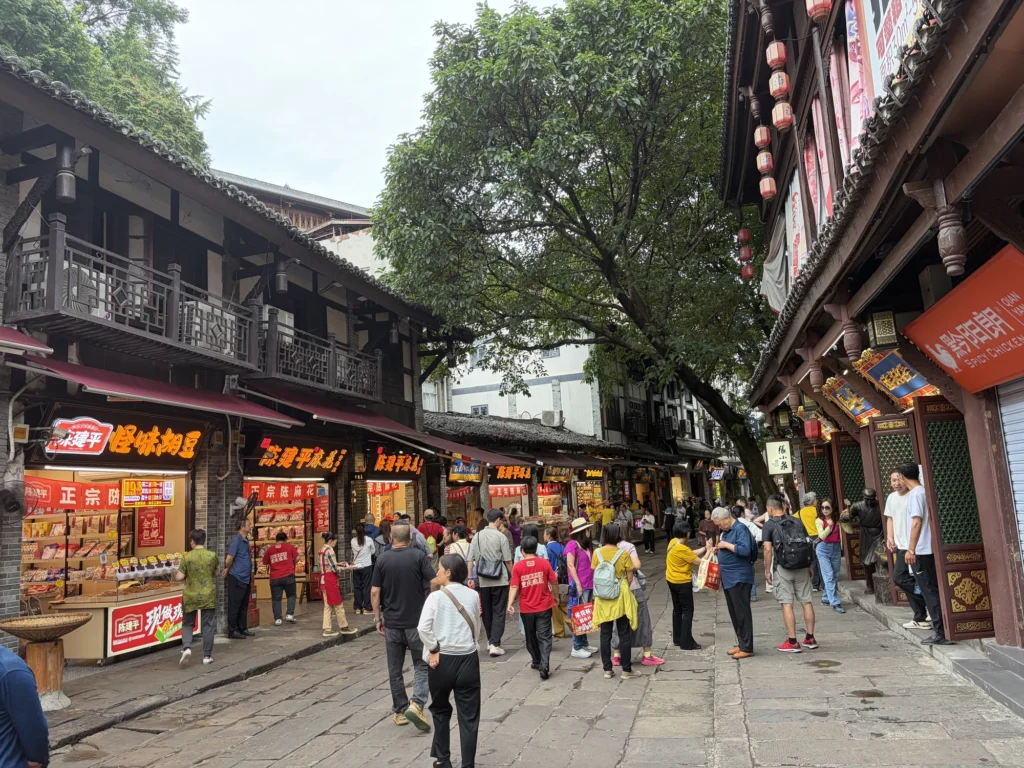
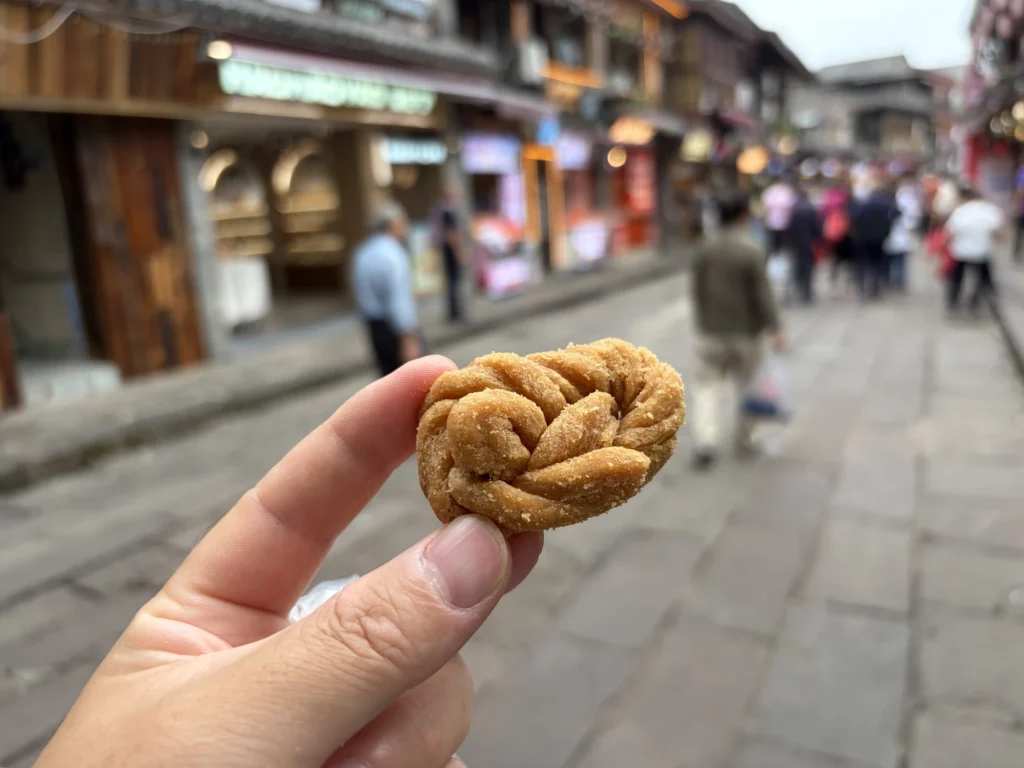
Besides the arts and crafts shops and snack stalls found on almost every commercial street, Ciqikou is known for a local specialty called Chen Mahua (陈麻花), a particularly crispy type of fried dough twist.
I’m not usually much of a mahua fan, but I have a soft spot for Chen Mahua.
Stop 3: Jialing Xiaodu Sunset Cruise (嘉陵小渡晚霞游)
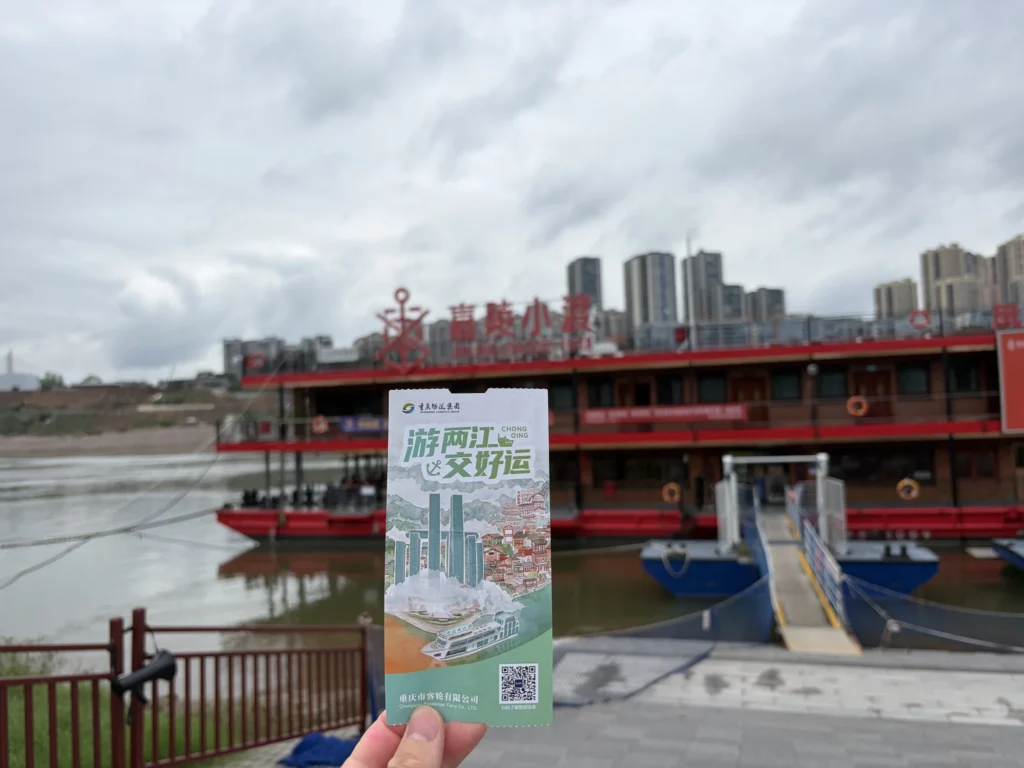
Ferries run between Ciqikou and Hongyadong roughly every 1 to 1.5 hours, but I’d choose the evening sunset cruise.
The journey takes about an hour, with views along both banks of the Jialing River. Once you get off the boat, you can continue directly to Hongyadong.
Stop 4: Hongyadong (洪崖洞)
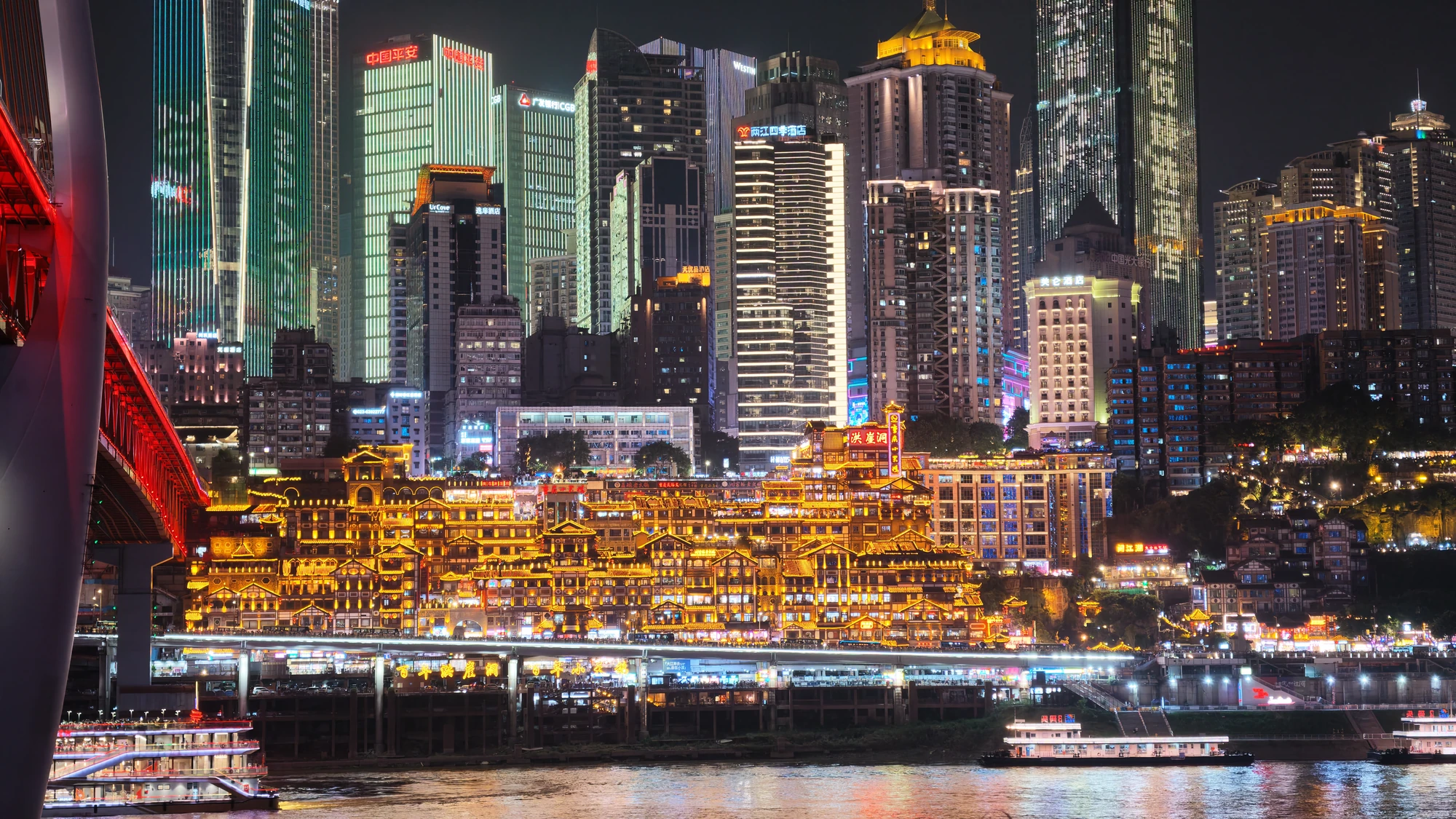
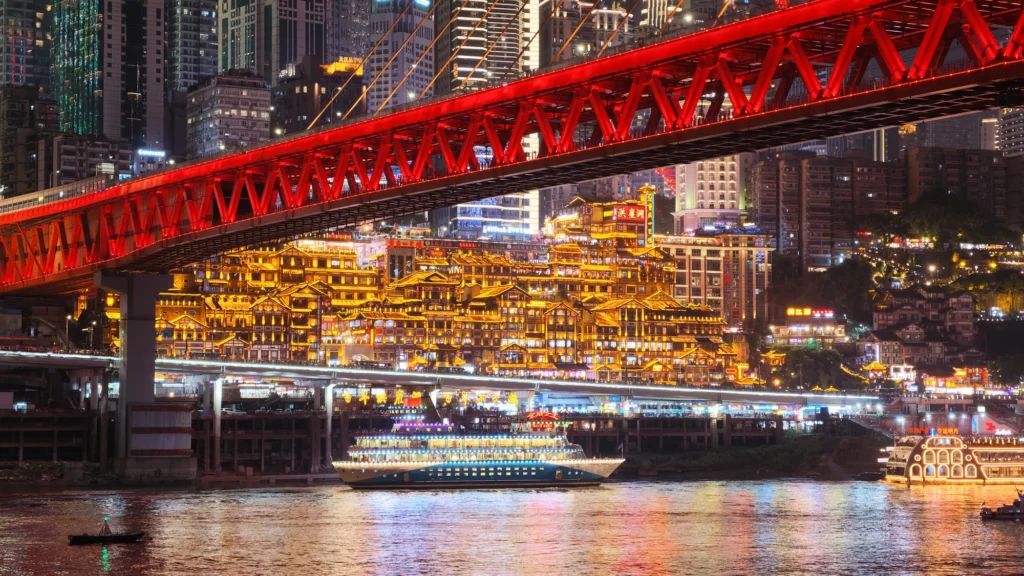
Hongyadong is one of Chongqing’s most popular attractions. The walk from the ferry takes you past the viewing platform at the base of the complex, making it a convenient place to stop for photos.
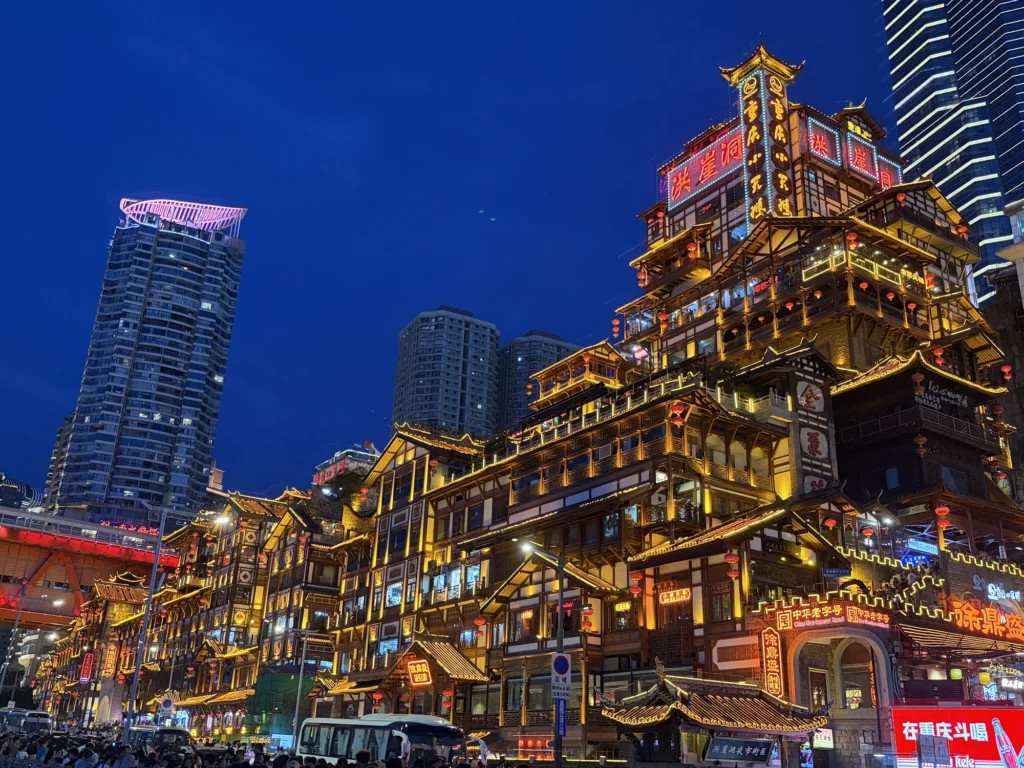
Inside, Hongyadong is essentially an ordinary shopping area, and I wouldn’t spend much time exploring it. Instead, take the elevator to the top floor after your photos, then head to Qiansimen Bridge for a view down over Hongyadong.
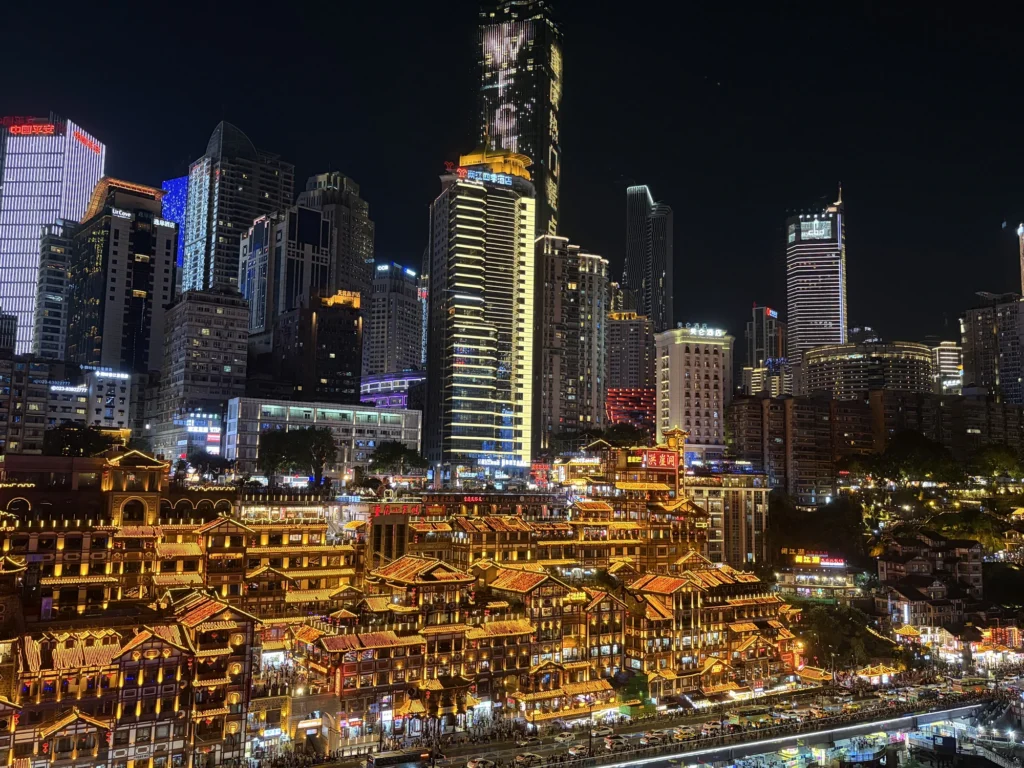
If you still have some energy left, I’d strongly recommend continuing across Qiansimen Bridge to the opposite bank. From there, make your way down to the riverside Jiangtan Park (江滩公园) via Grand Theatre Station.
With the Yuzhong Peninsula as the backdrop, I think this is the best place to see Hongyadong.
Final thoughts
This three-day itinerary covers many of Chongqing’s most popular attractions and experiences, but it’s not a particularly leisurely itinerary.
If you prefer traveling at a slower pace, or you’re visiting with older family members or children, consider leaving out a few stops. There’s no need to rush through attractions just to complete the itinerary.
For more ideas on adjusting the route, take a look at my Chongqing travel guide. It includes more places to visit, an overview of central Chongqing and where its main attractions are located, along with practical information on transportation and accommodation to help you plan around your own interests and available time.